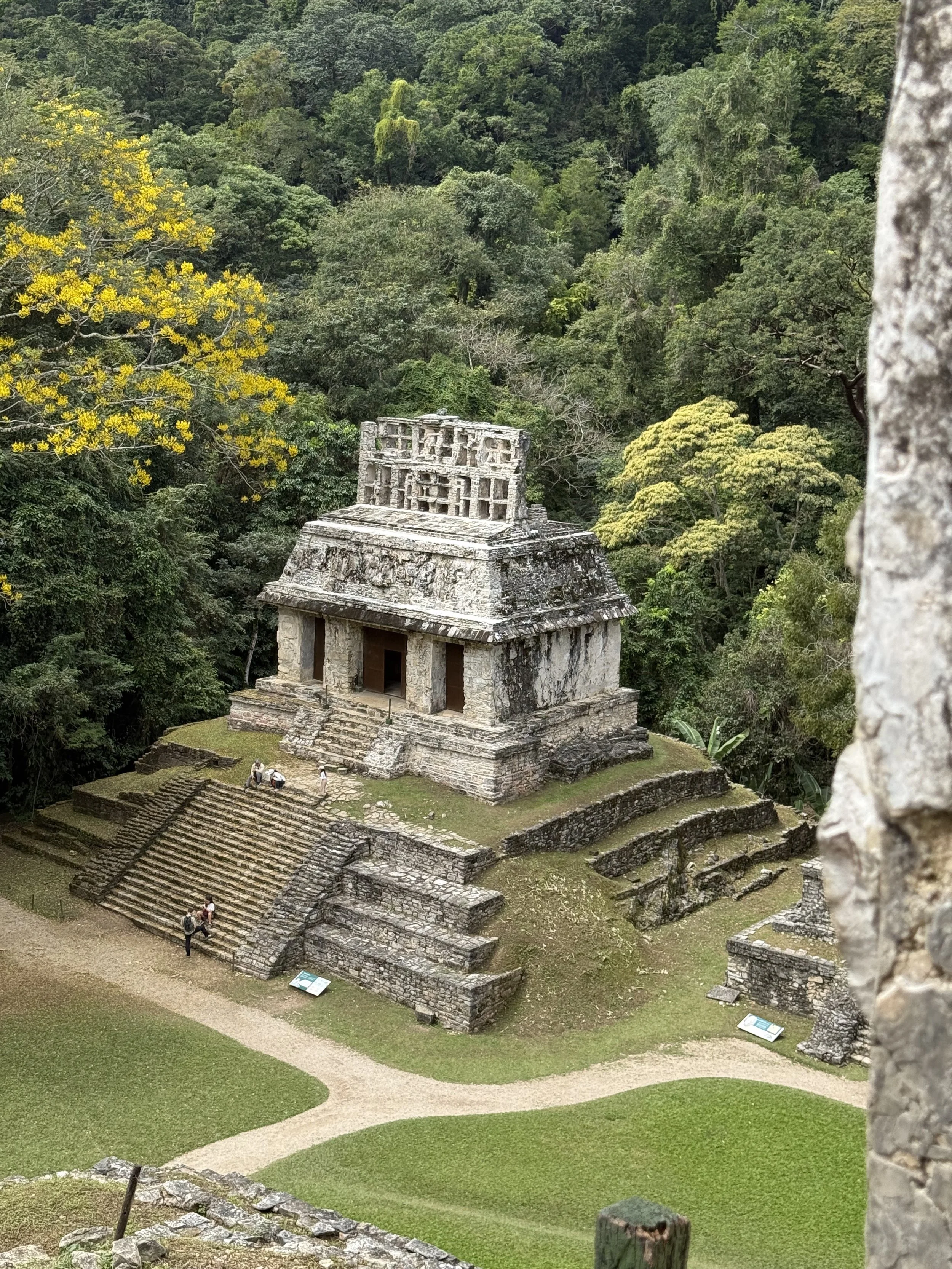
Oaxaca & The Chiapas February 2026
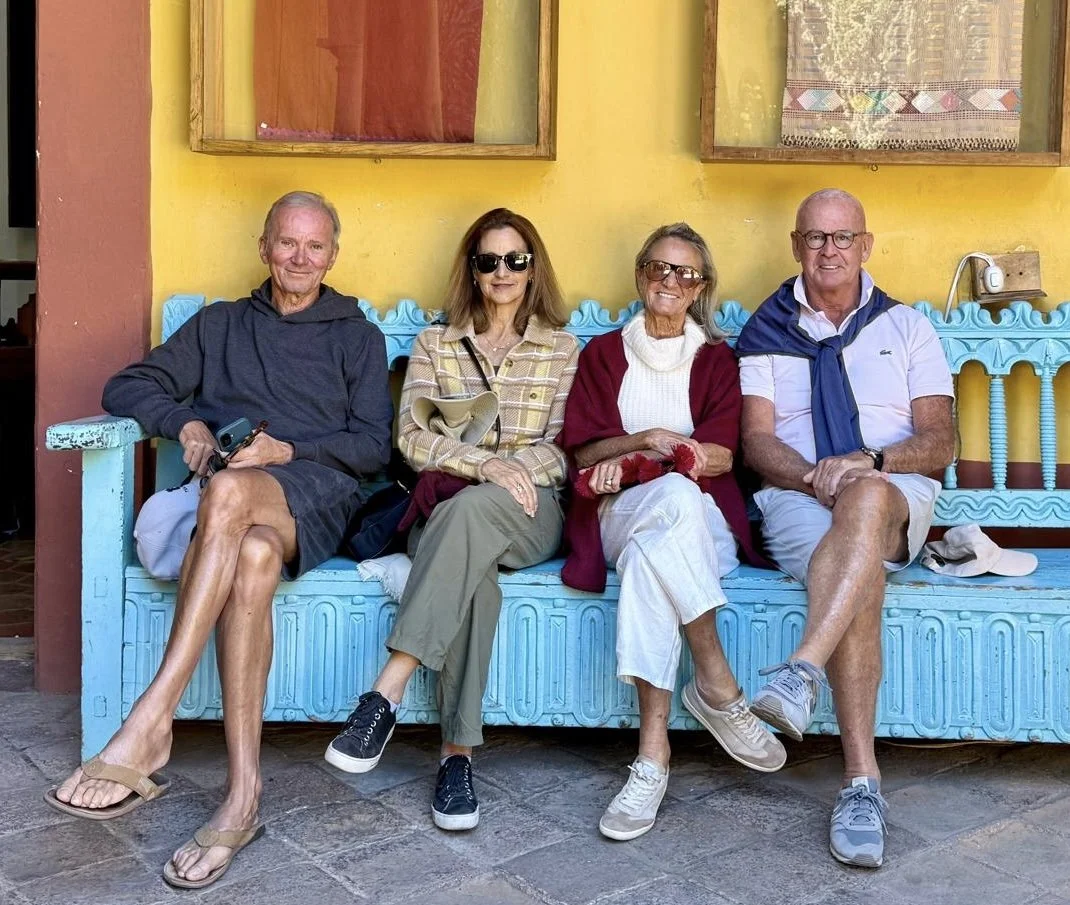
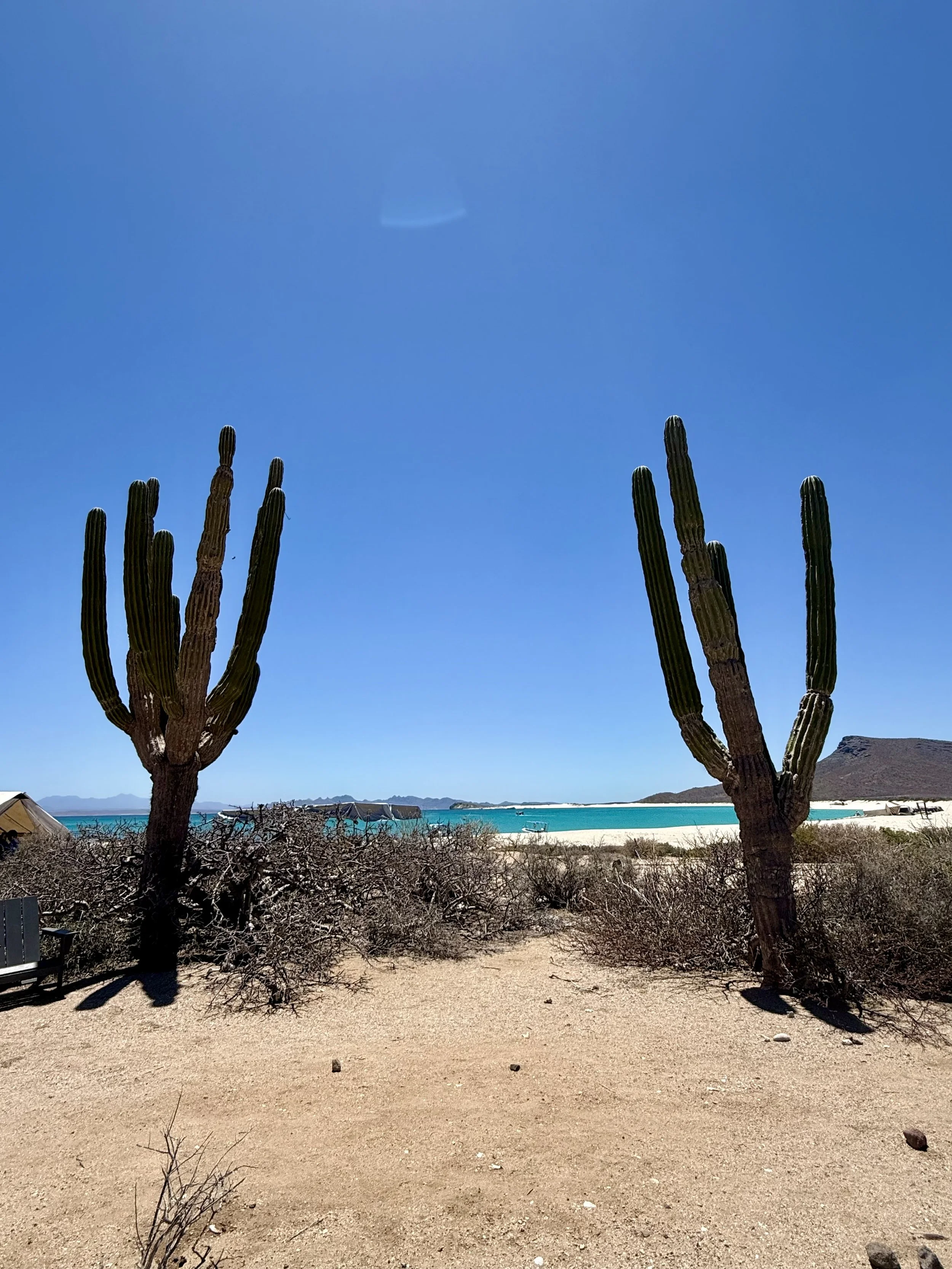
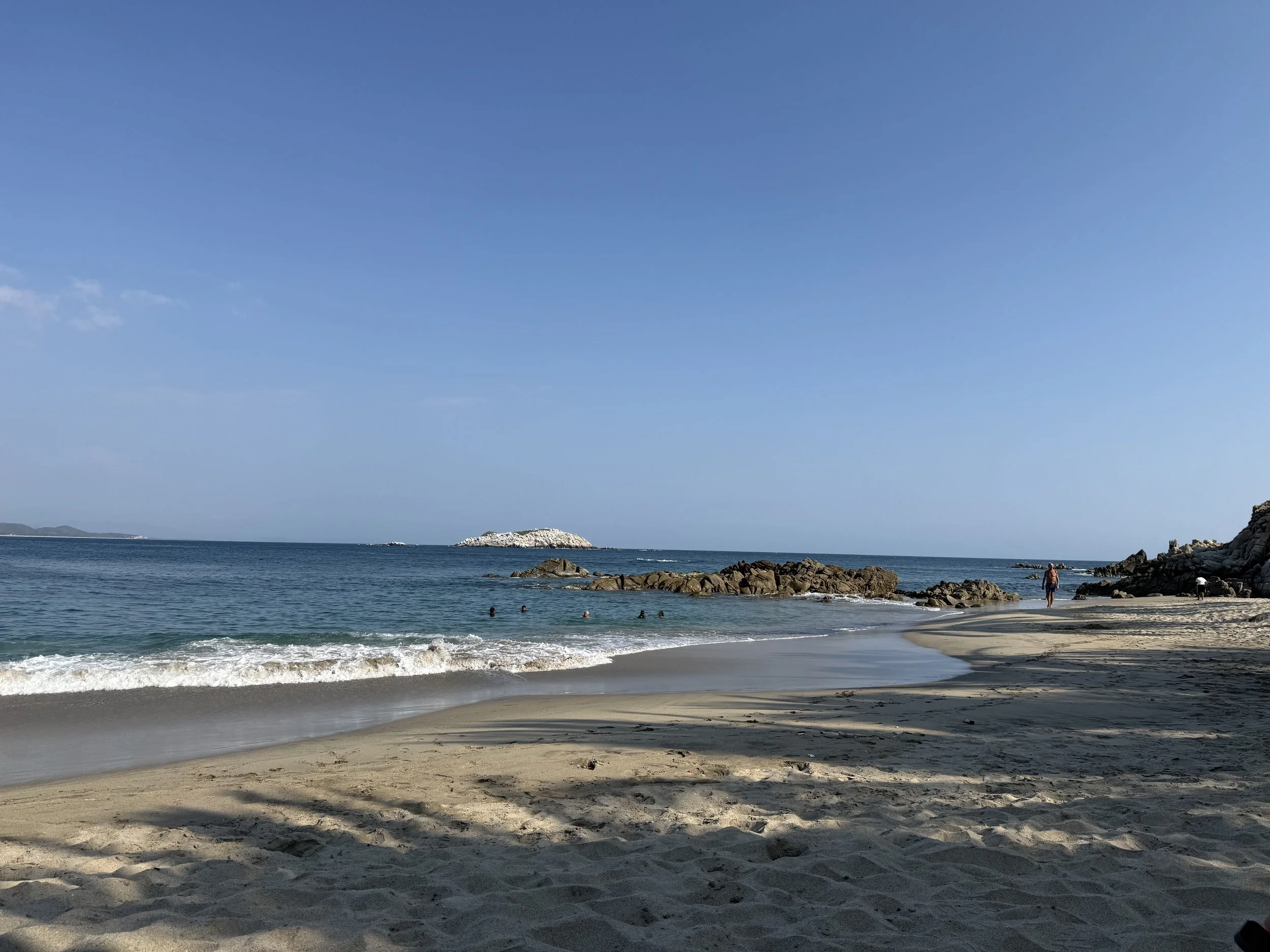
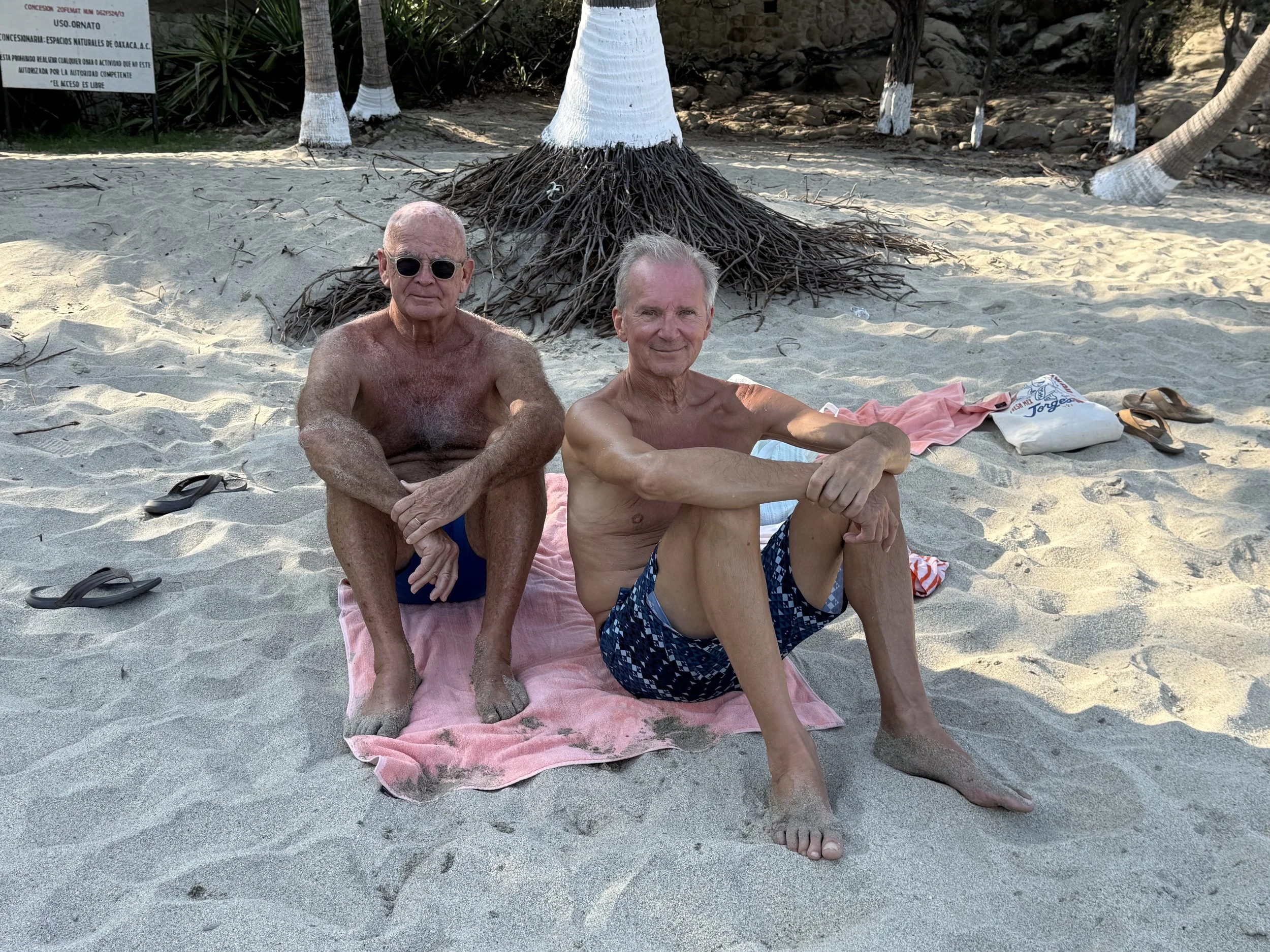
A two weeks trip with Isabel & Martin. After a few days at Casa Kura Kura in Santa Cruz de los Zacatitos, we take off to Oaxaca.
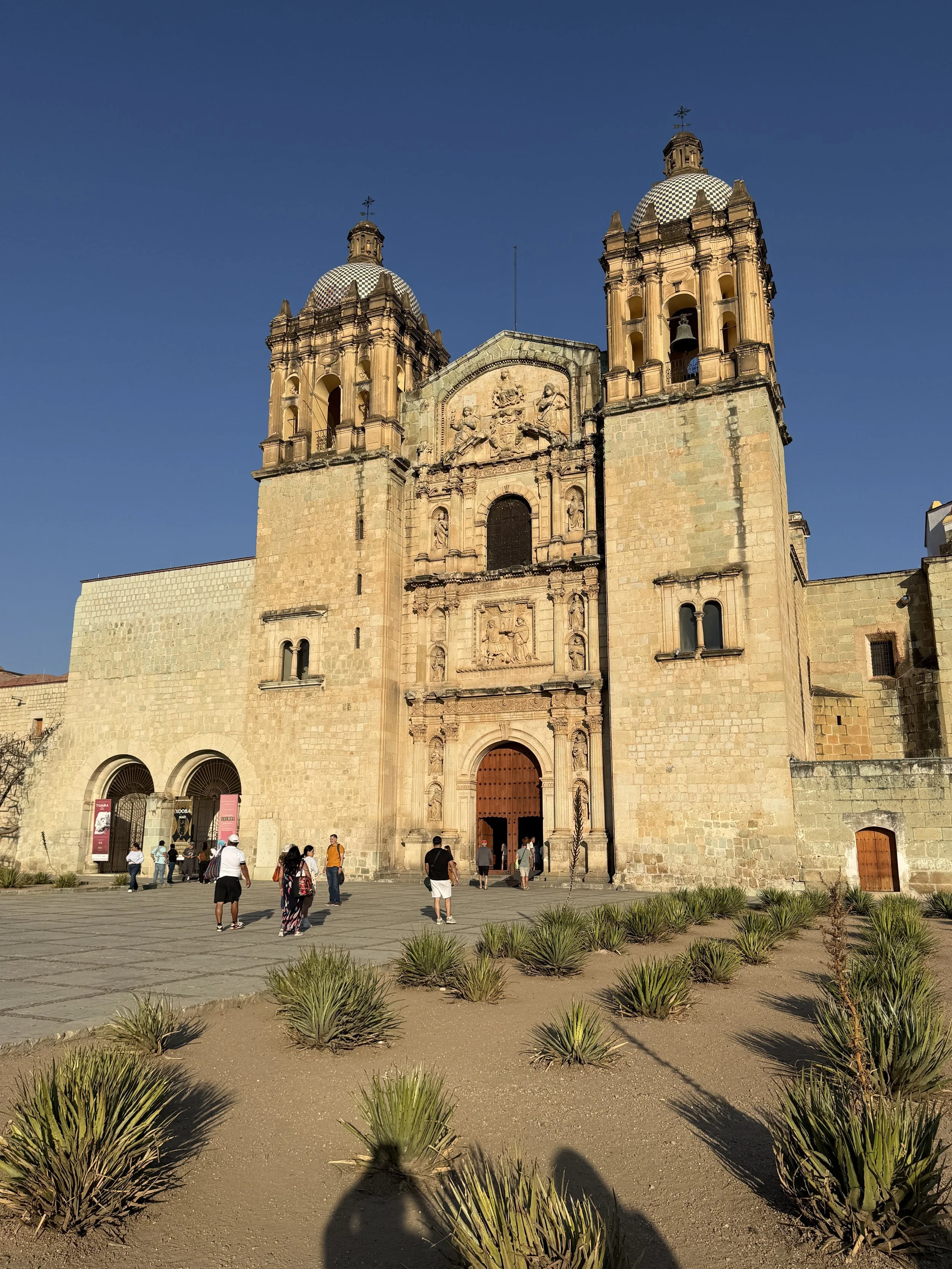
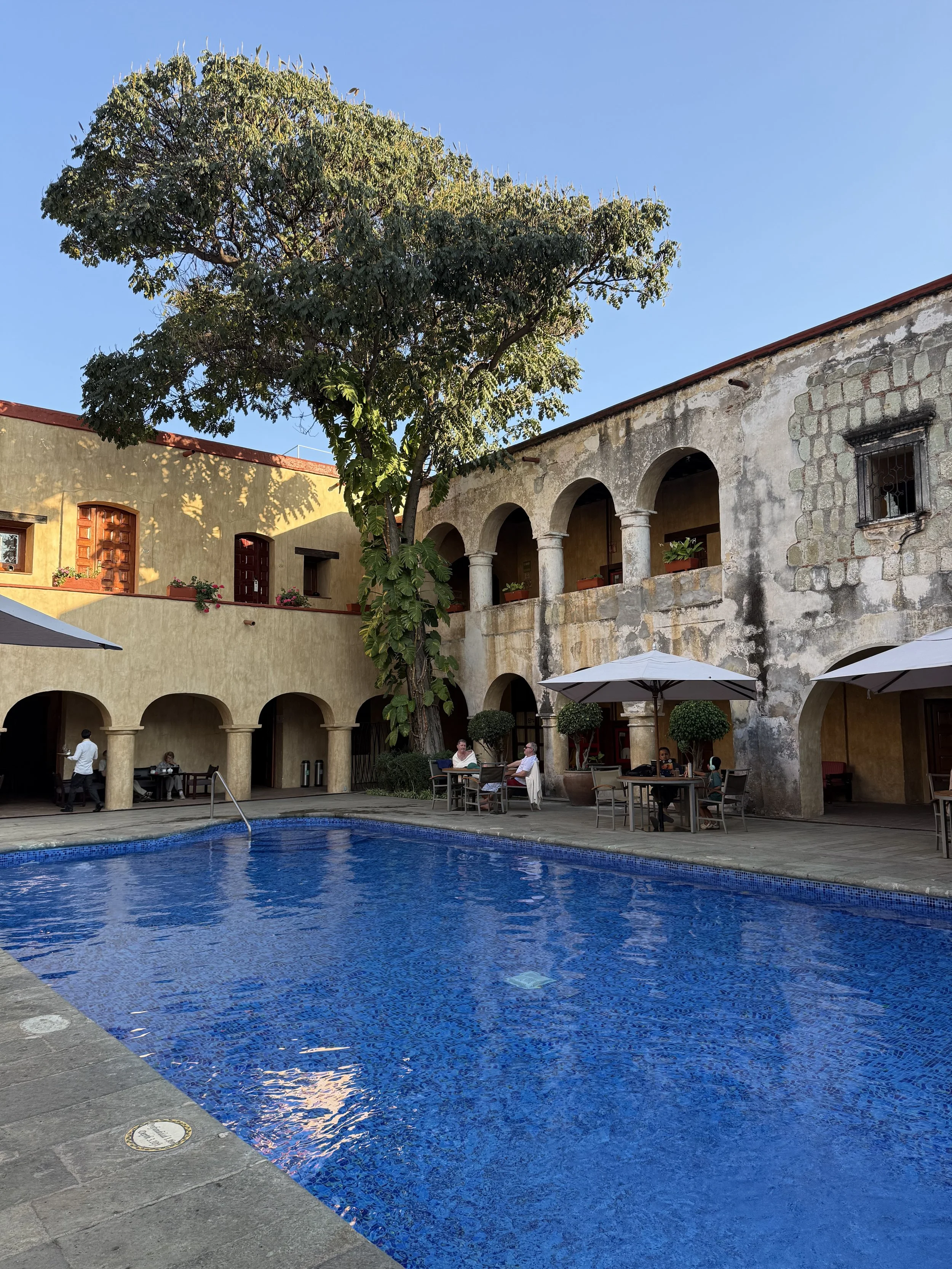
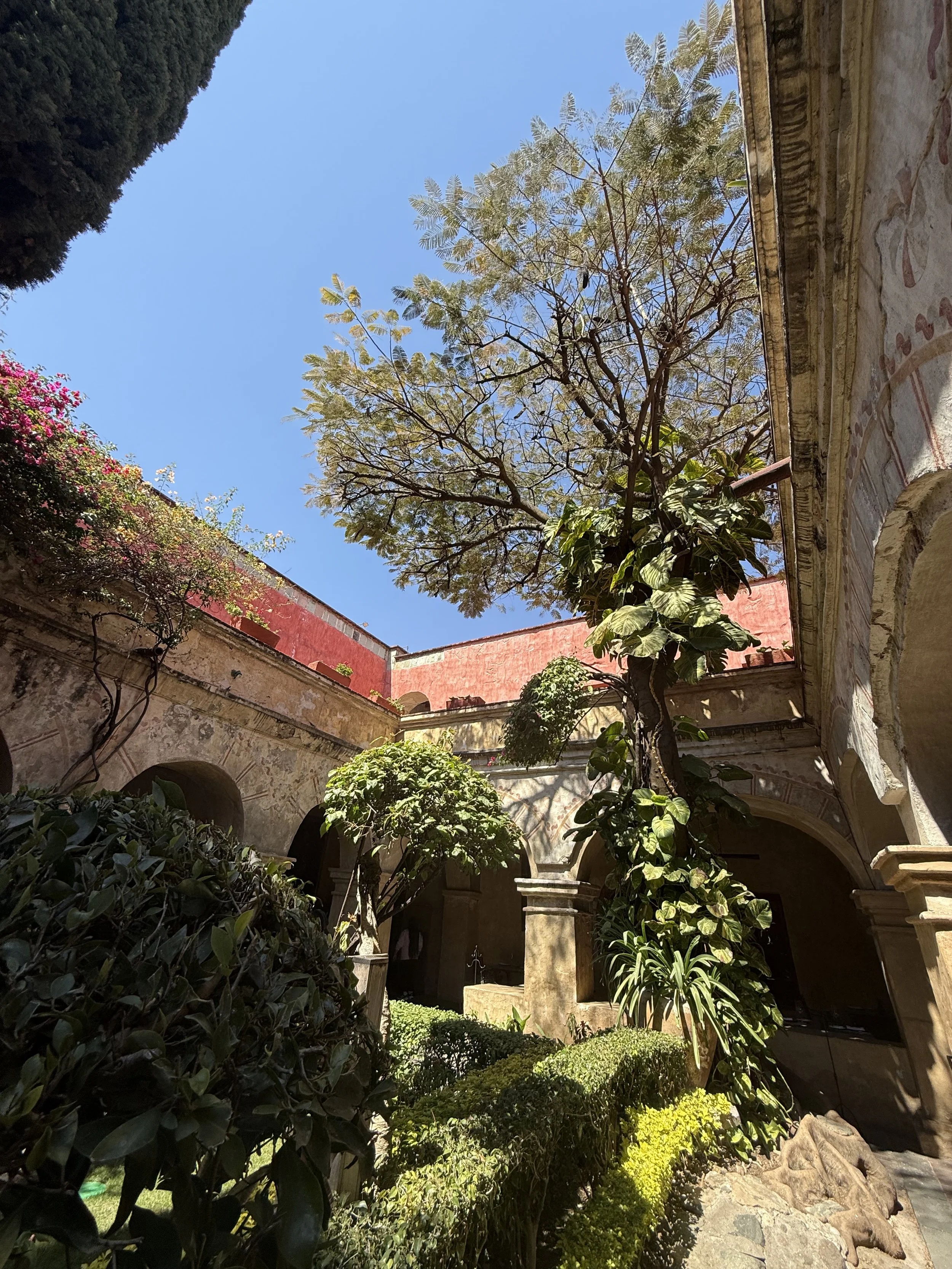
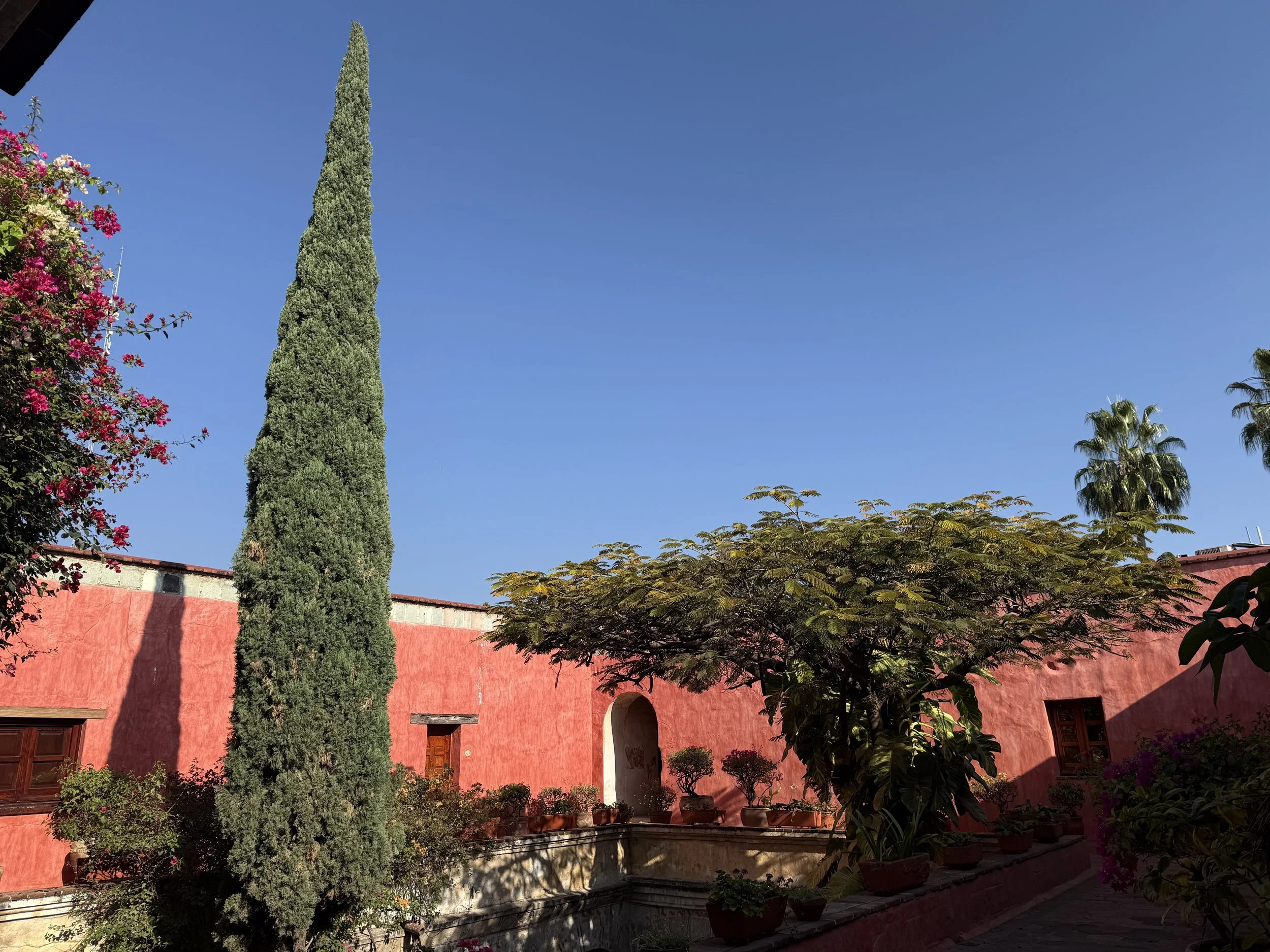
We stayed at The Quinta Real Oaxaca downtown Oaxaca in the restored 16th-century Convent of Santa Catalina de Siena. Great recommandation!
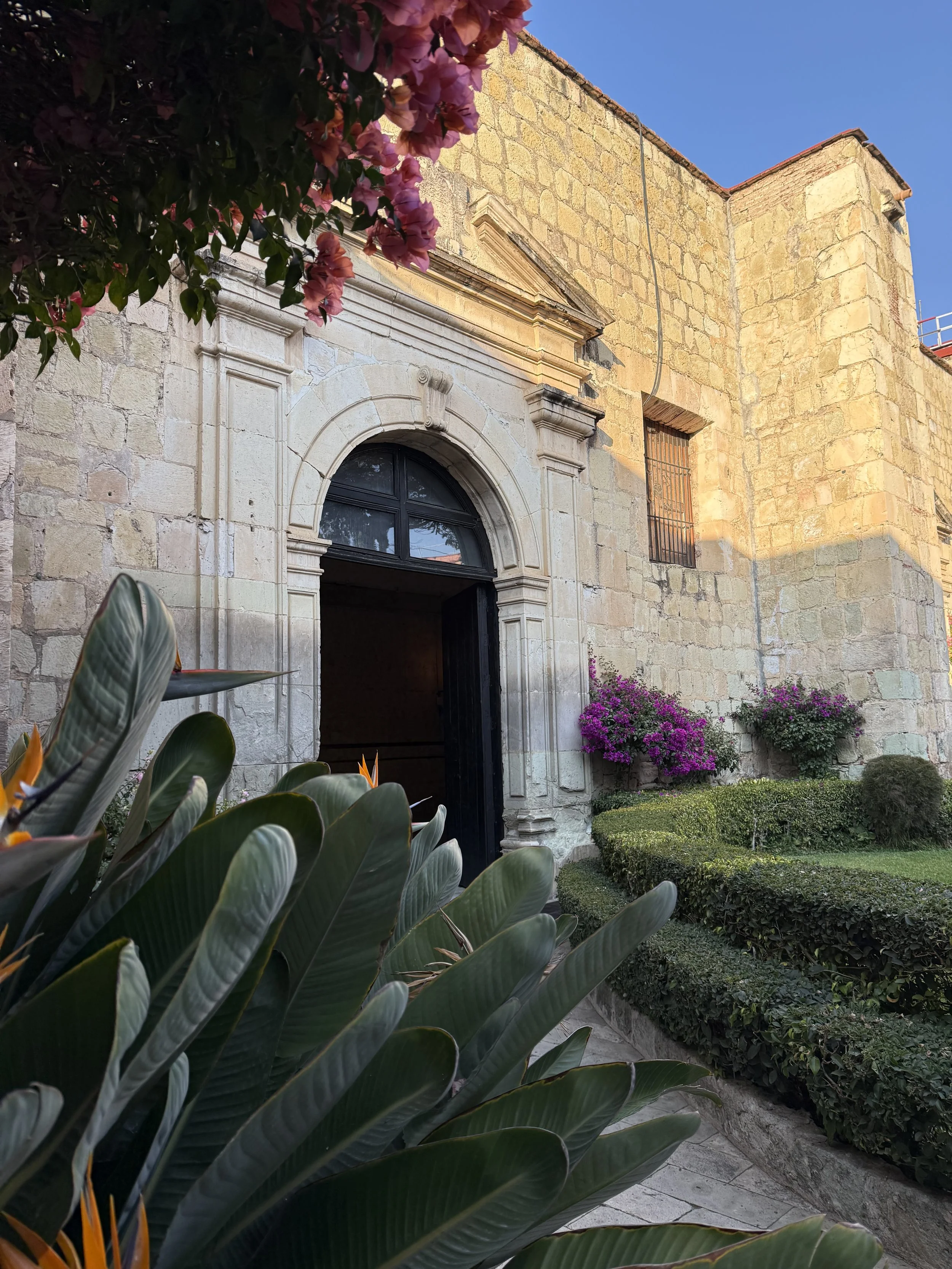
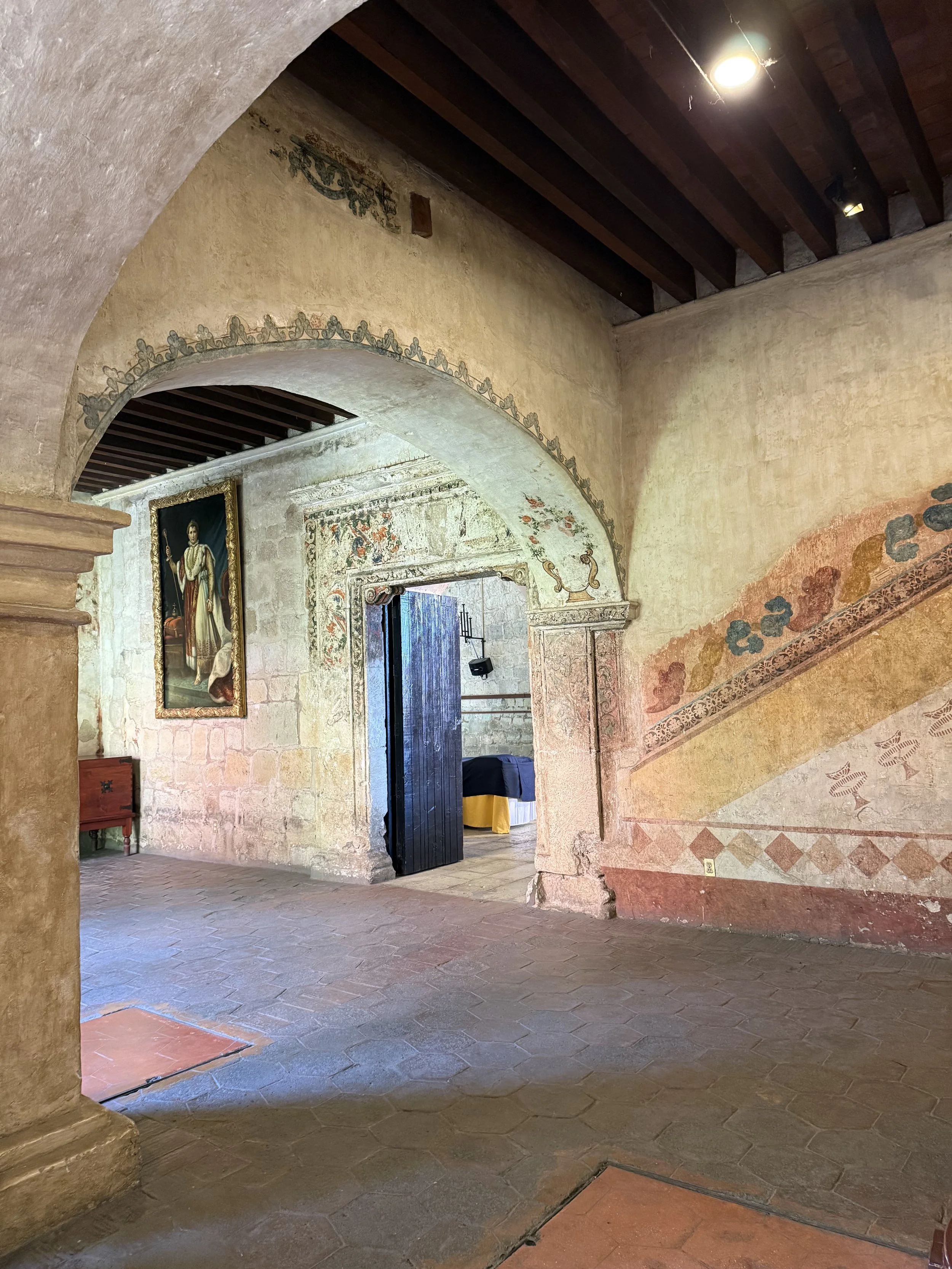
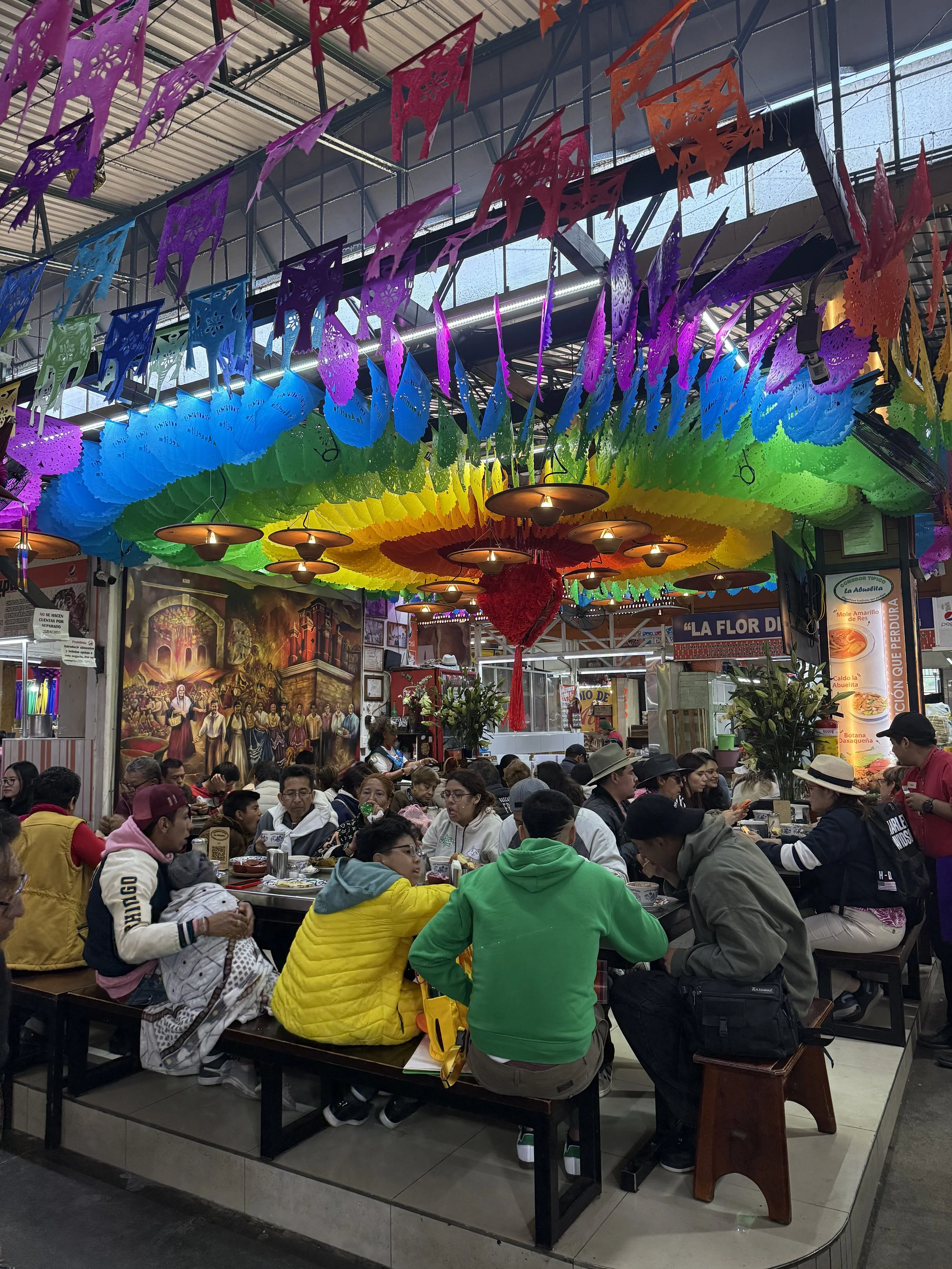
The Boys love their breakfast at the local market: El Mercado 20 de Noviembre. Definitely a cultural experience!
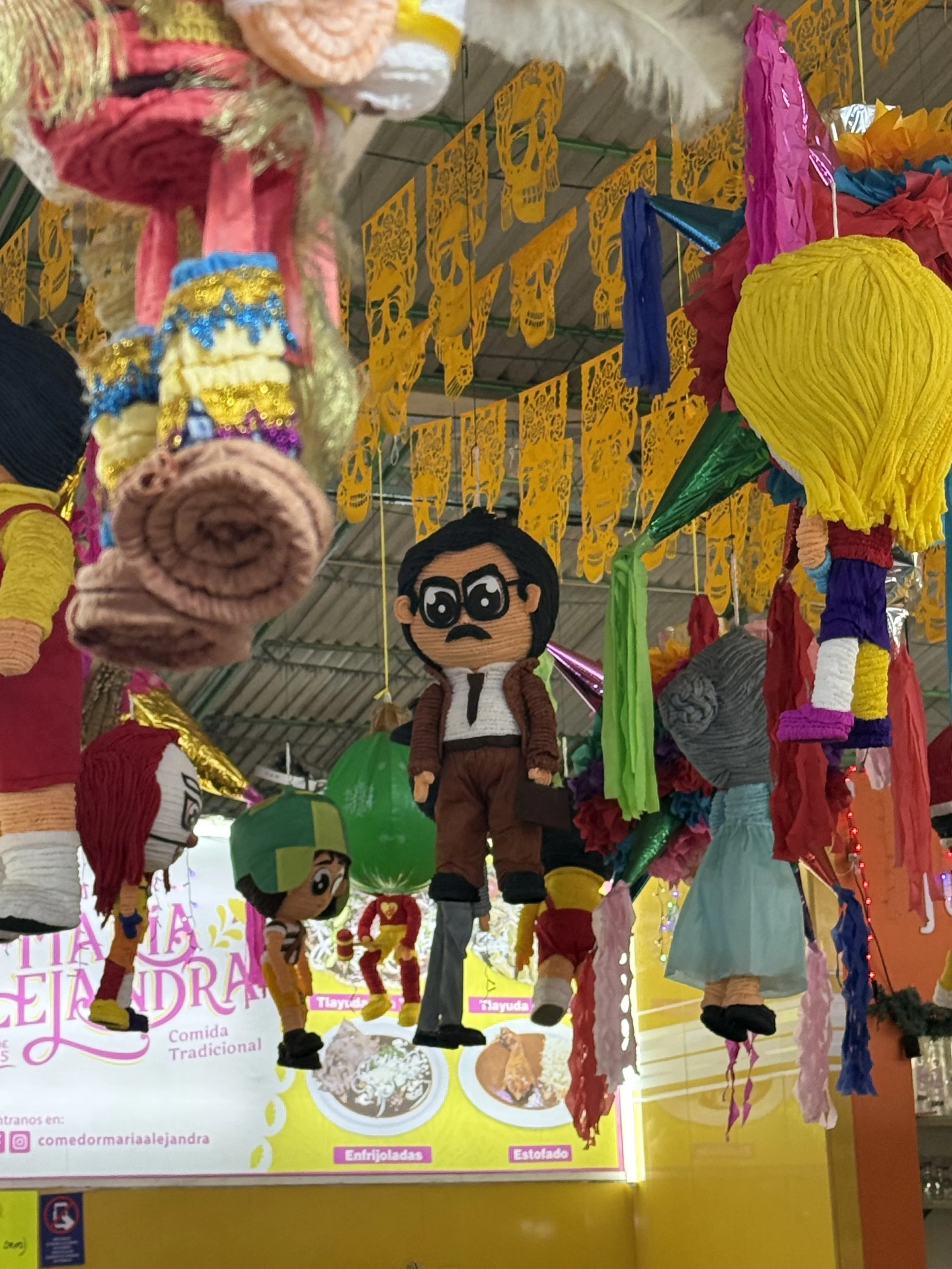
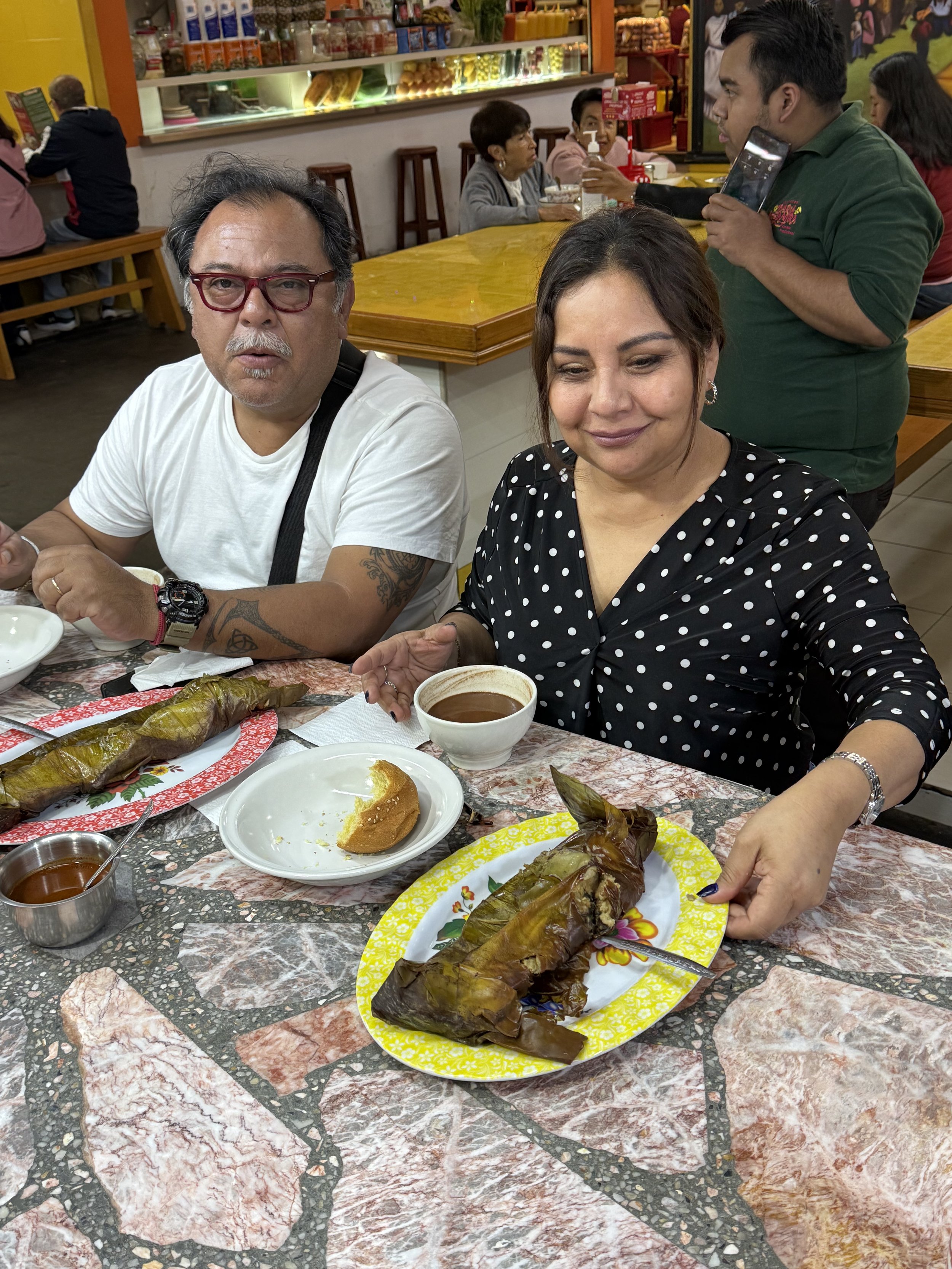
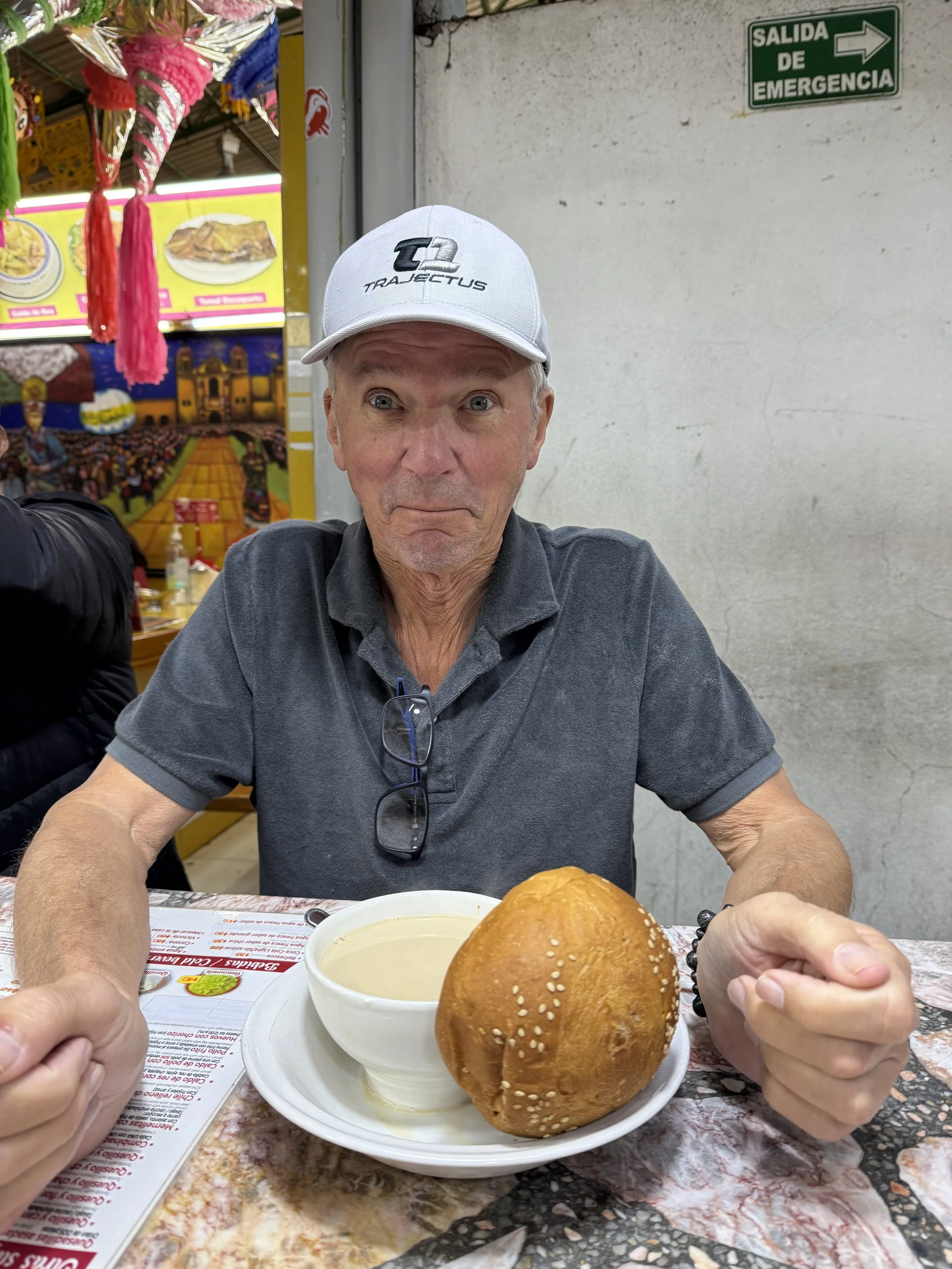
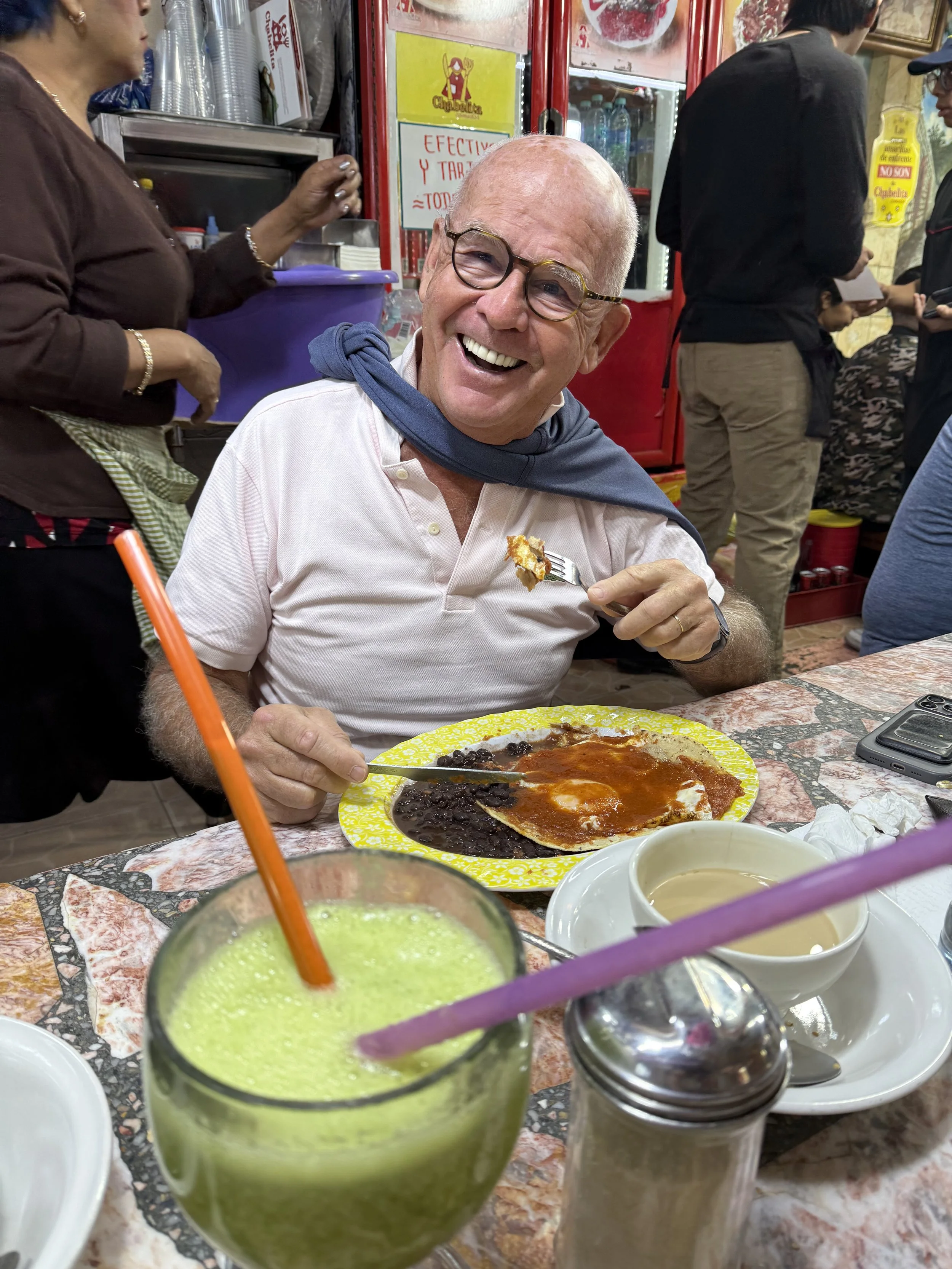
Oaxaca, located in southwestern Mexico, is a vibrant state and colonial city renowned for its rich indigenous culture, UNESCO-listed historic center, and world-famous cuisine. It offers deep-rooted Zapotec and Mixtec history, artisanal crafts, vibrant markets, and mezcal.
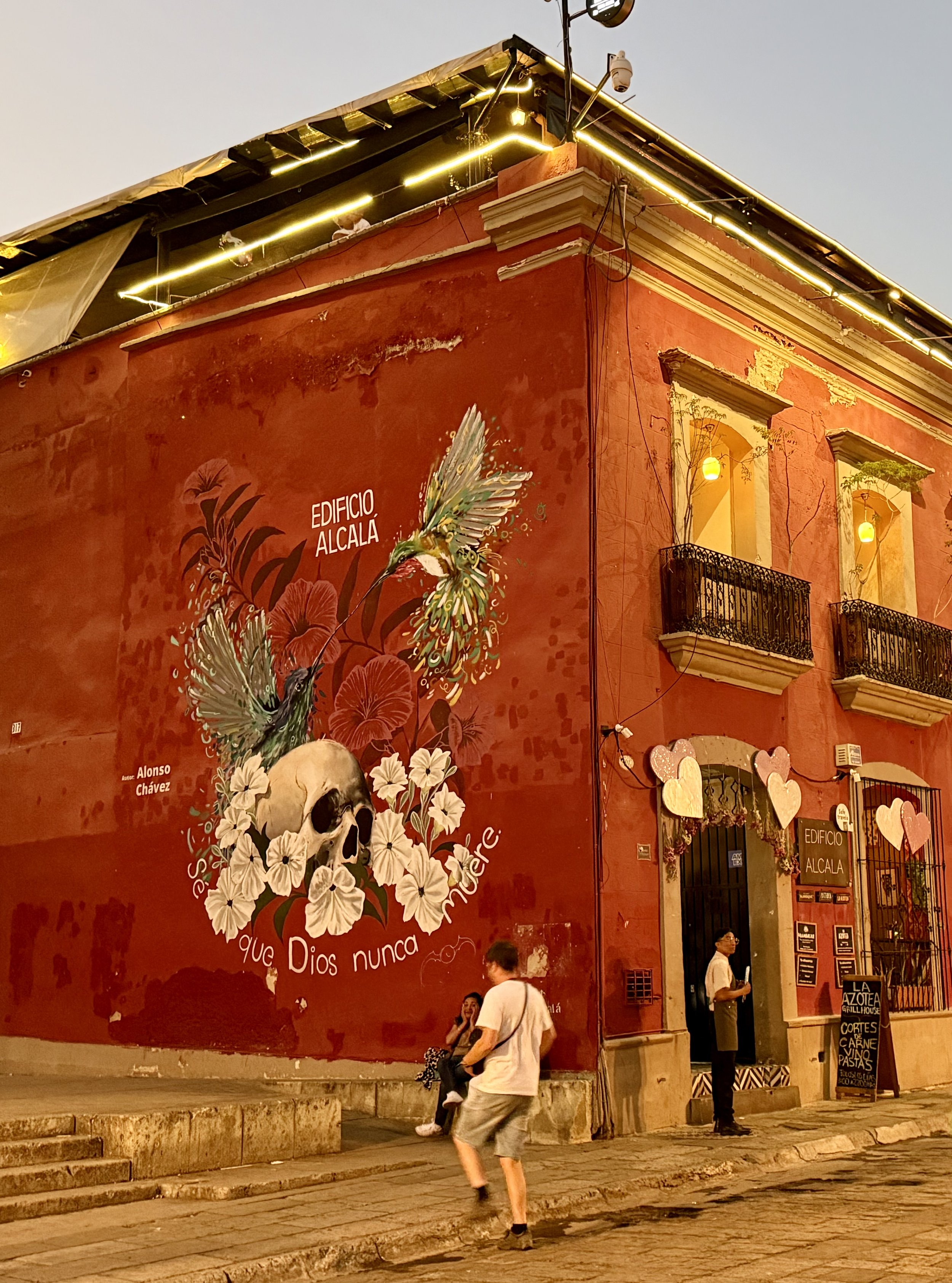
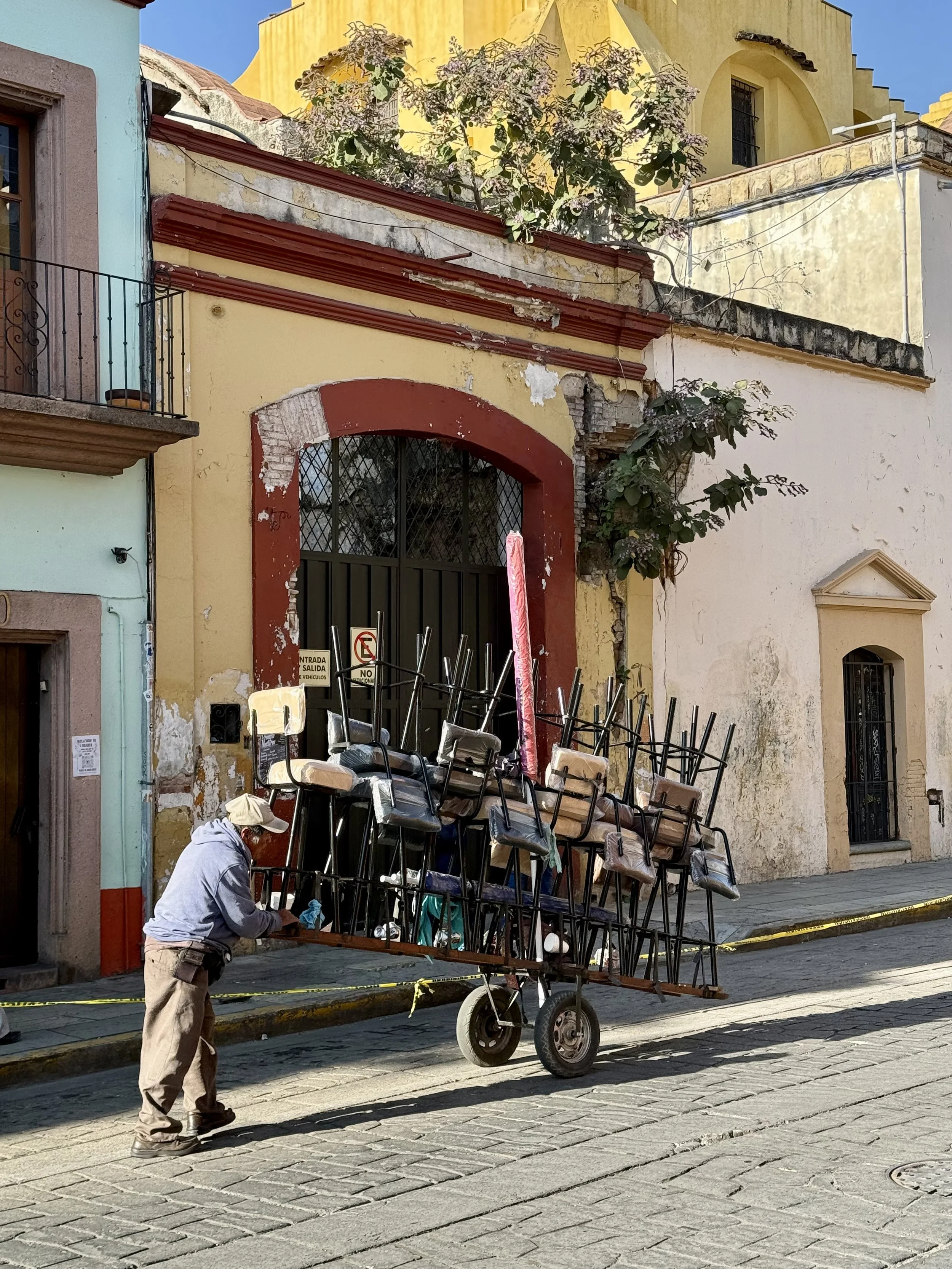
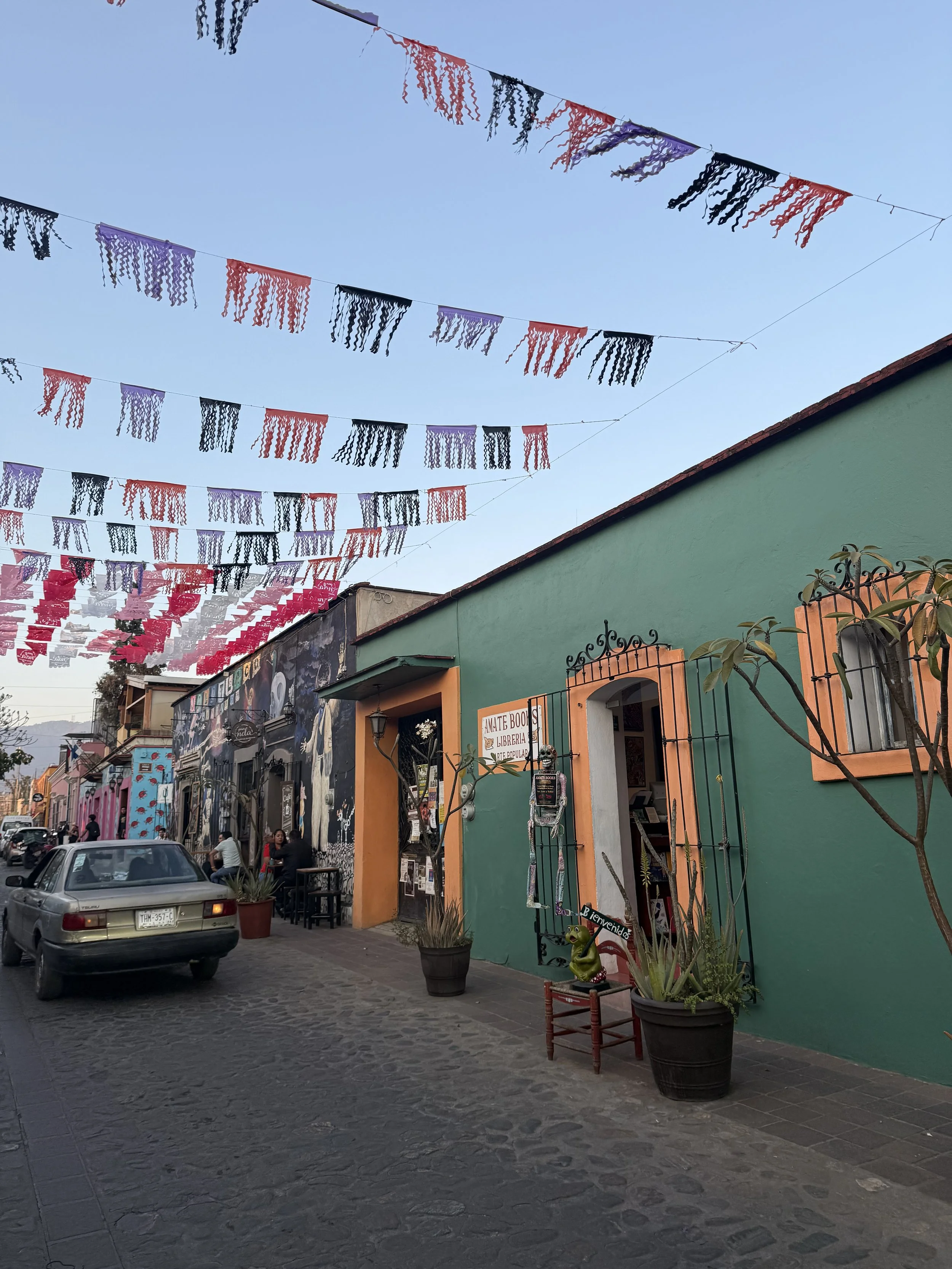
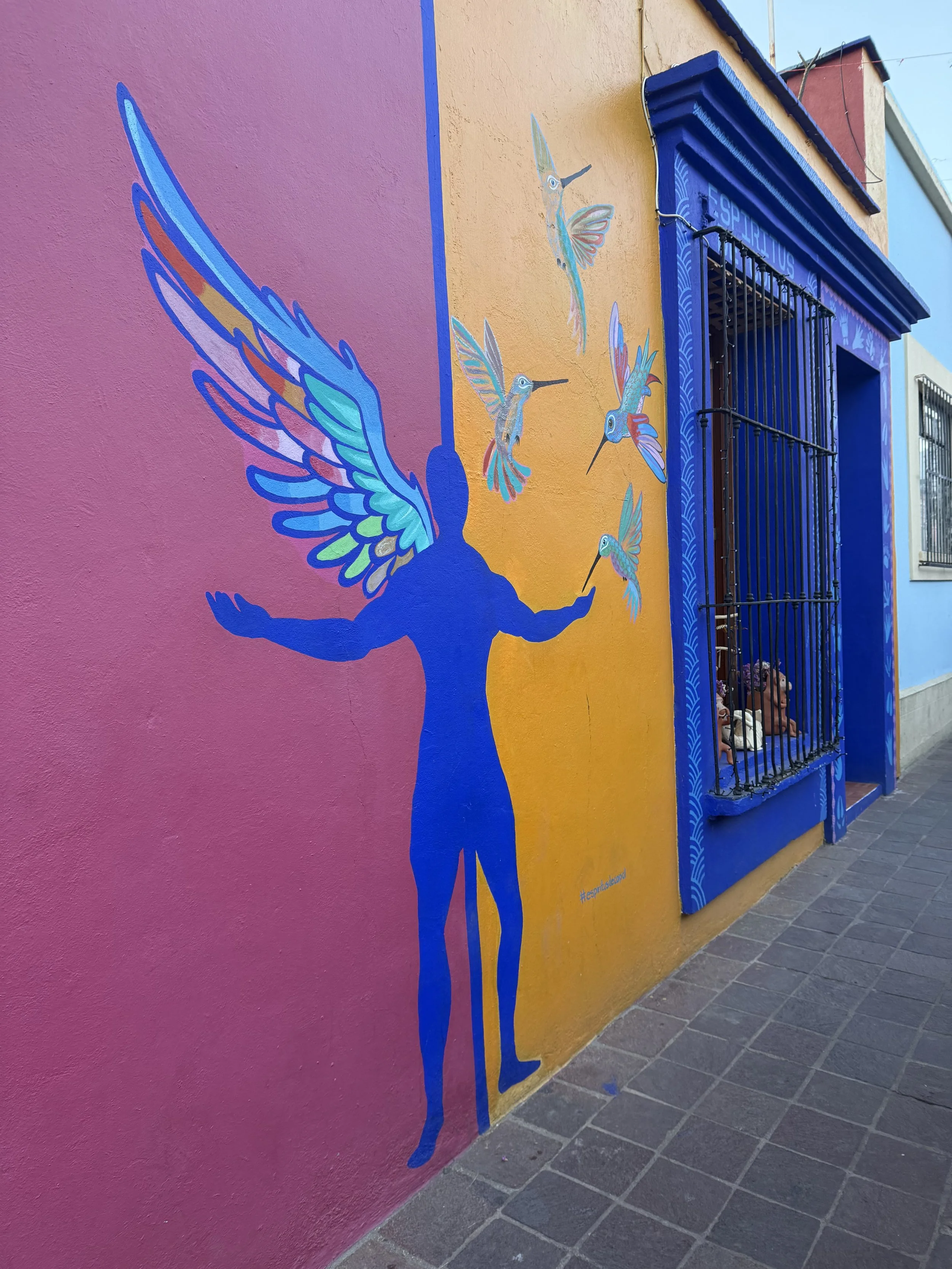
We enjoyed walking around the city and the Jalatlaco neighborhood.
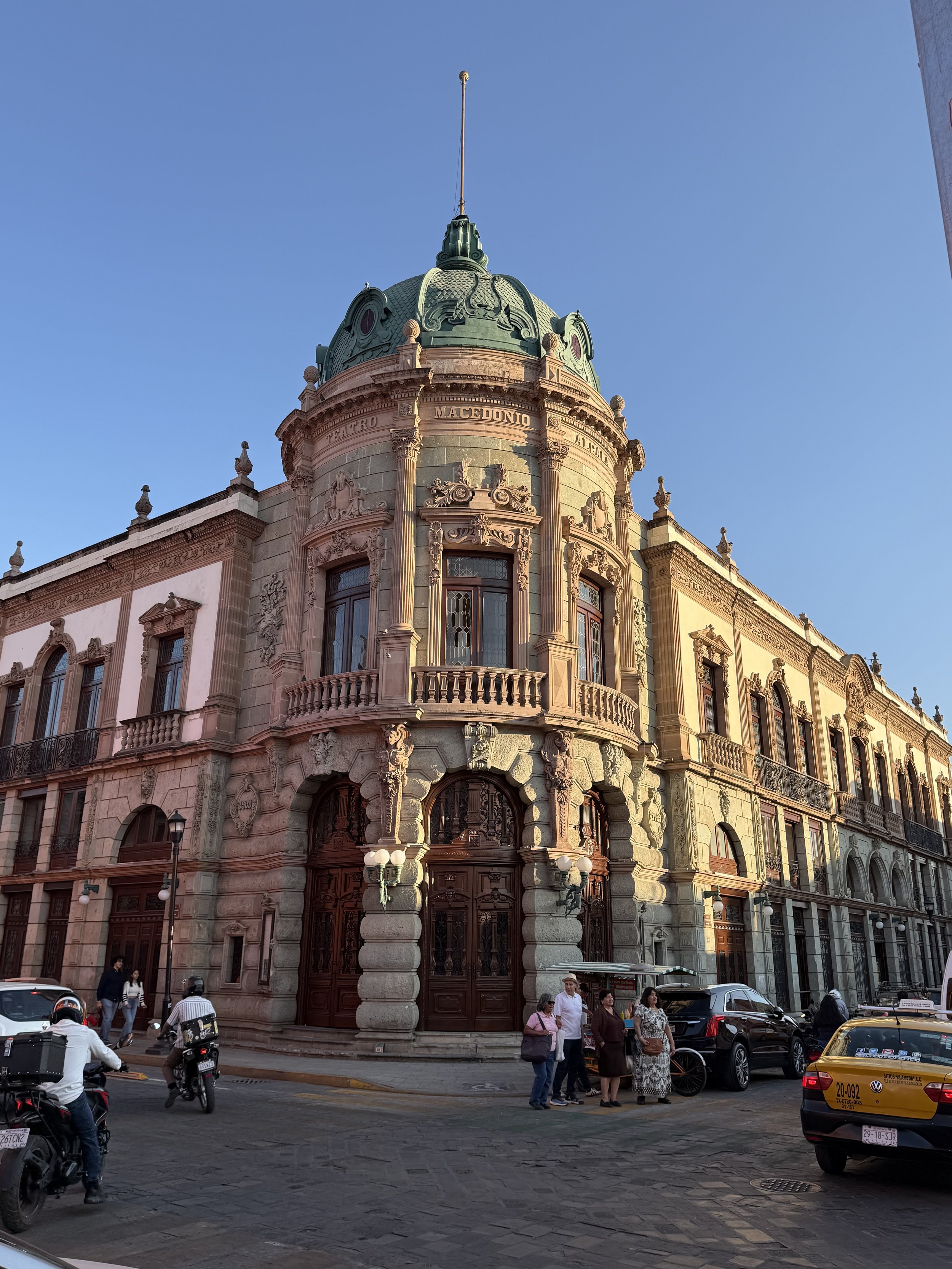
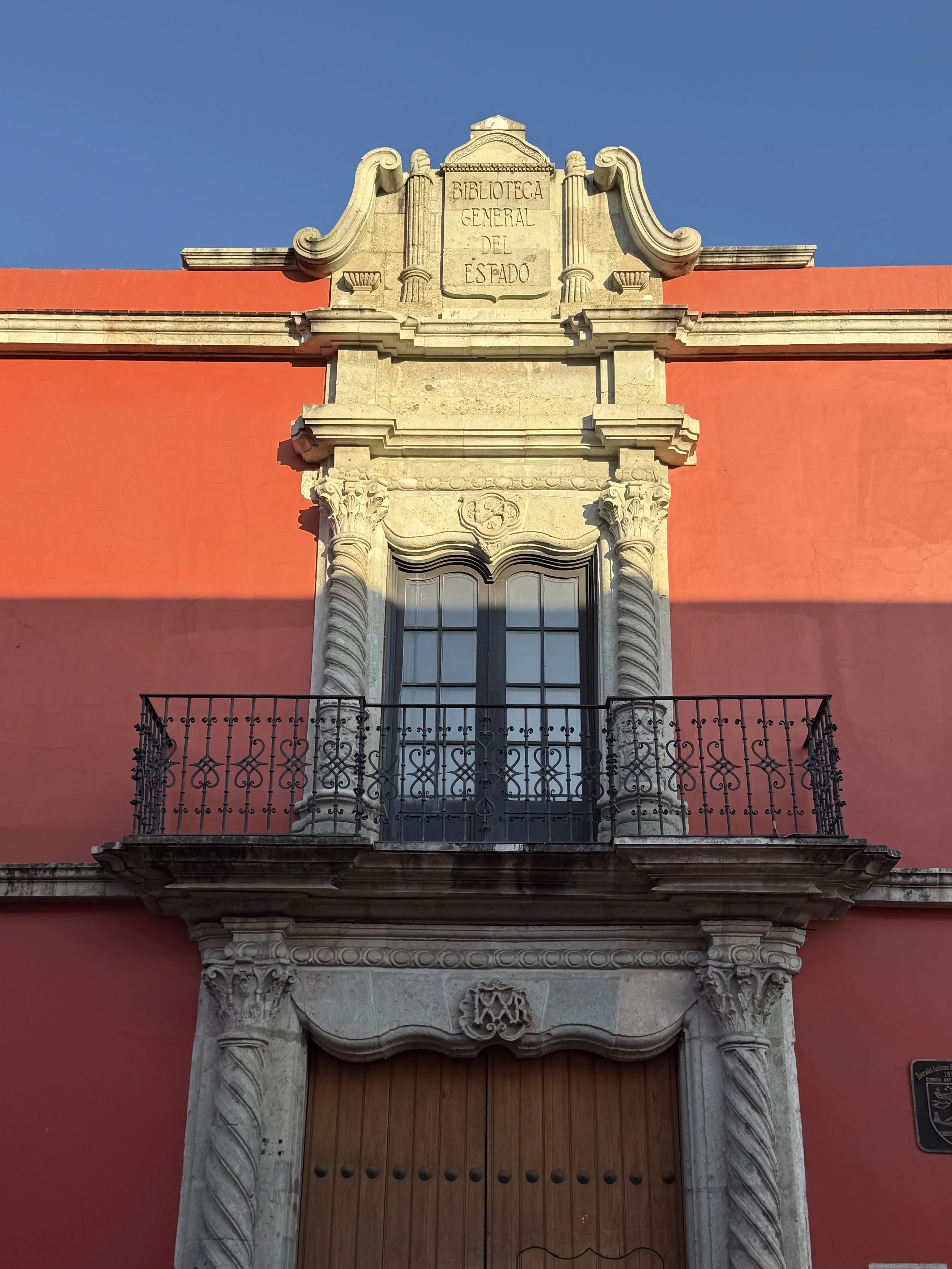
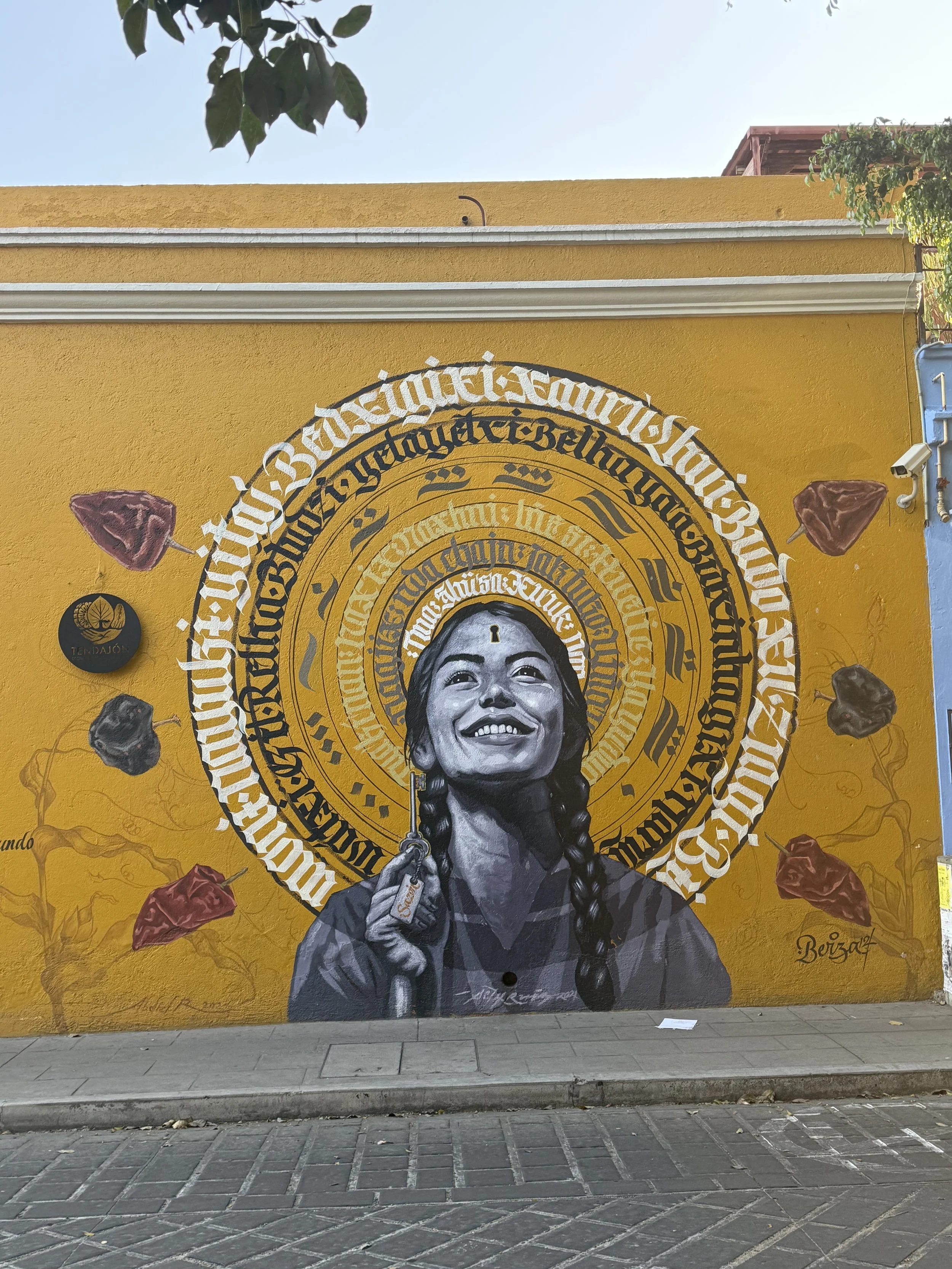
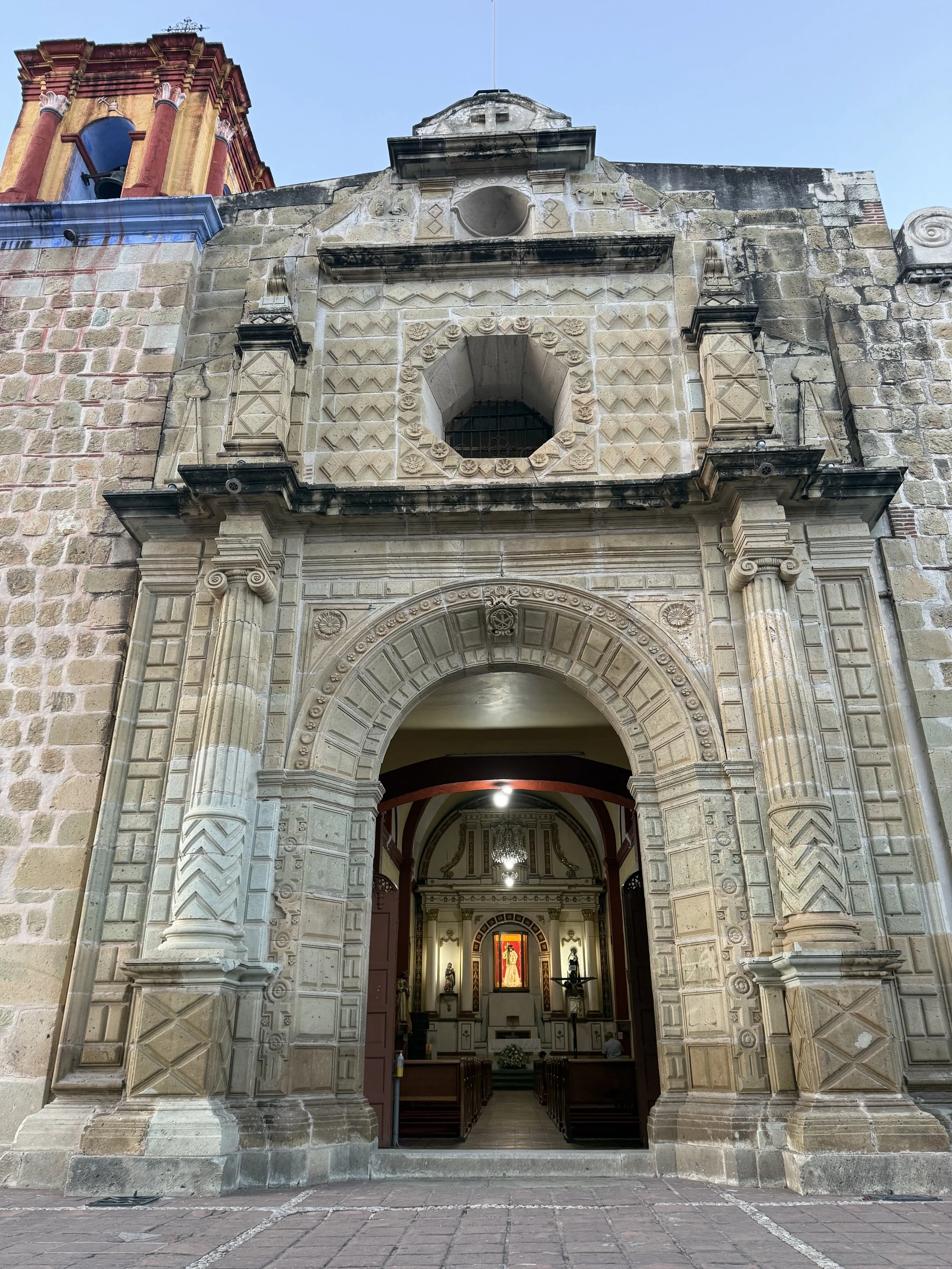
The Metropolitan Cathedral of Oaxaca dedicated to Our Lady of the Assumption. Its construction began in 1535, and the church was consecrated on July 12, 1733.
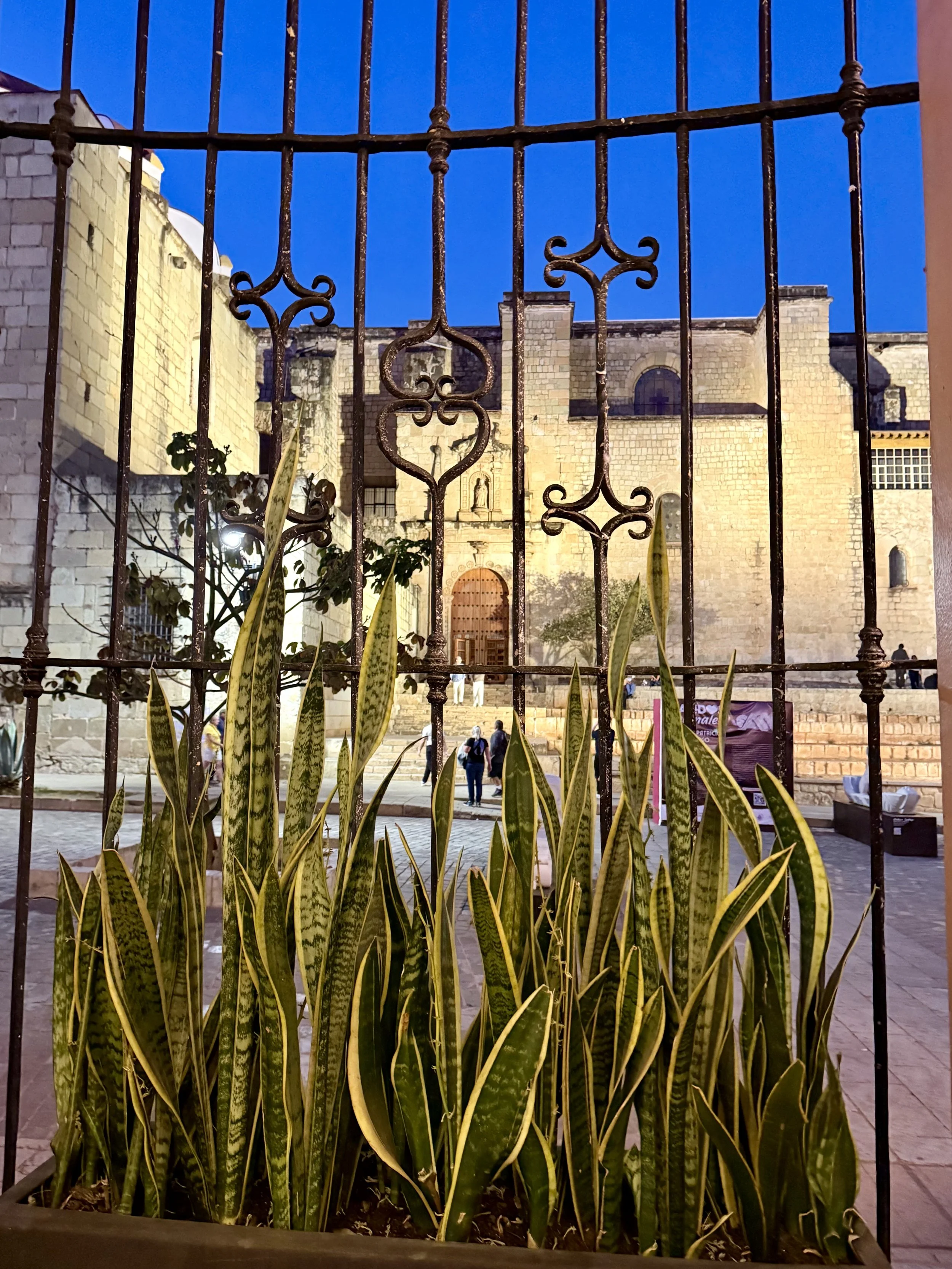
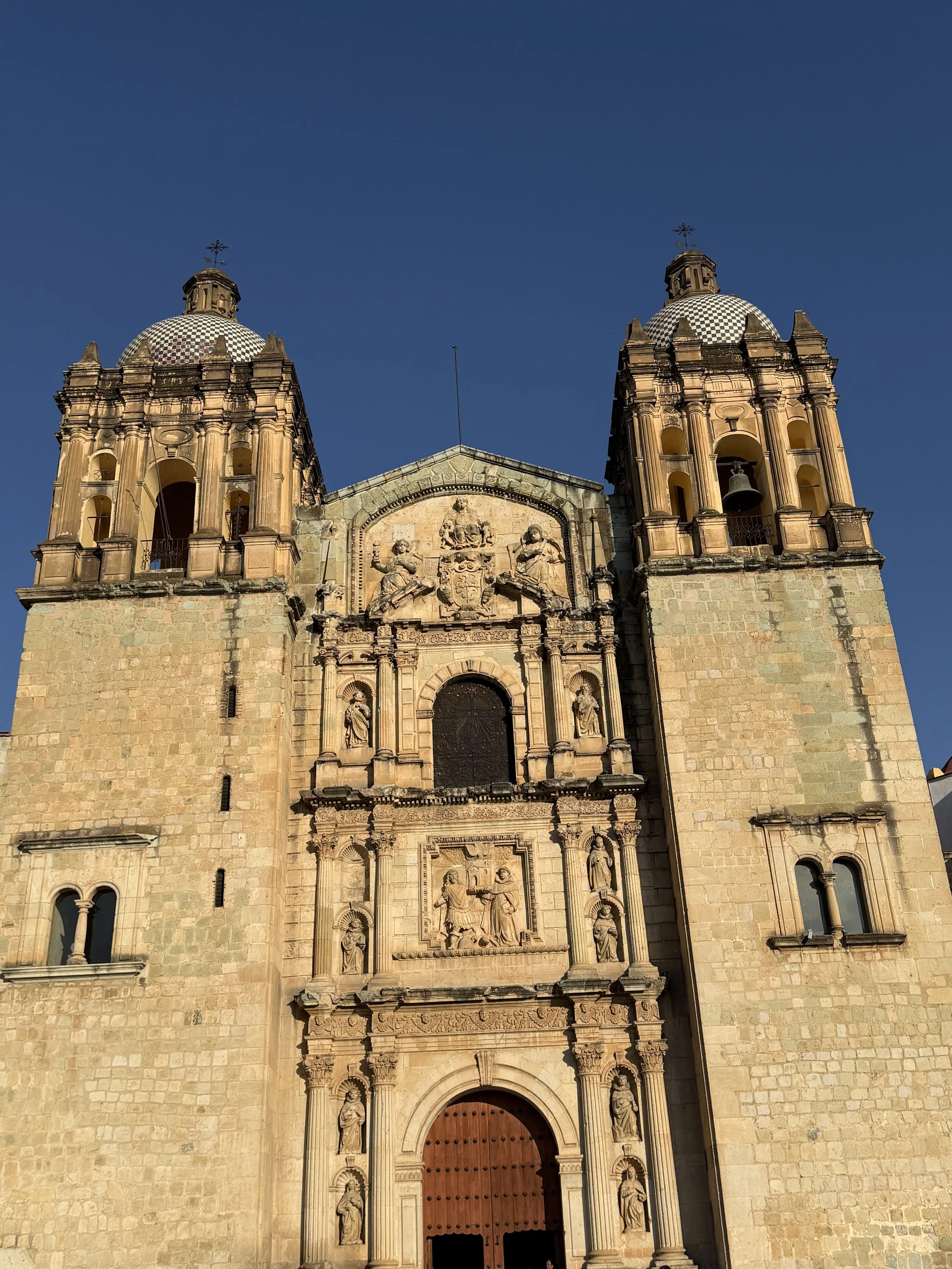
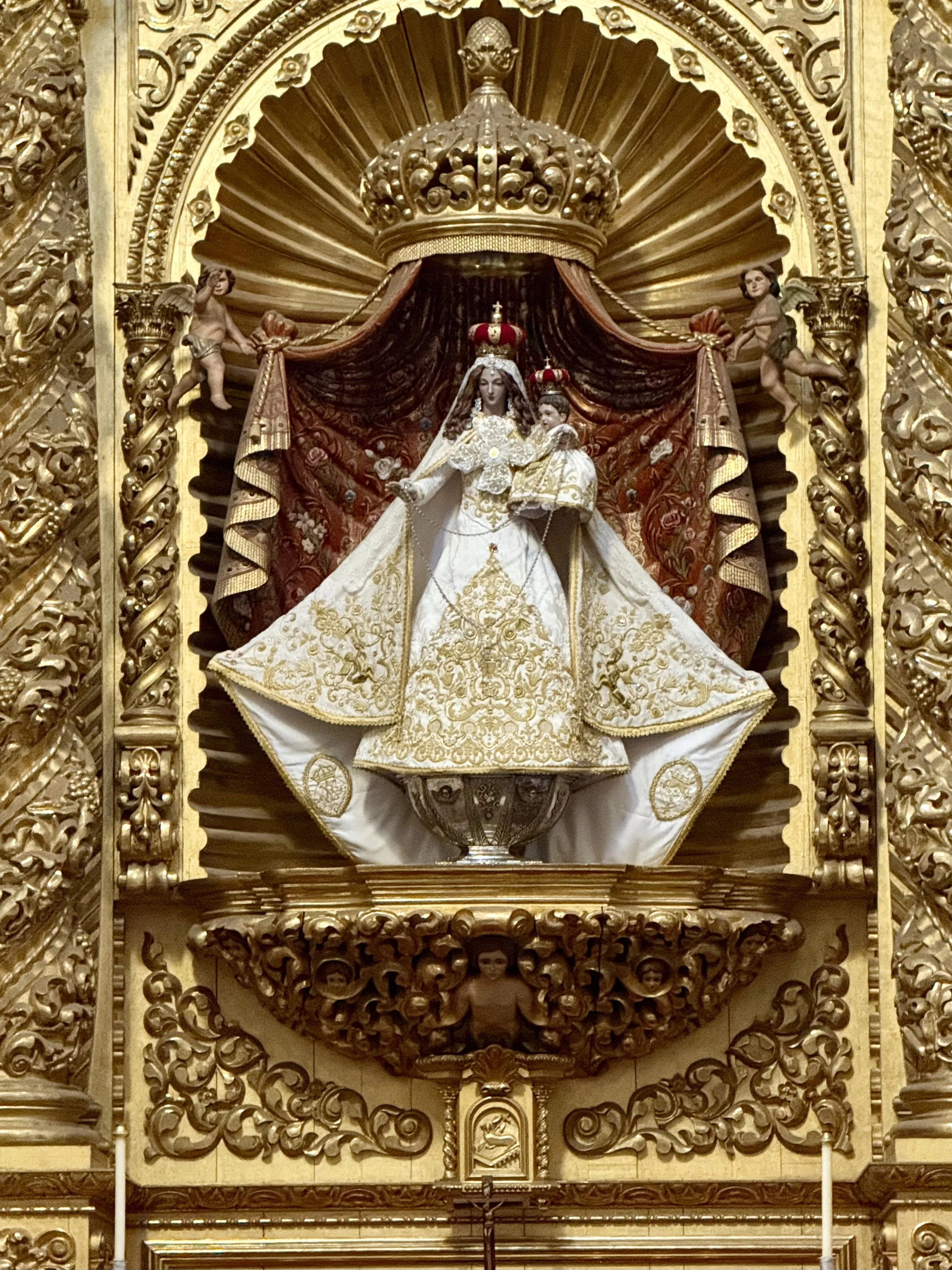
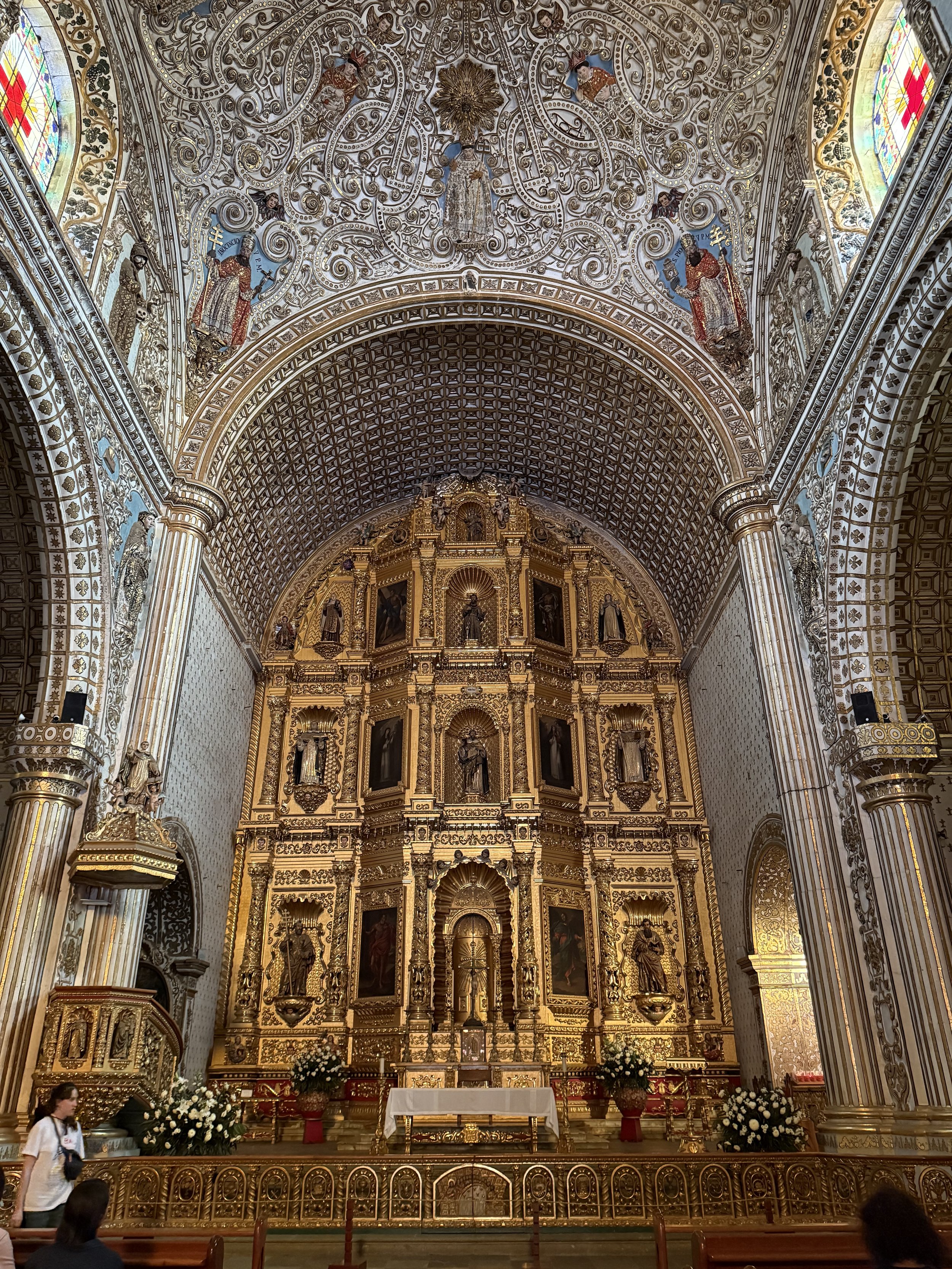
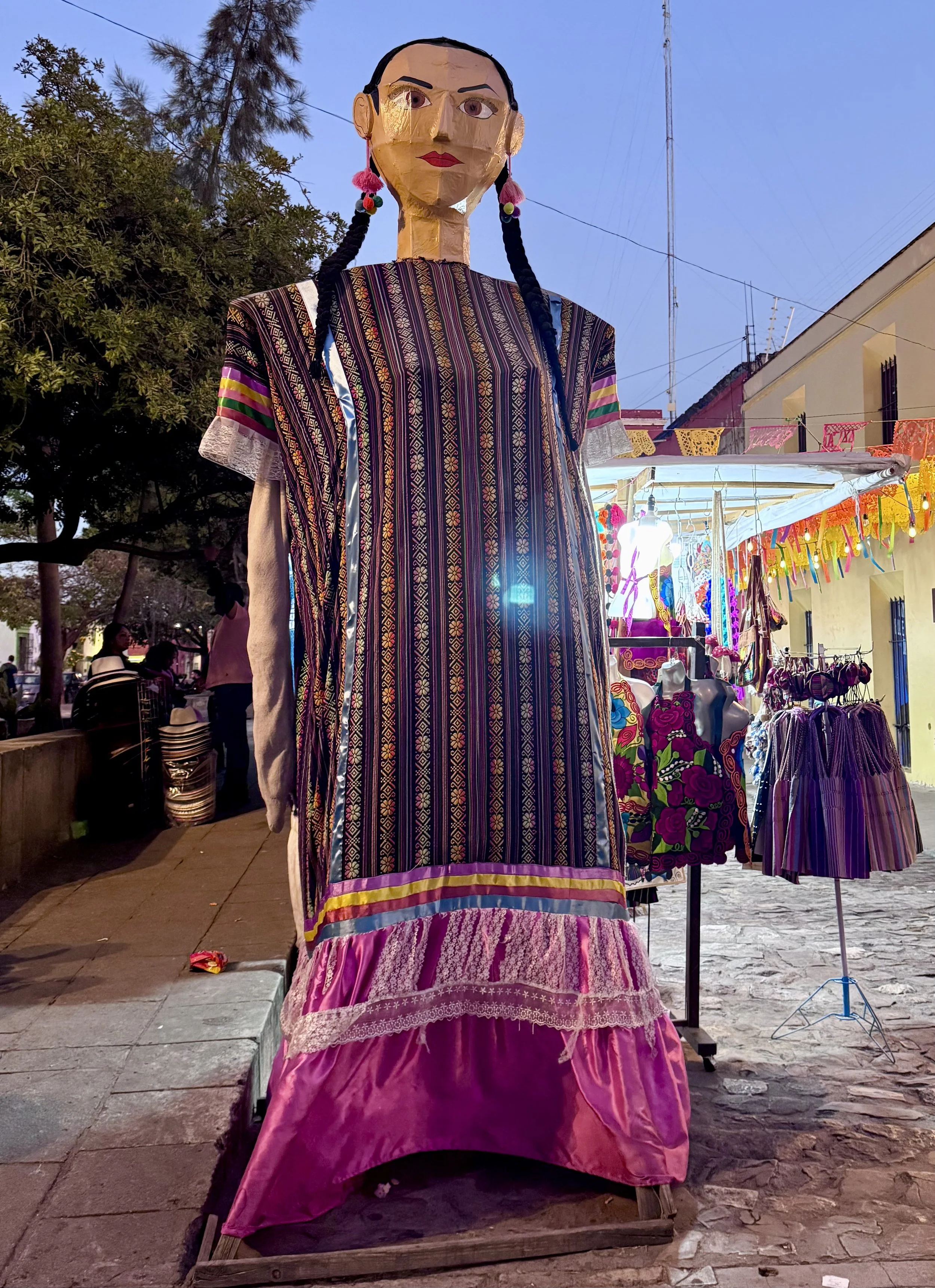
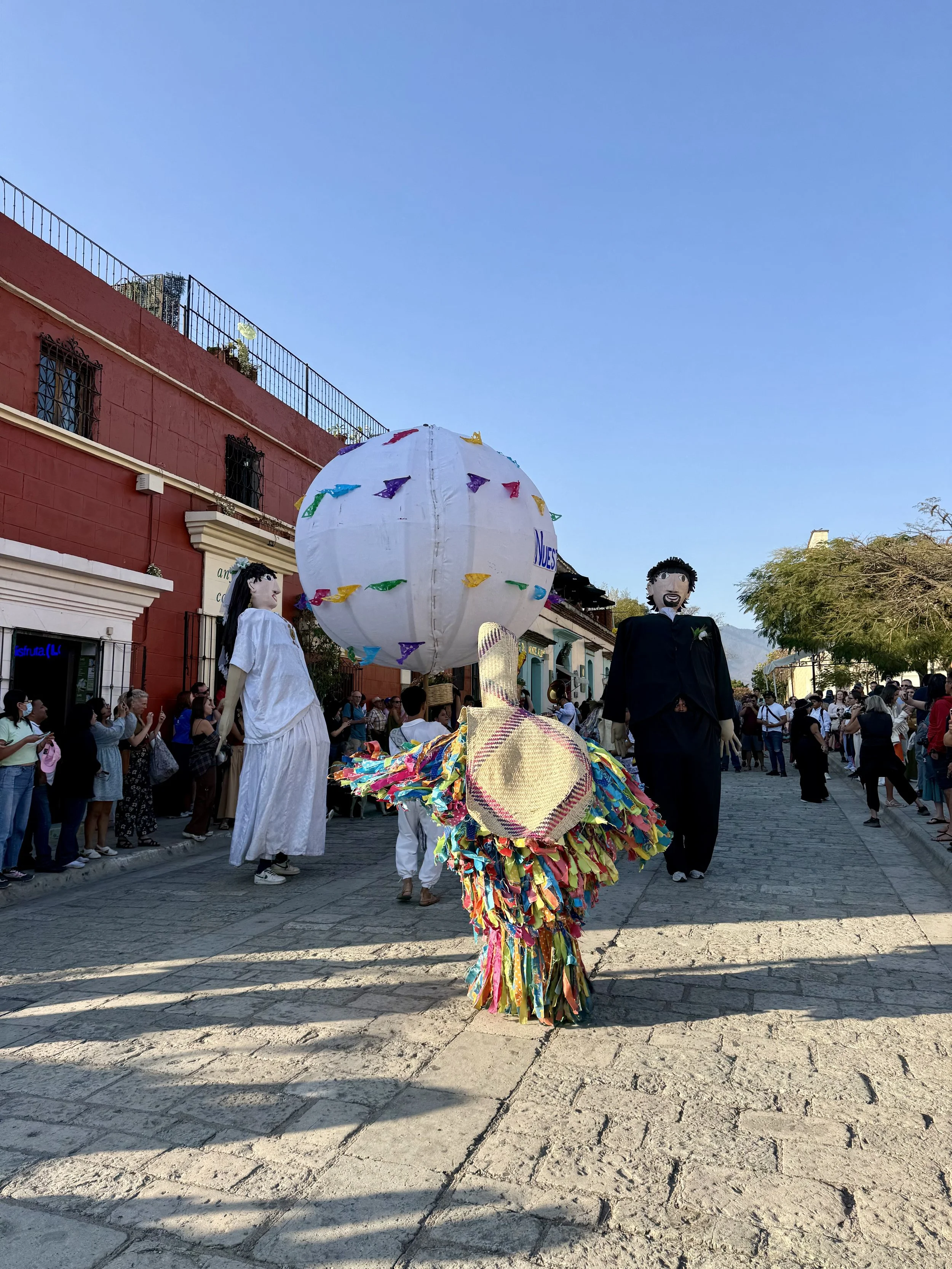
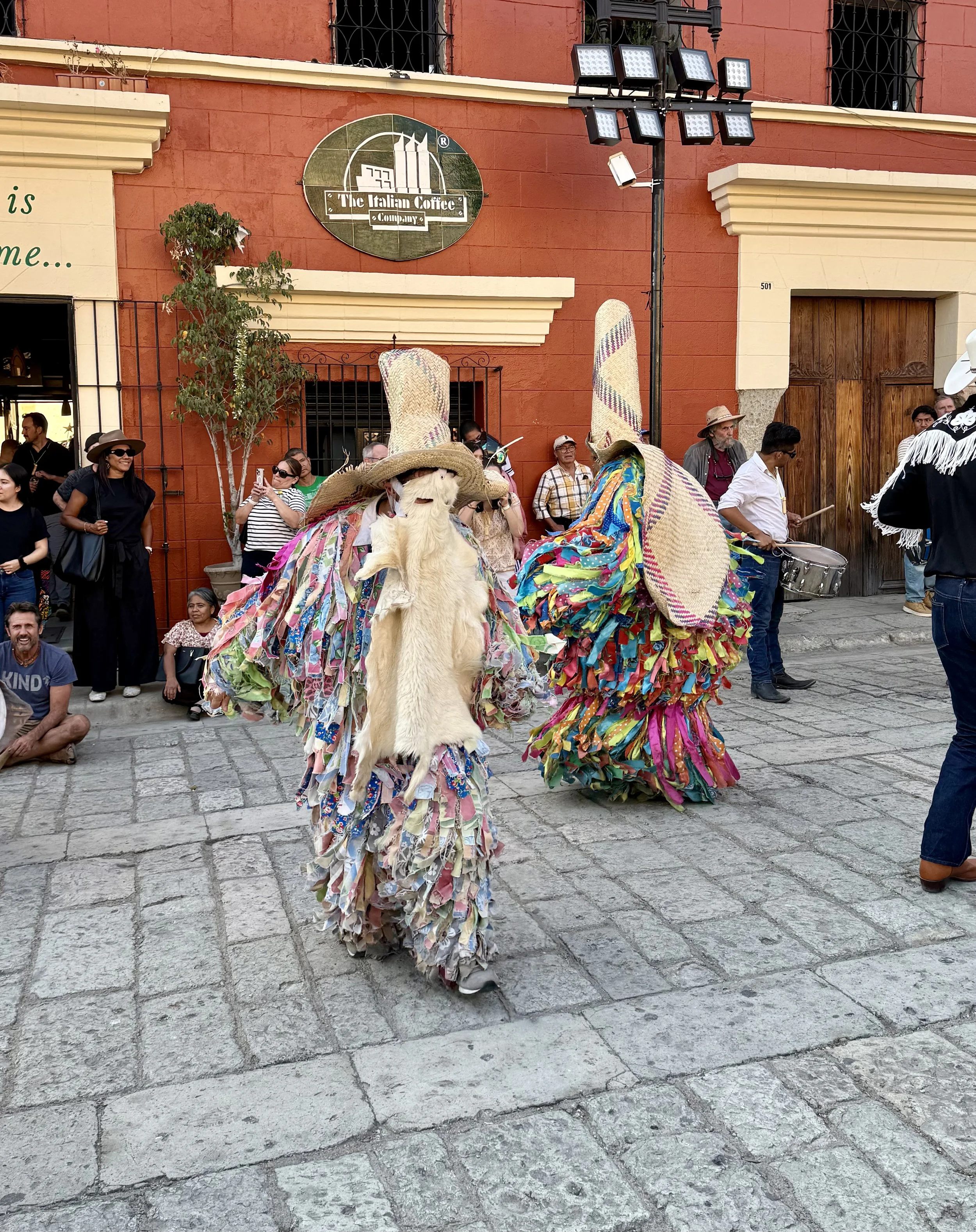
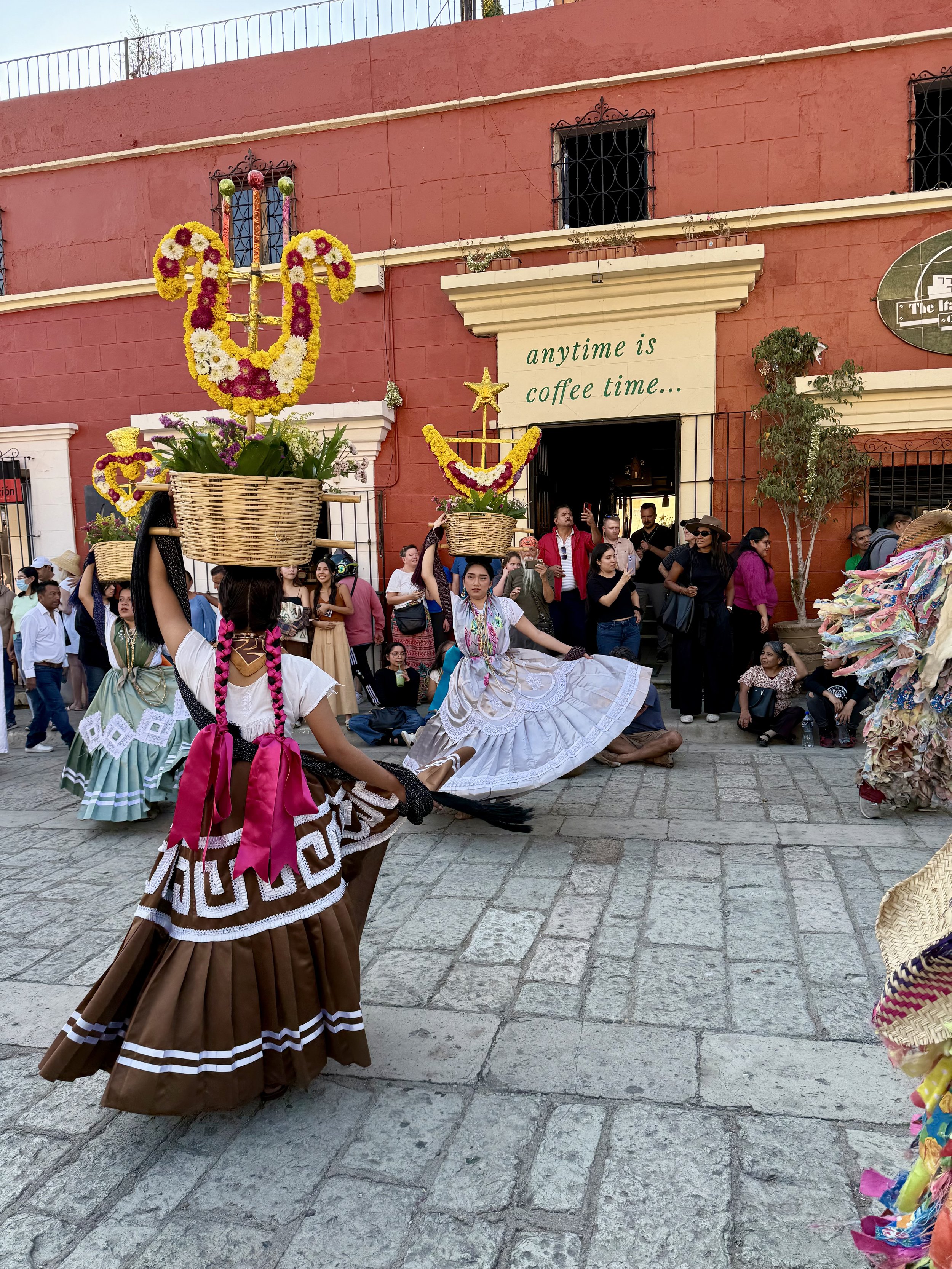
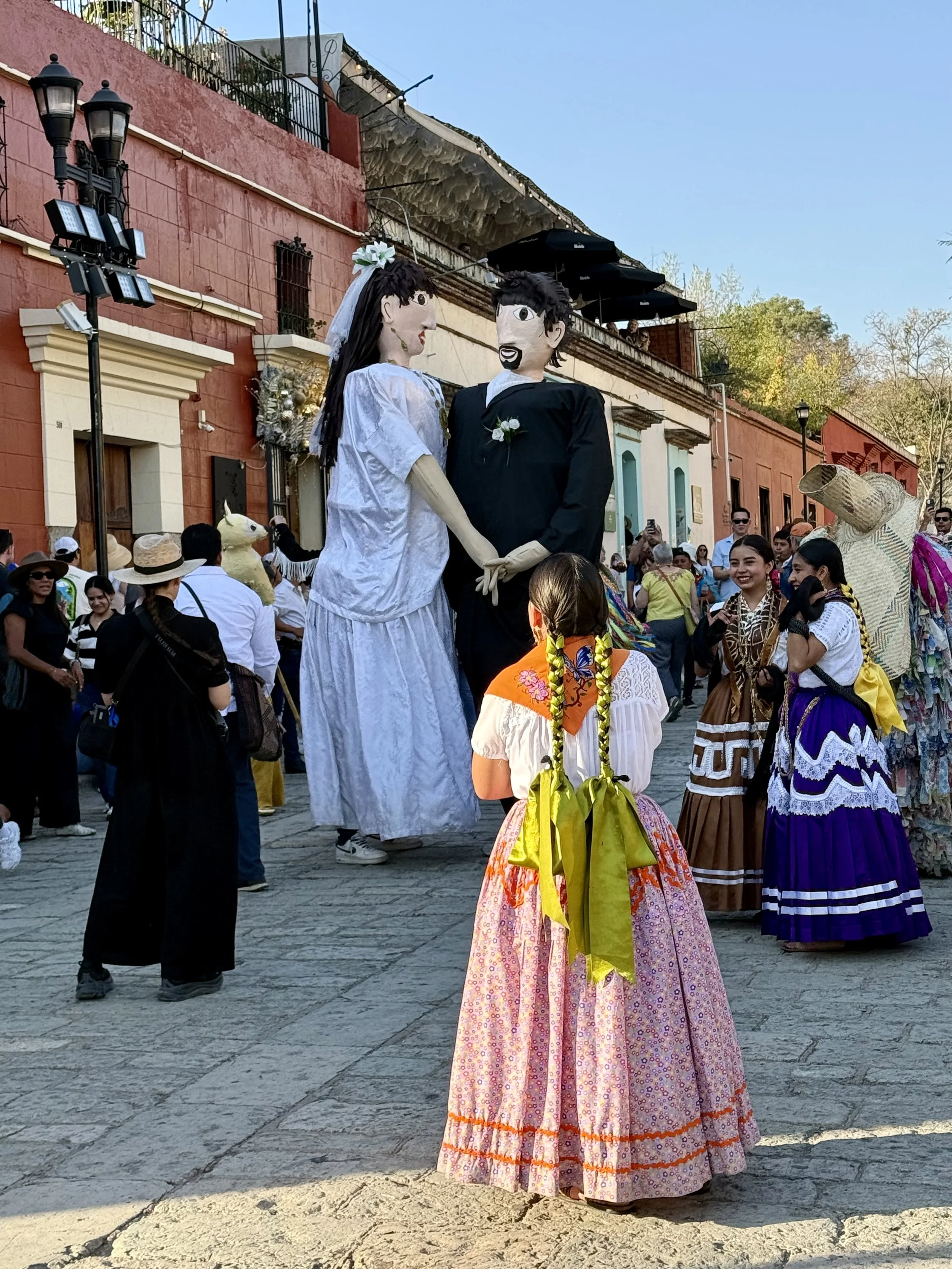
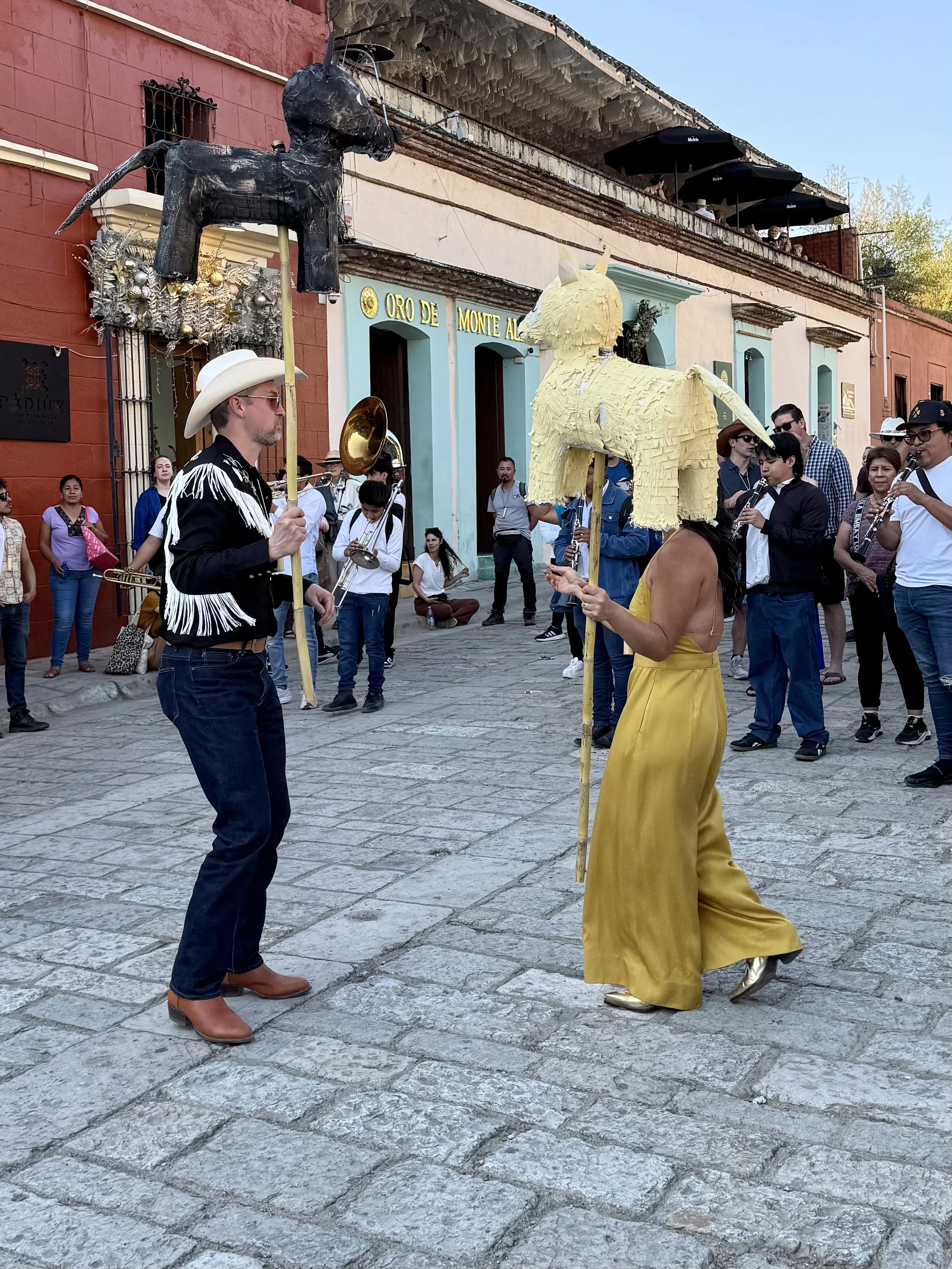
Weddings offer a very vibrant experience and seem to be very popular among gringos…
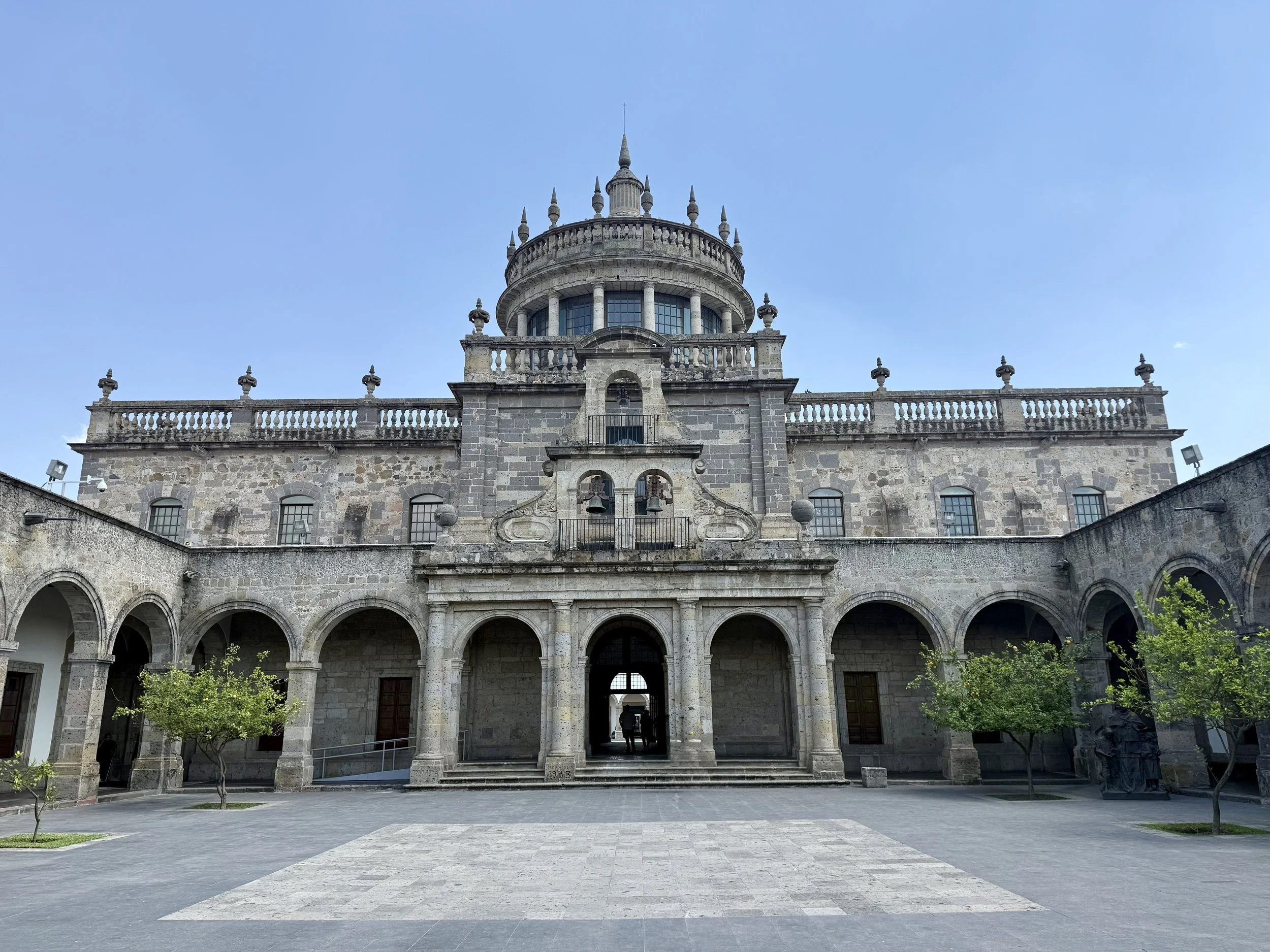
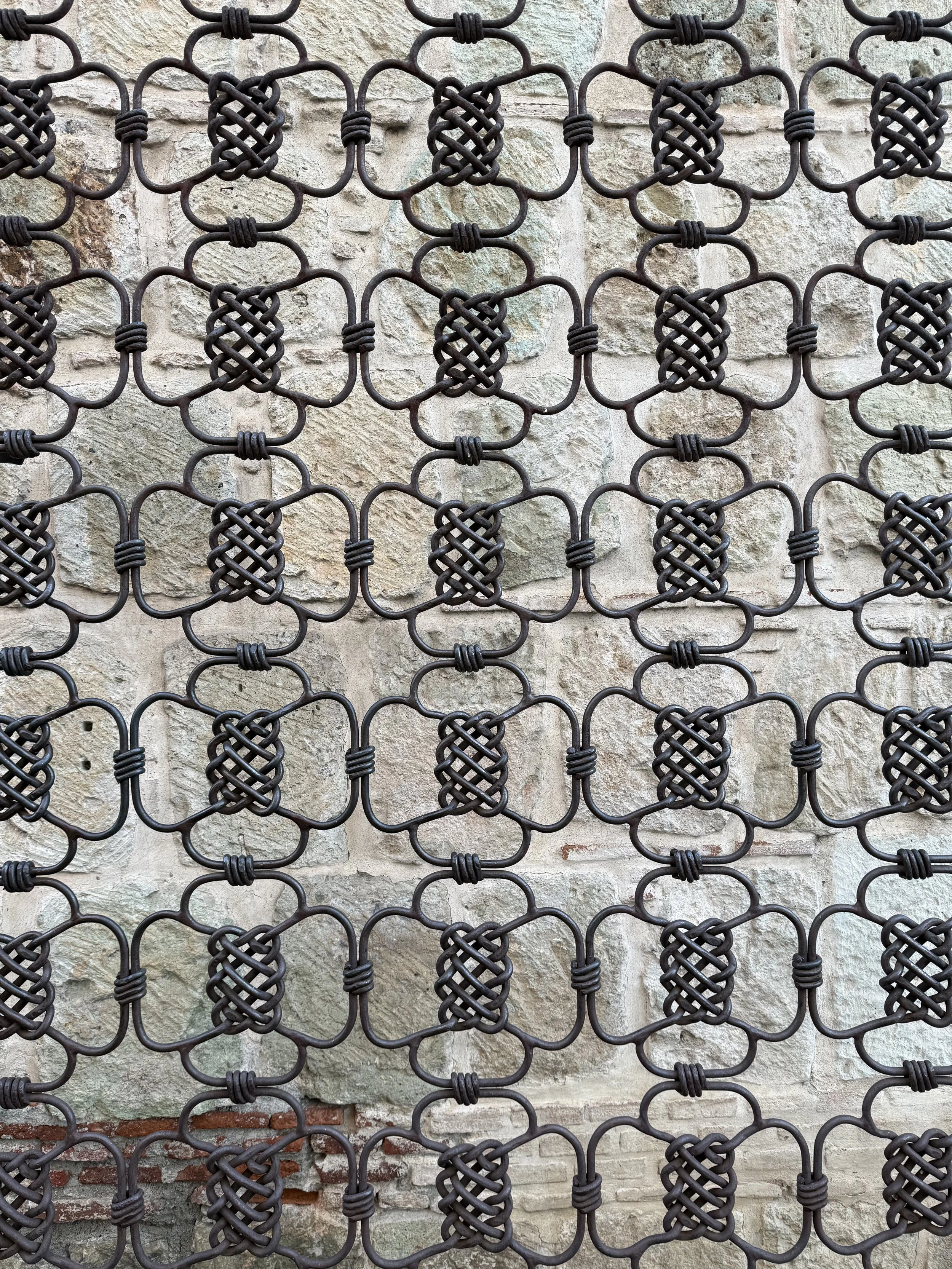
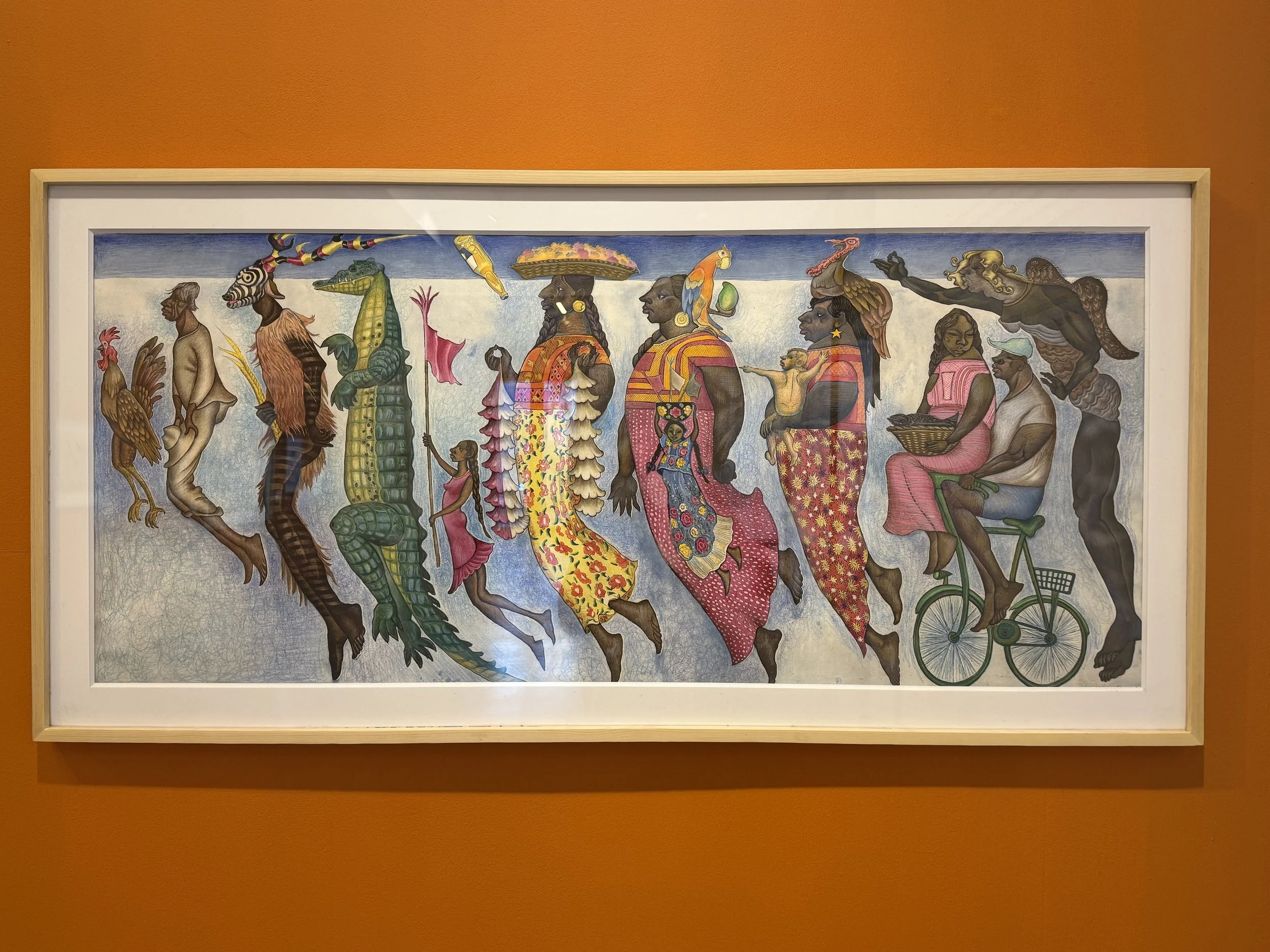
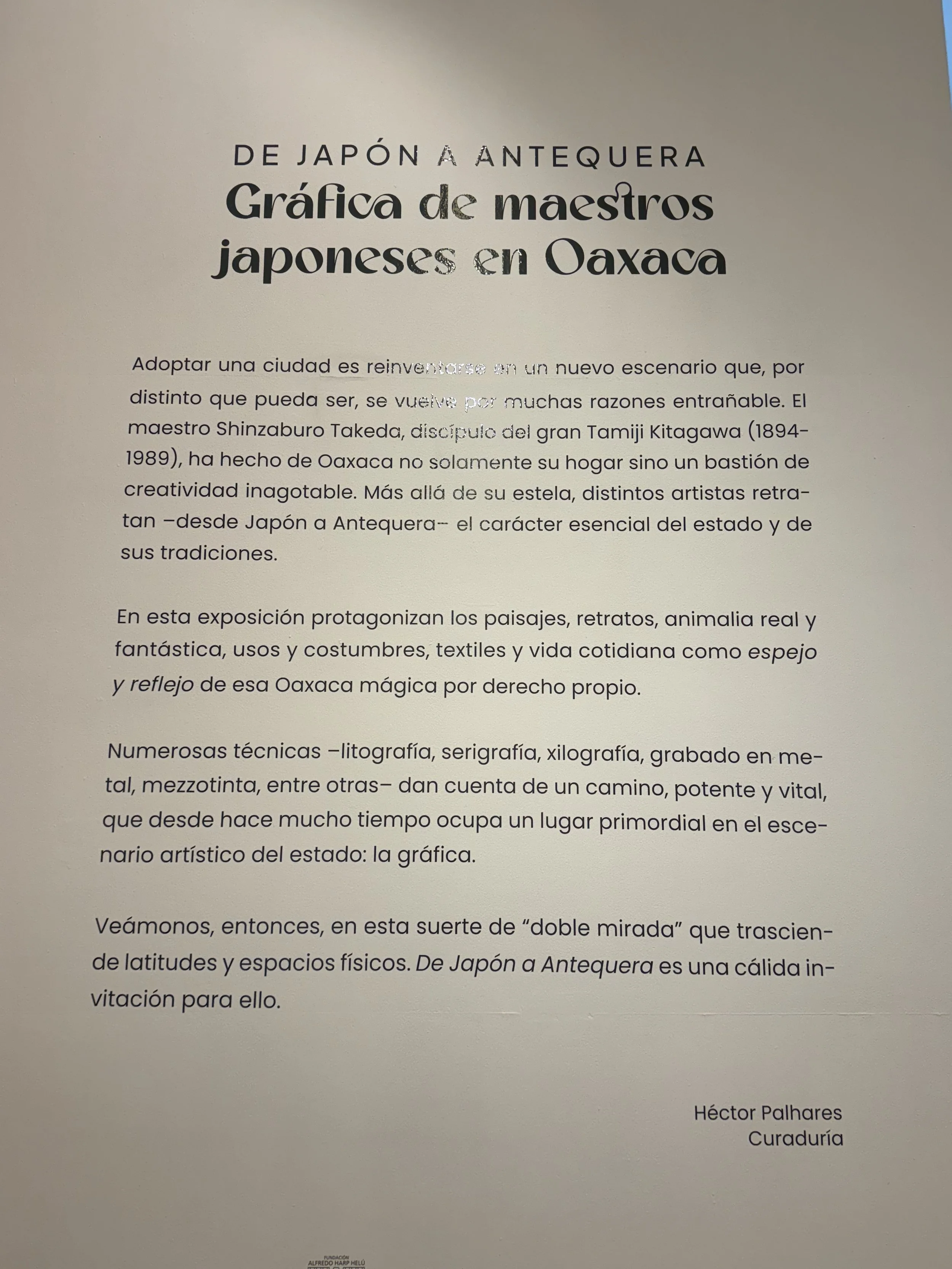
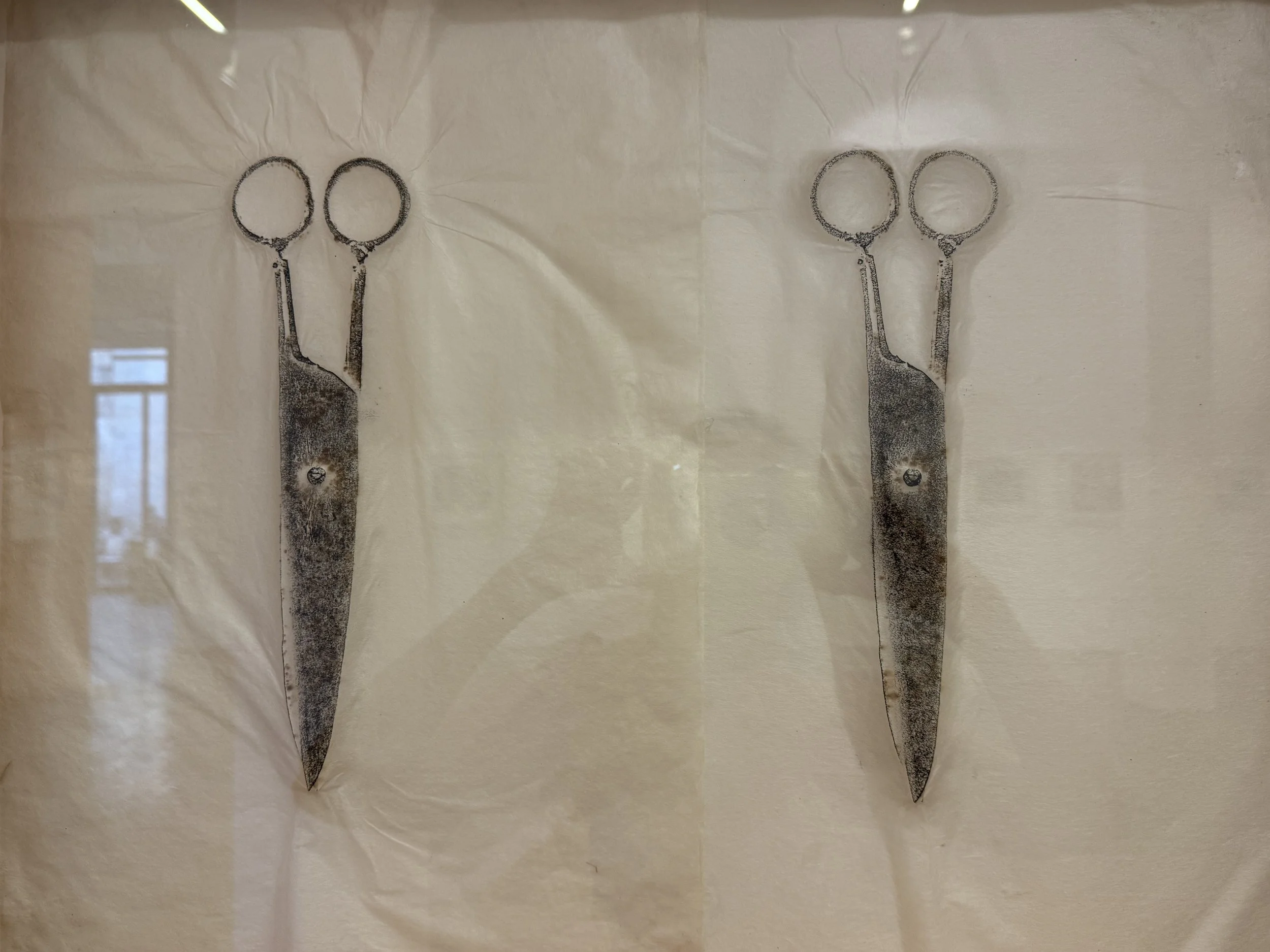
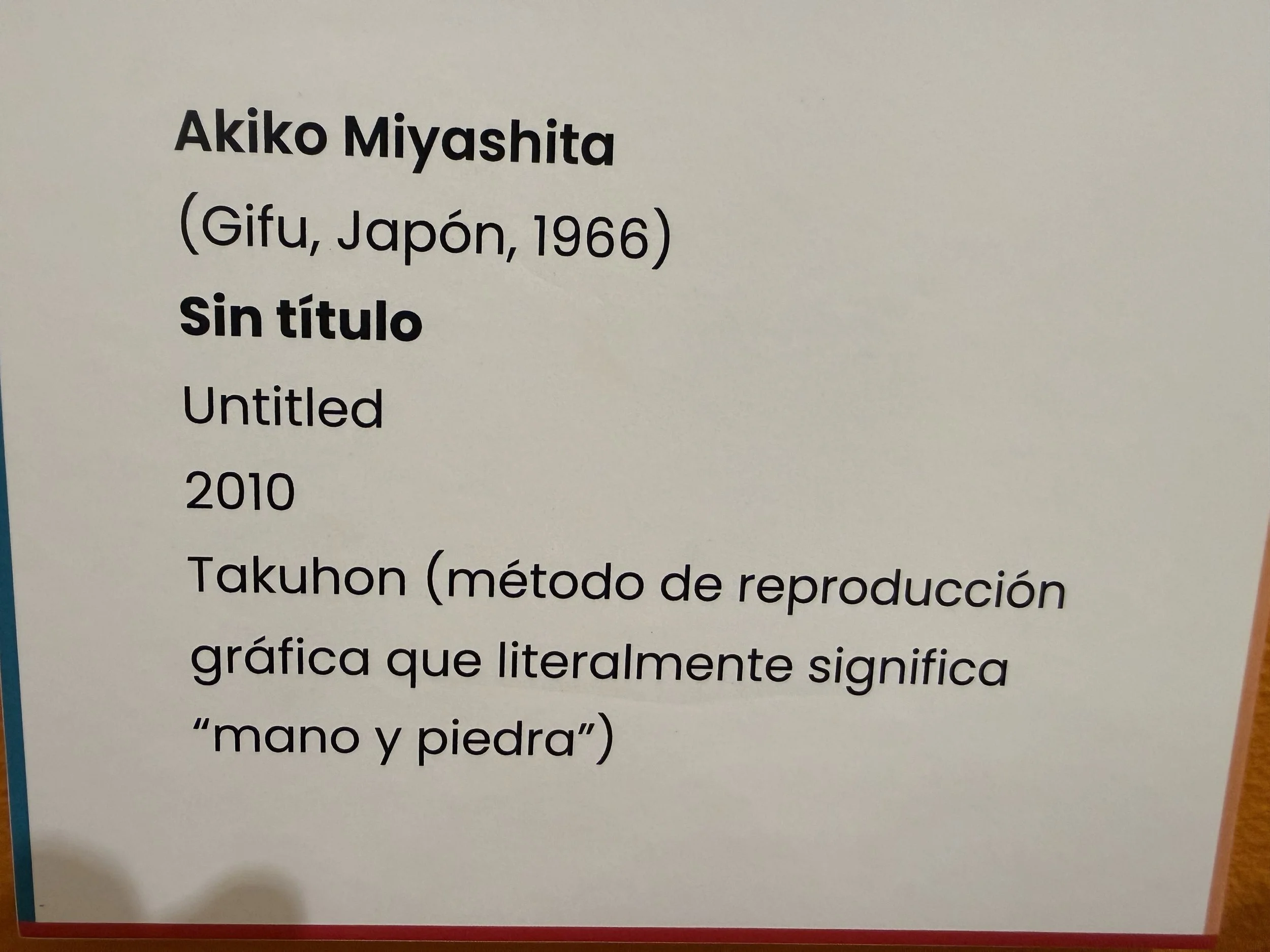
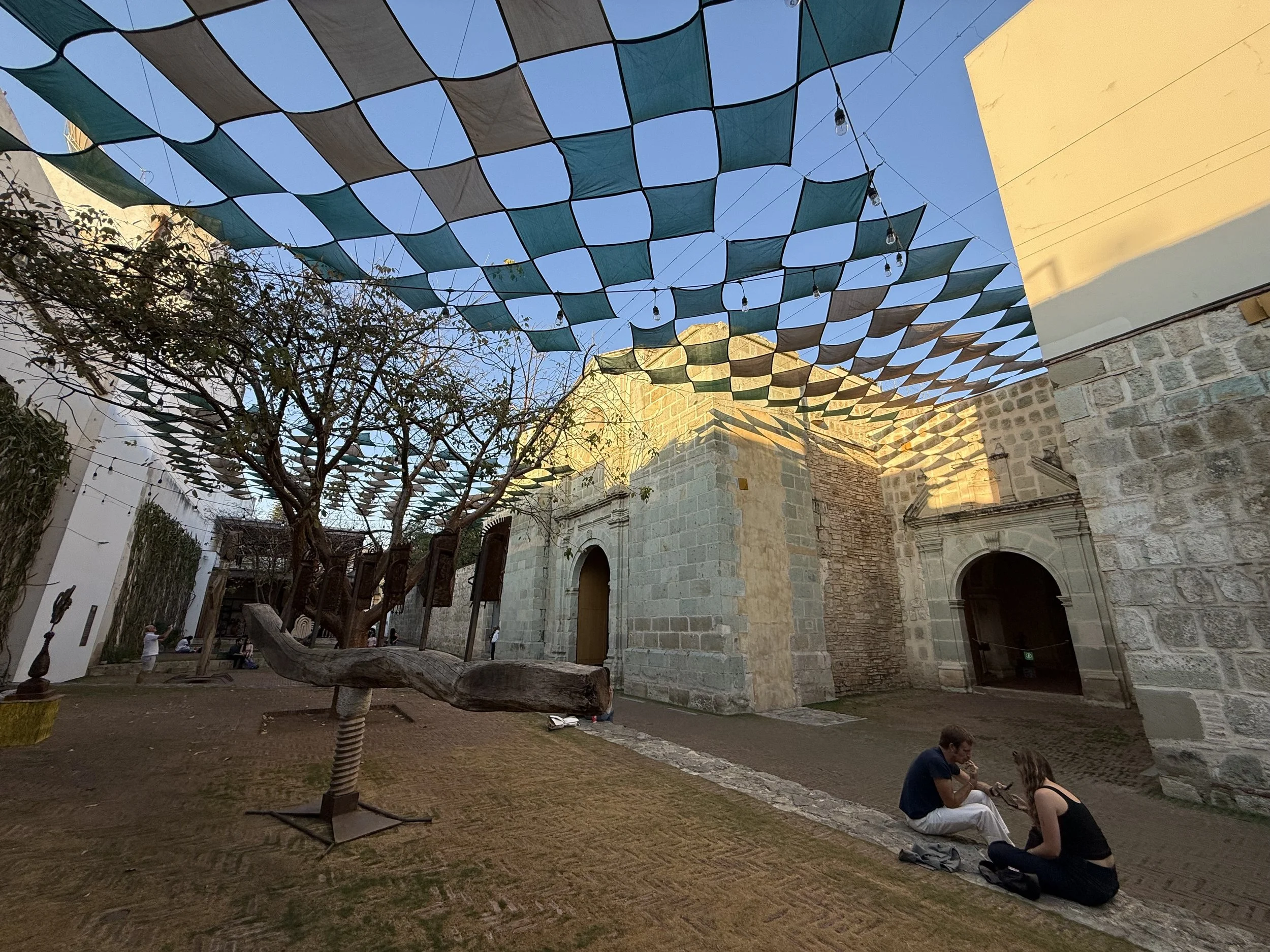
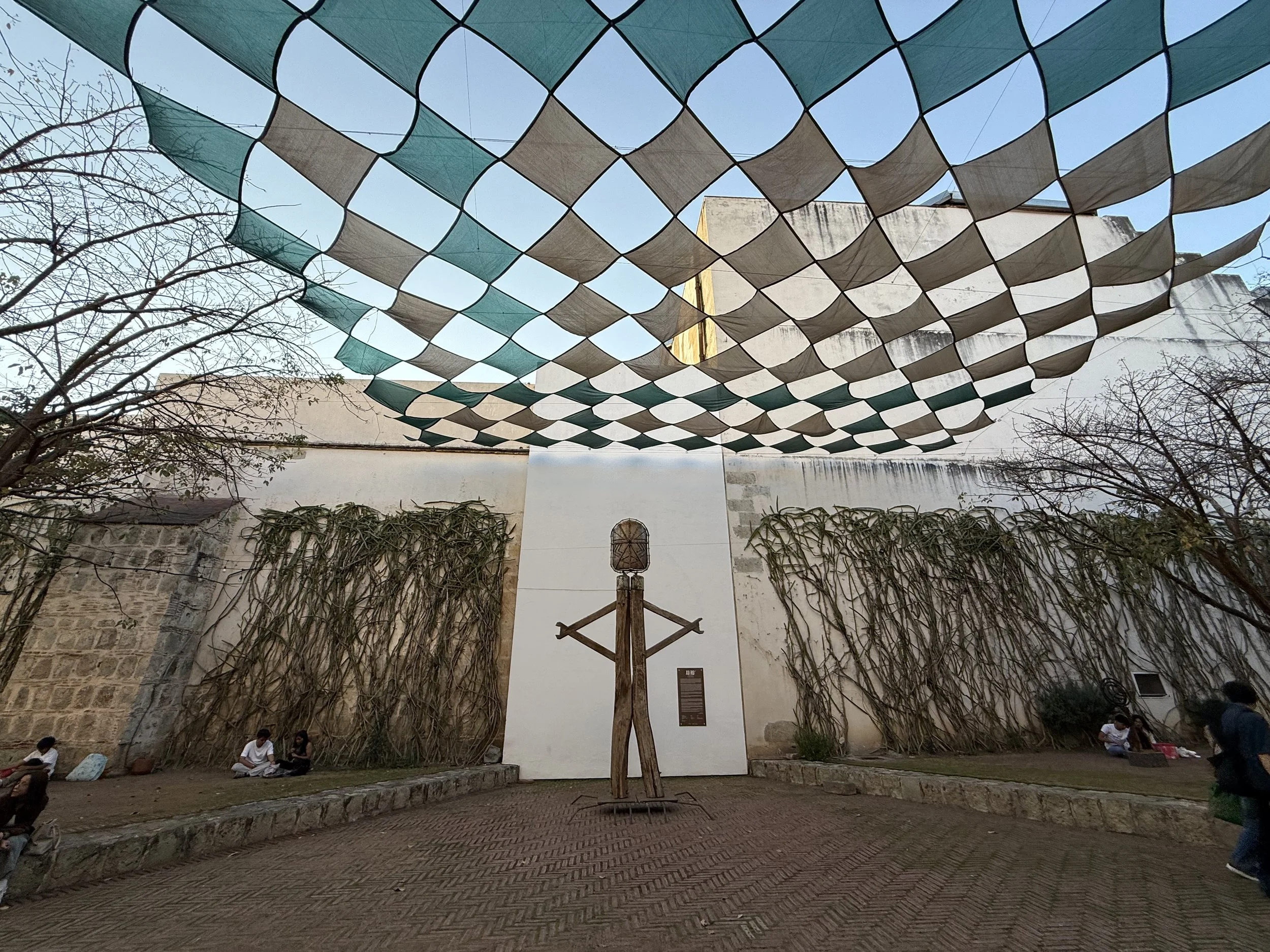
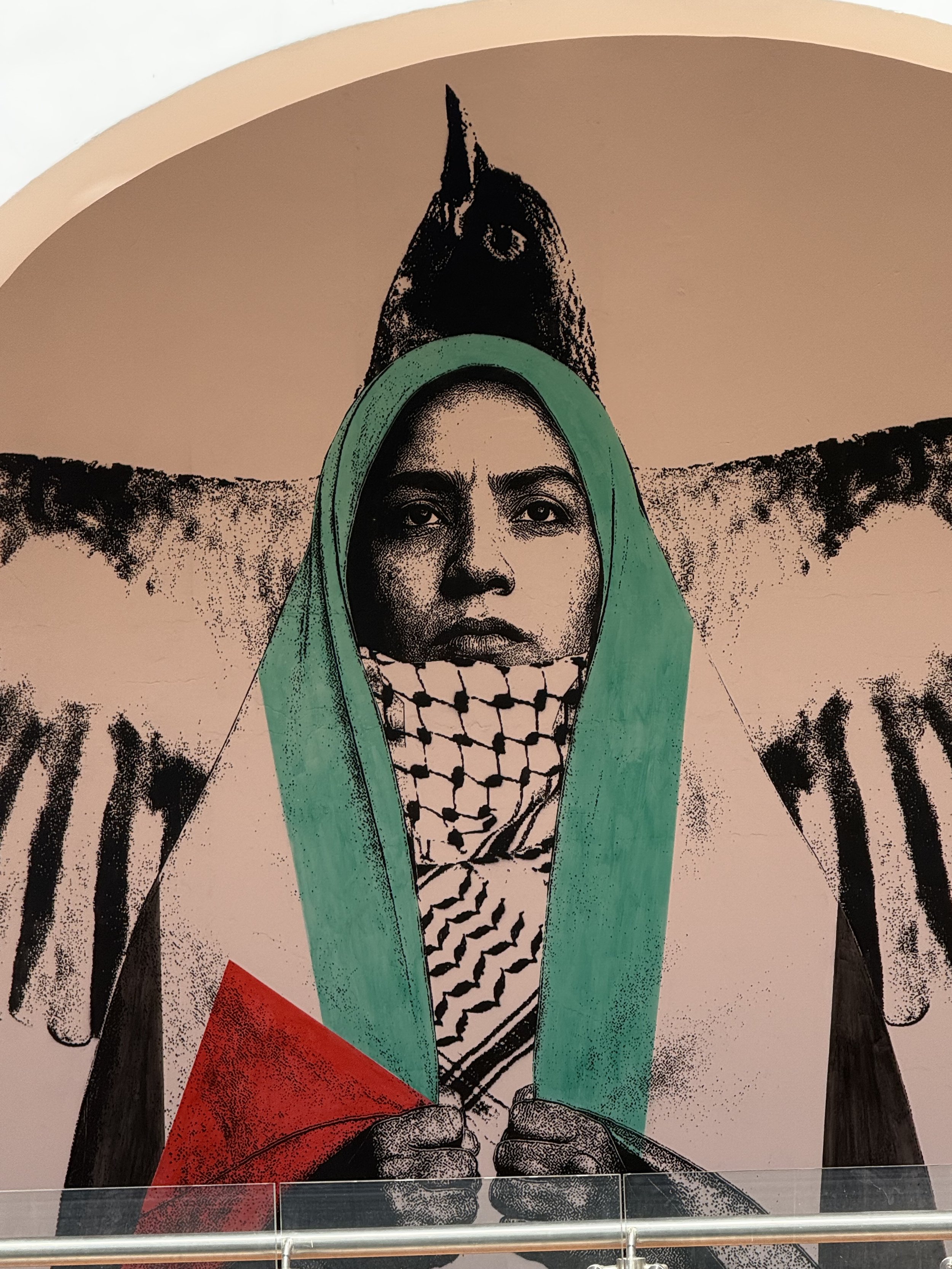
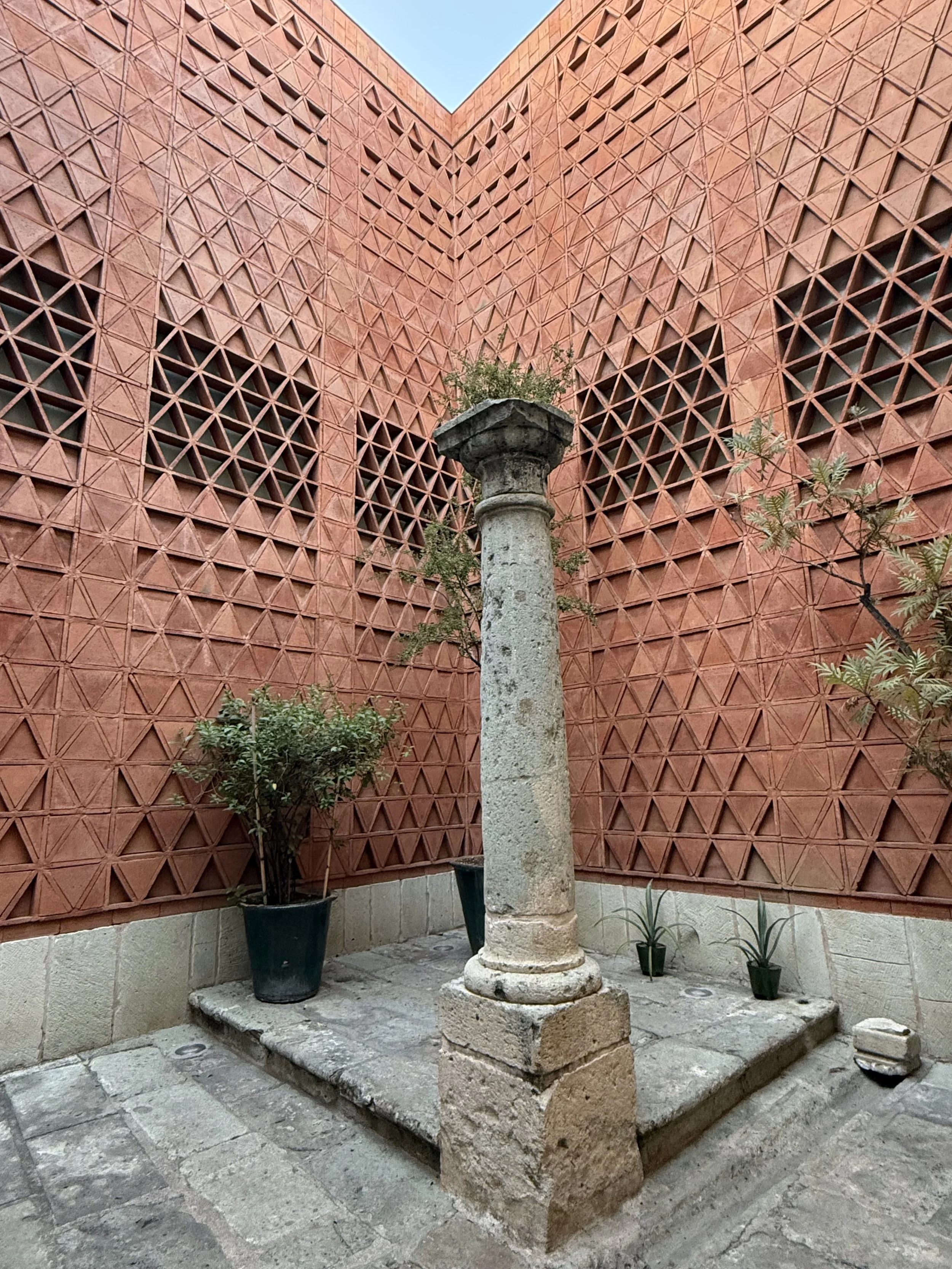
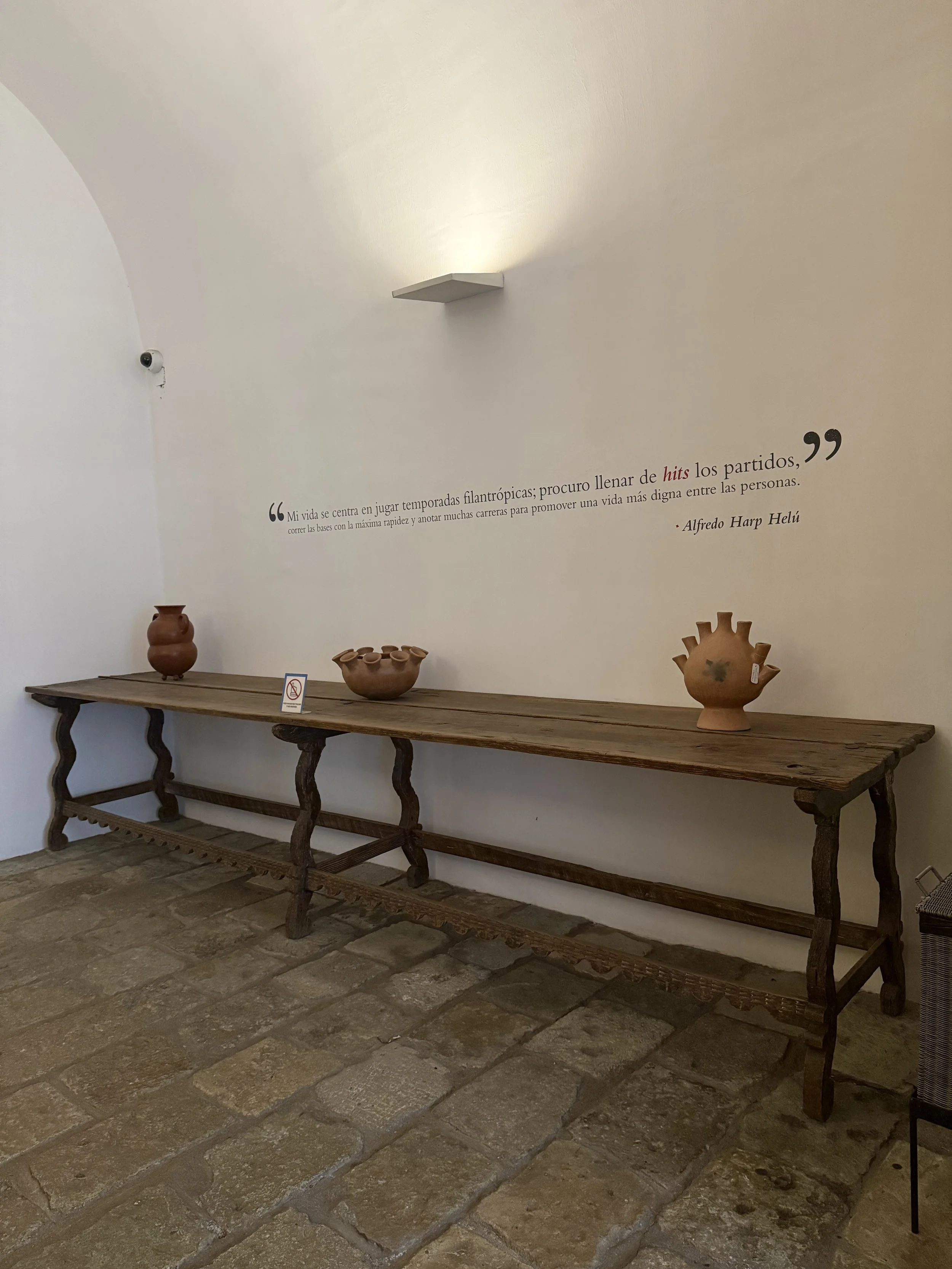
Very interesting museums: El Centro Fotográfico Manuel Alvarez Bravo, El Centro Academico y Cultural San Pablo & El Muséo Textil de Oaxaca. Also lots of galleries.
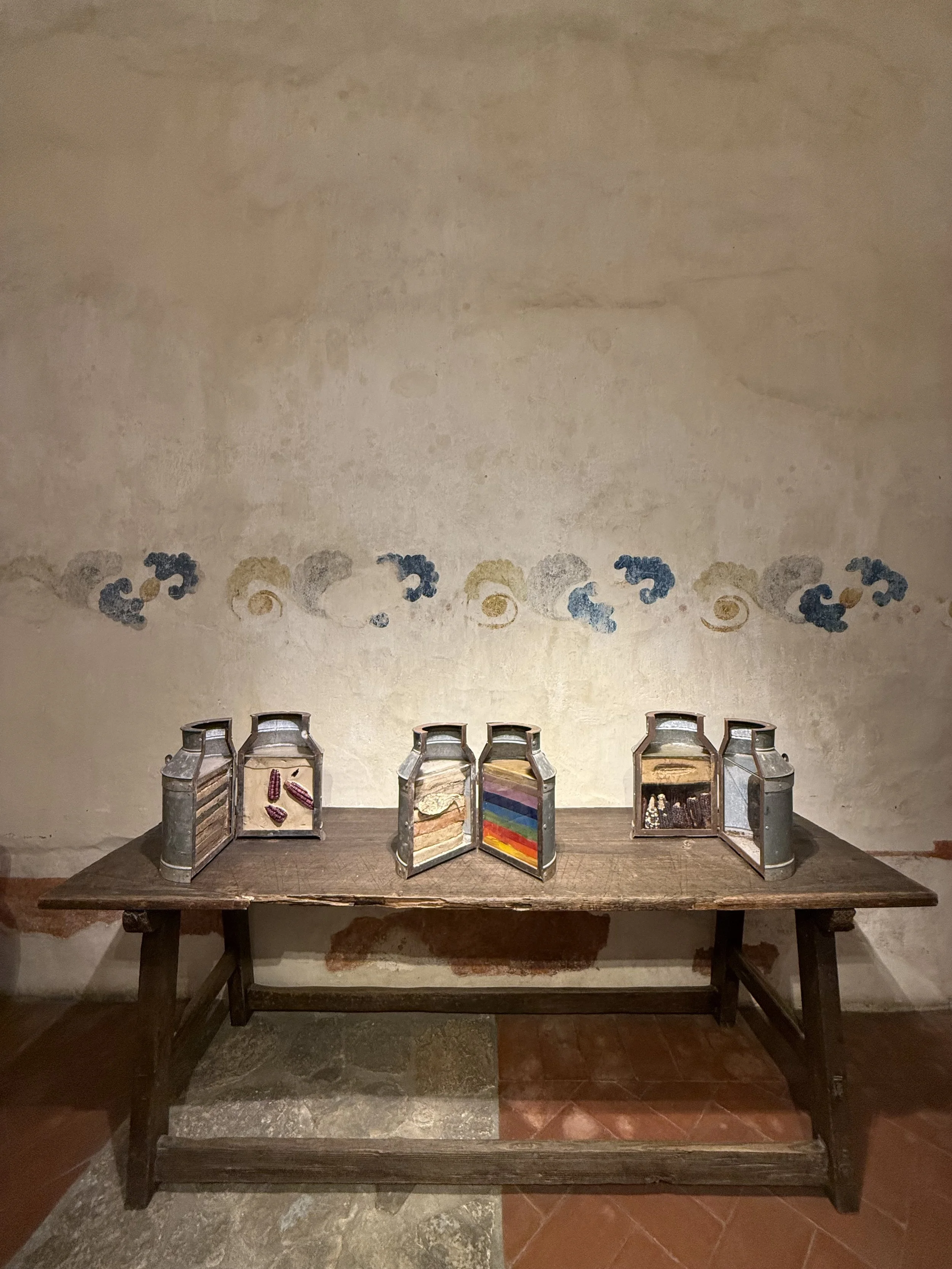
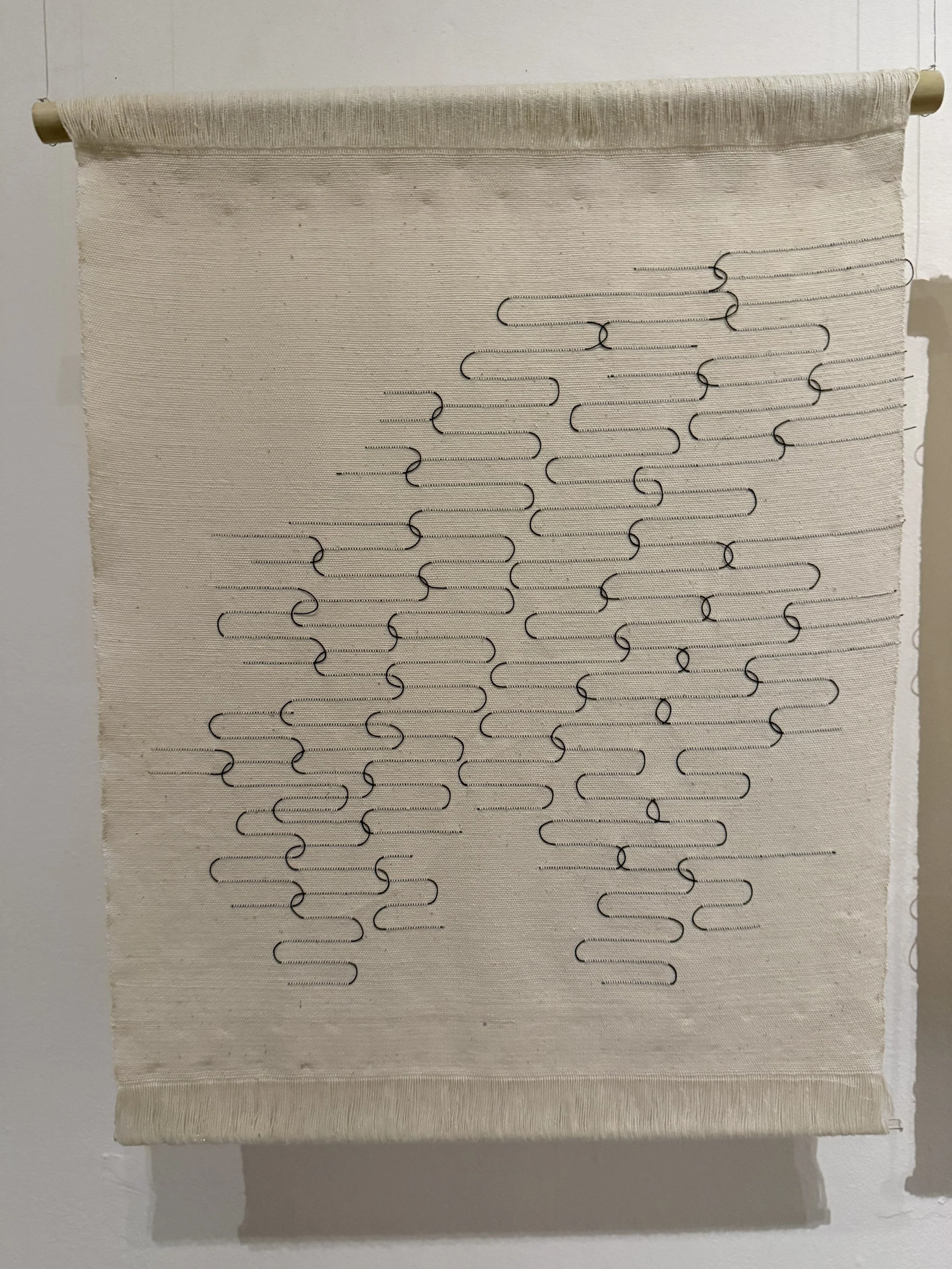
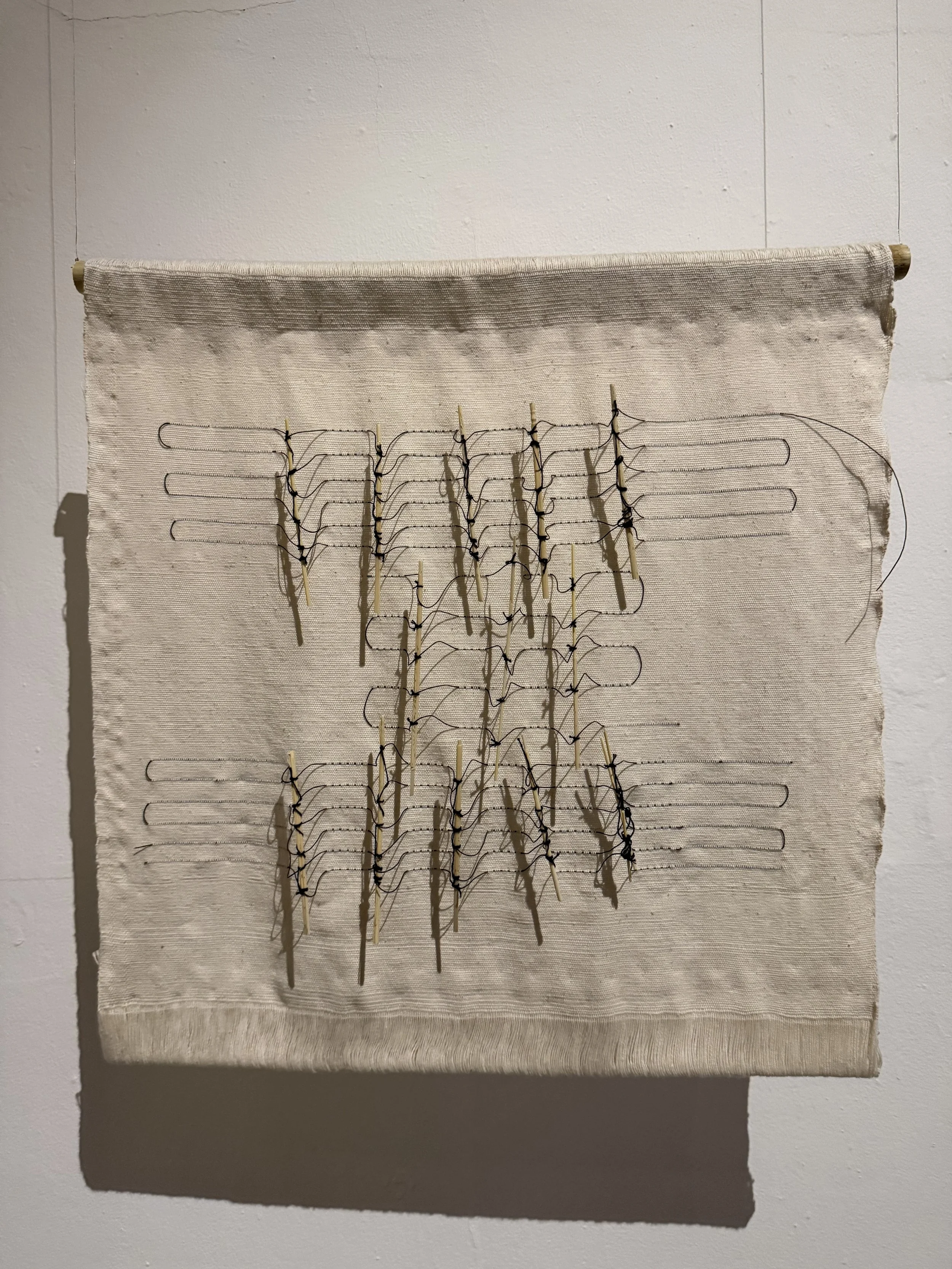
More mercado:
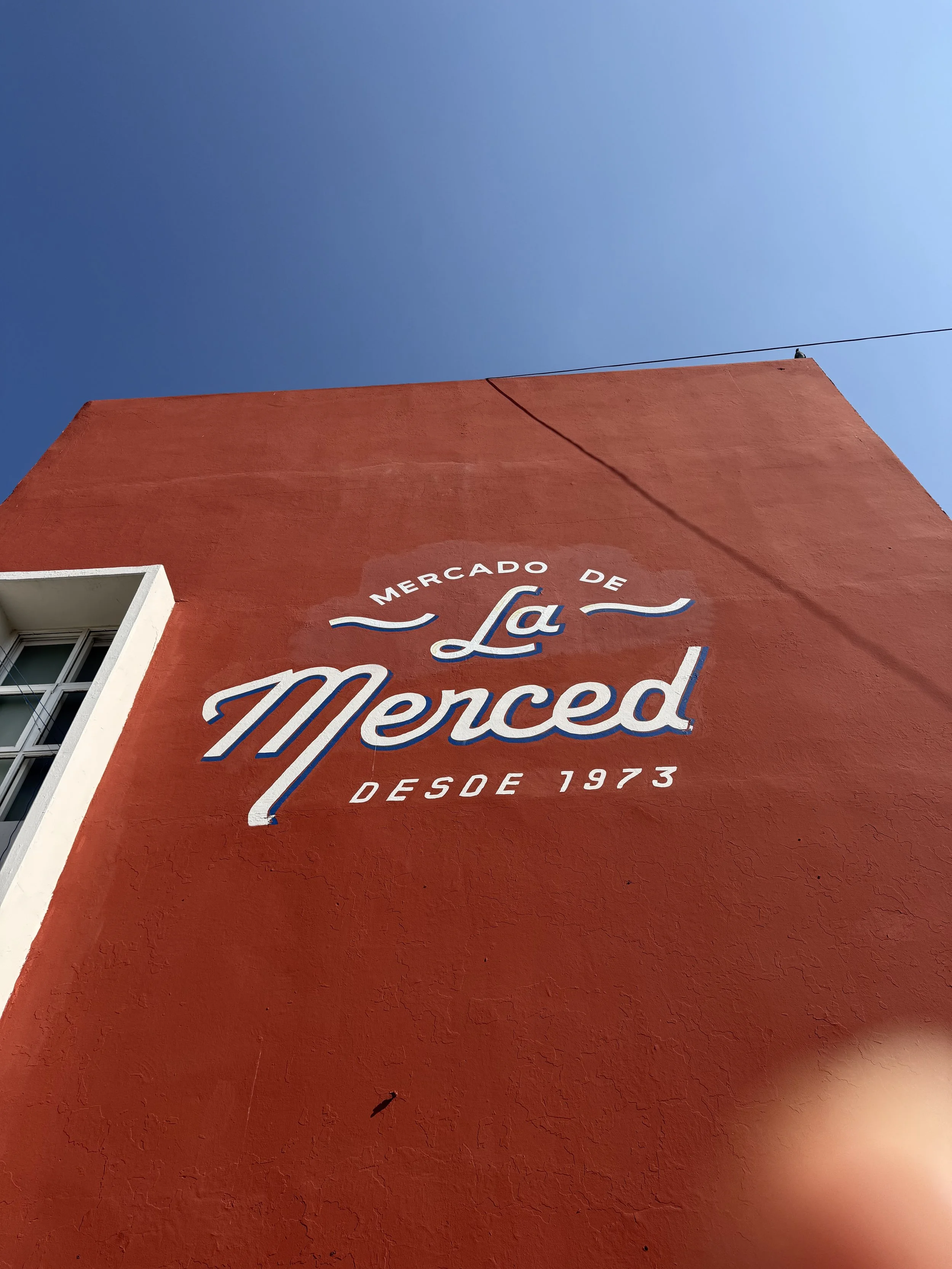
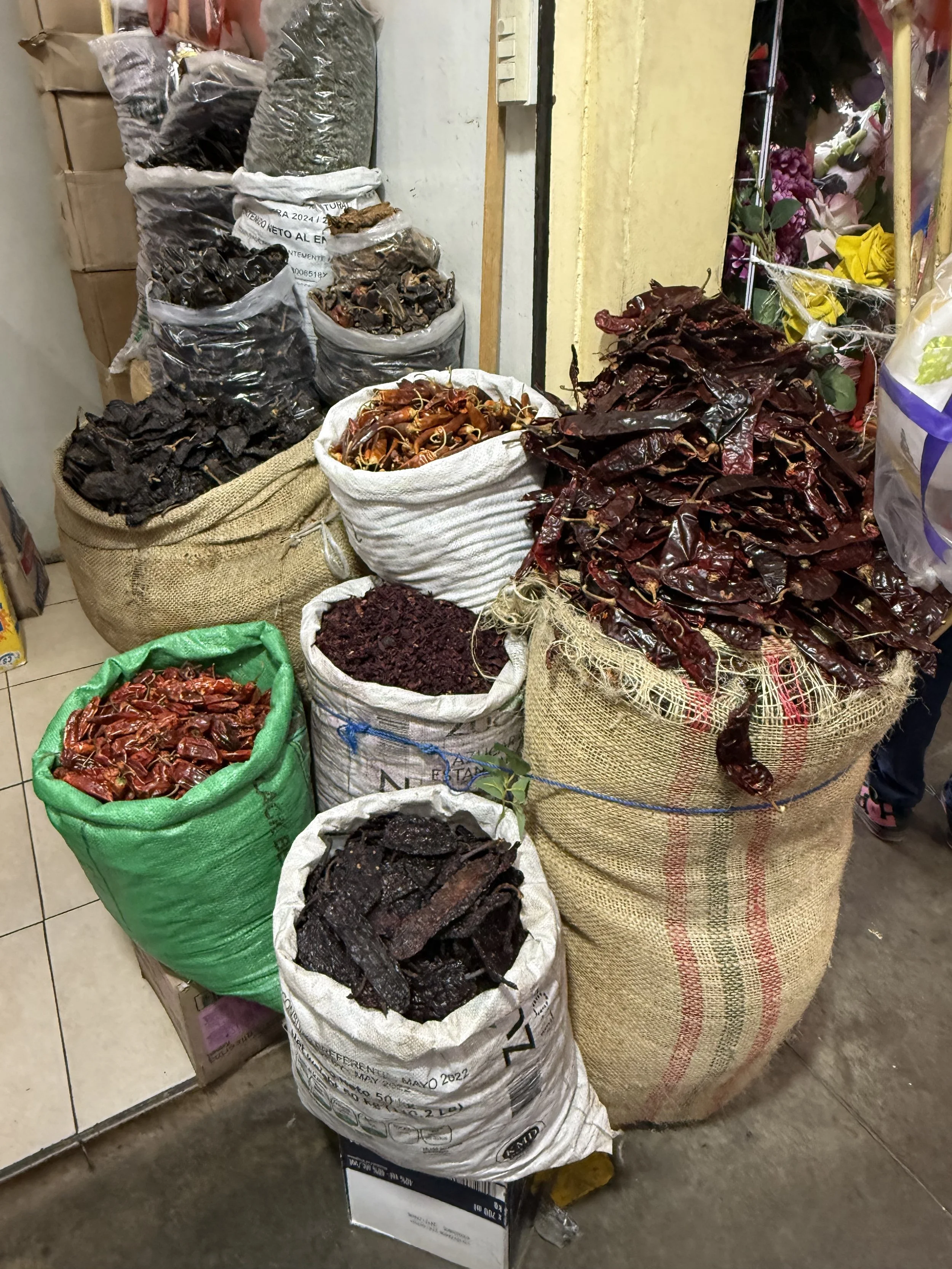
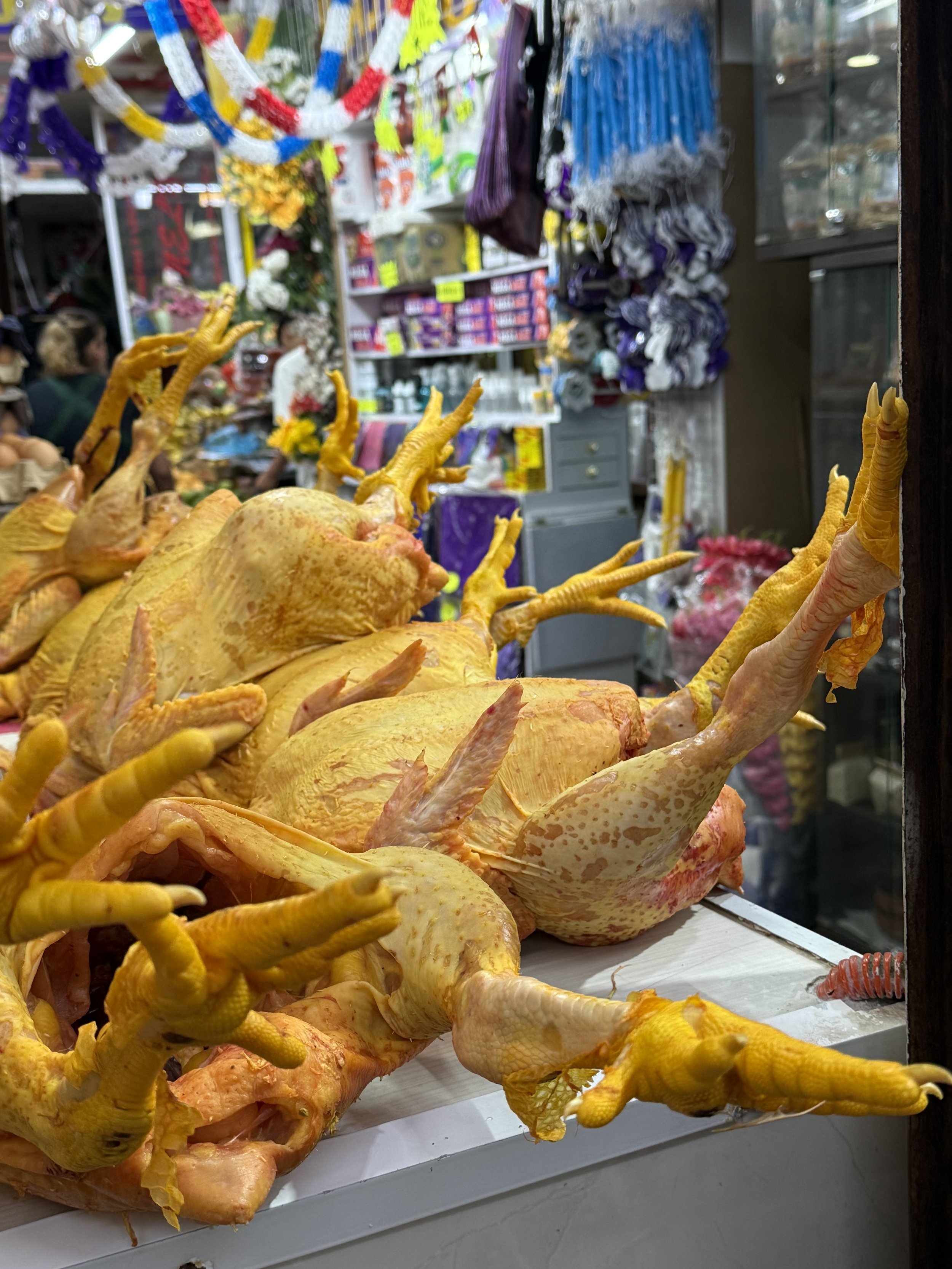
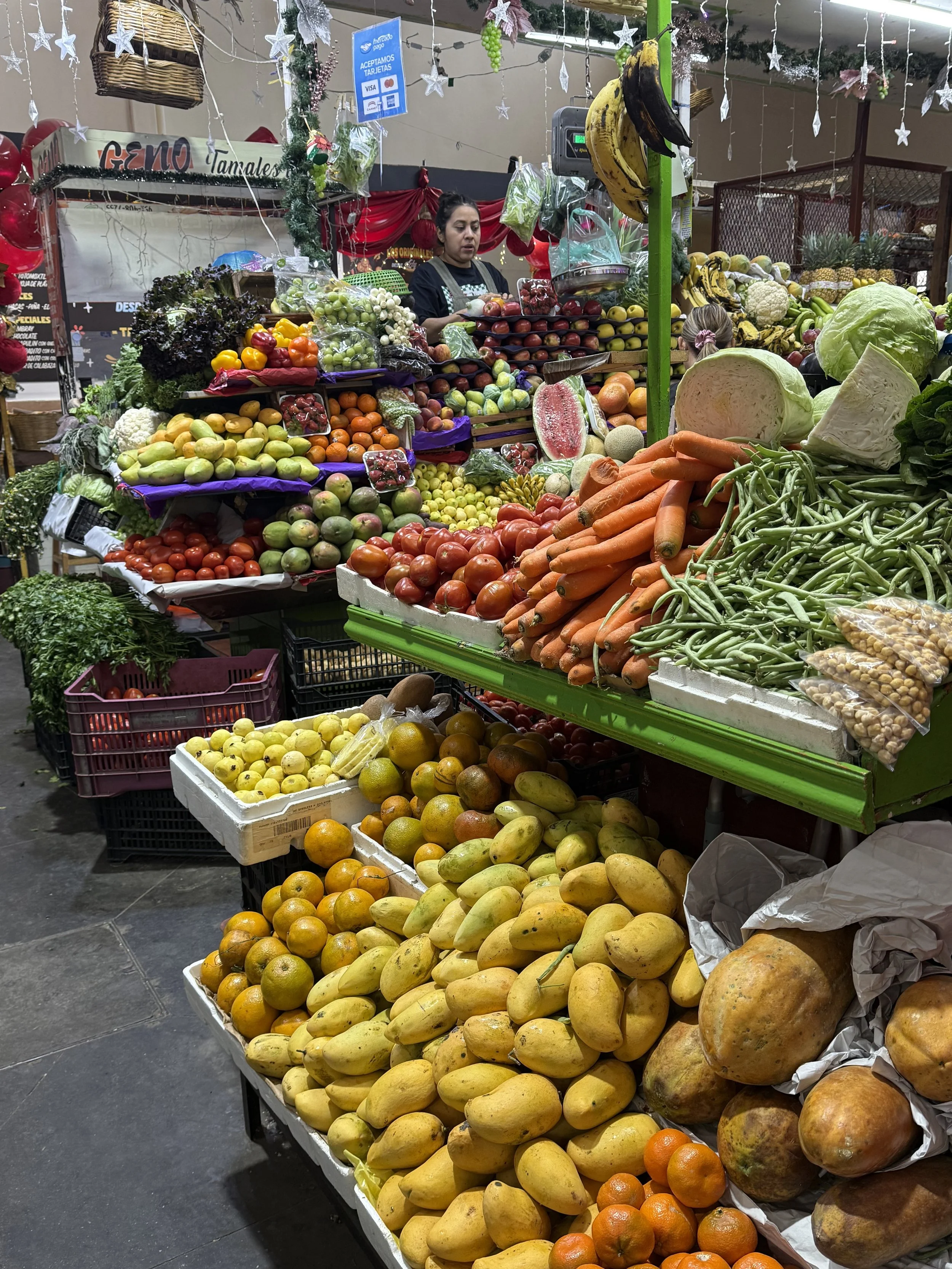
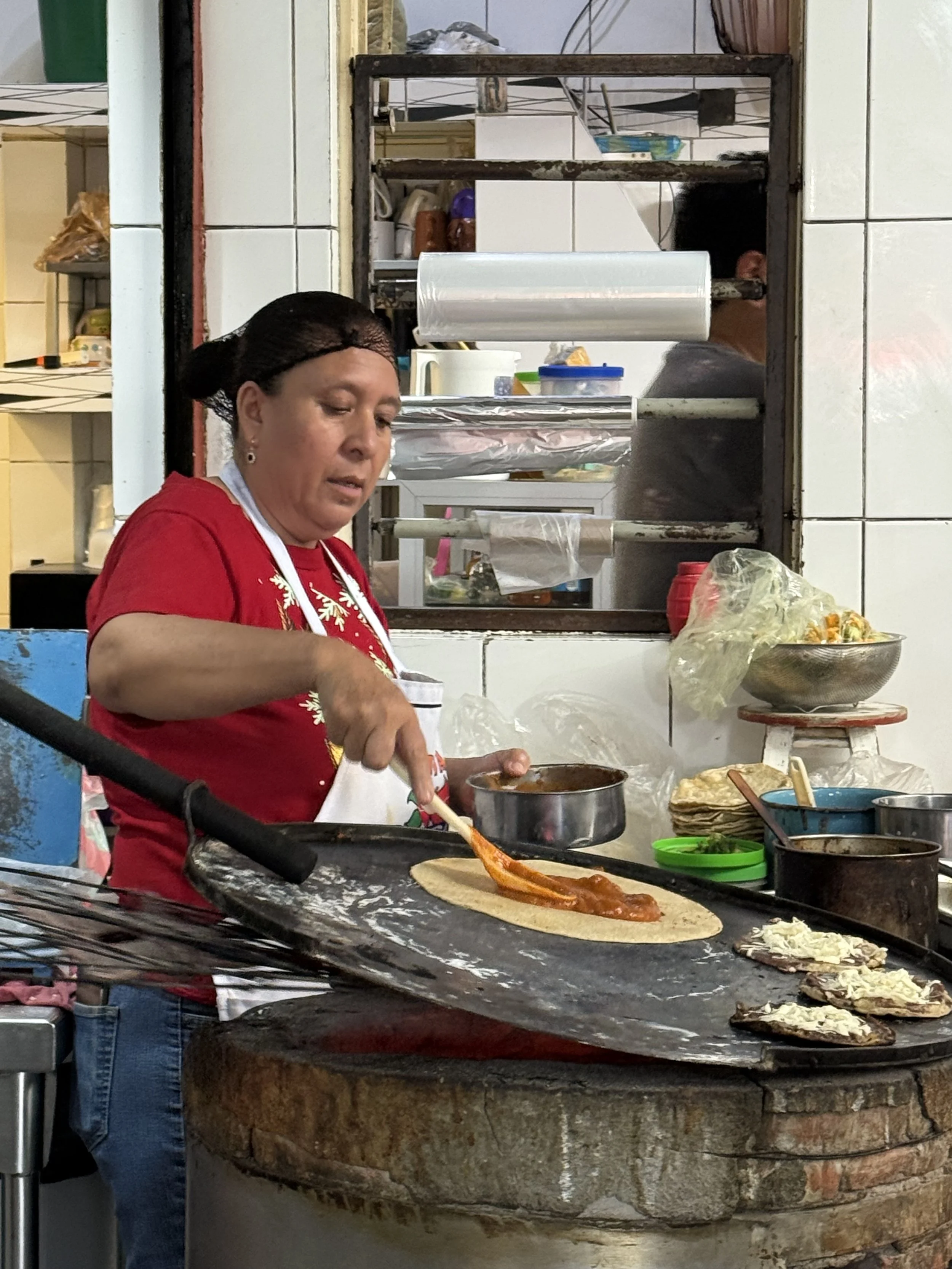
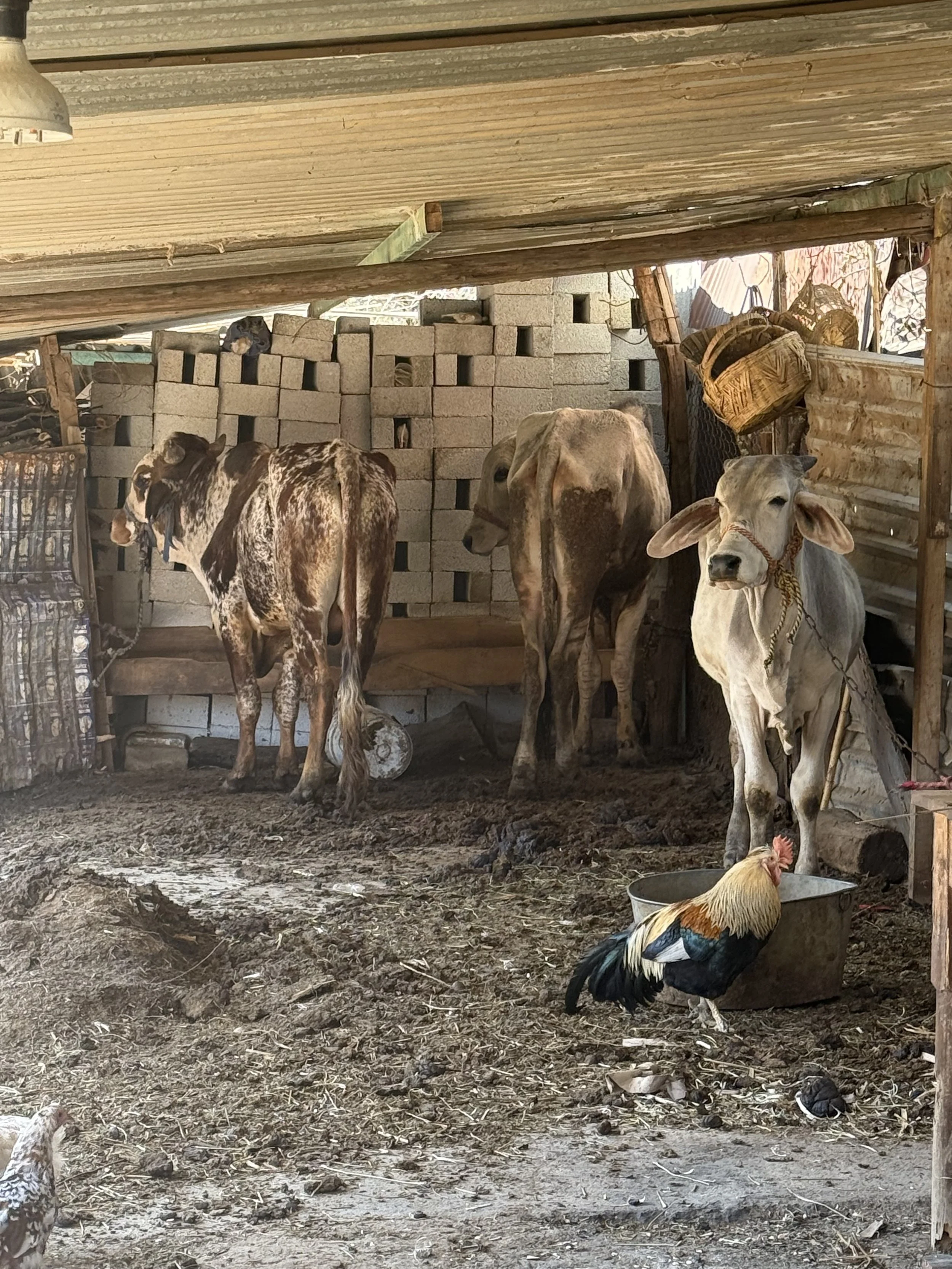
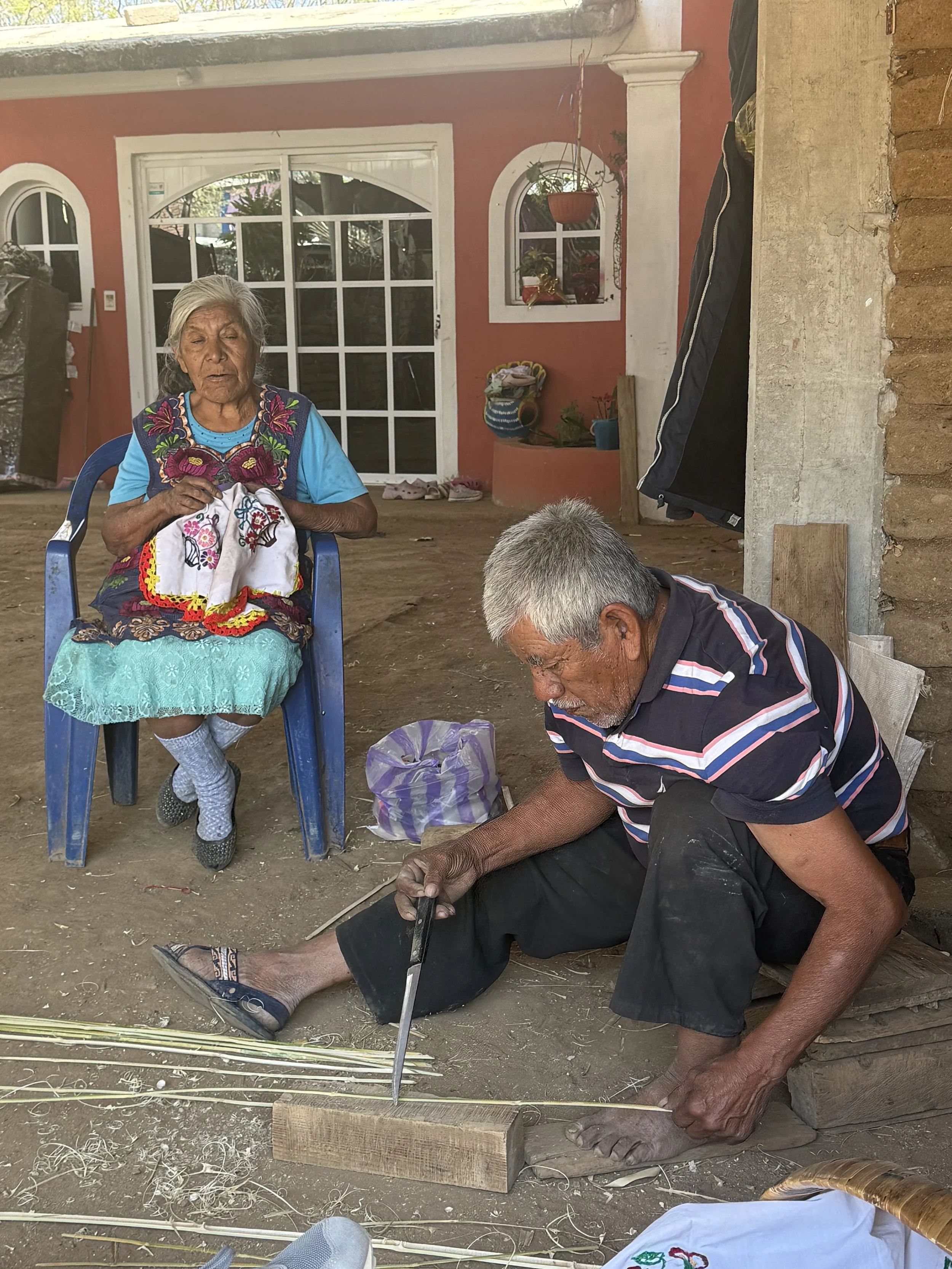
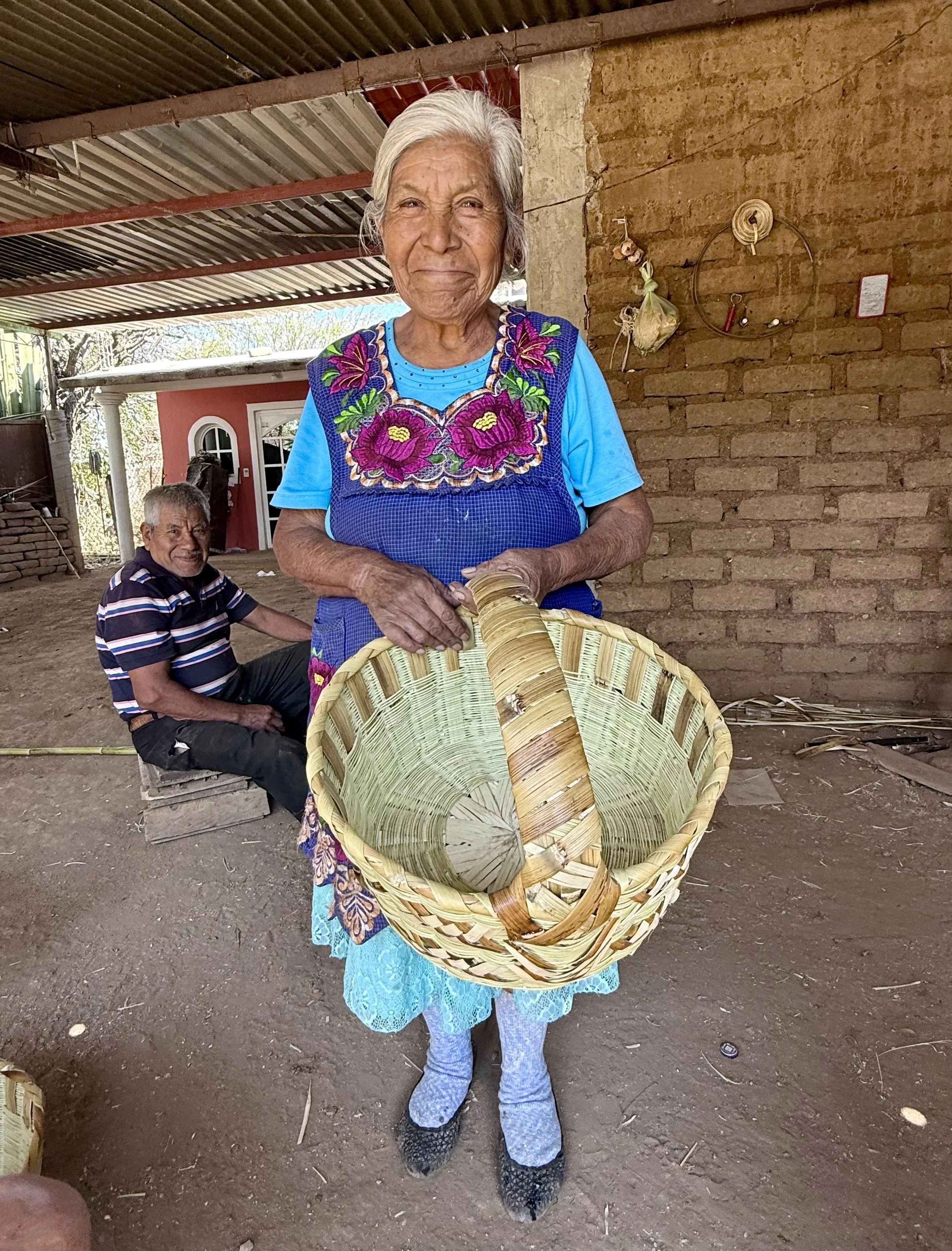
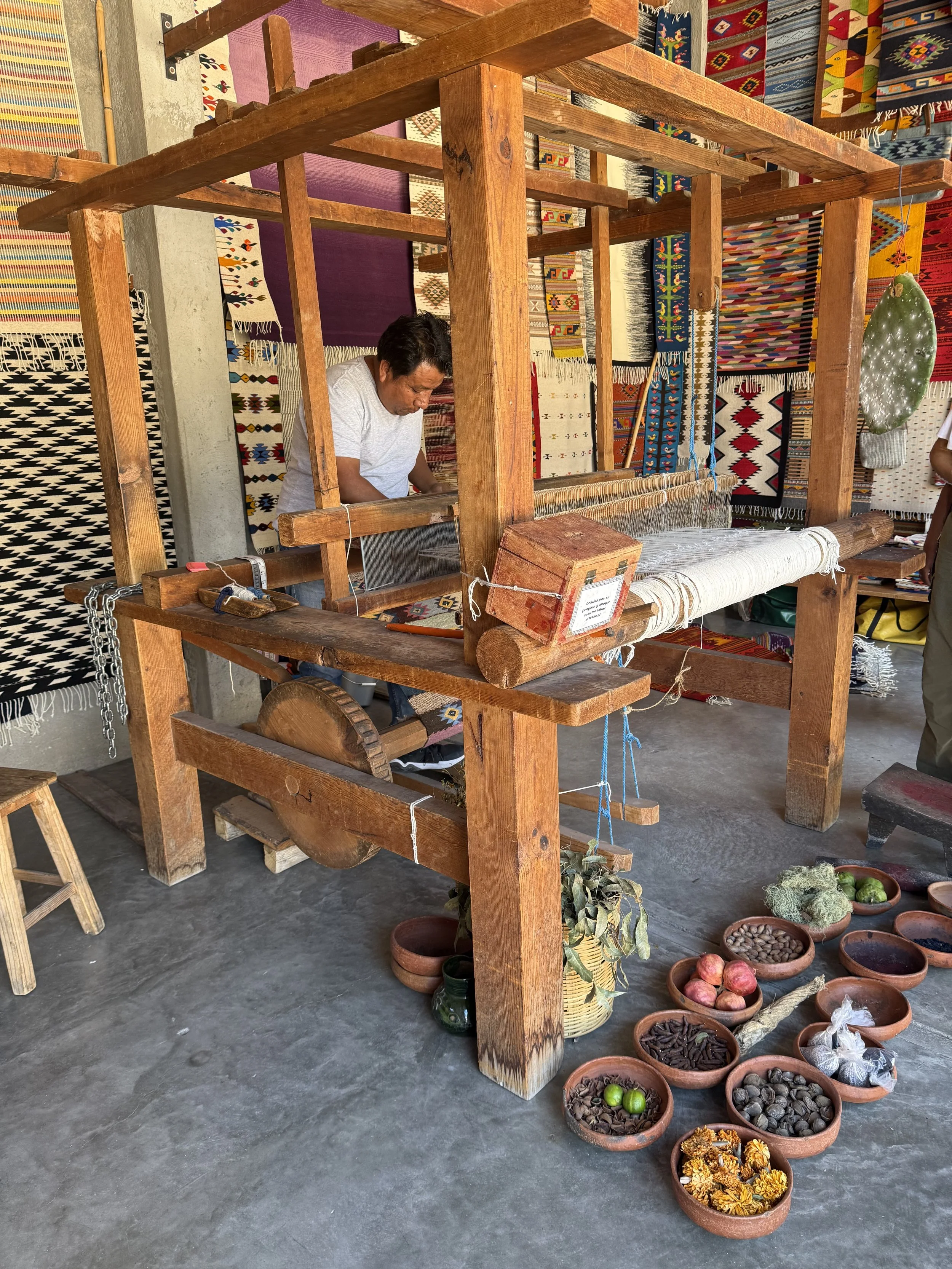
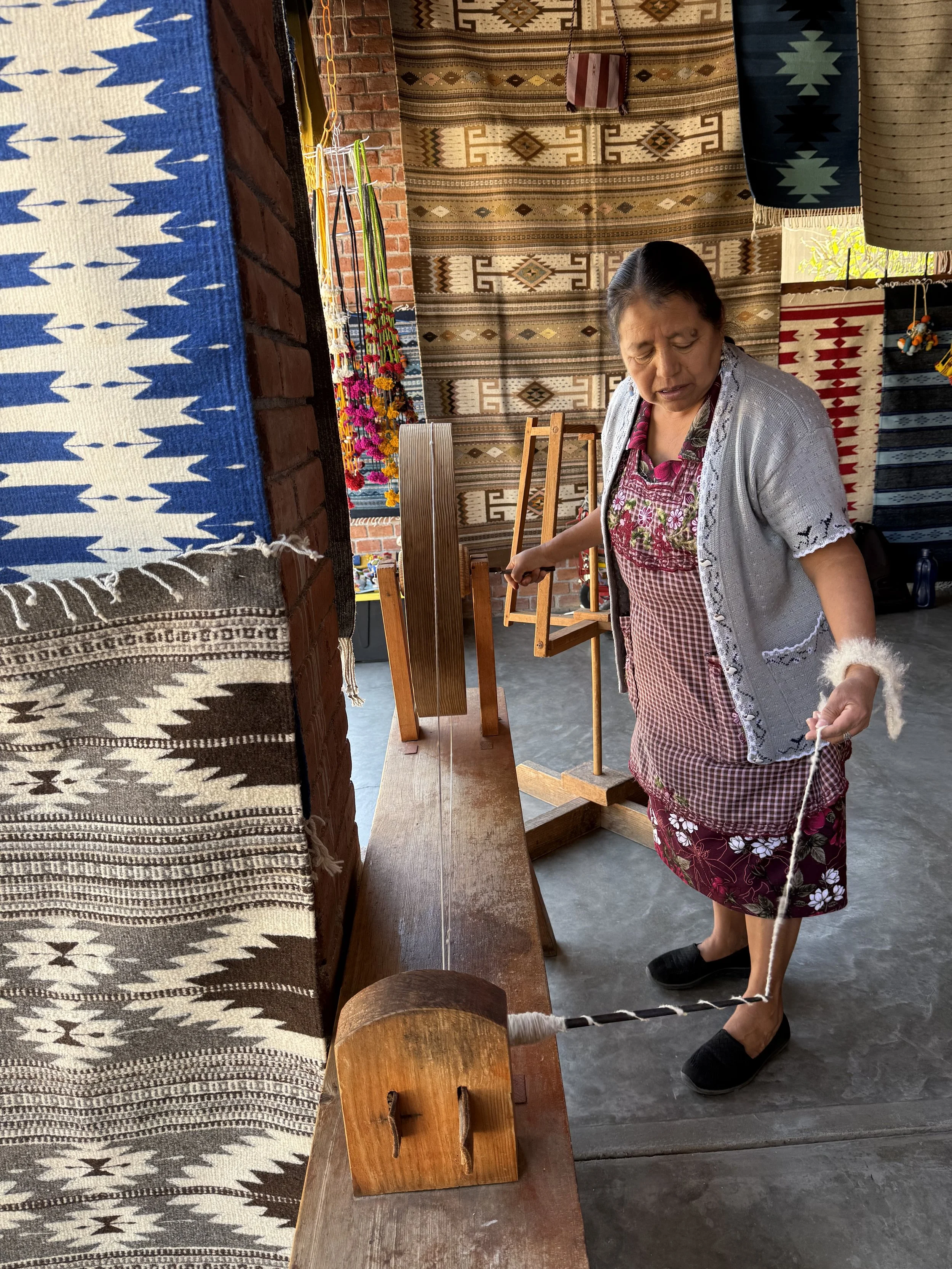
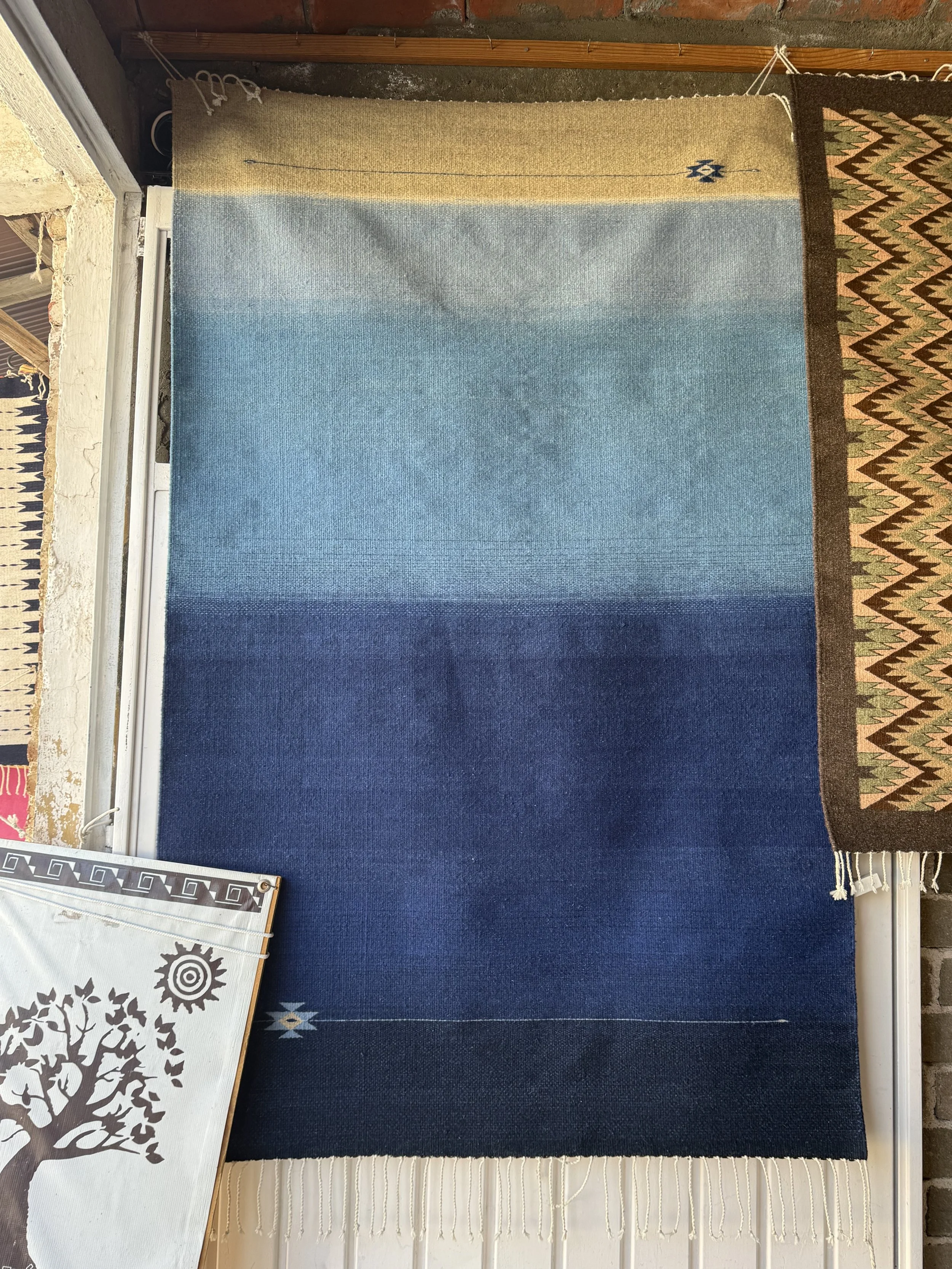
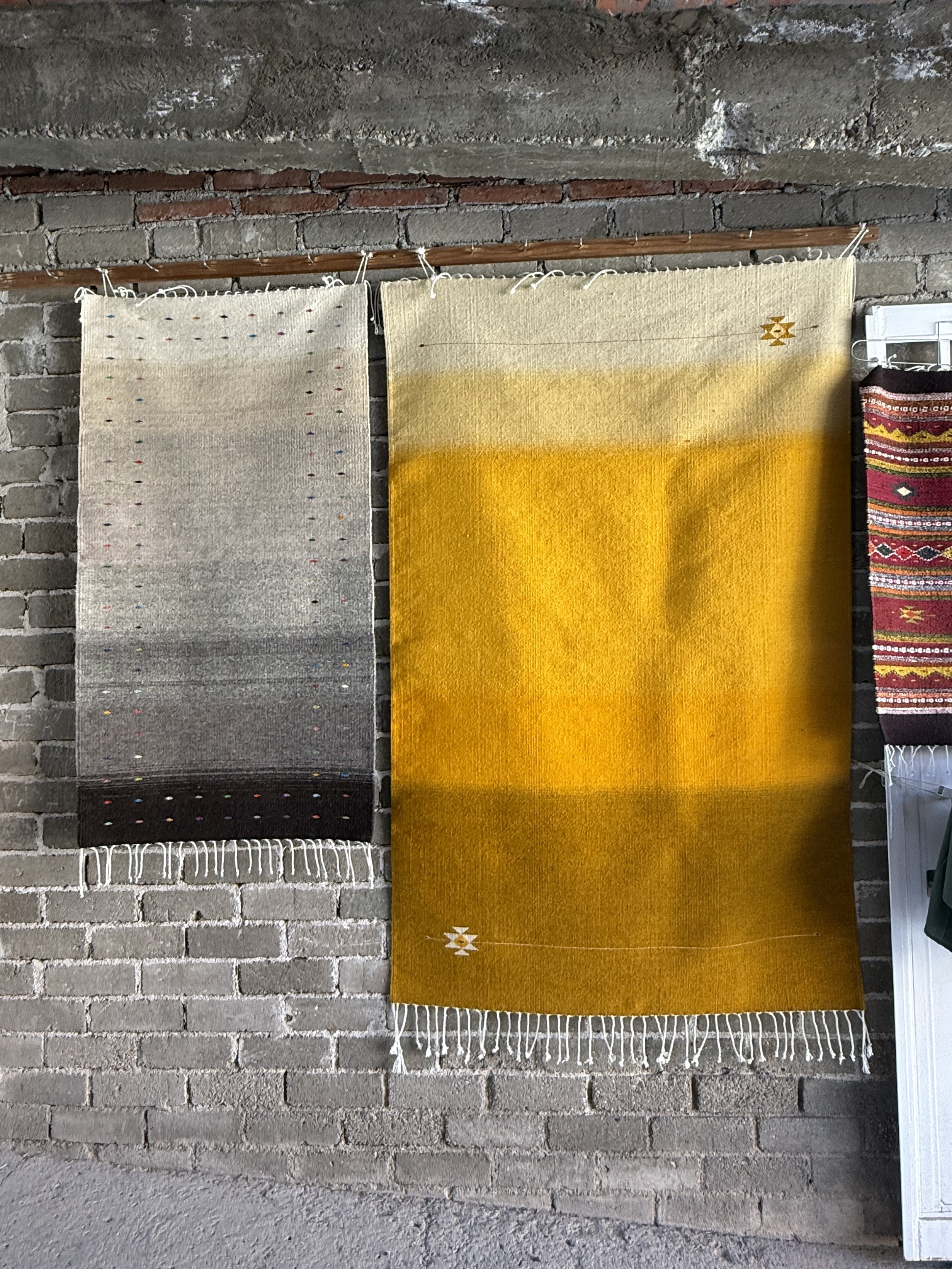
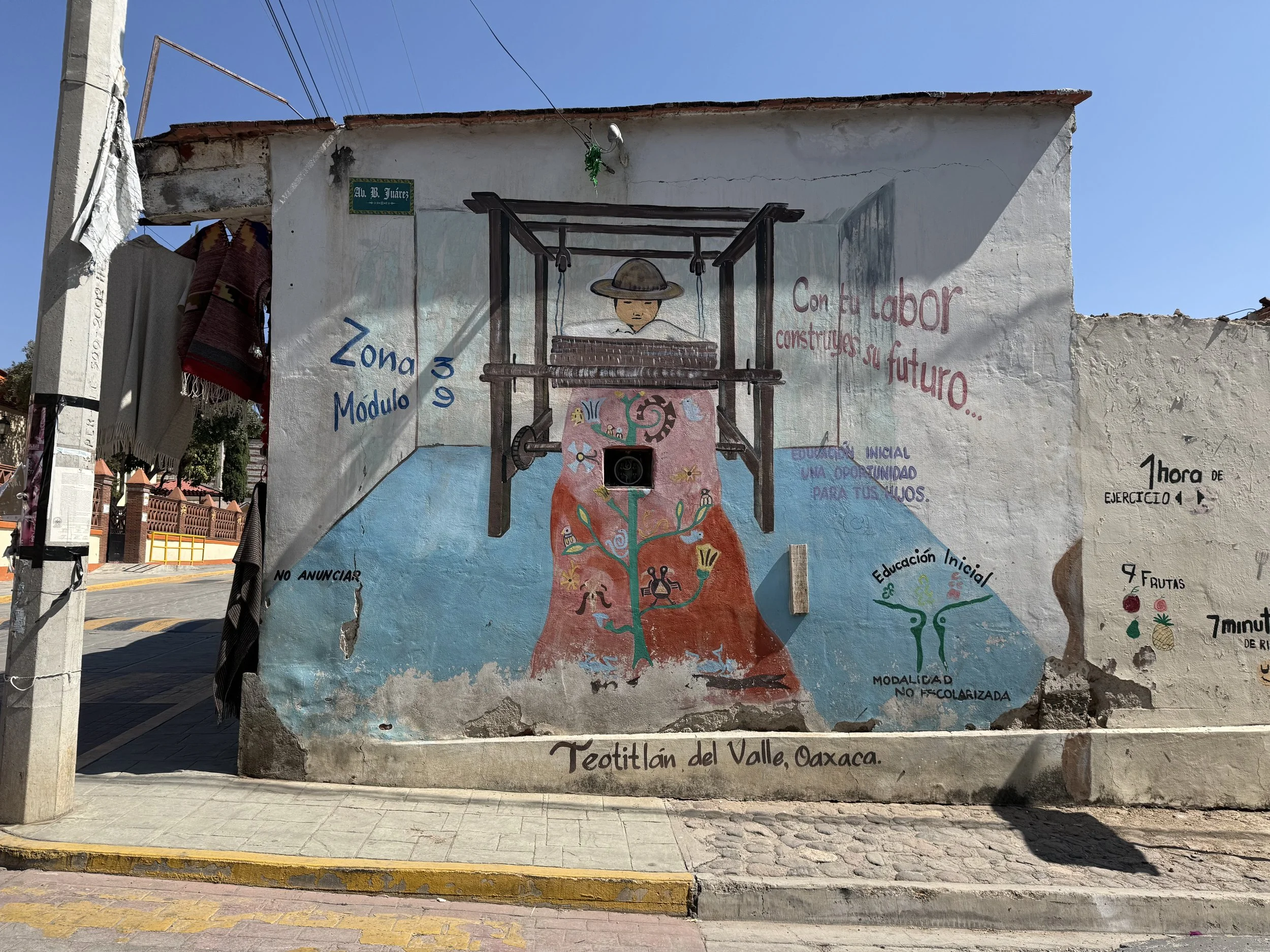
A day near Oaxaca visiting artisans from The Zapotec civilization:
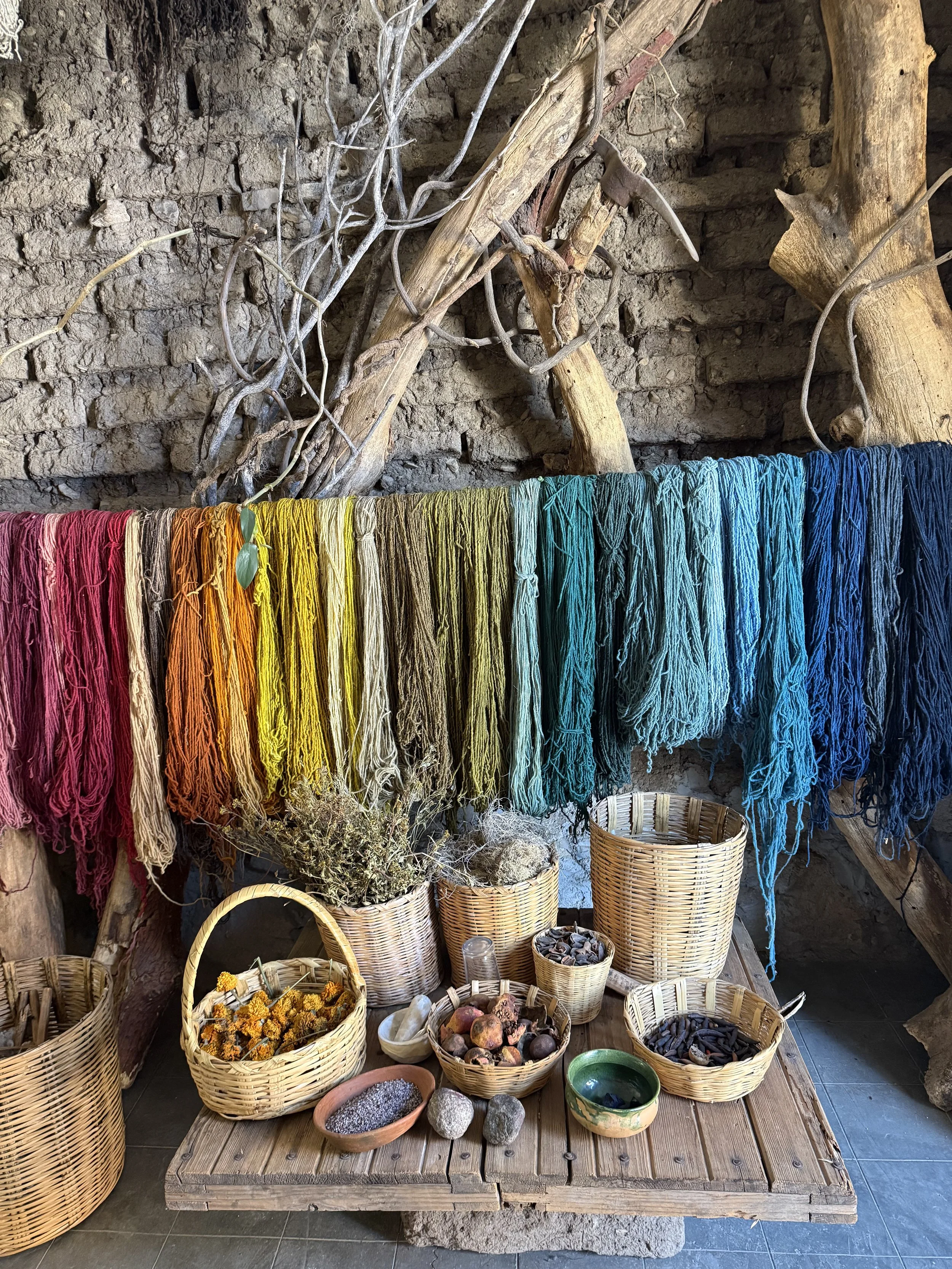
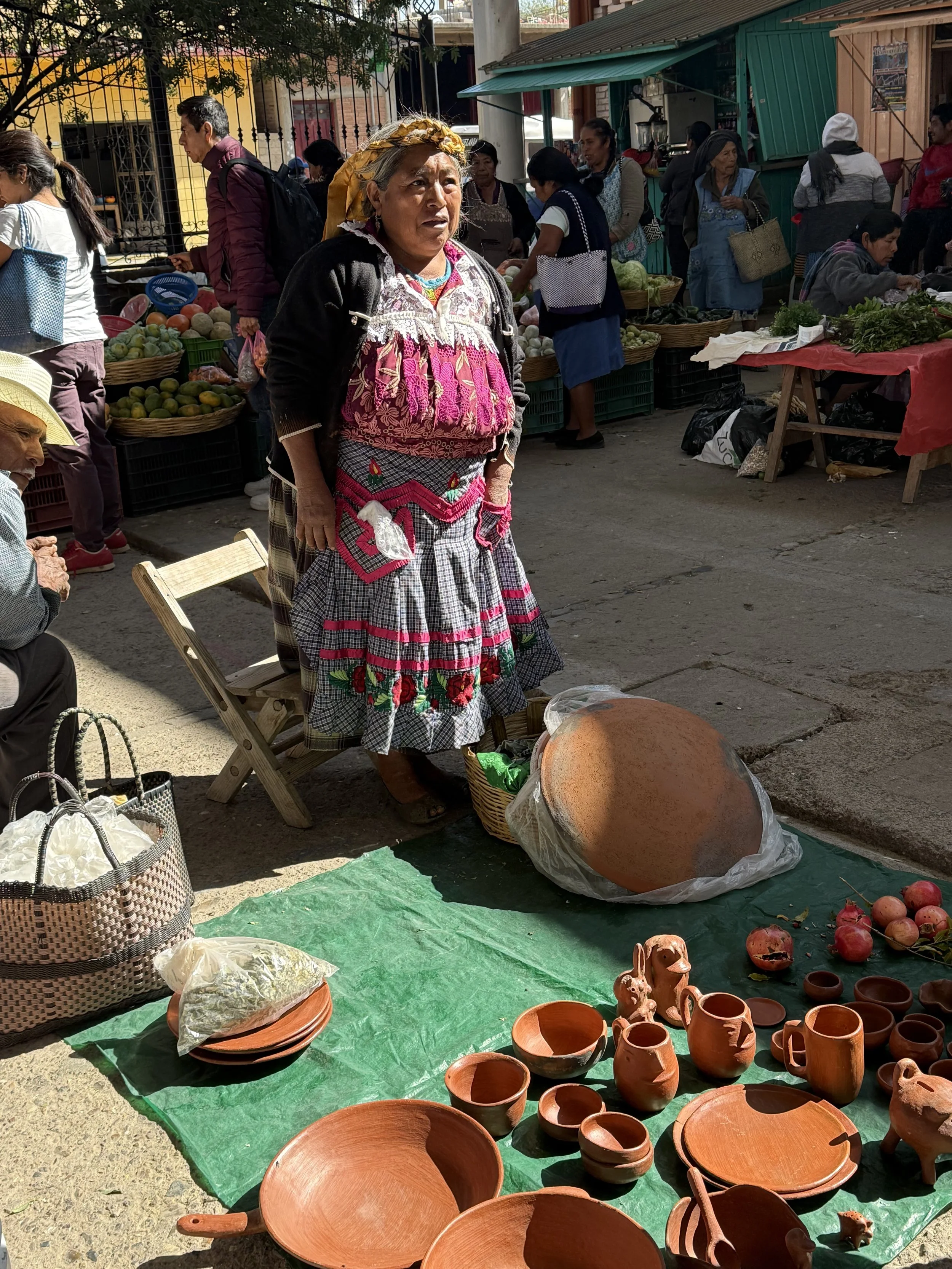
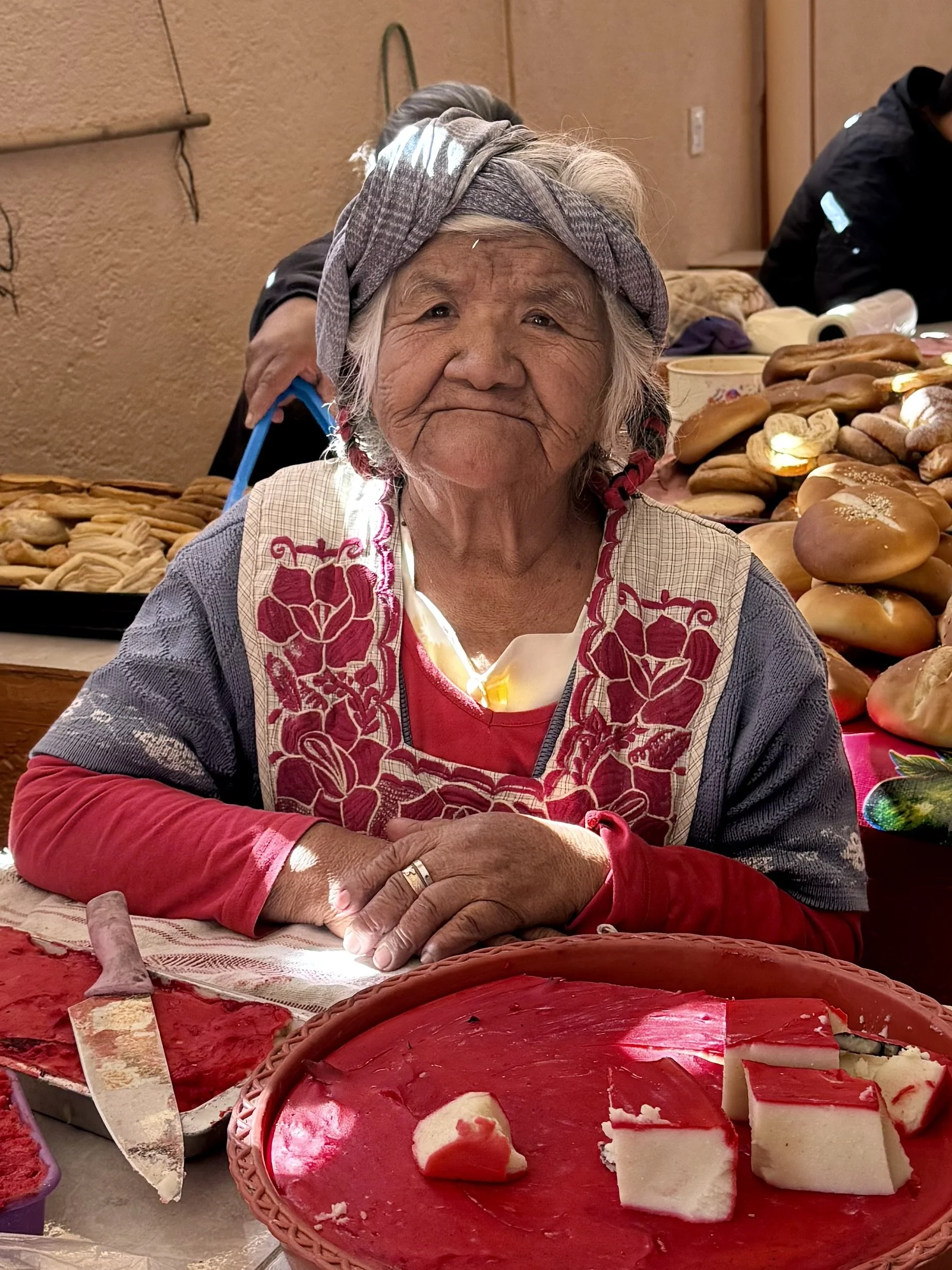
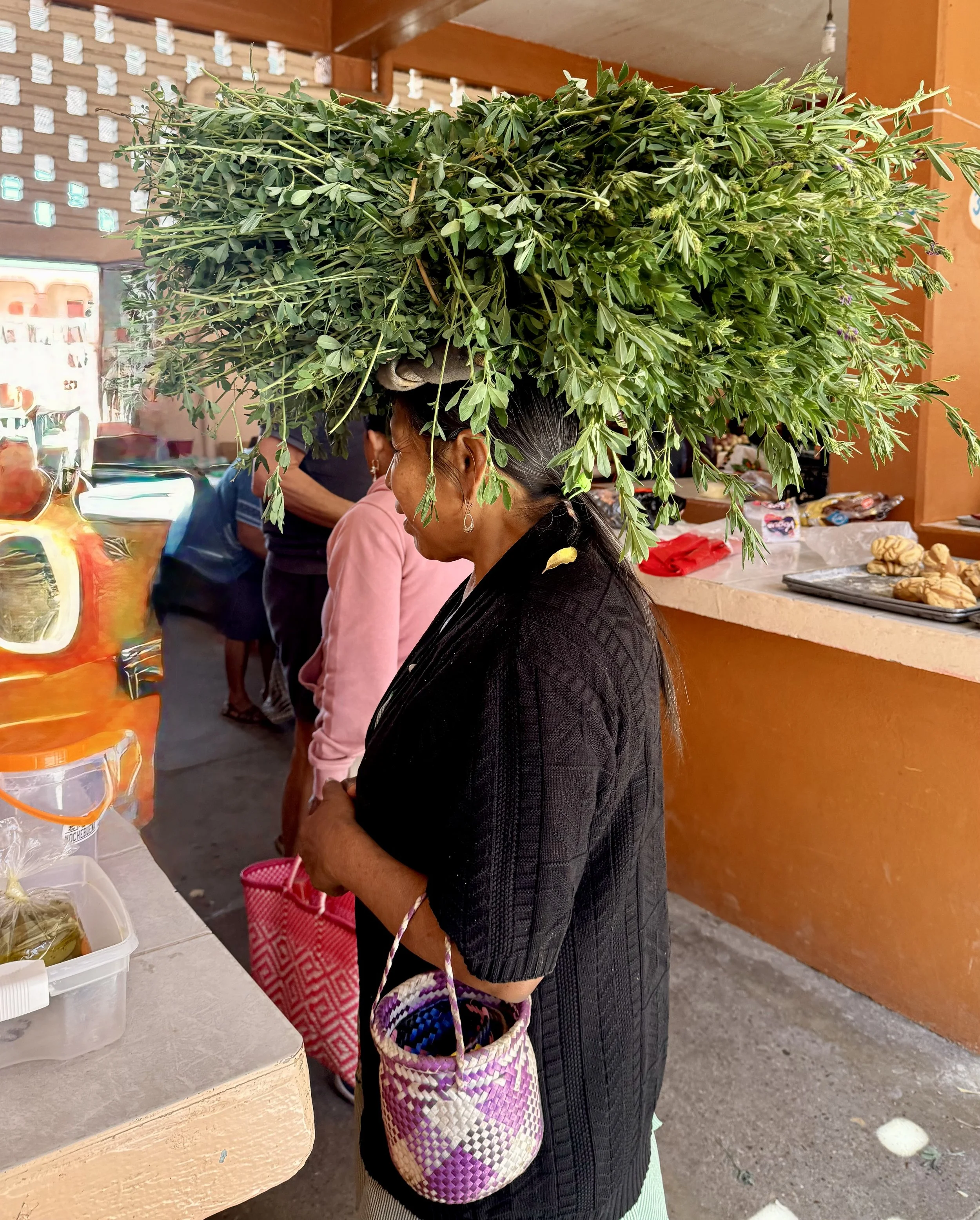
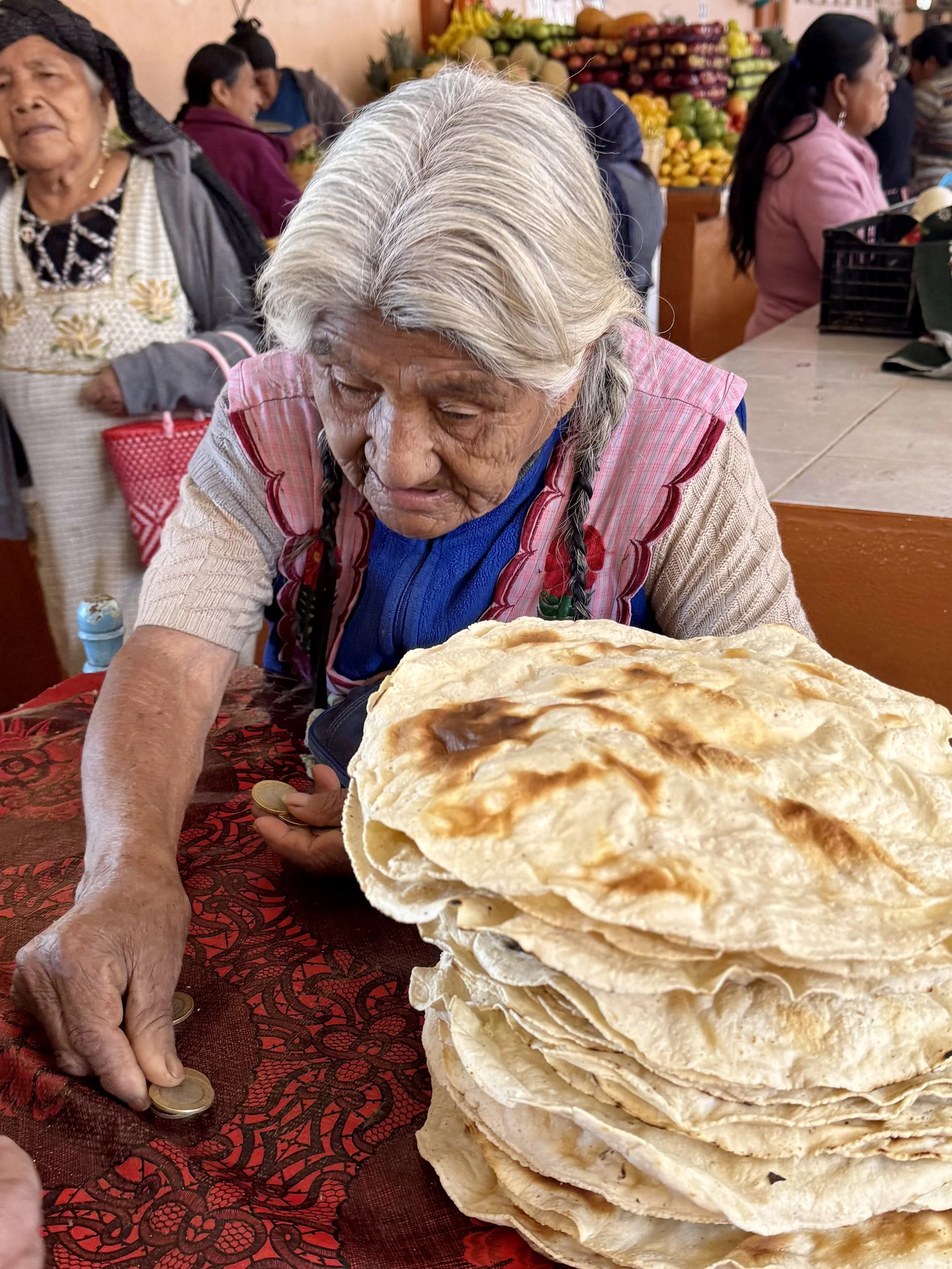
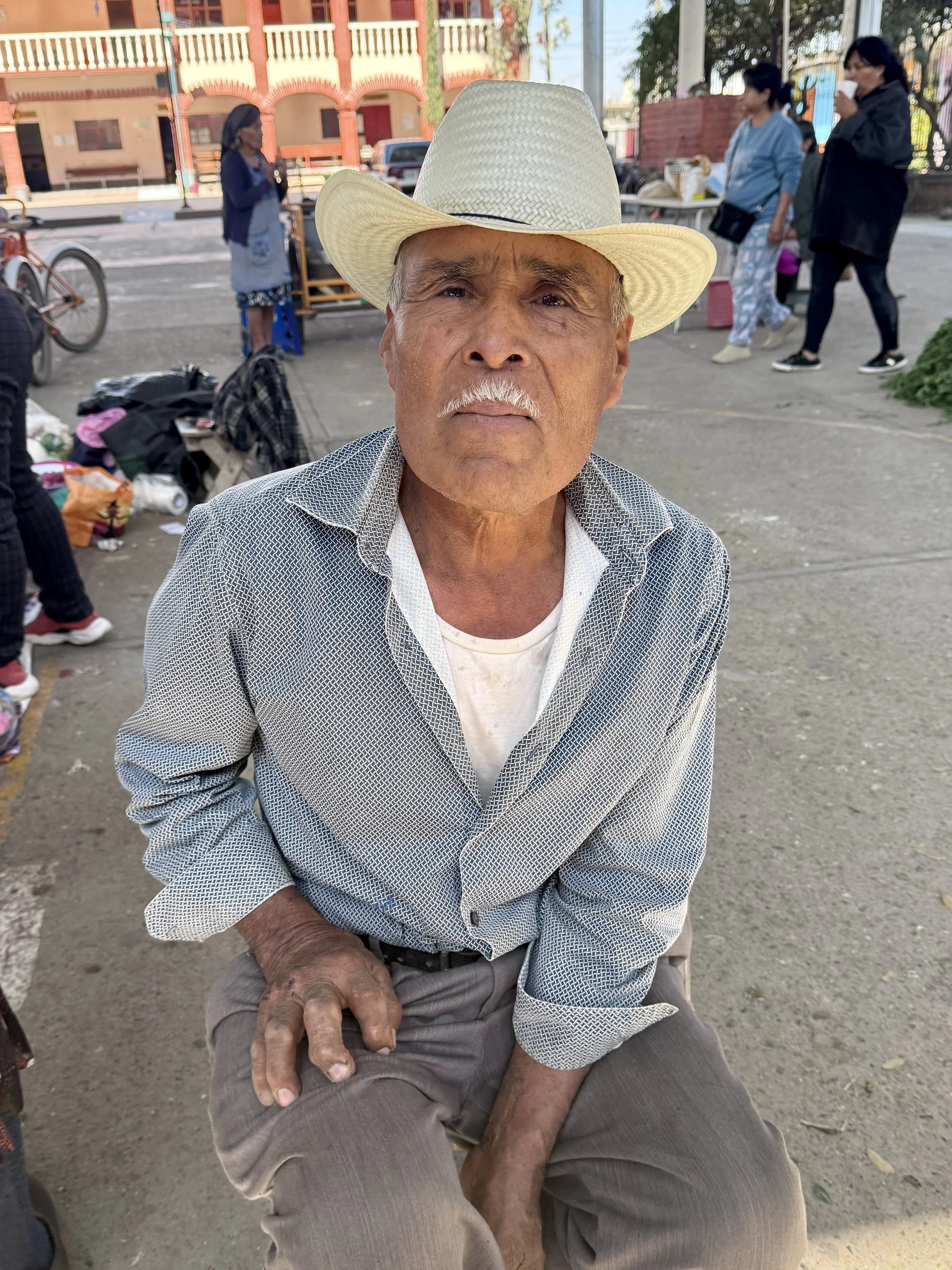
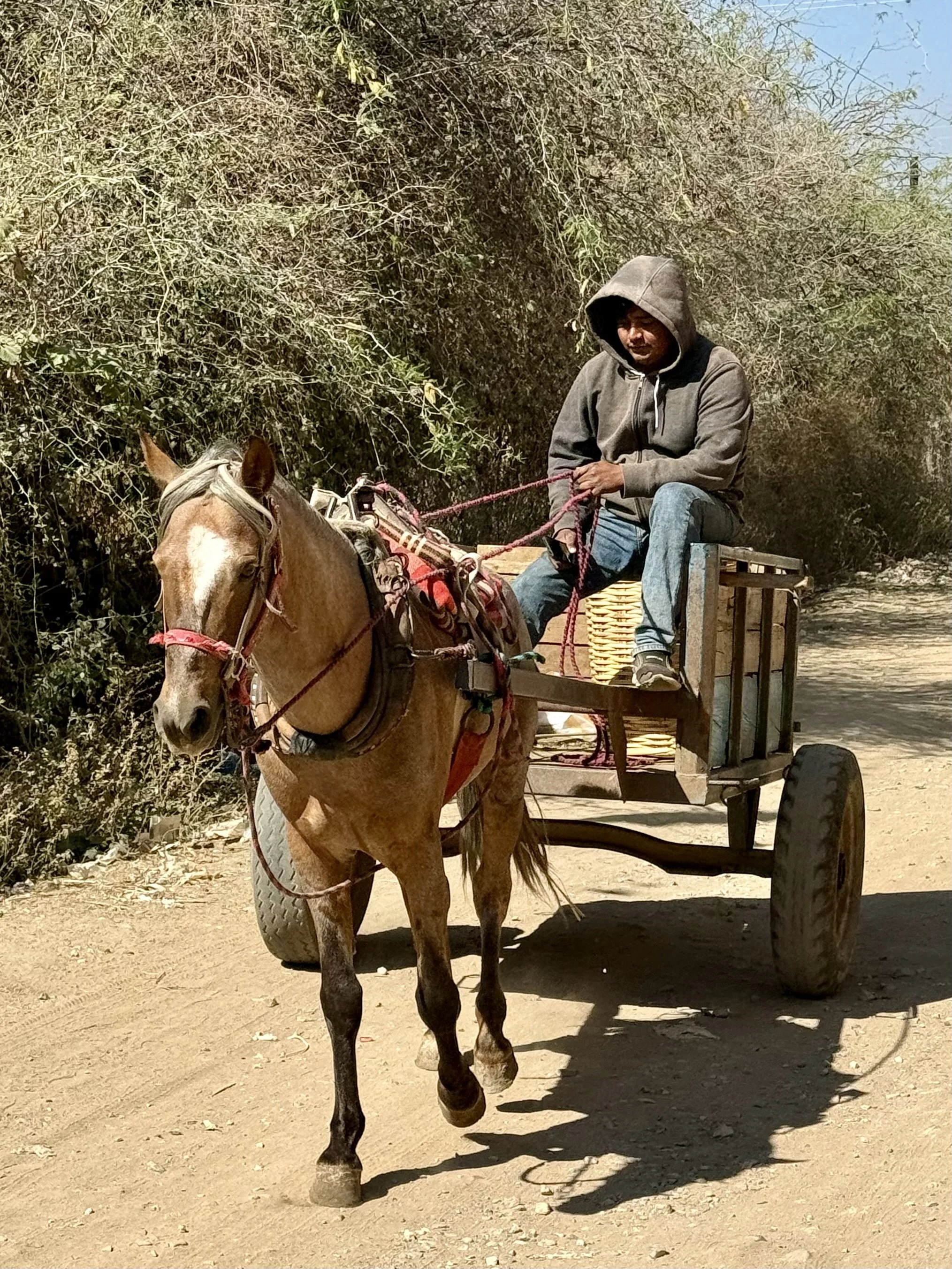
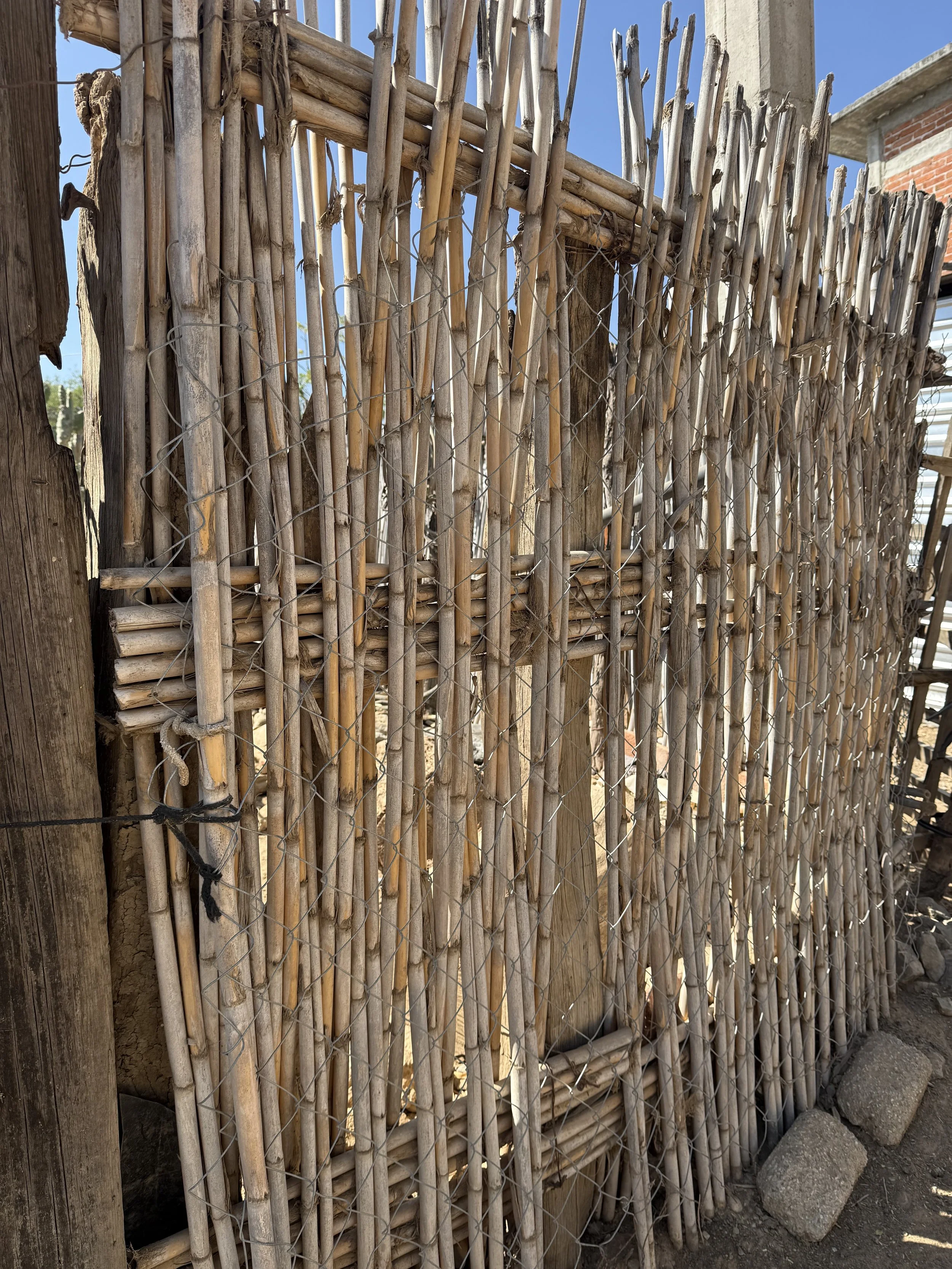
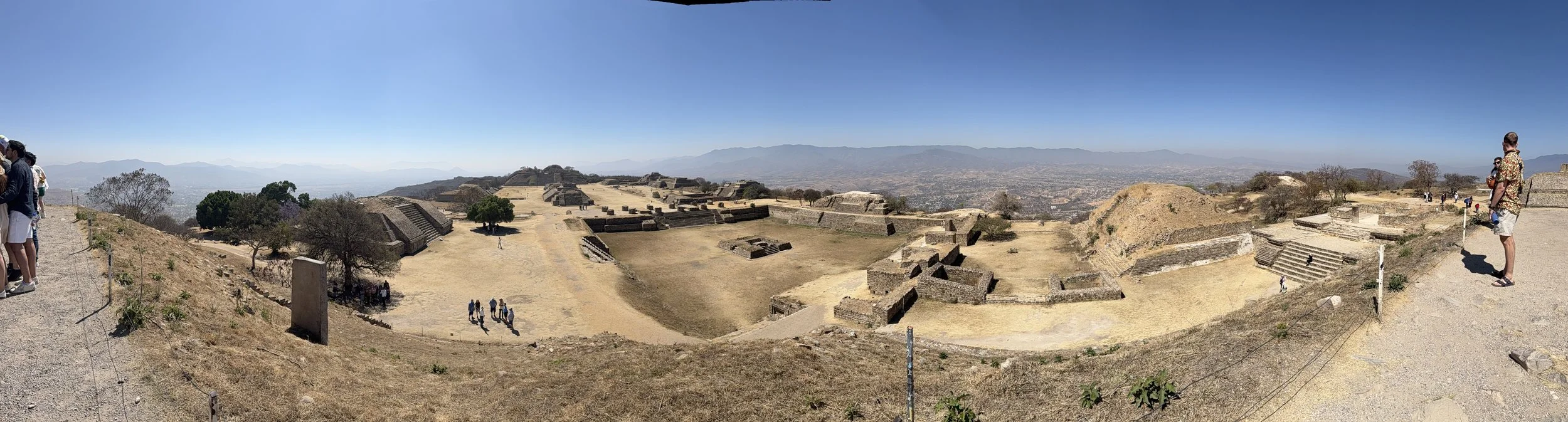
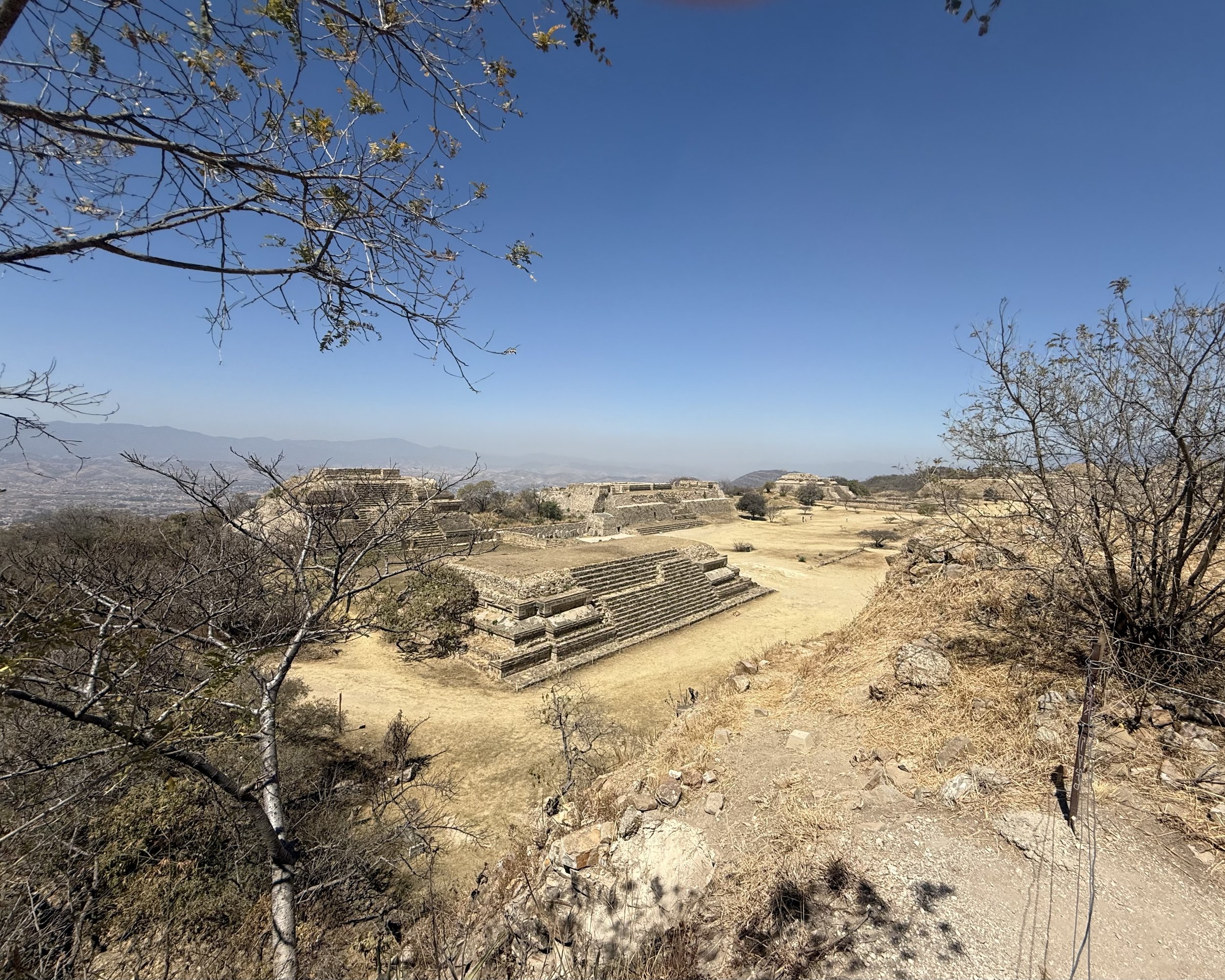
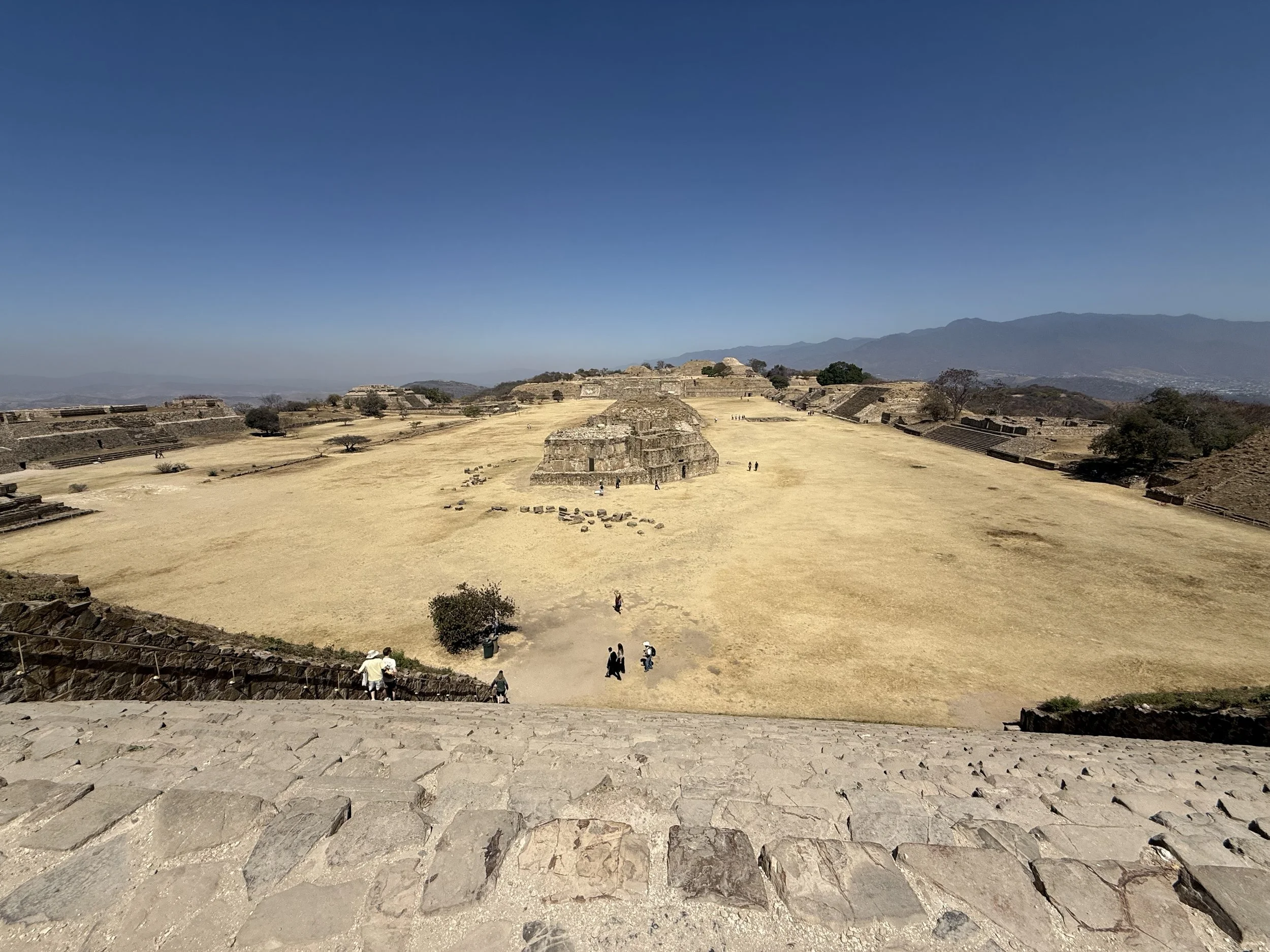
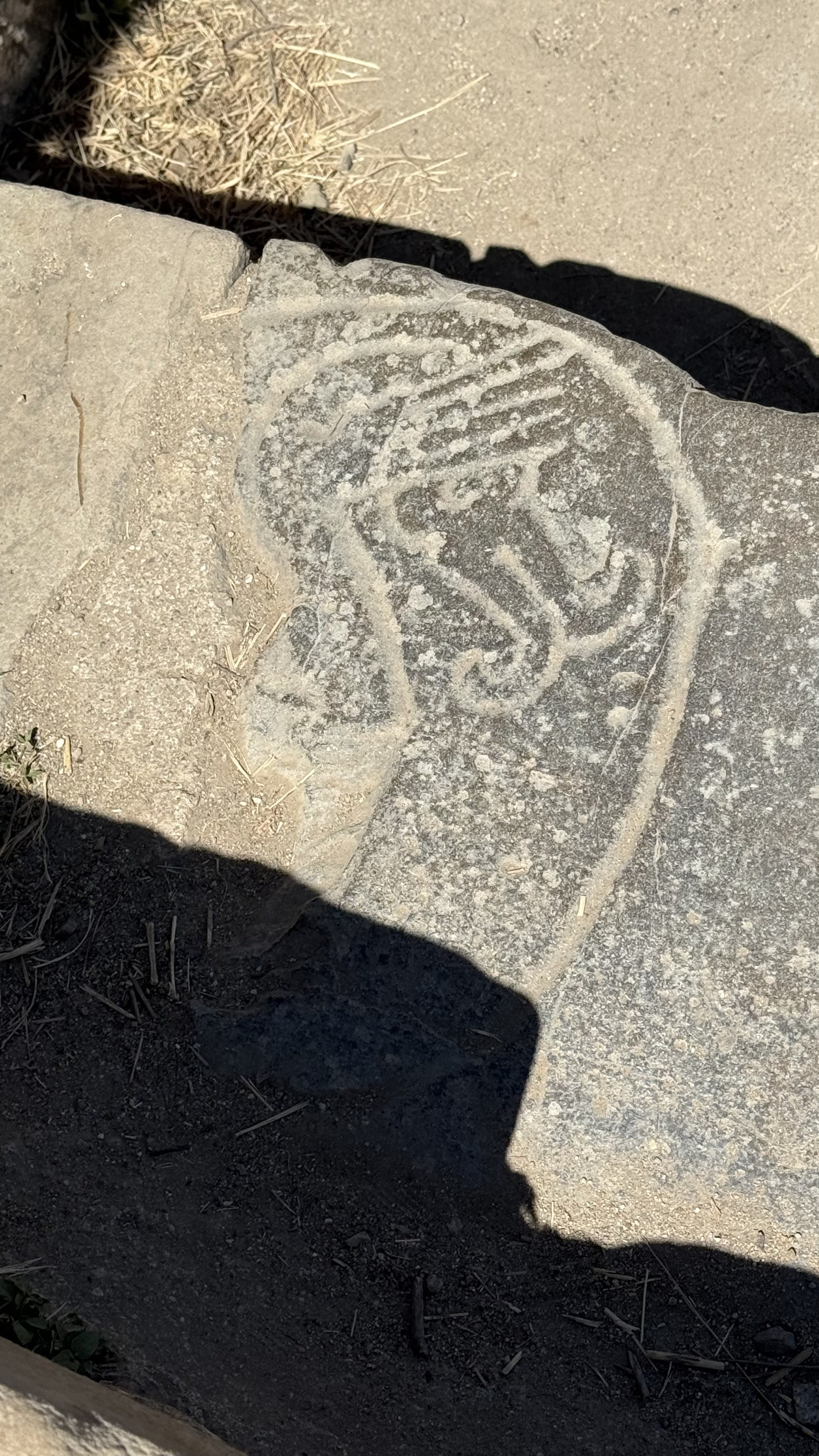
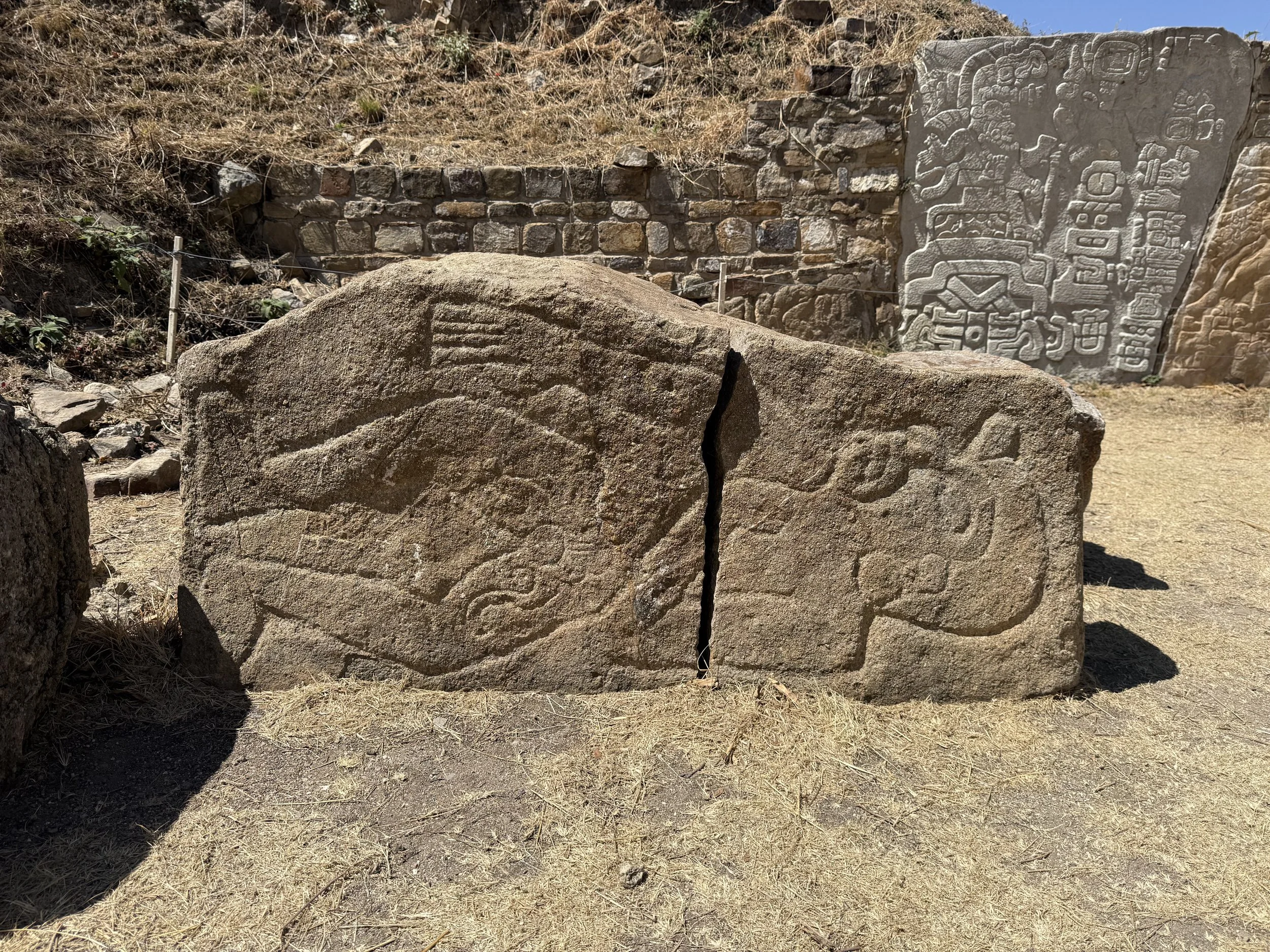
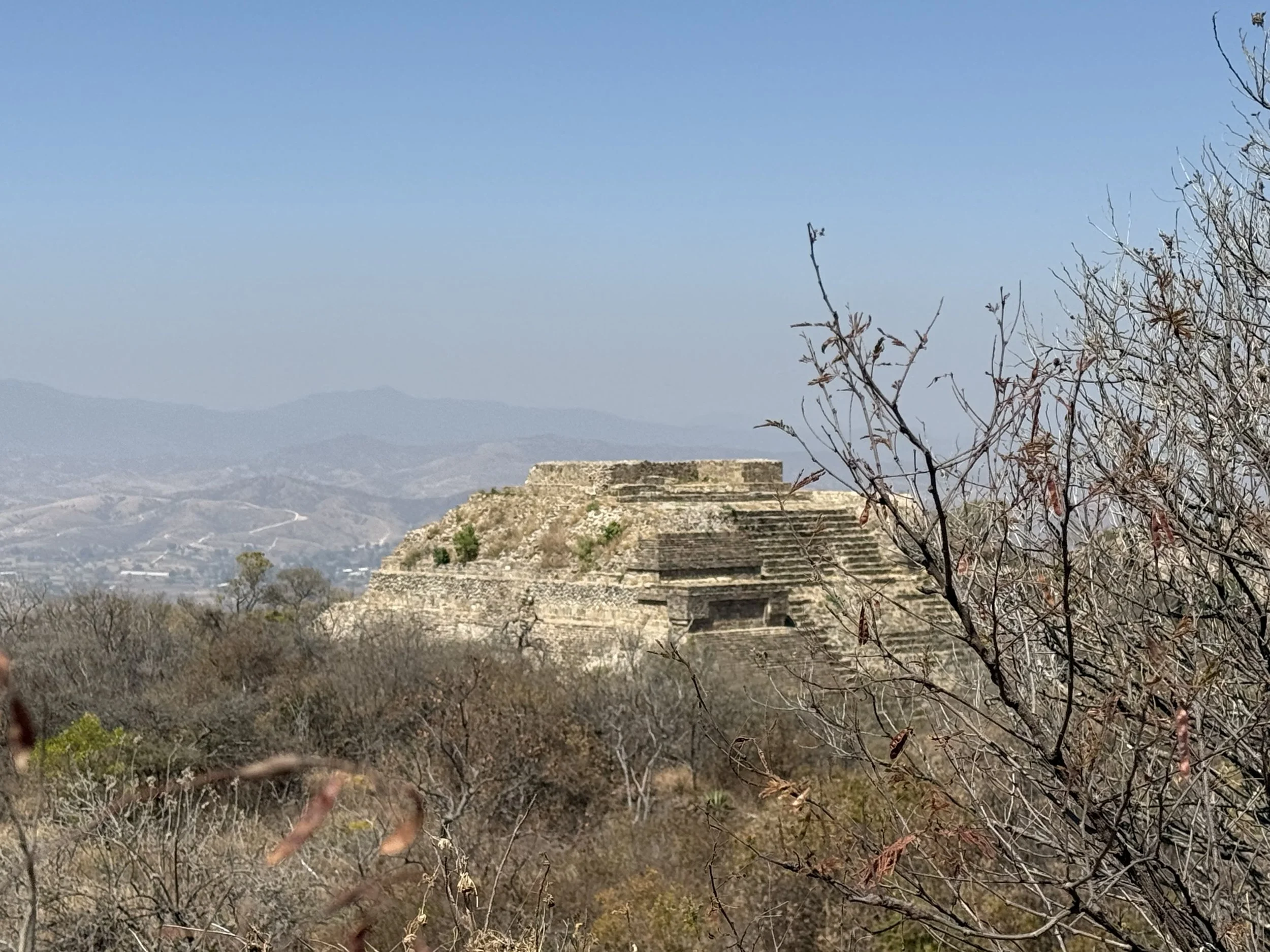
A short taxi ride takes us to Monte Albán a UNESCO World Heritage Site. There is 36 in Mexico…
Besides being one of the earliest cities of Mesoamerica, Monte Albán was important for nearly one thousand years as the pre-eminent Zapotec socio-political and economic center. Founded around 500 BC, Monte Albán had become the capital of a large-scale expansionist polity that dominated much of the Oaxacan highlands and interacted with other Mesoamerican regional states, such as Teotihuacan to the north (Paddock 1983; Marcus 1983). The city lost its political pre-eminence by the end of the Late Classic (c. AD 500–750)
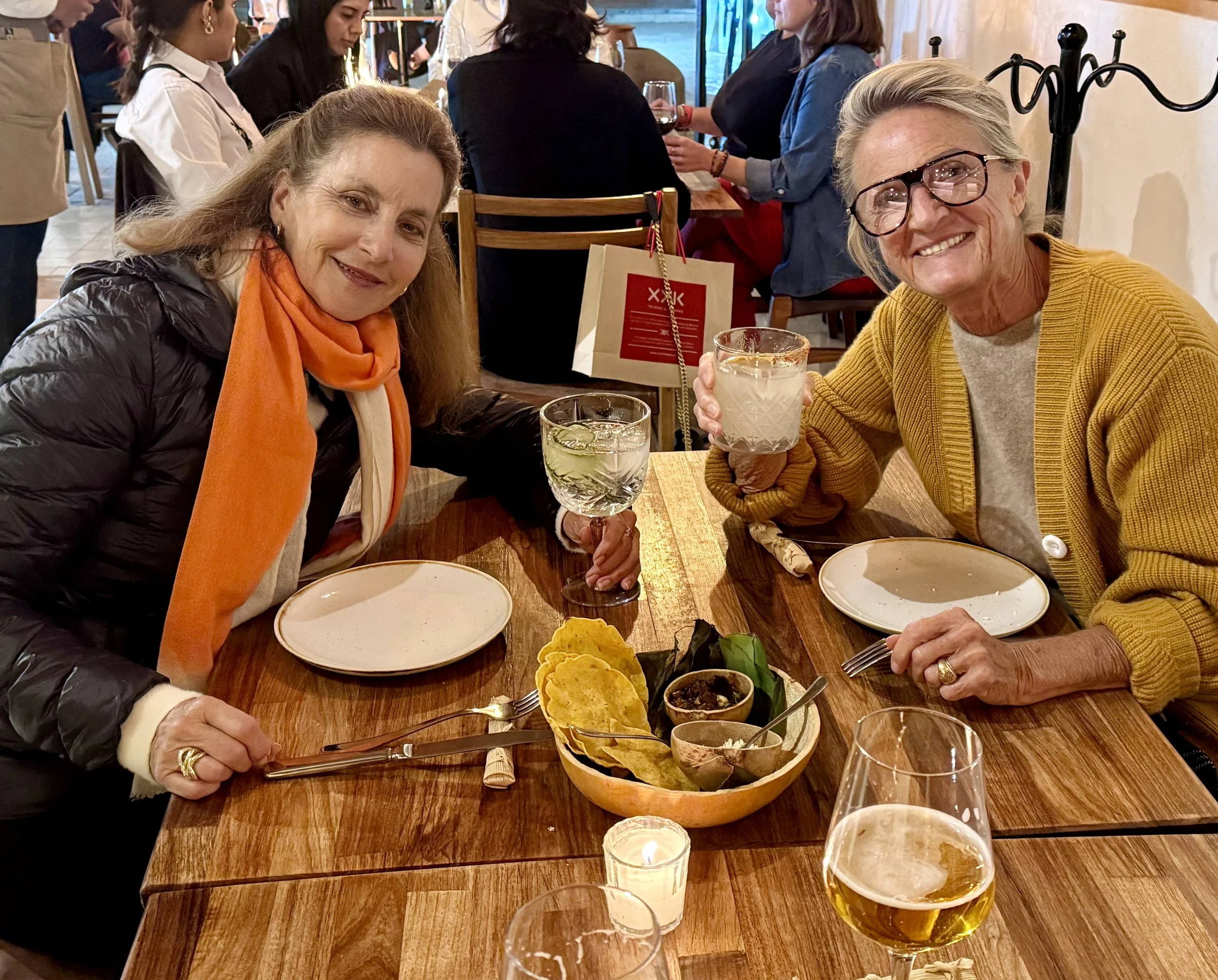
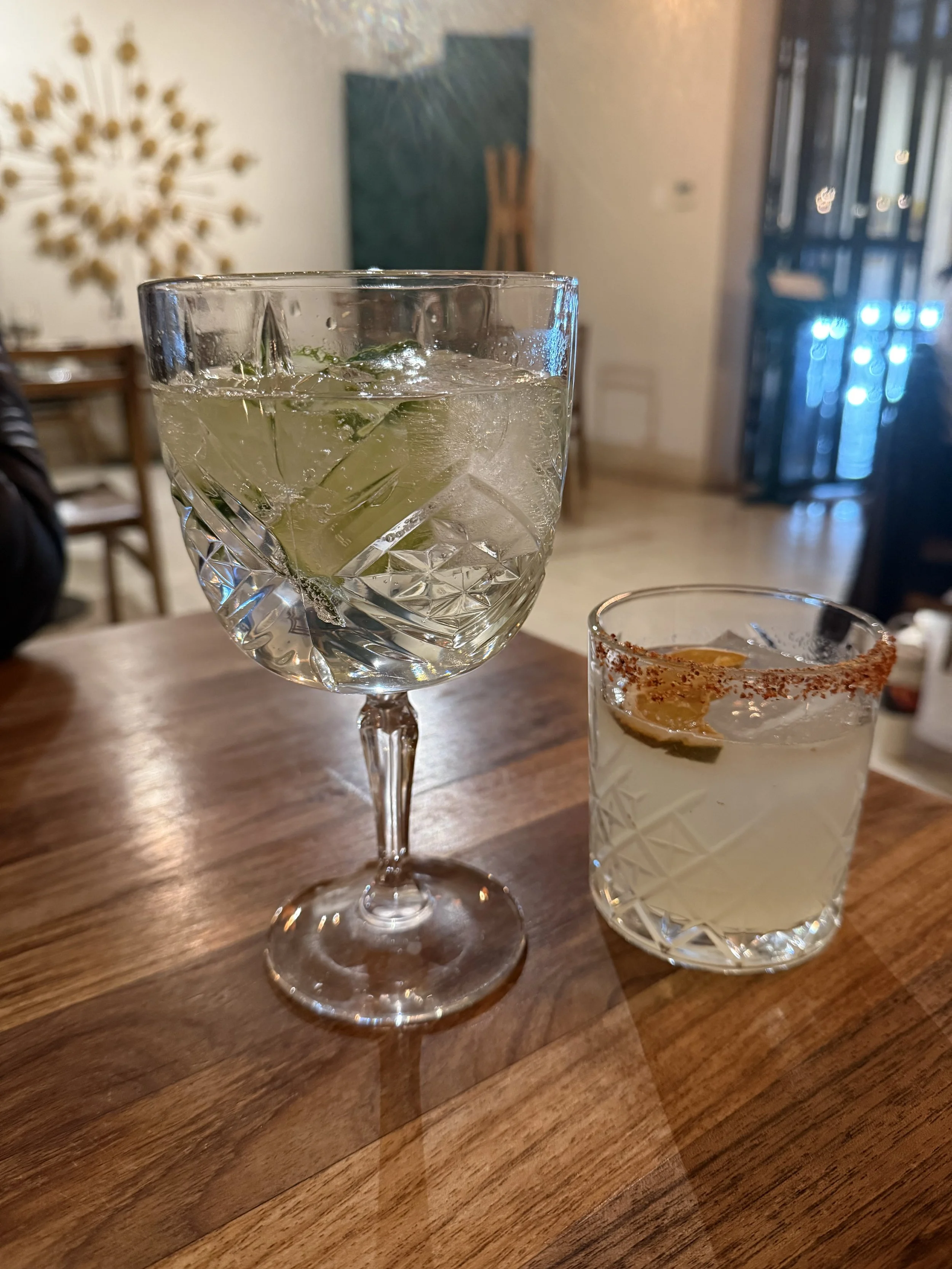
Friendship celebration!
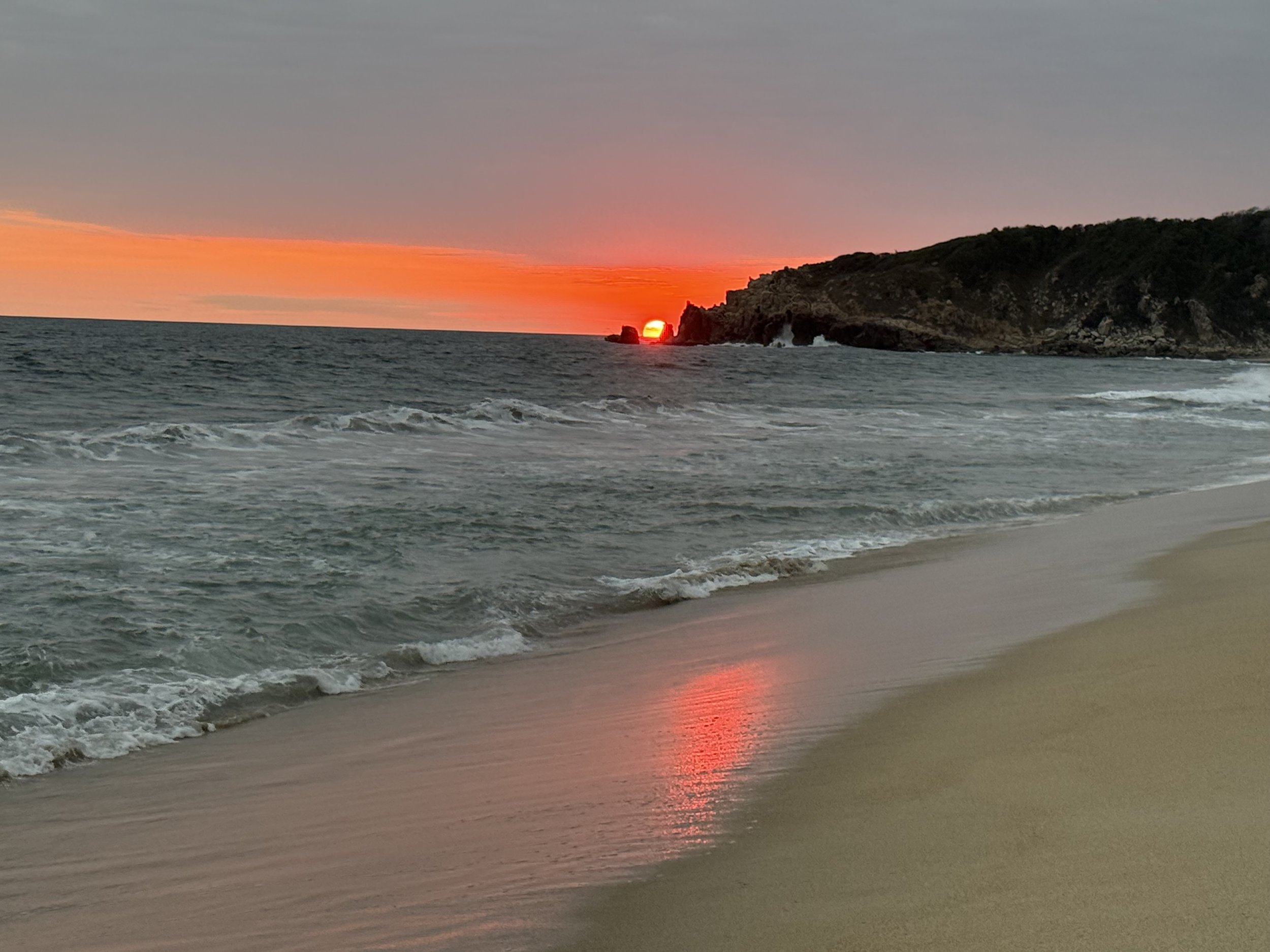
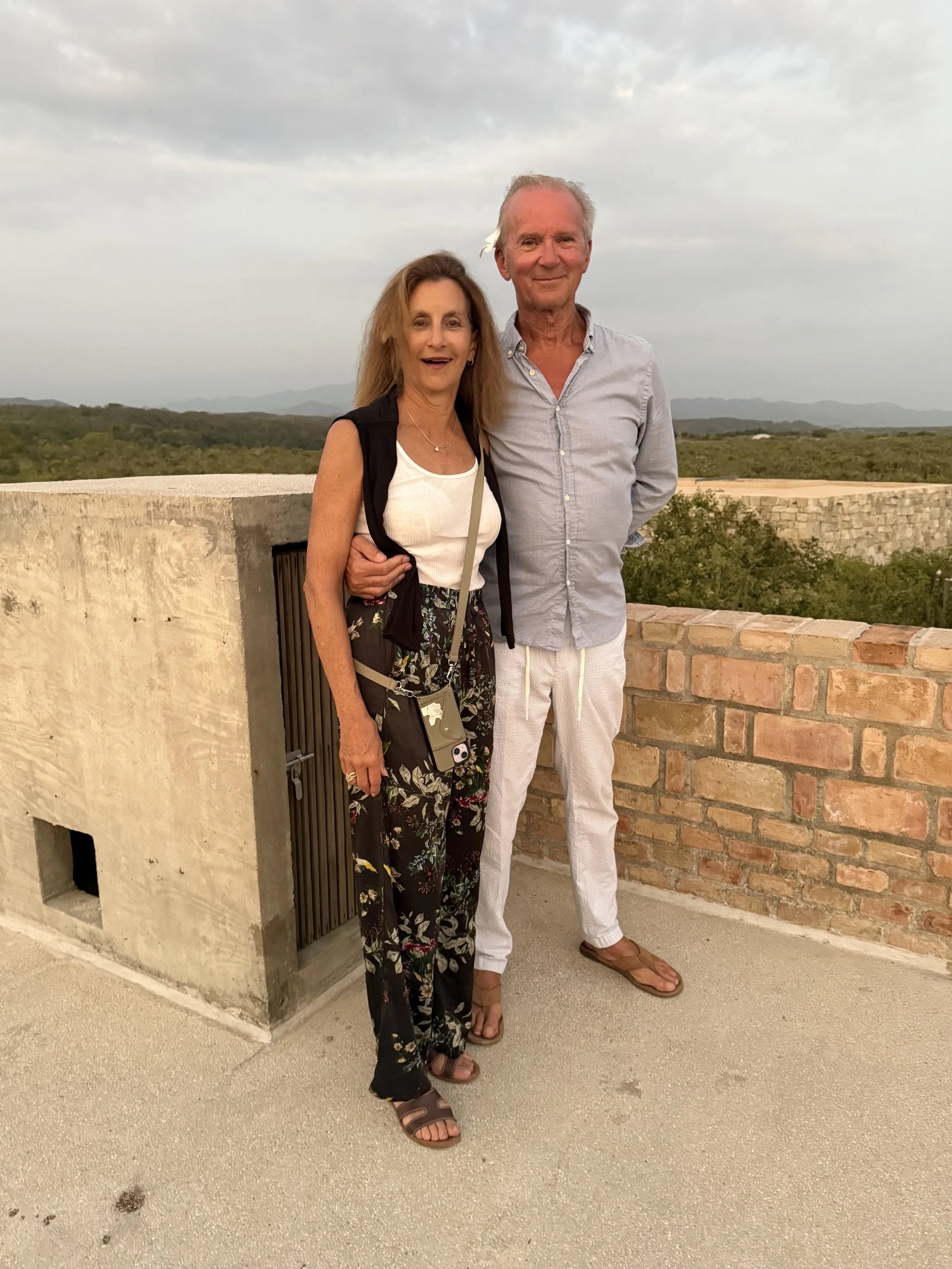
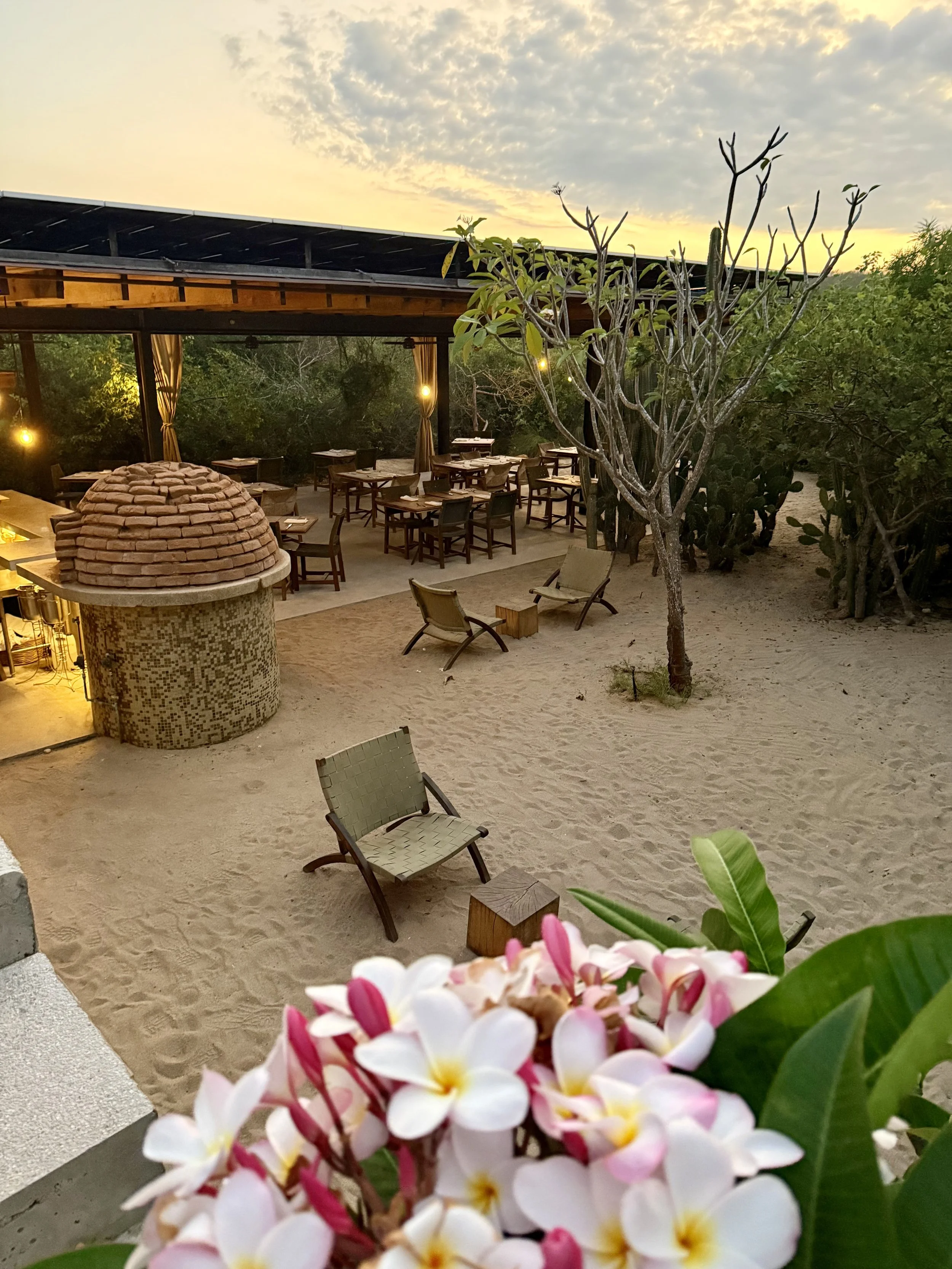
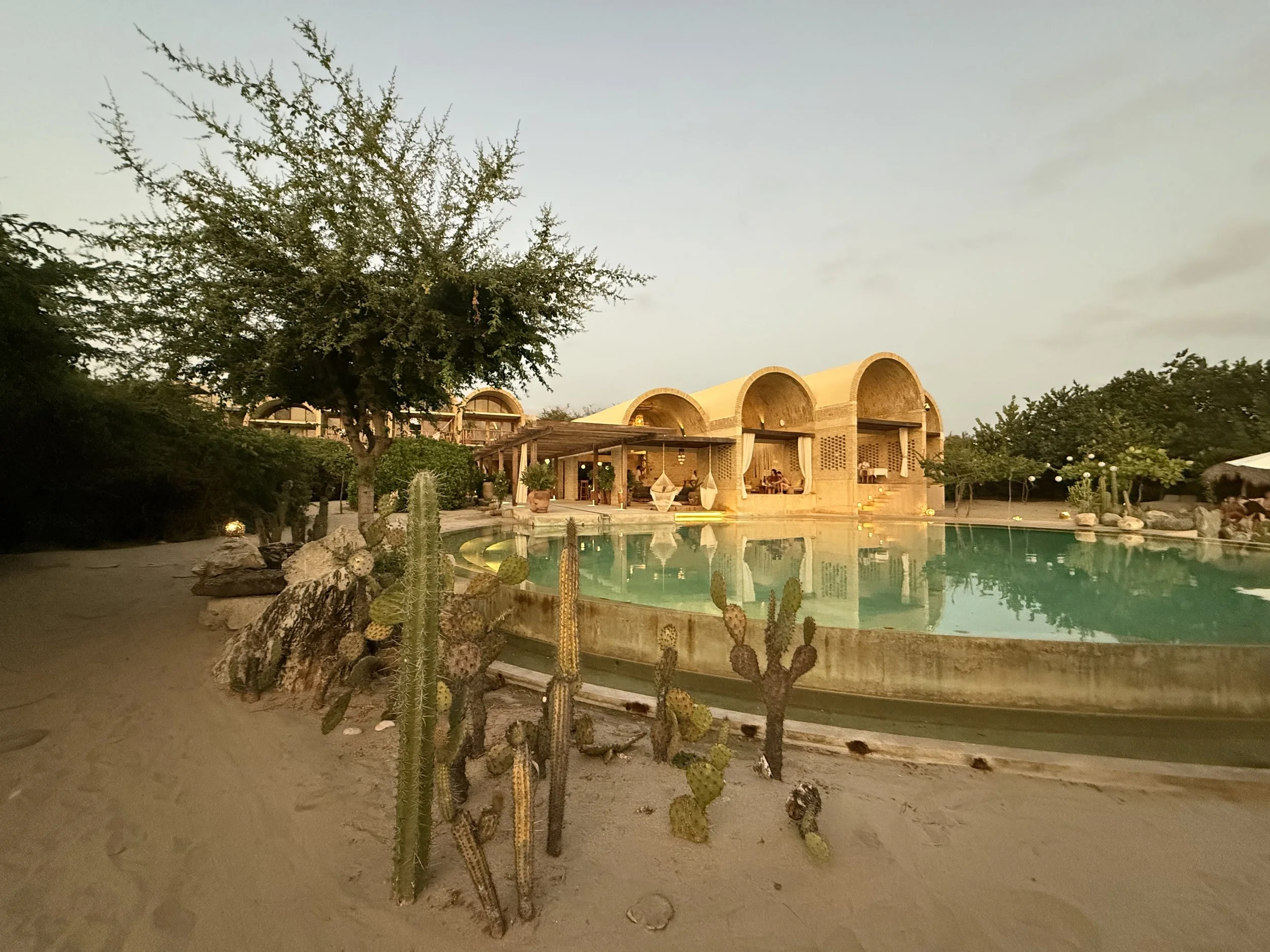
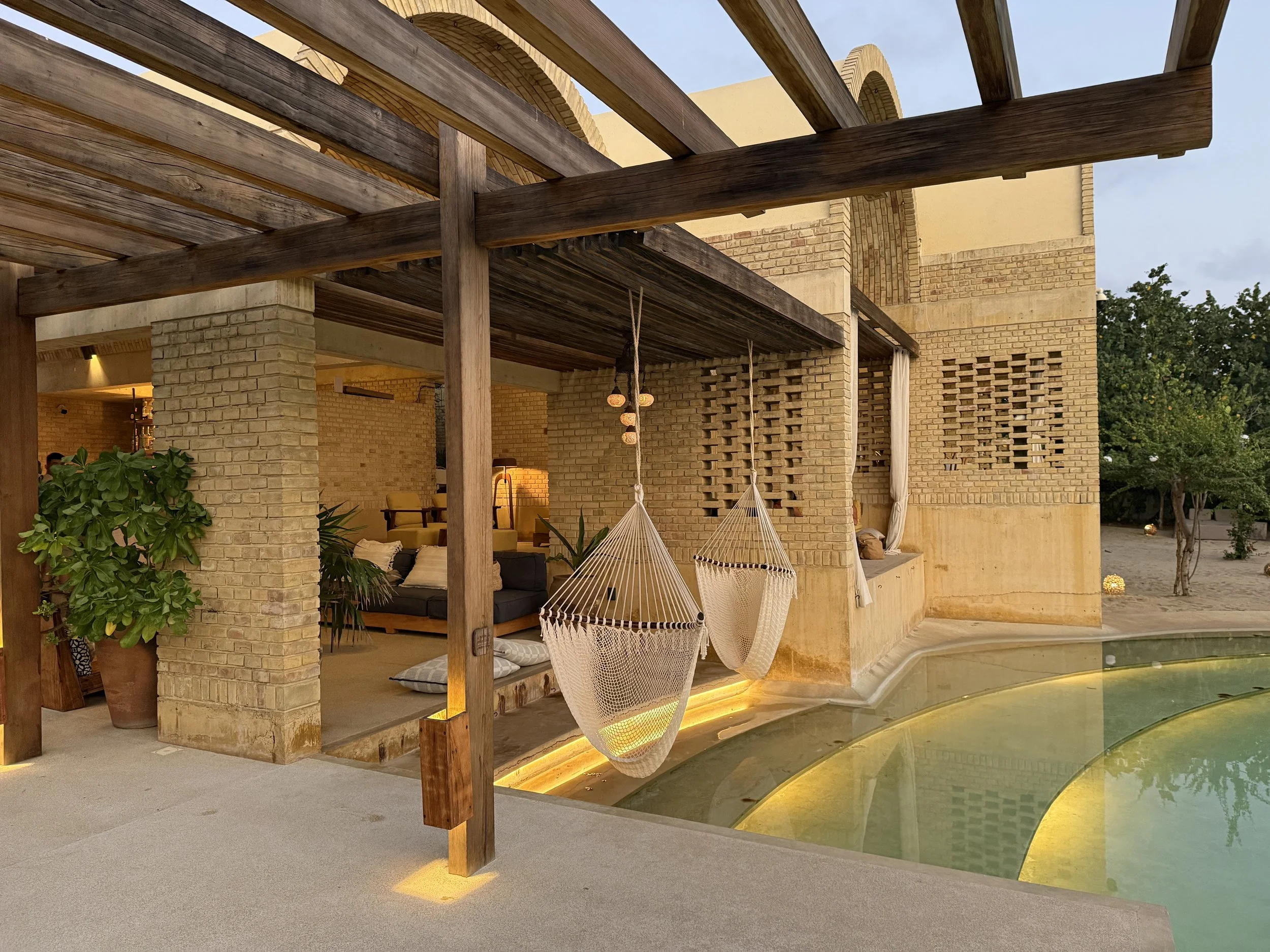
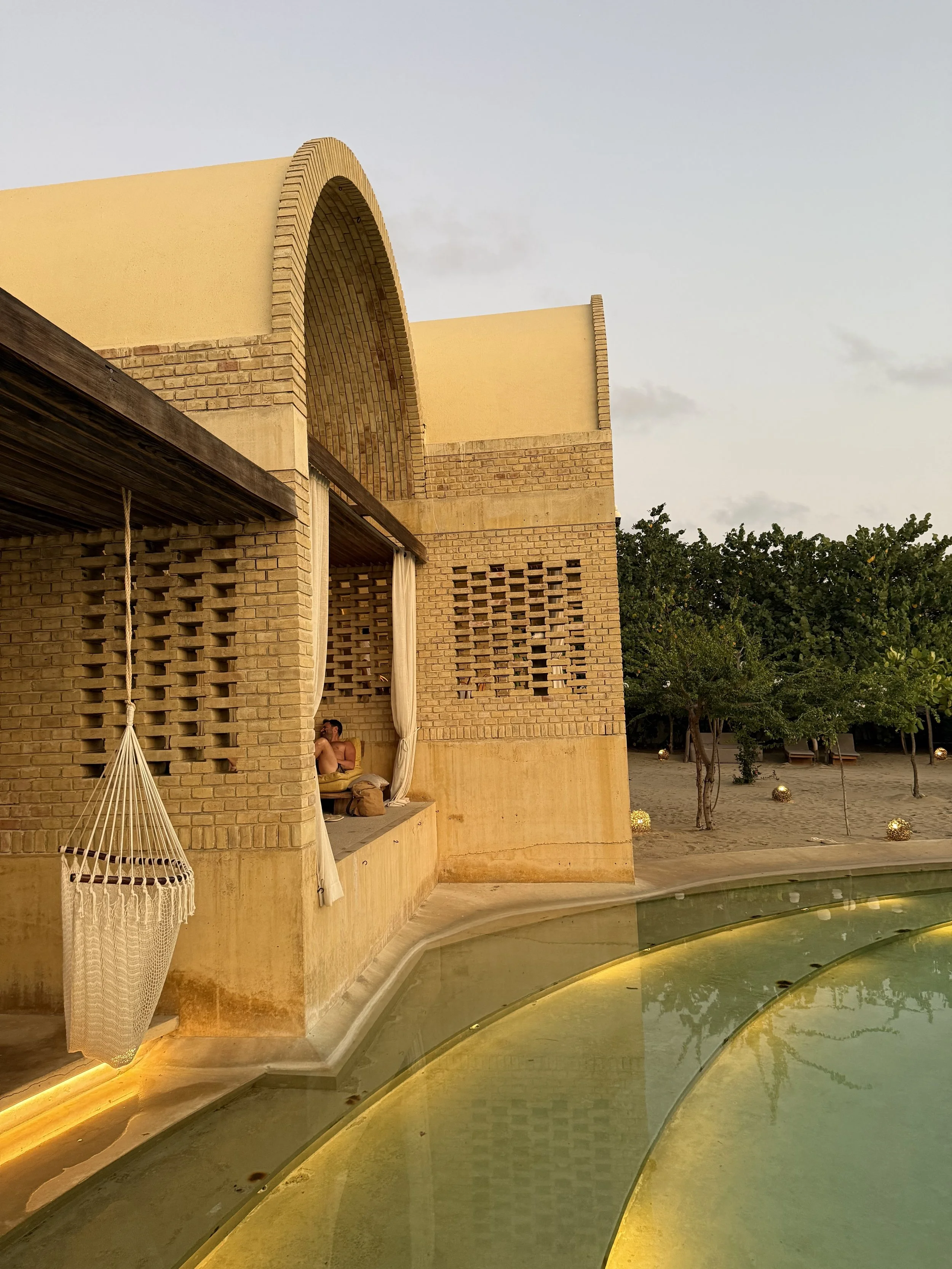
A 3 hours drive by our favorite race car driver Martin to arrive at our next stop near Puerto Escondido, in Punta Pajaros. Punta Pájaros is a secluded, eco-conscious coastal area known for sustainable, low-impact luxury, including Hotel Terrestre and Hotel Escondido. Developed by architect Alberto Kalach among others.
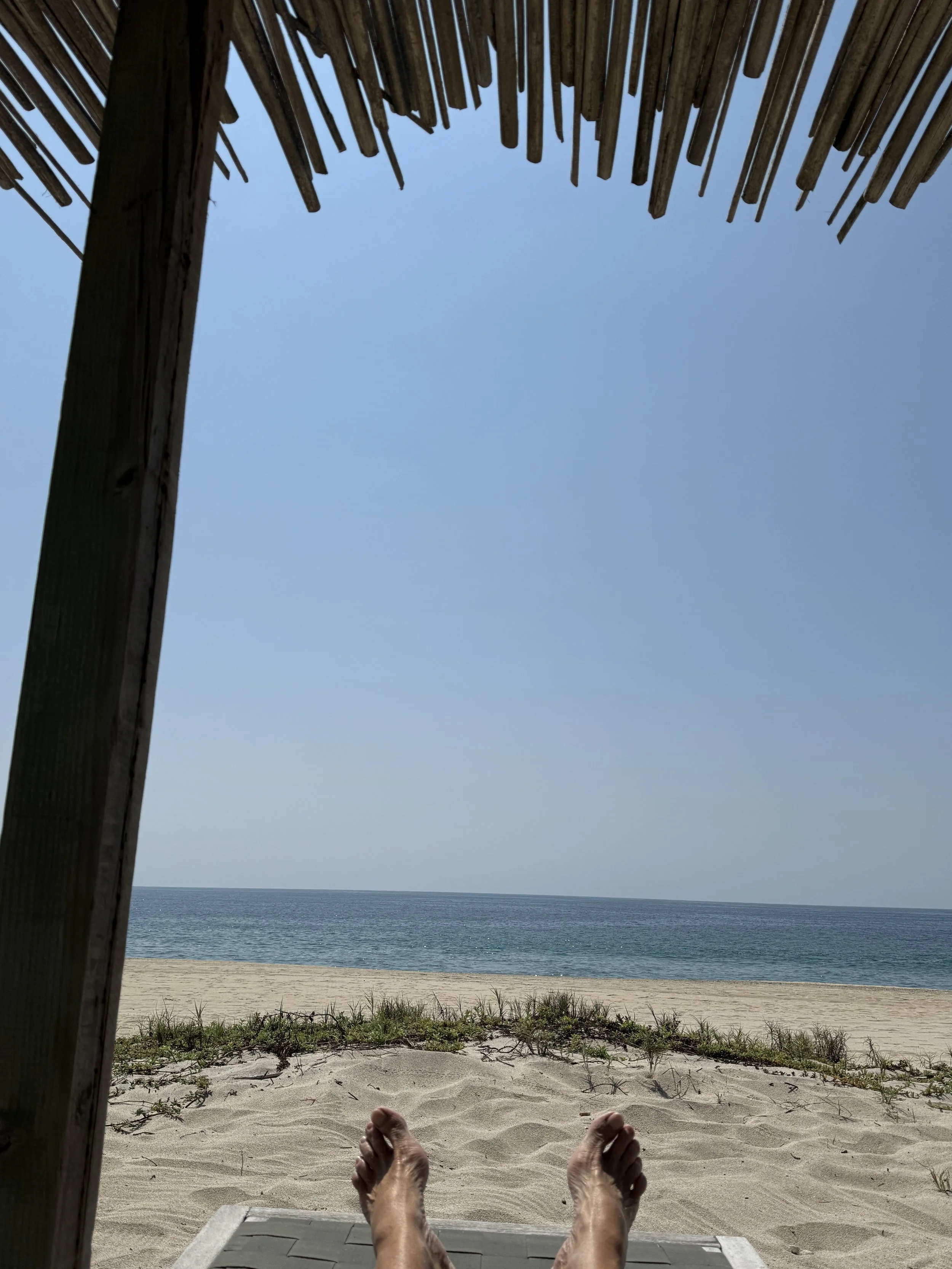
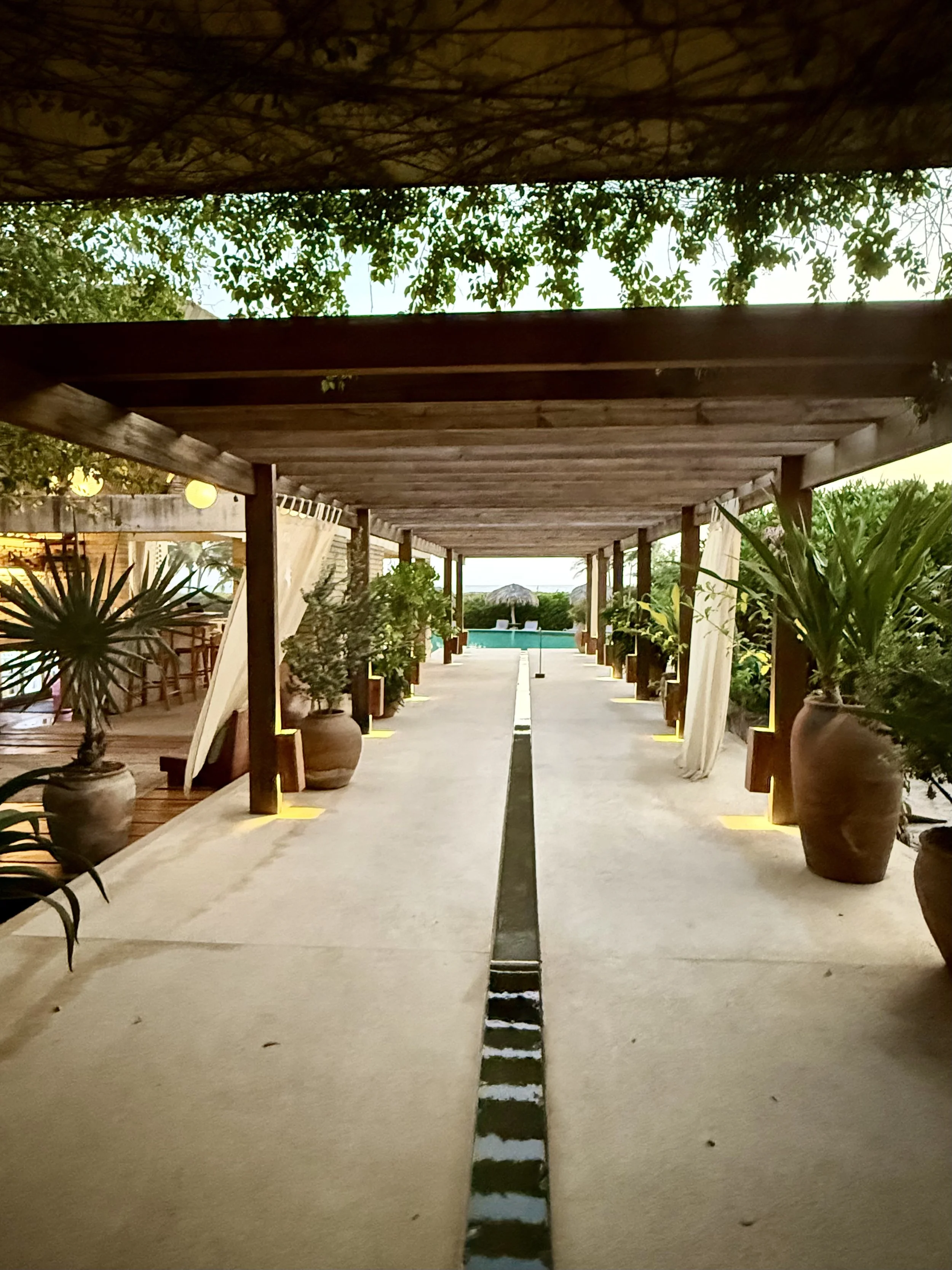
We stayed in Hotel Pajáros where we had an amazing time! Delicious food and incredible Kakurega Omakase next door.
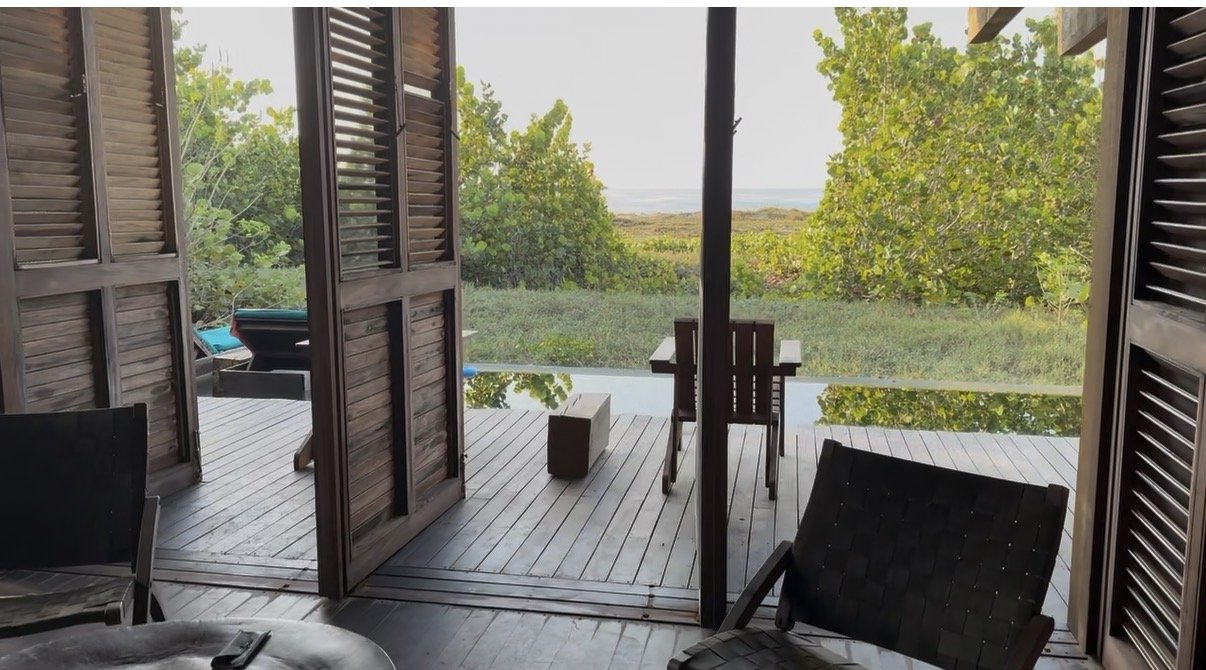
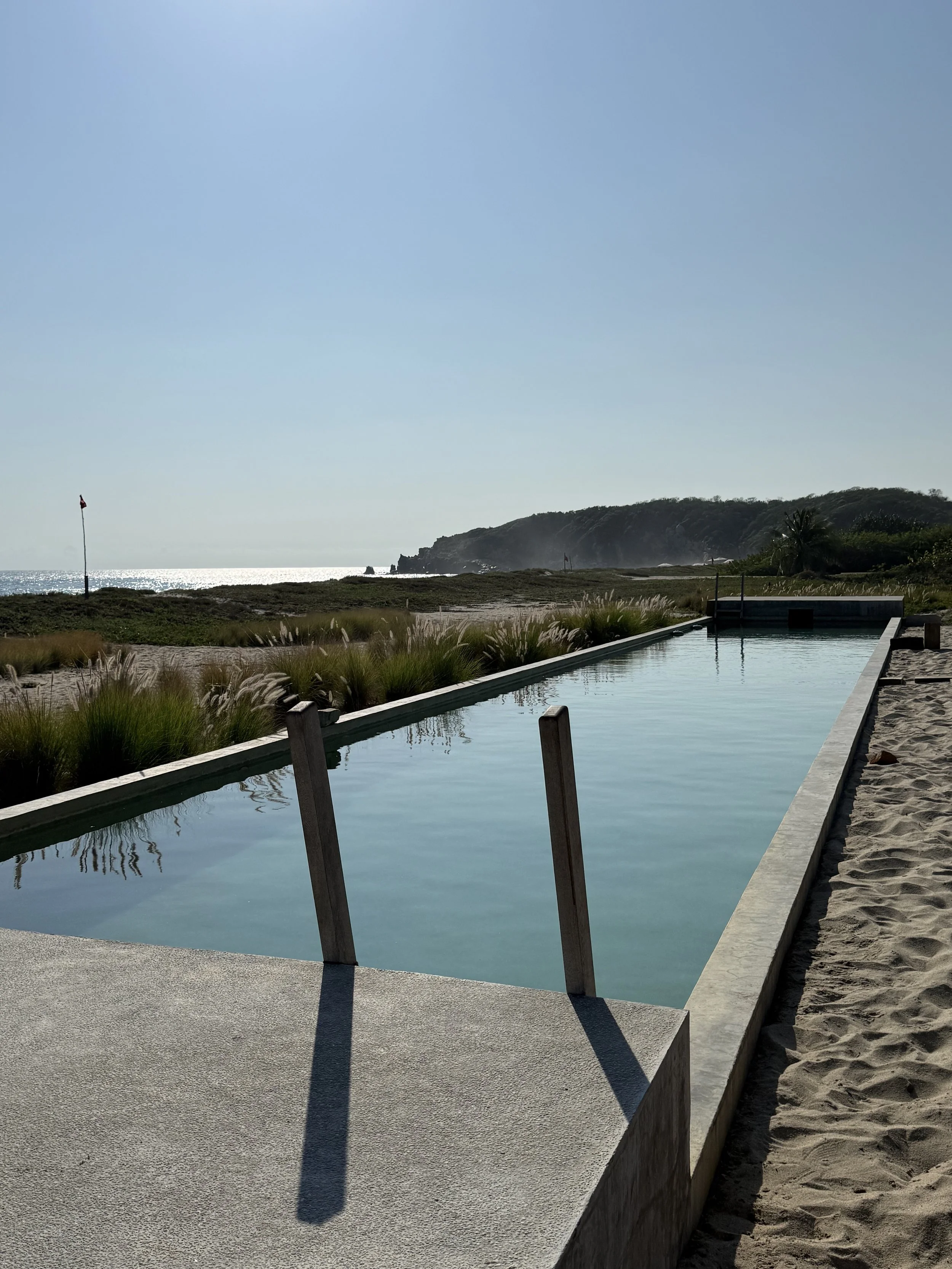
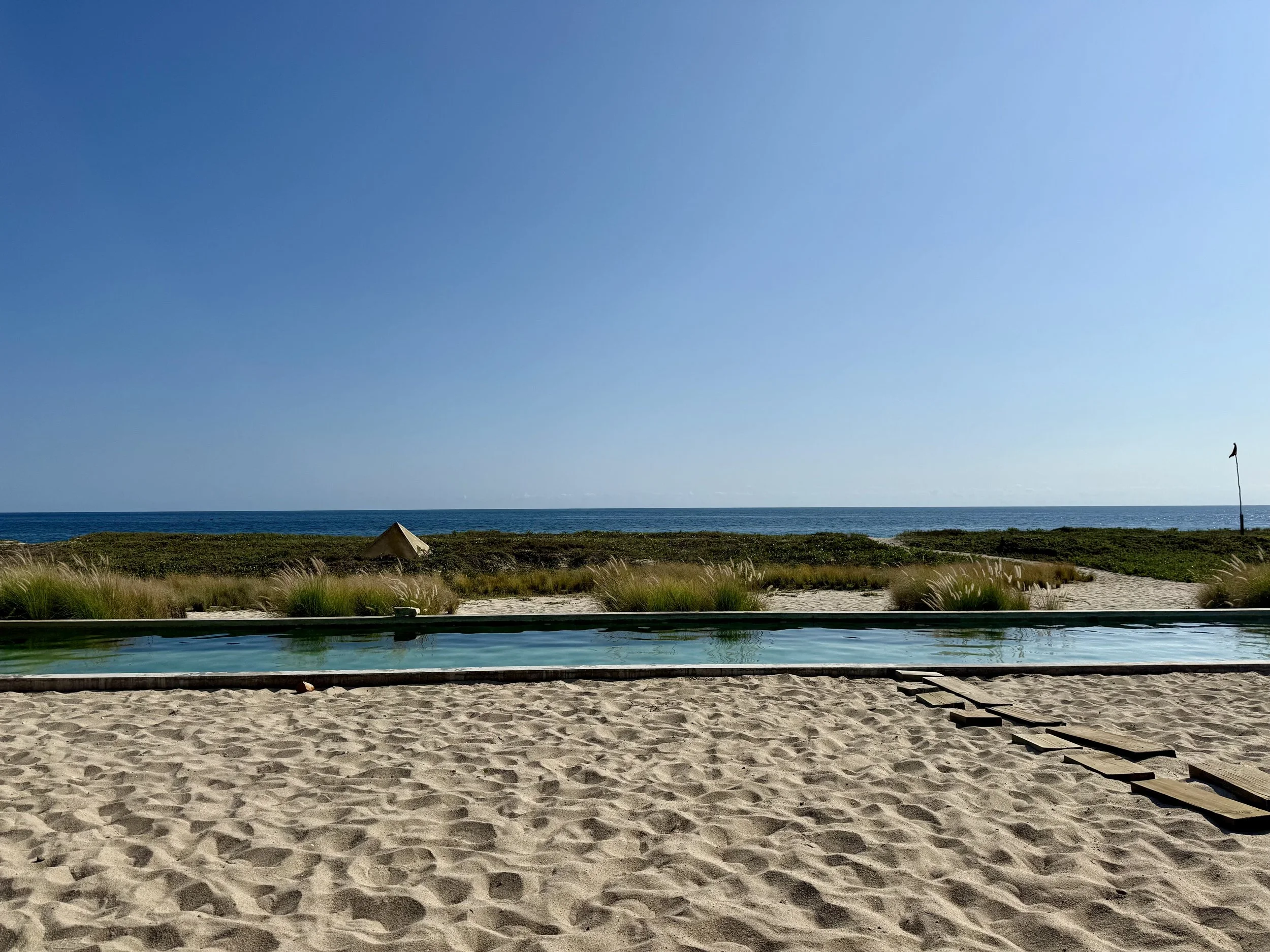
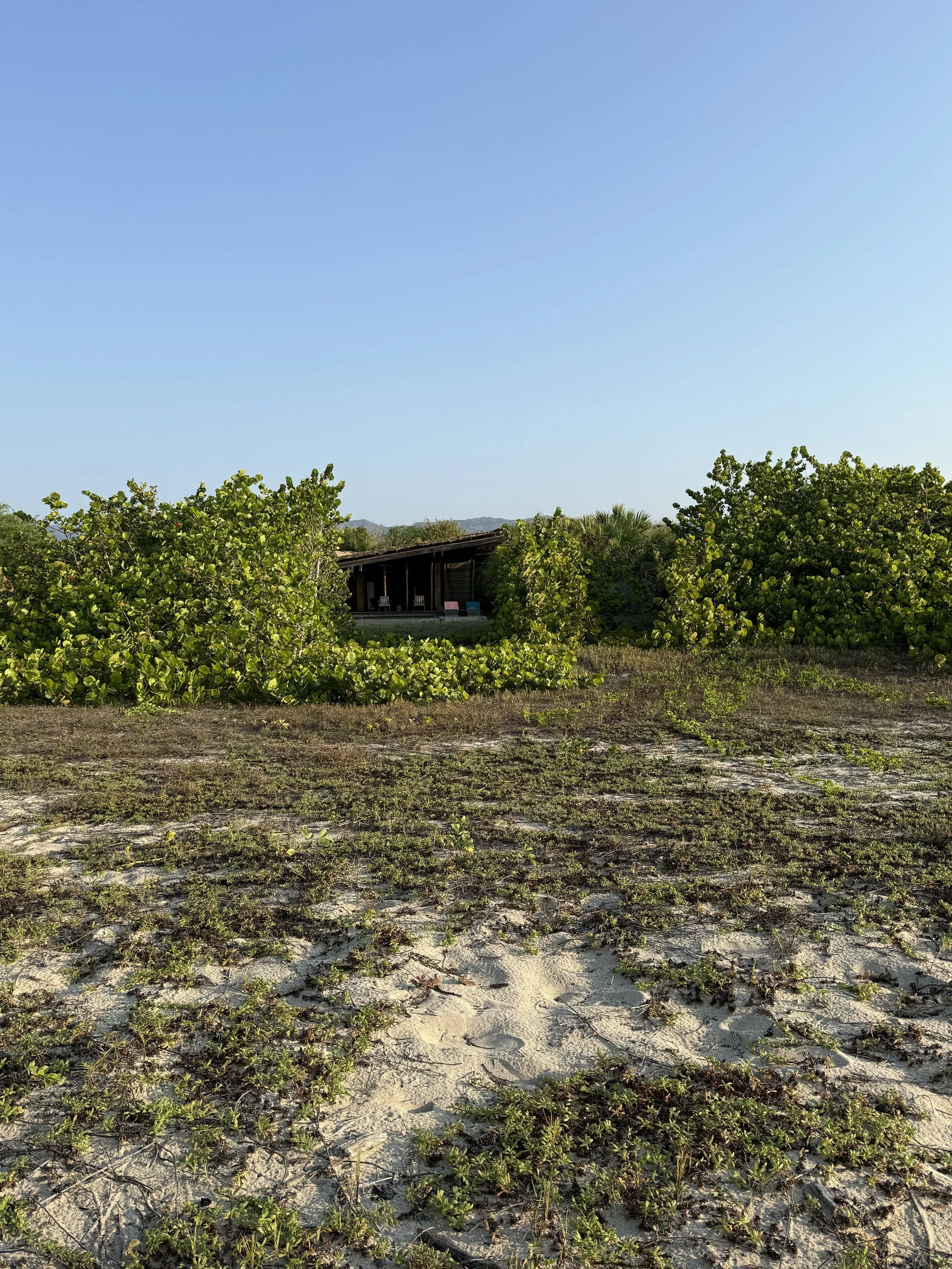
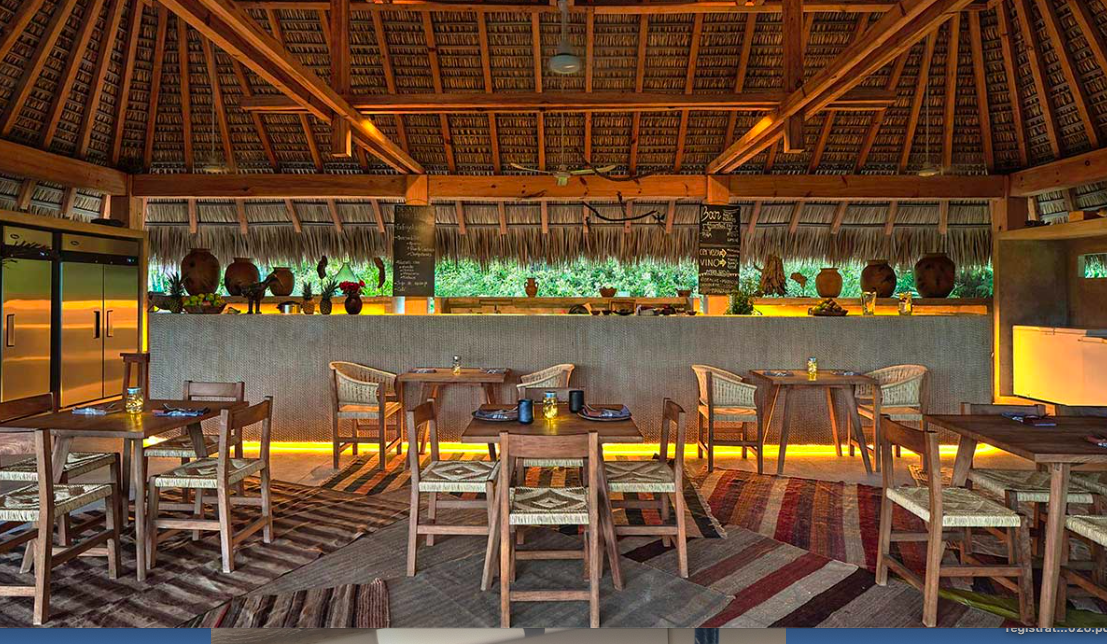
Next door Hotel Terrestre
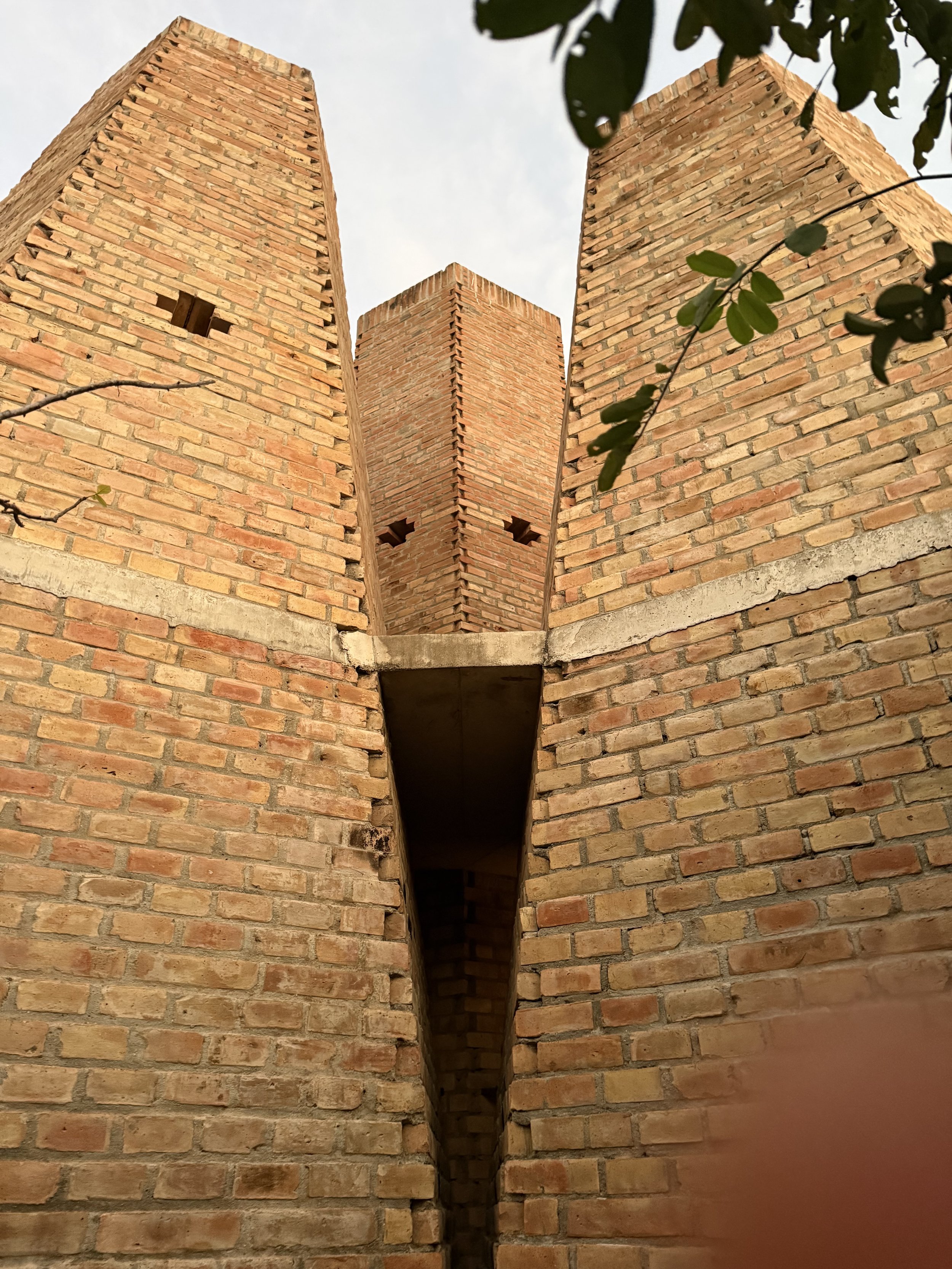
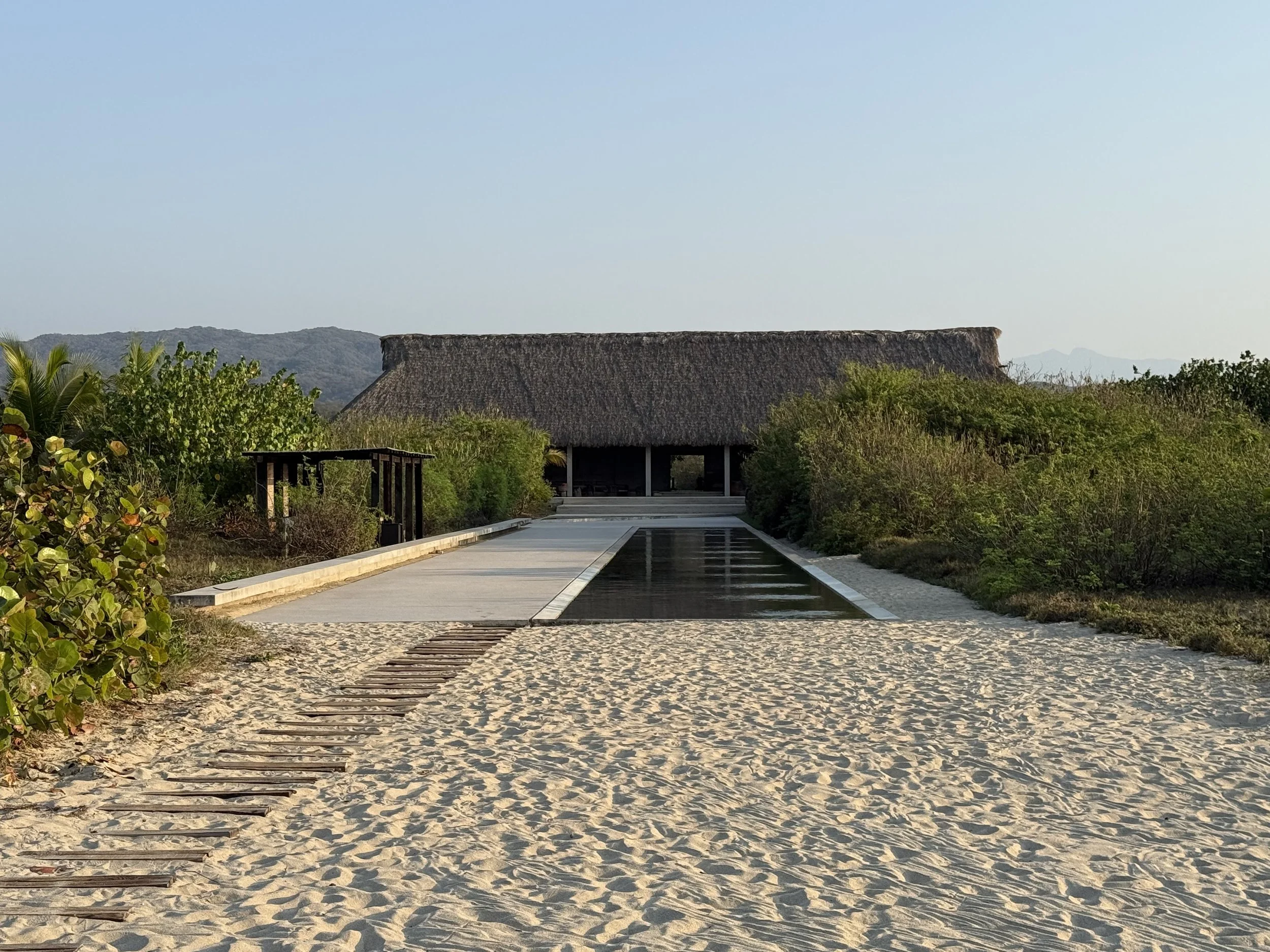
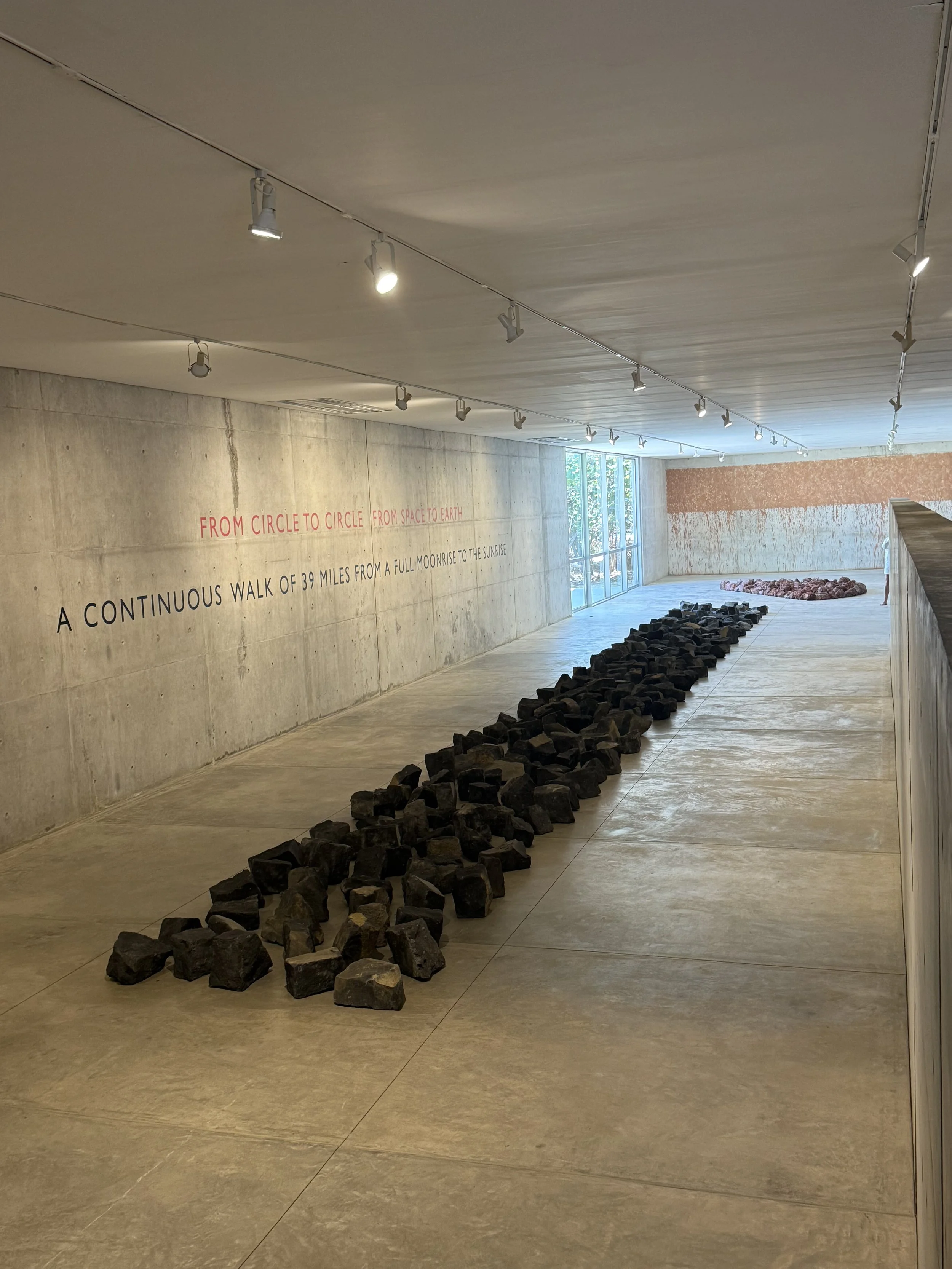
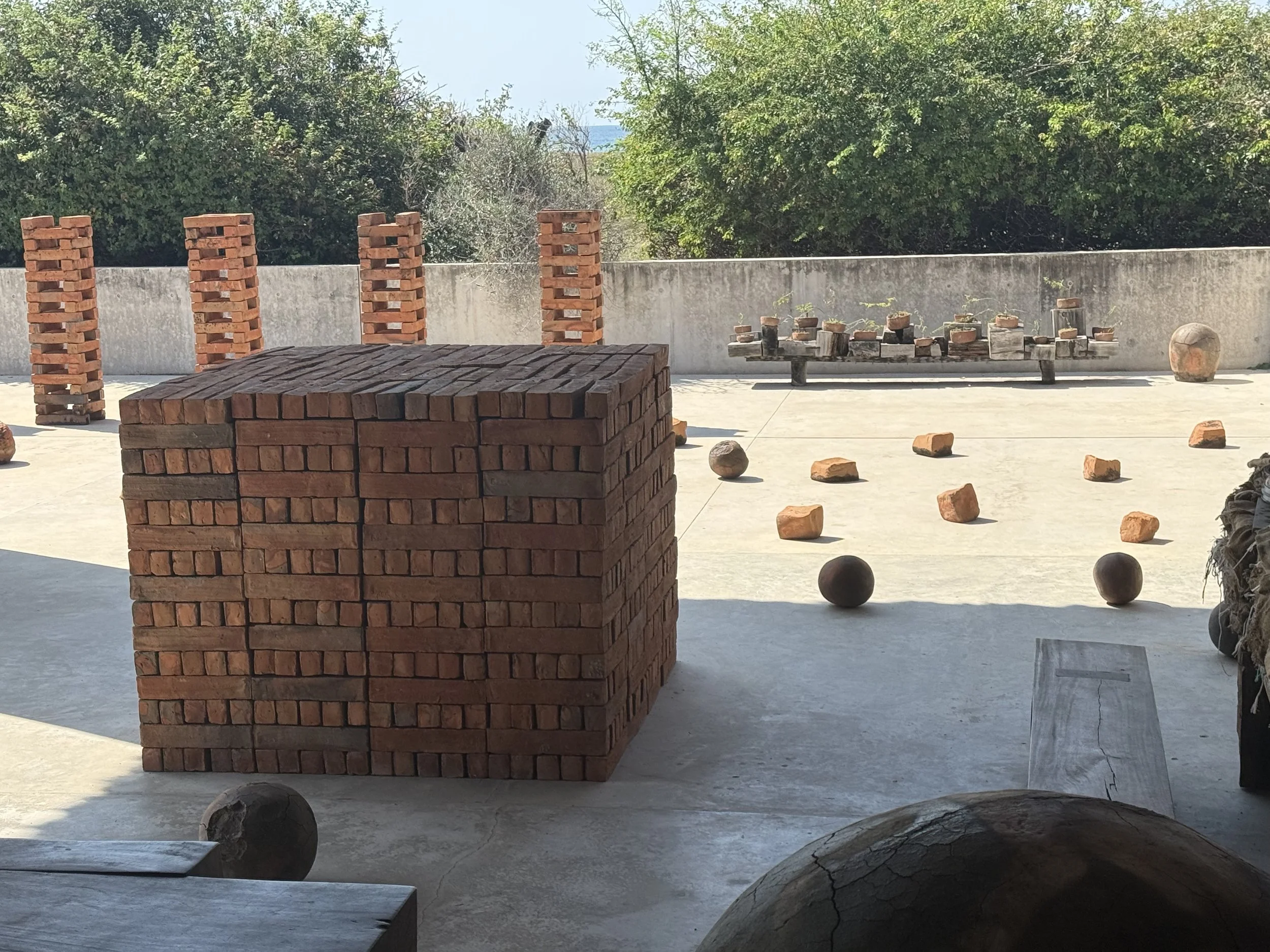
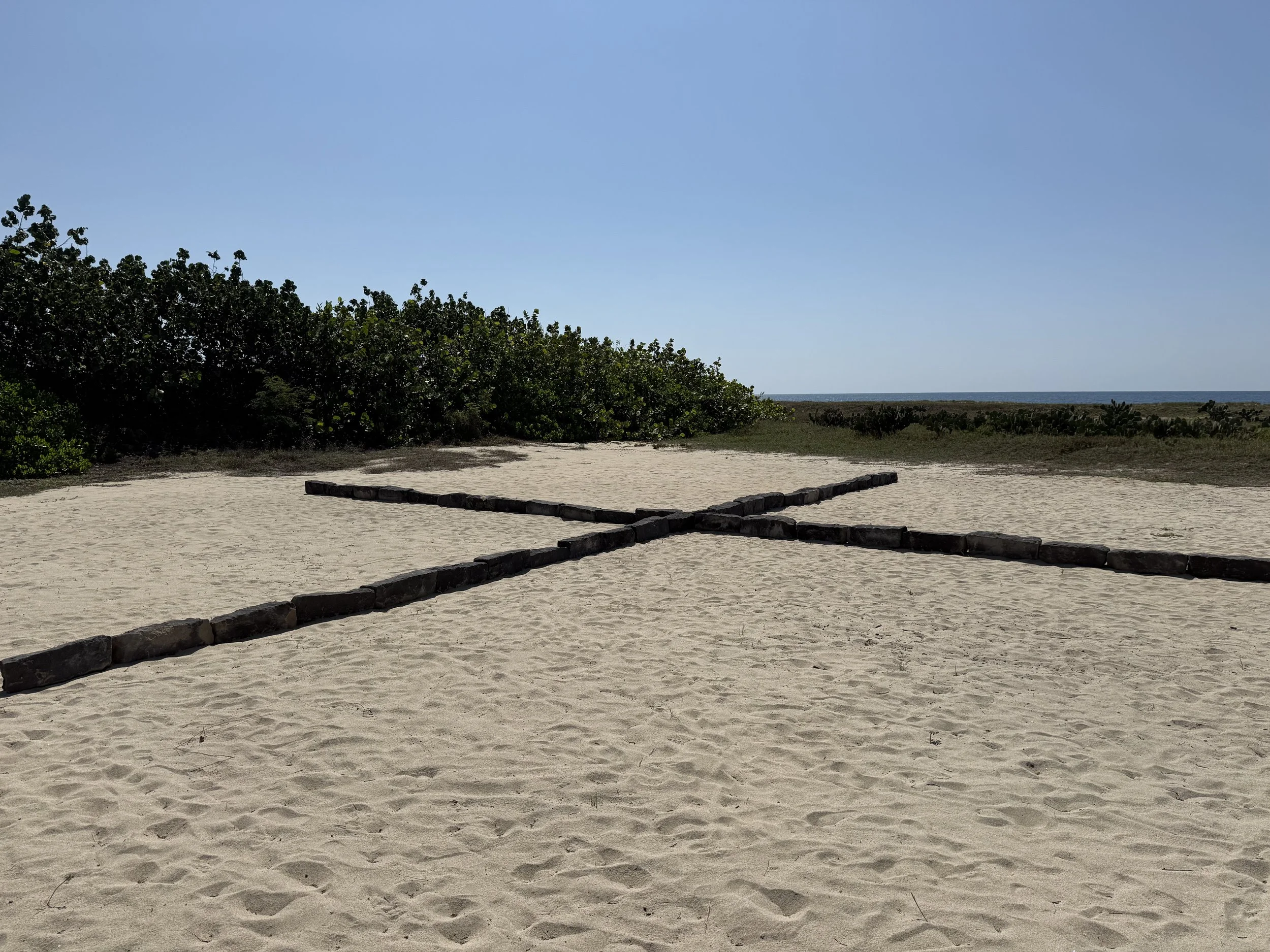
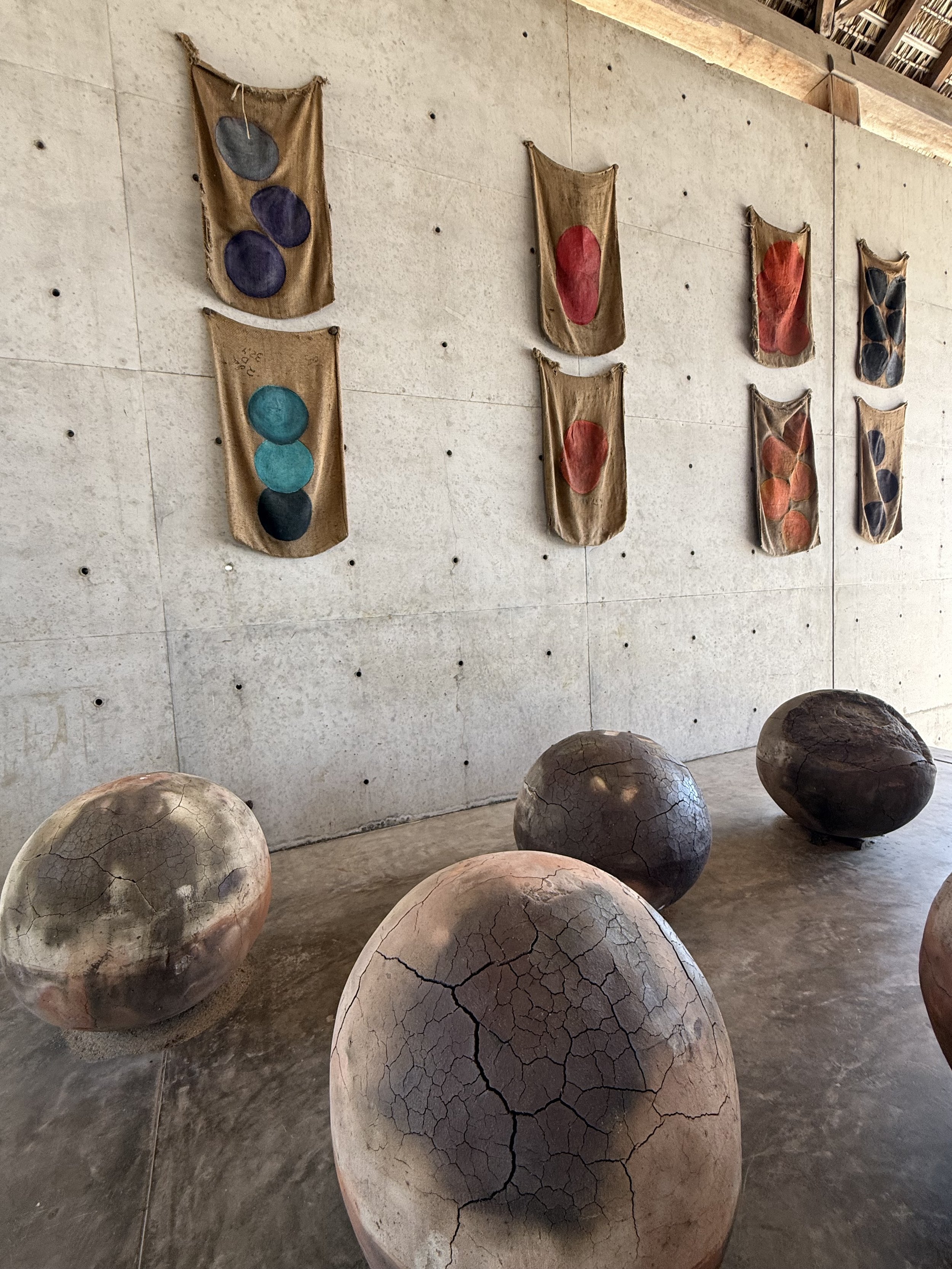
Very close by is the Fundación Casa Wabi, the name originates from the Japanese philosophy of Wabi-Sabi, which seeks beauty and harmony in simplicity, imperfection, and the unconventional. It was designed by Japanese architect Tadao Ando and conceived by Mexican artist Bosco Sodi. It promotes exchange between contemporary art and local communities in three locations: Puerto Escondido, Mexico City and Tokyo. Among many artists, an installation by Richard Long was in display. Nearby is Boris Vervoodt gallery.
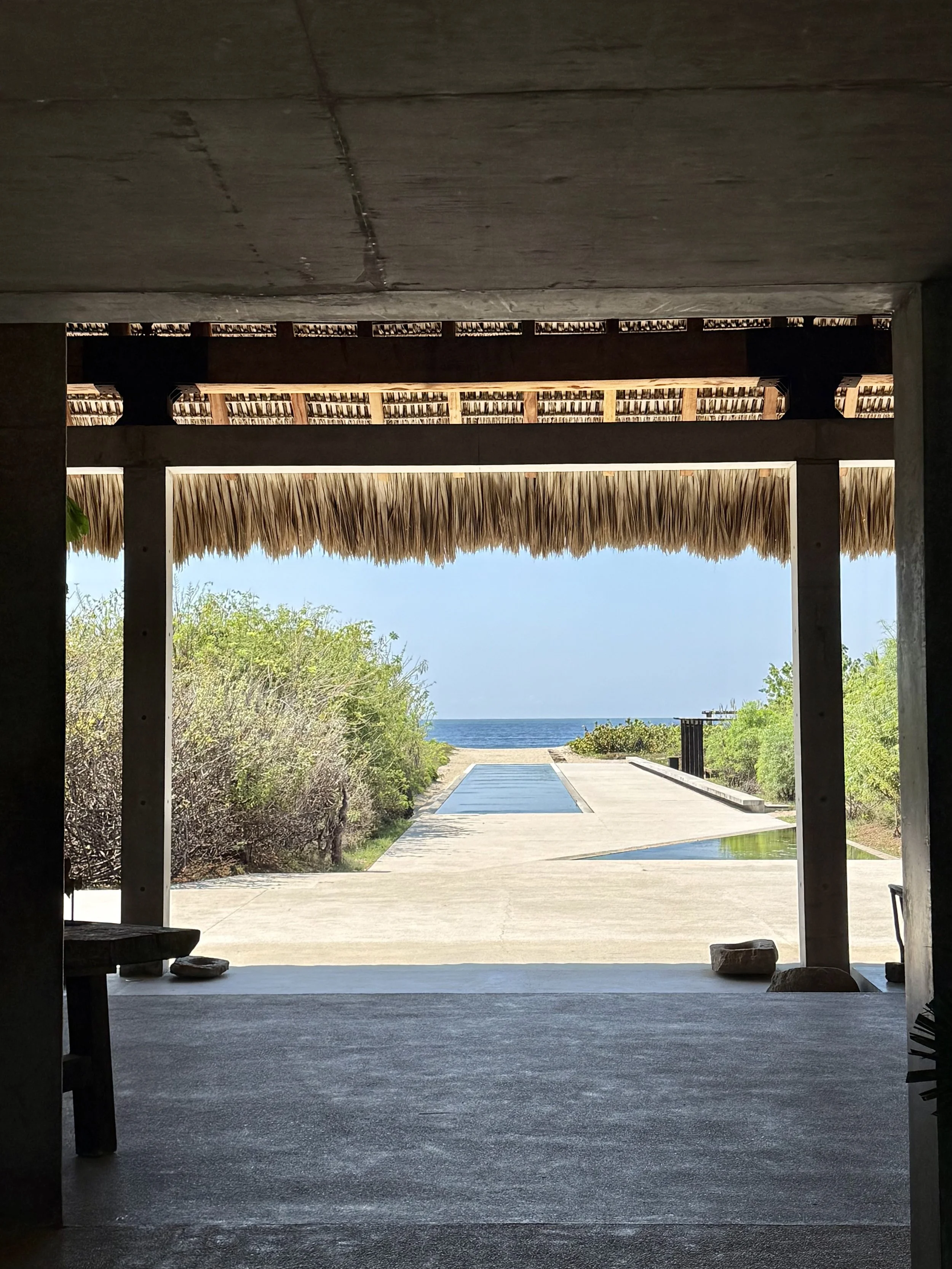
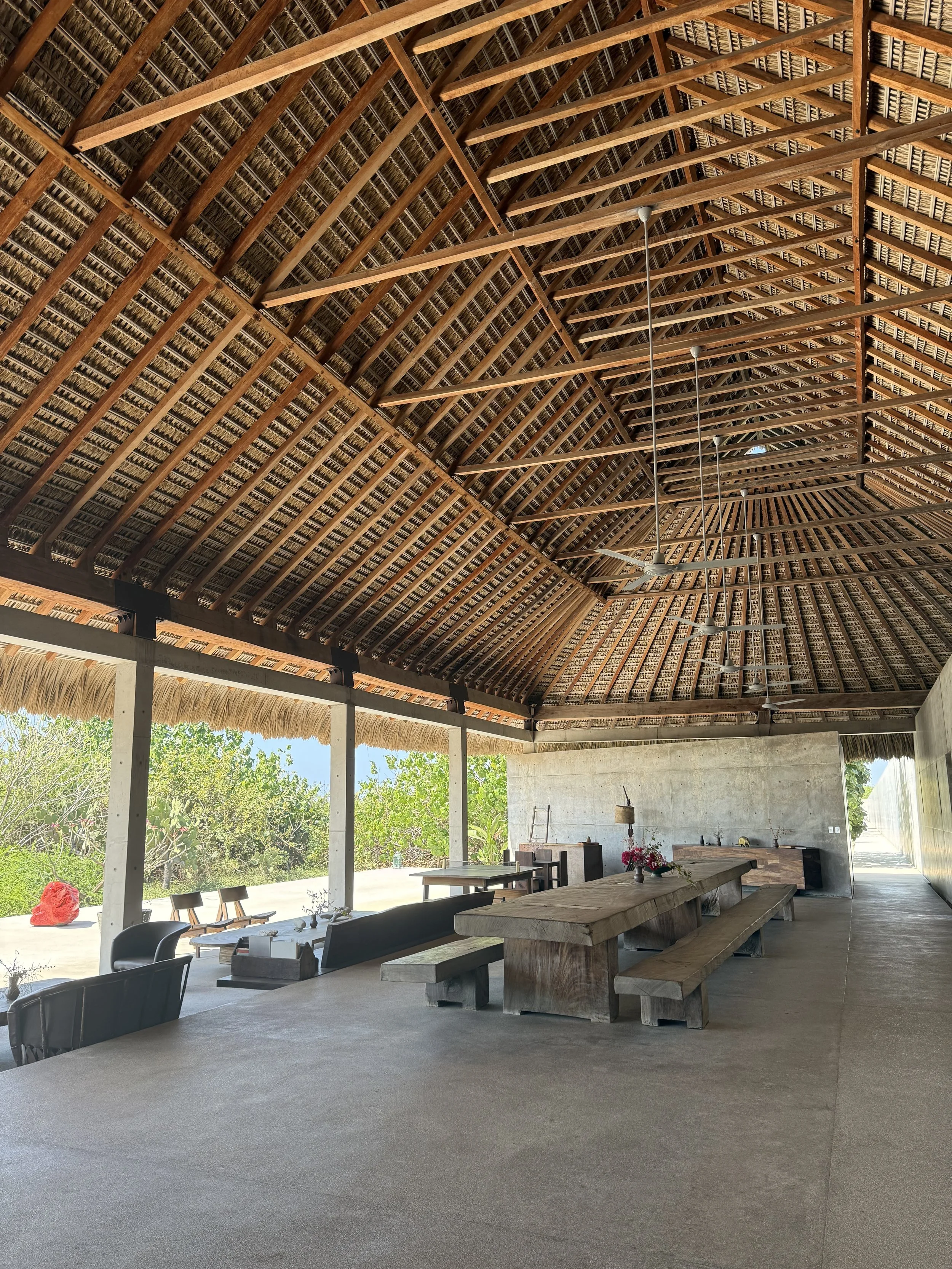
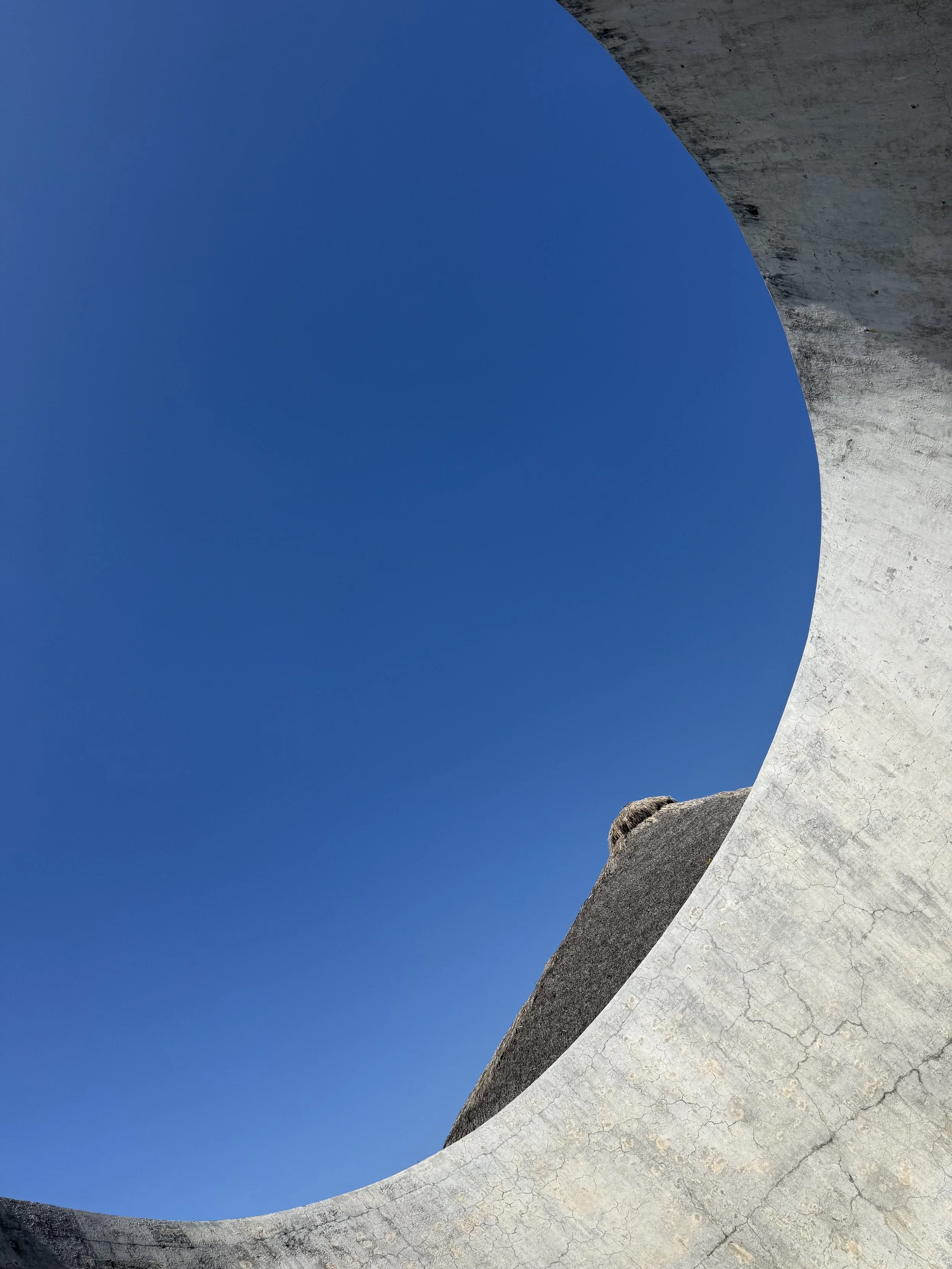
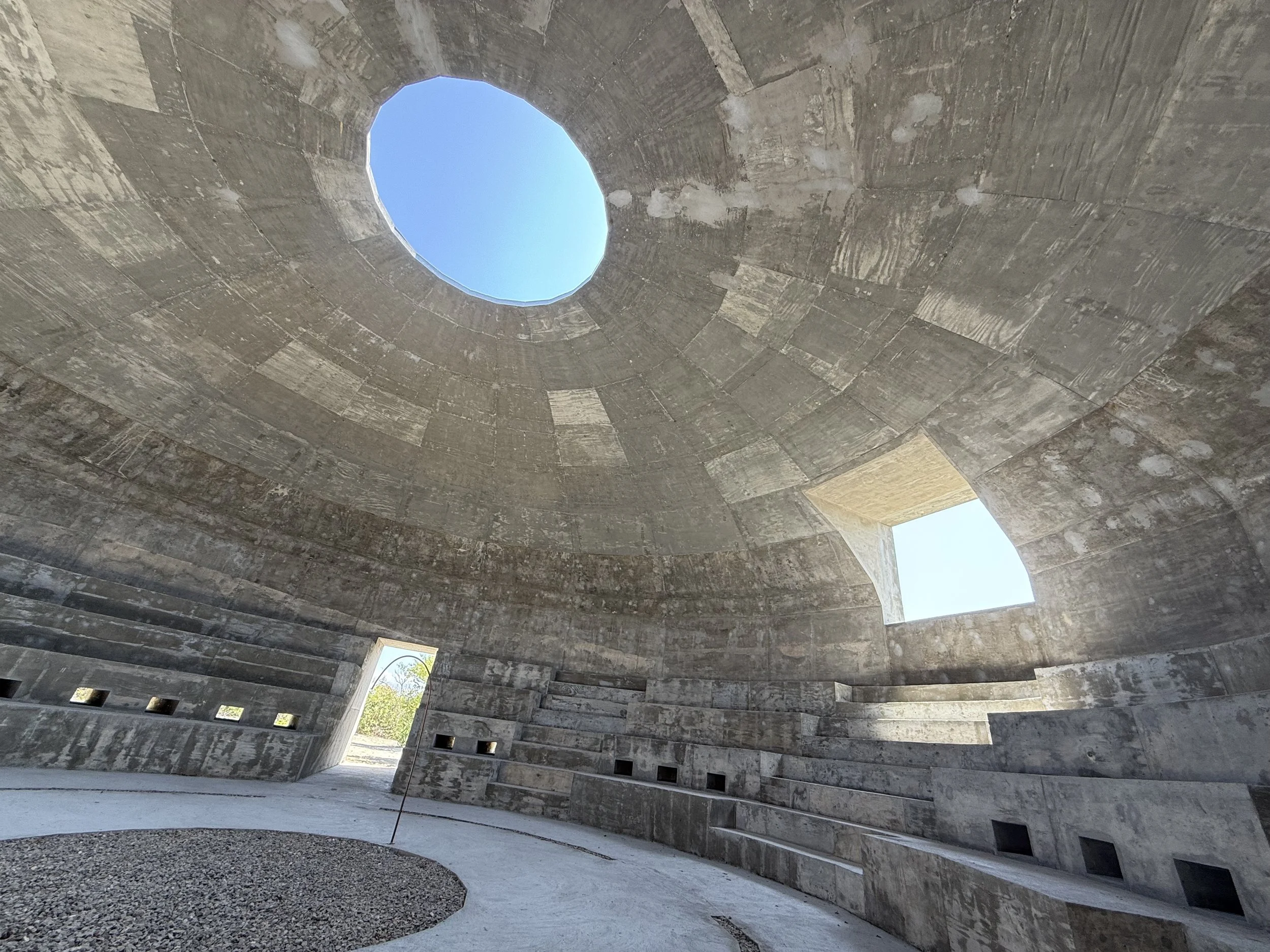
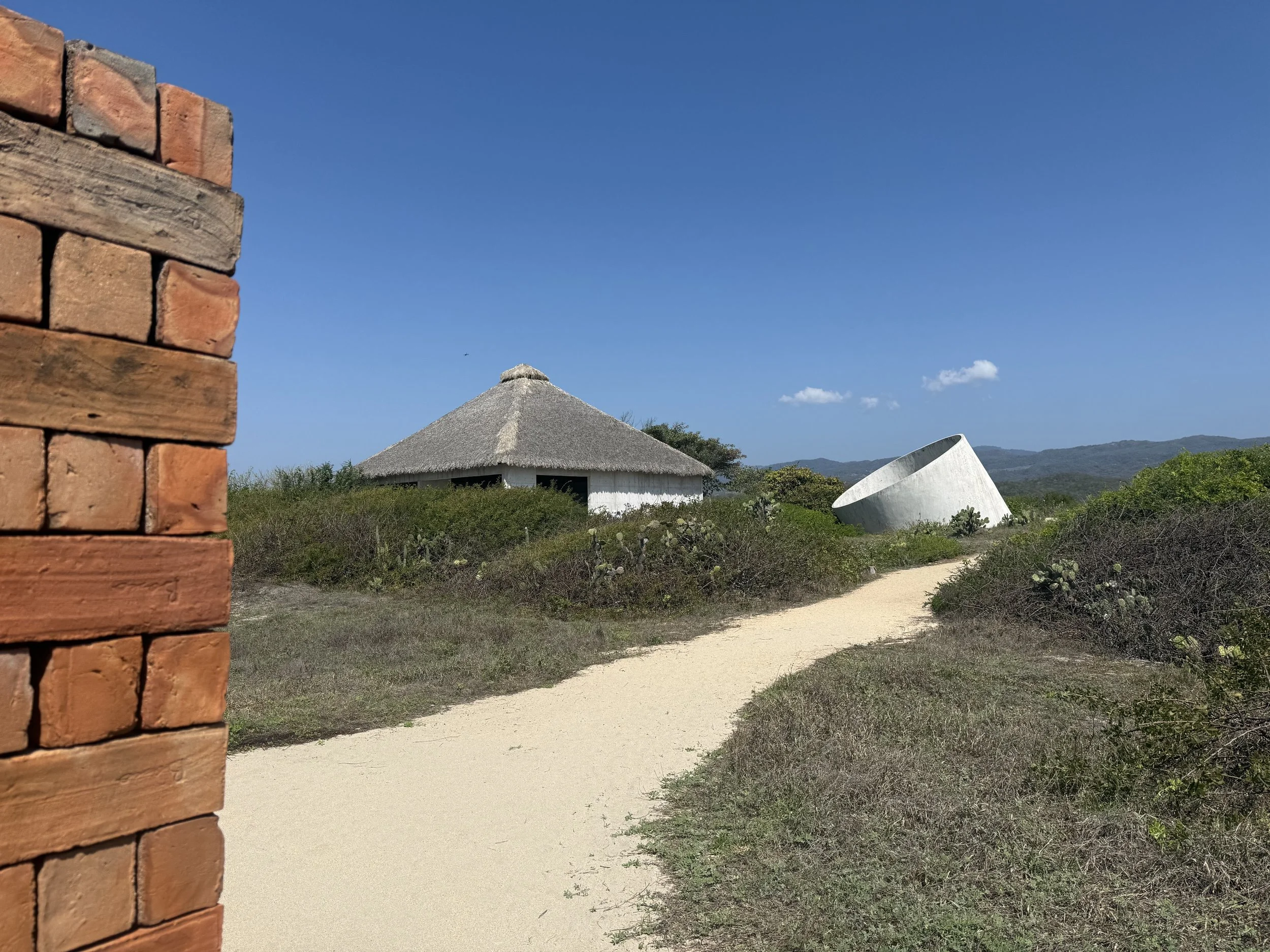
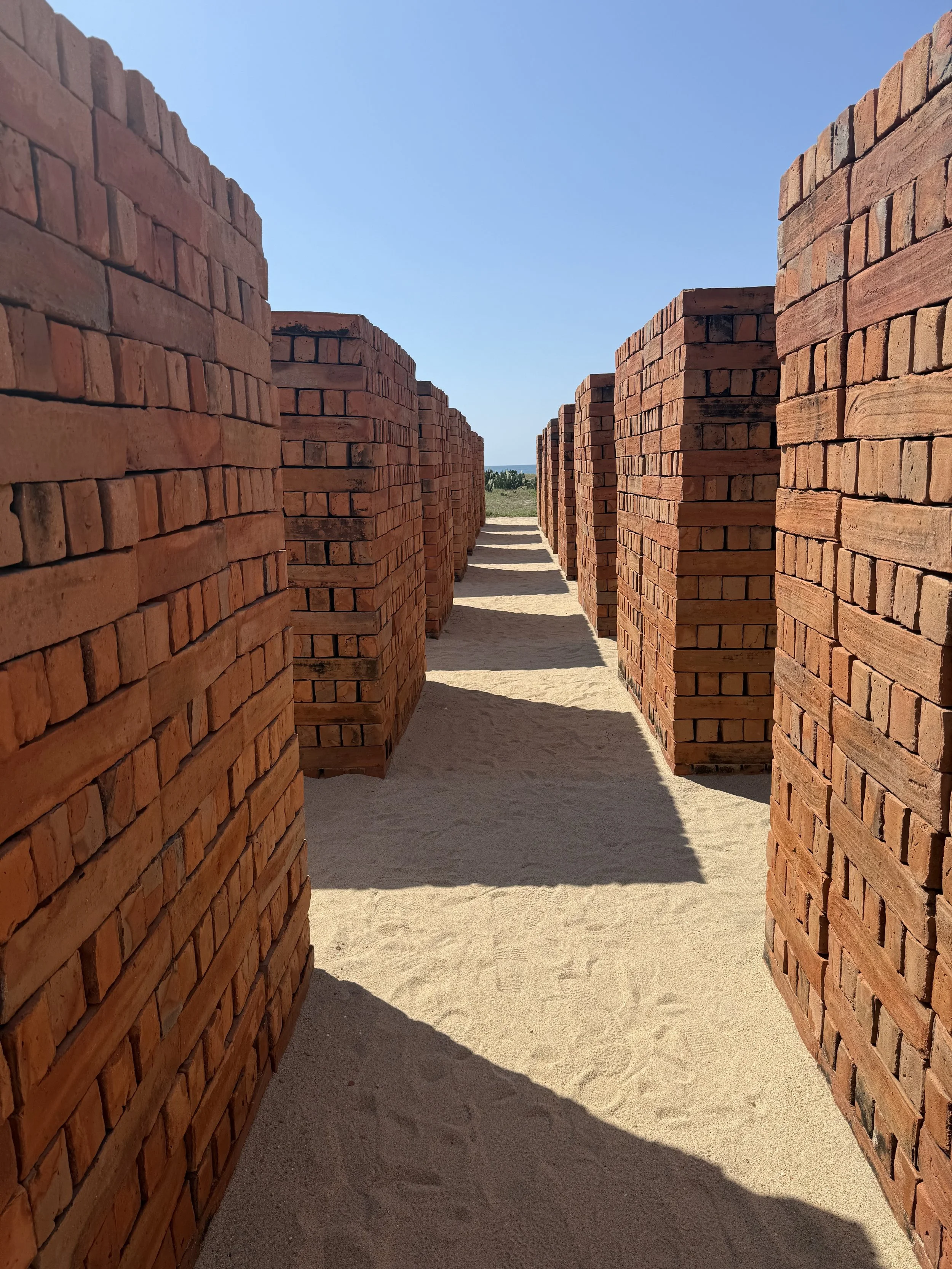
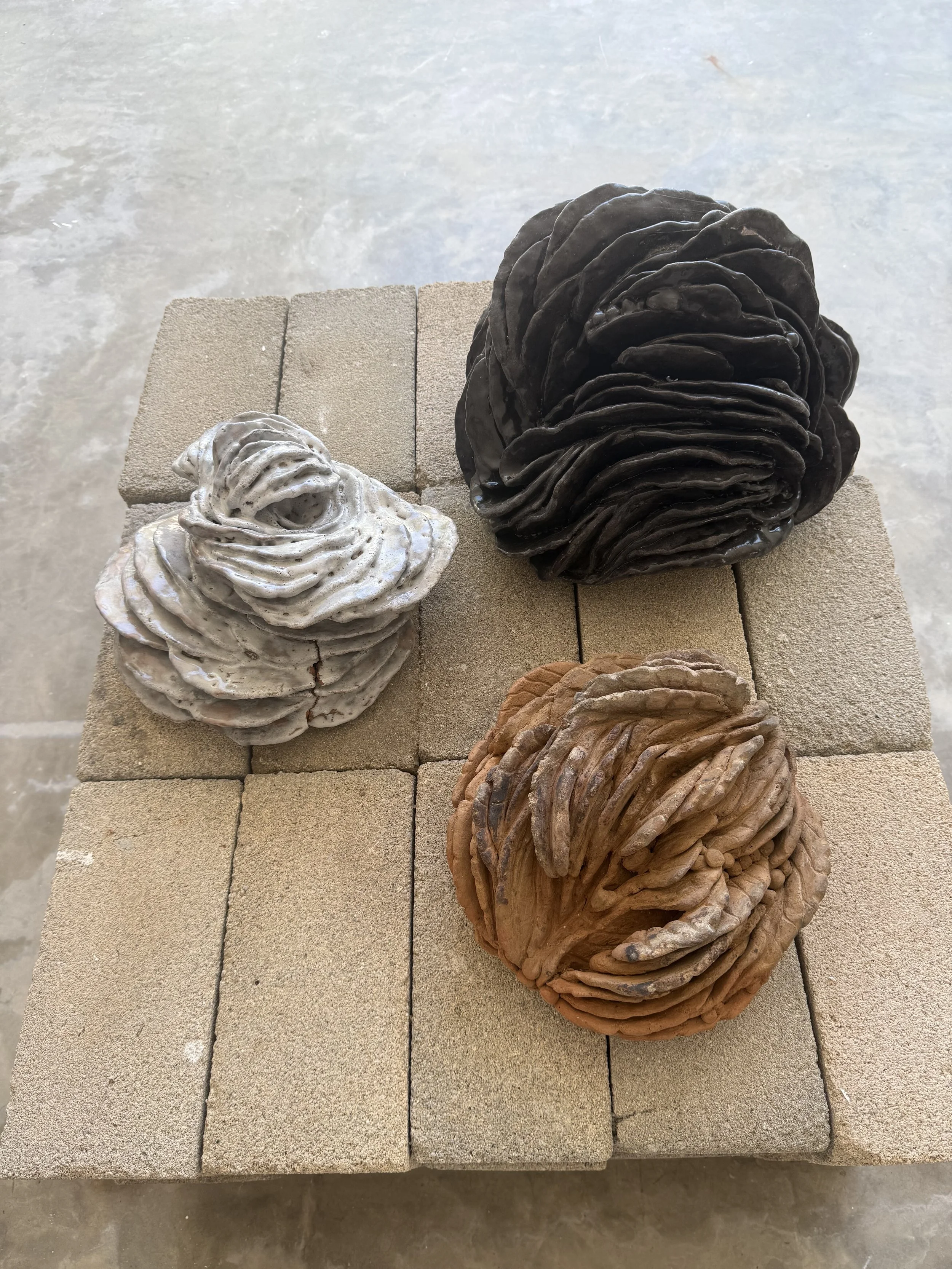
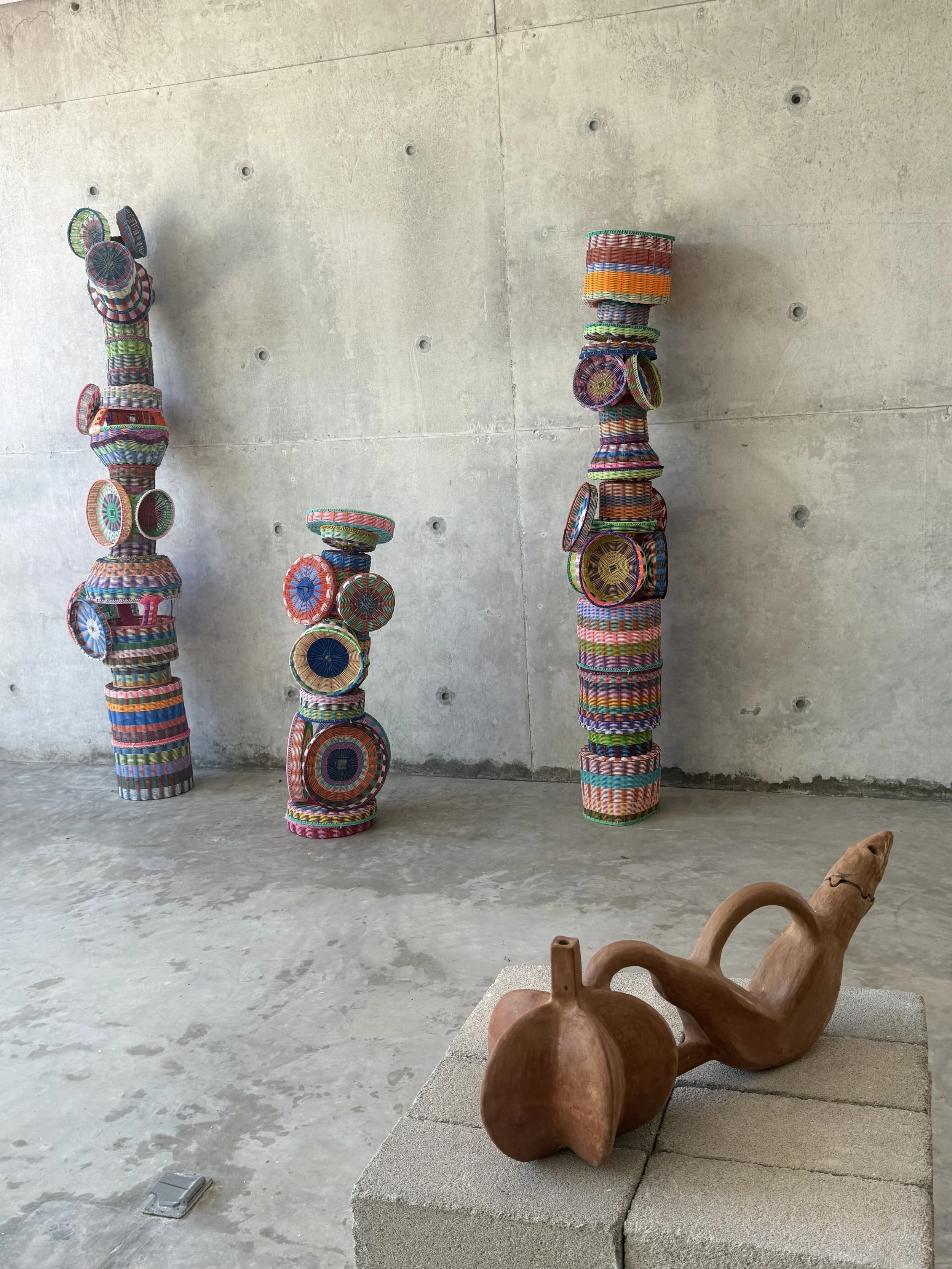
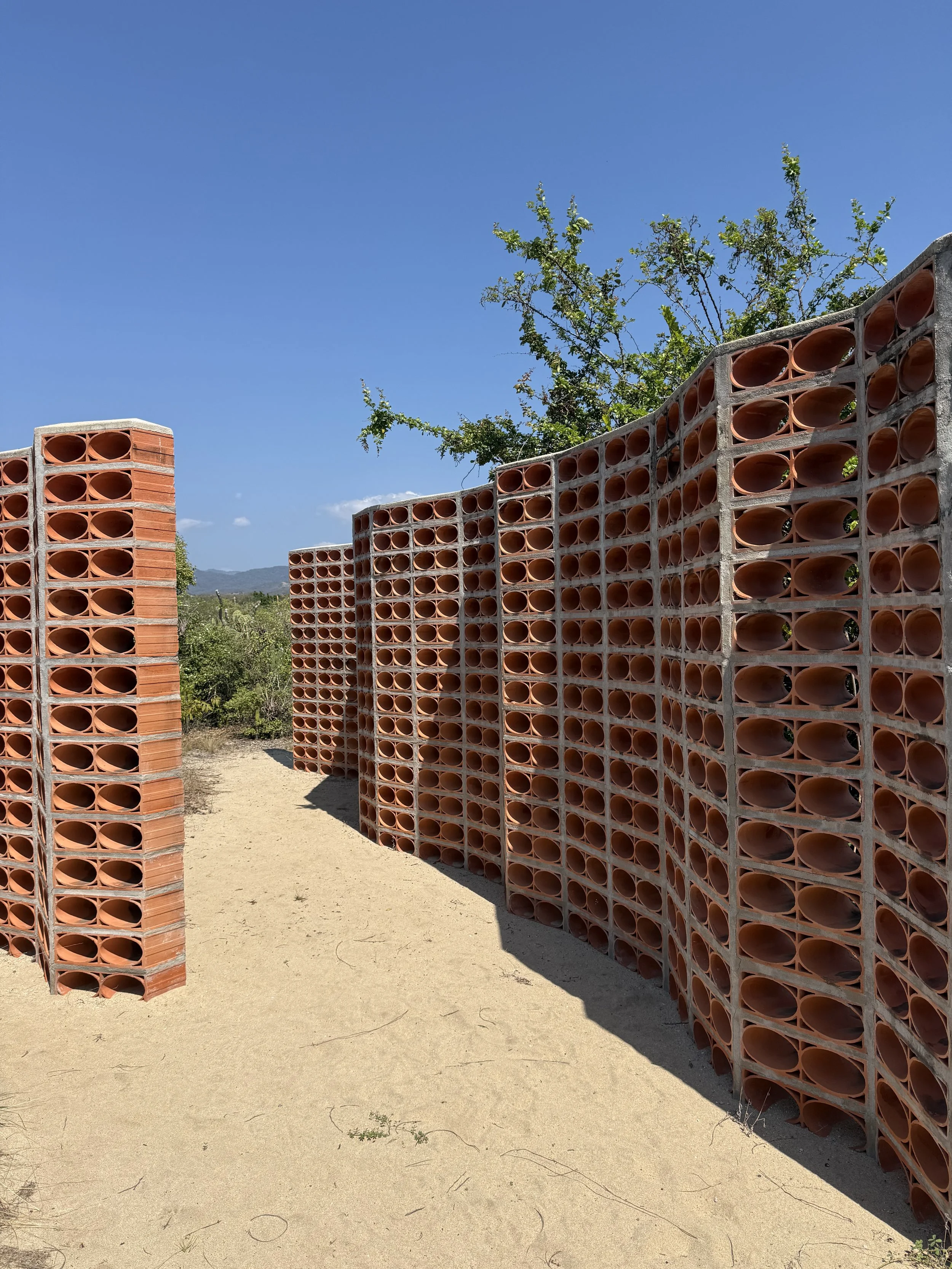
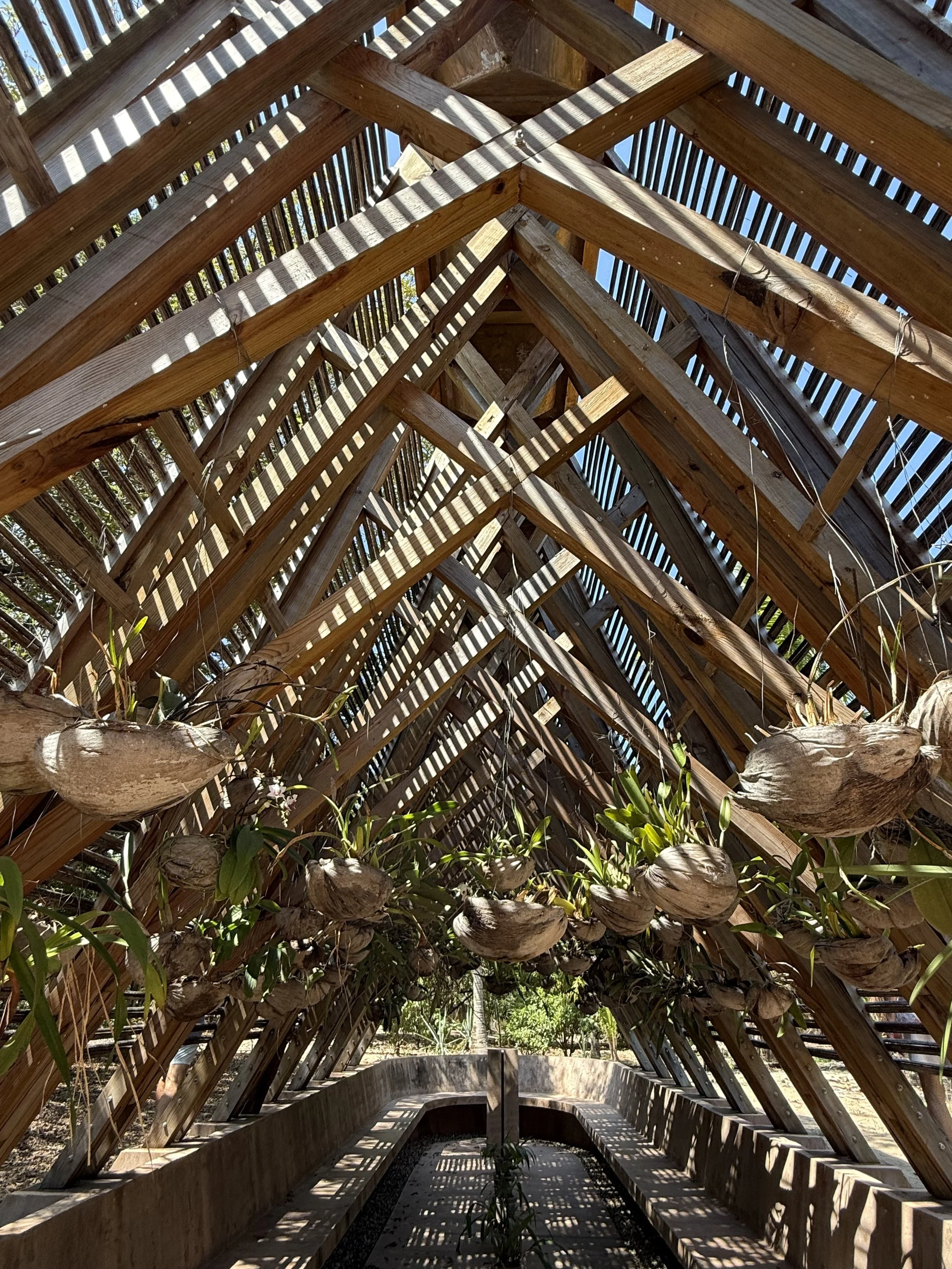
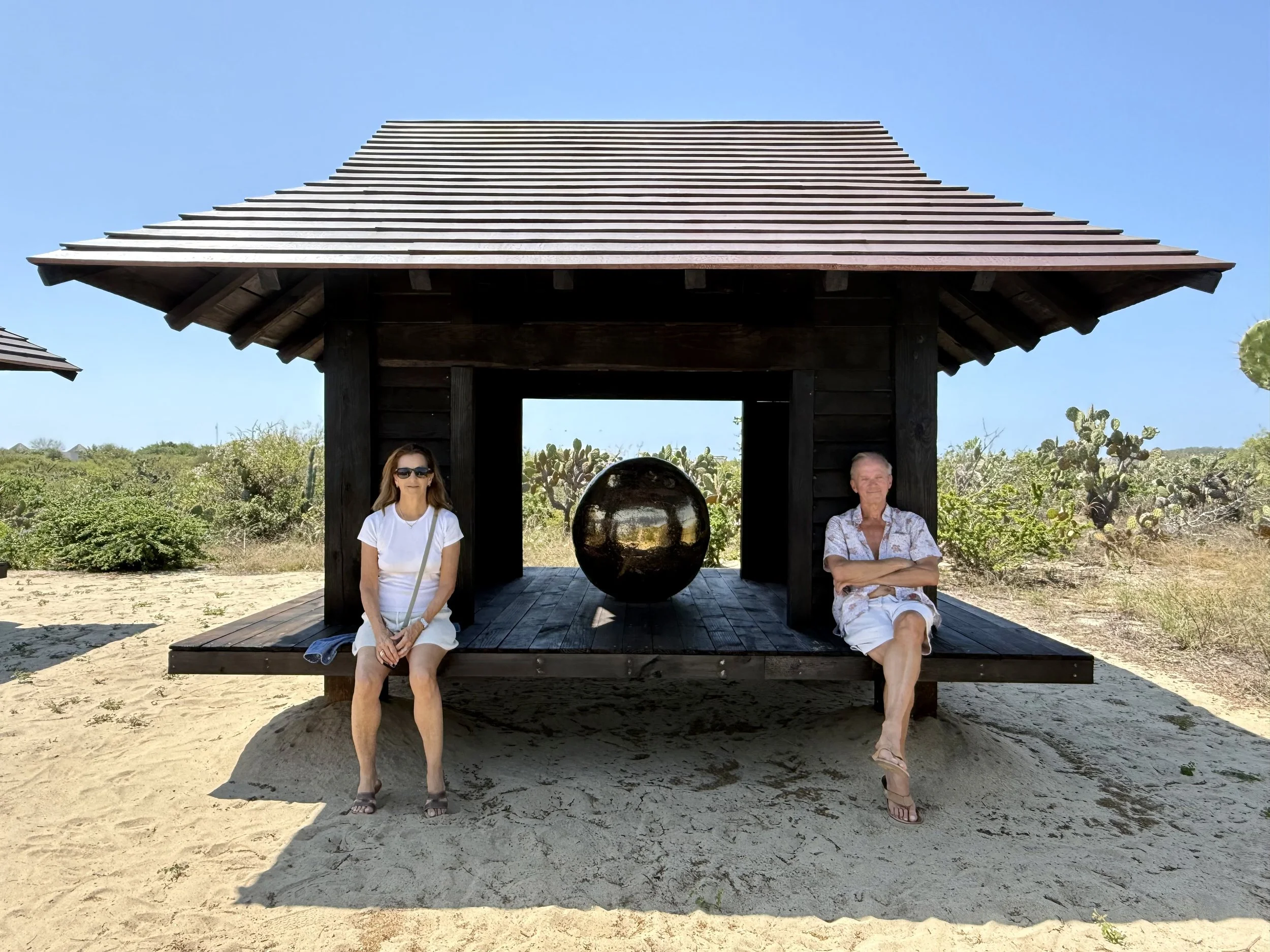
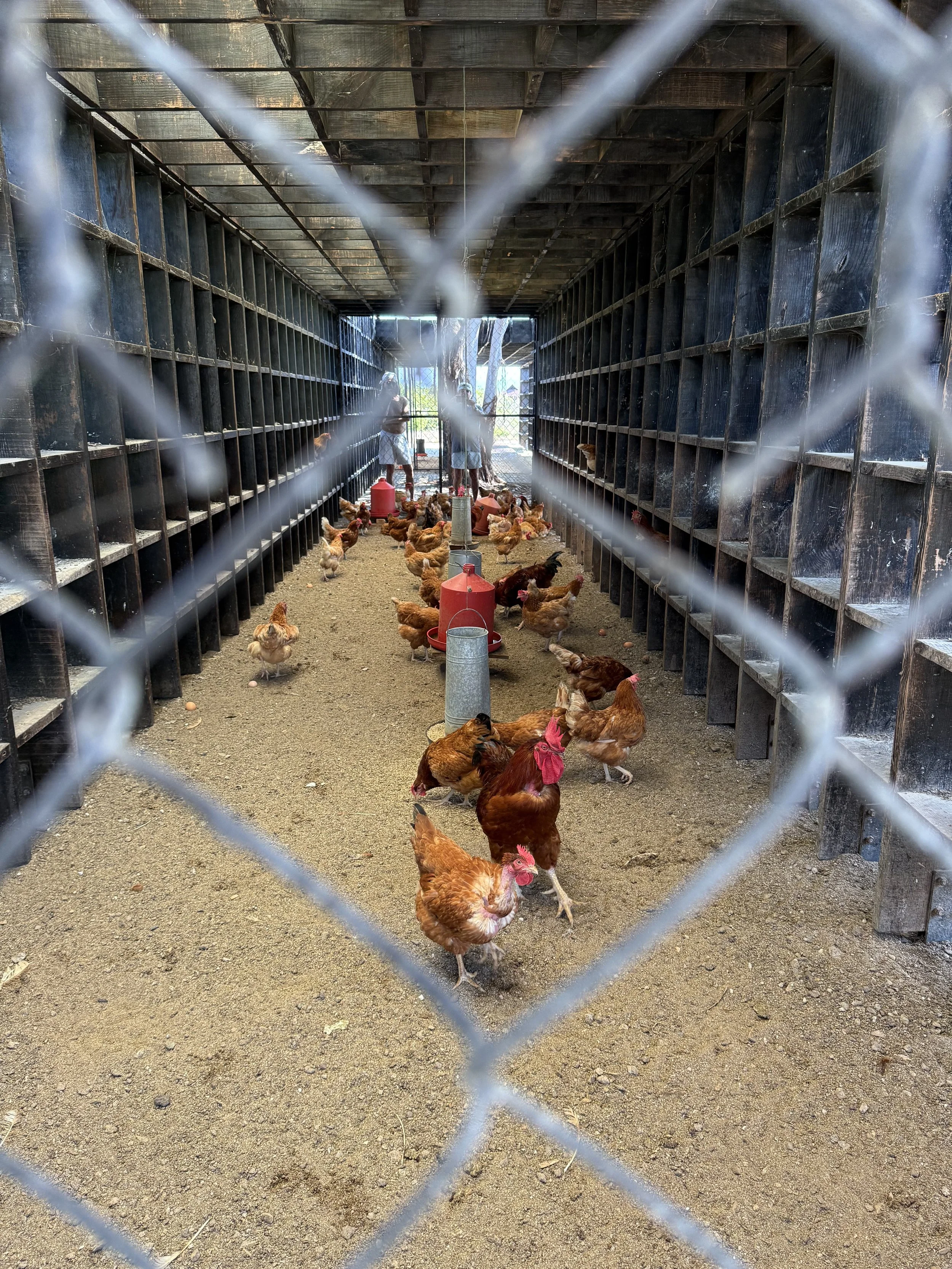
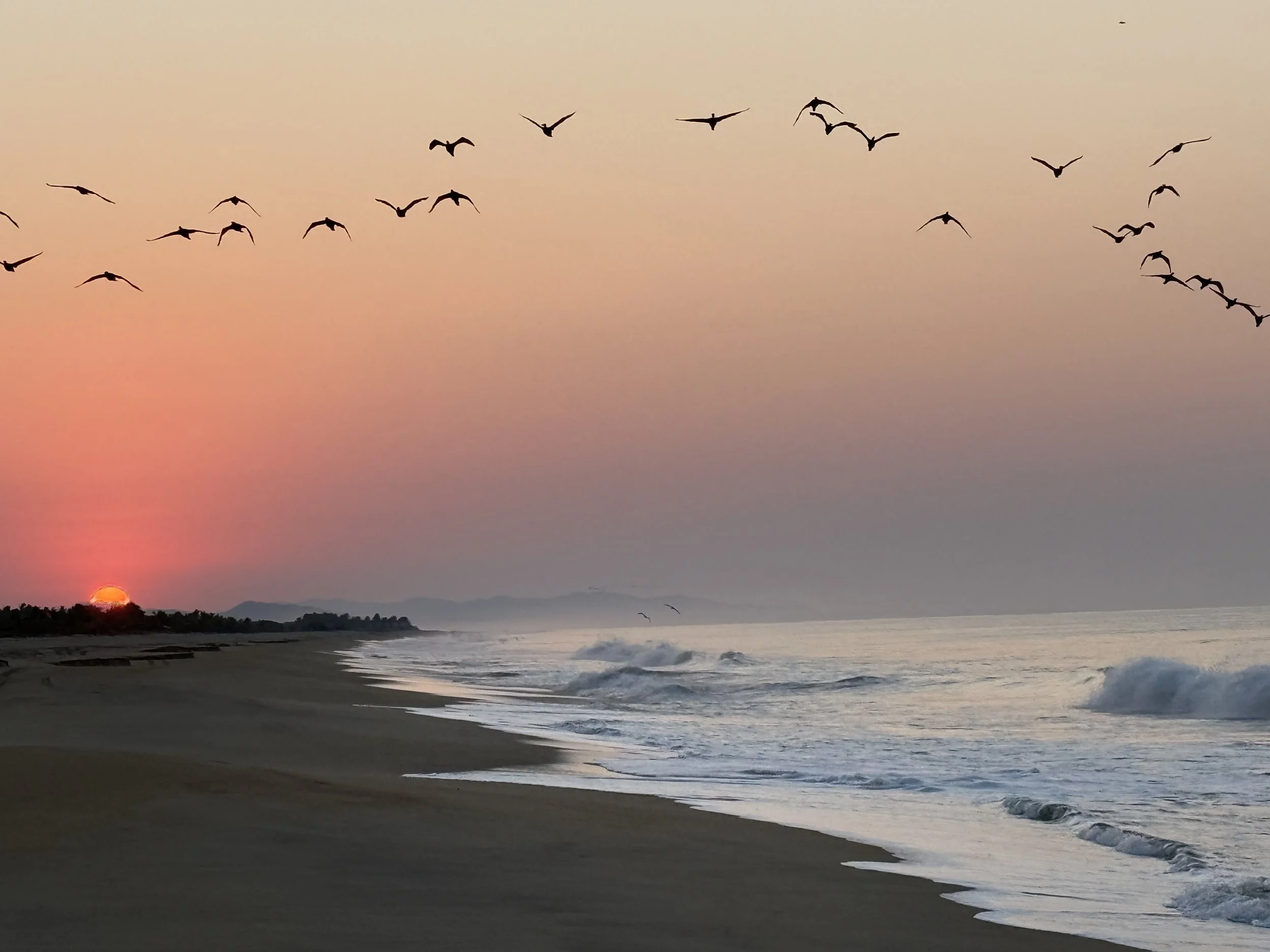
A day to Playa Roca Blanca and dinner in Puerto escondido at La Bóveda in Hotel Casona Sforza an other interesting design by architect Alberto Kalach. Puerto Escondido is a small surfers town like many others…
From Puerto Escondido we flew to Tuxtla Gutierrez where our guide Damián and driver Javier where waiting for us to start our journey thru The Chiapas.
The Chiapas is located in the southwestern region of the country , bordering Tabasco to the north , Guatemala and San Marcos to the east and southeast, the Pacific Ocean to the south , Oaxaca to the west, and Veracruz to the northwest.
It is home to World Heritage Site the archaeological site of Palenque, a World Heritage Site as well as the pre-Hispanic cities of Yaxchilán and Bonampak ,
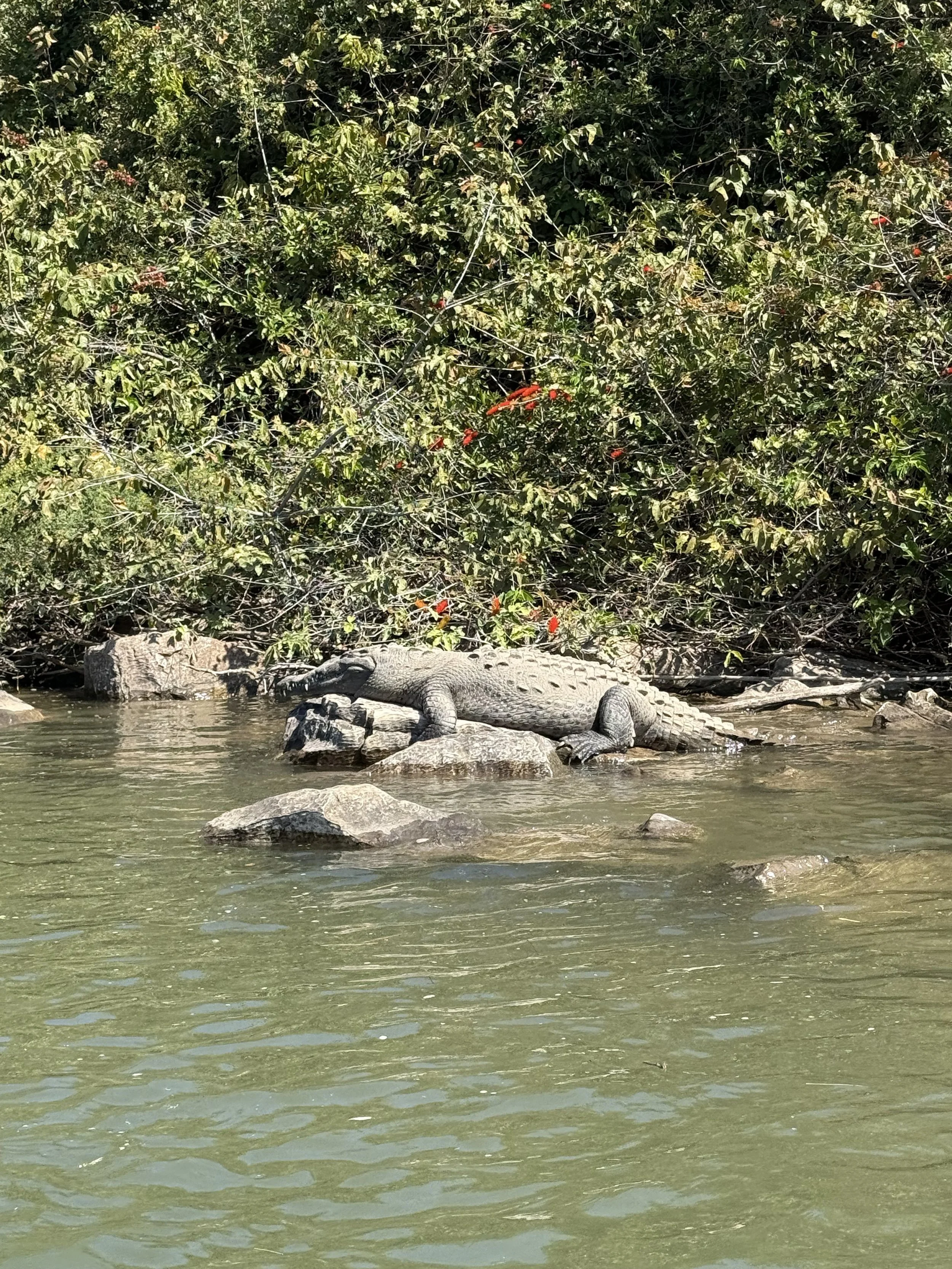
We stayed in San Cristobal de las Casas (about 1 hour drive from the airport). The first day we took a boat to Cañon Sumidero, created millions of years ago by tectonic activity and river erosion. Scenic with a diverse wildlife.
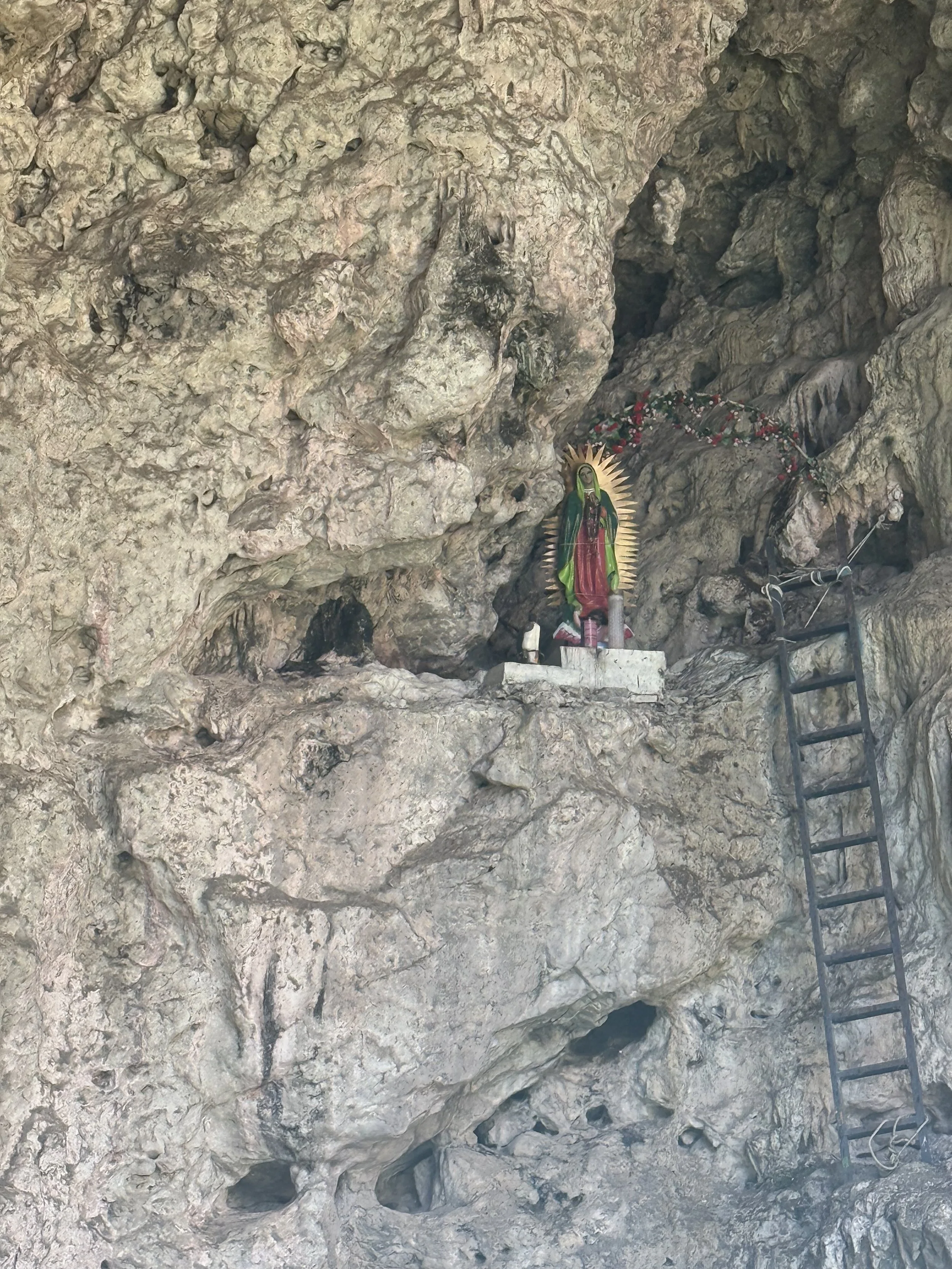
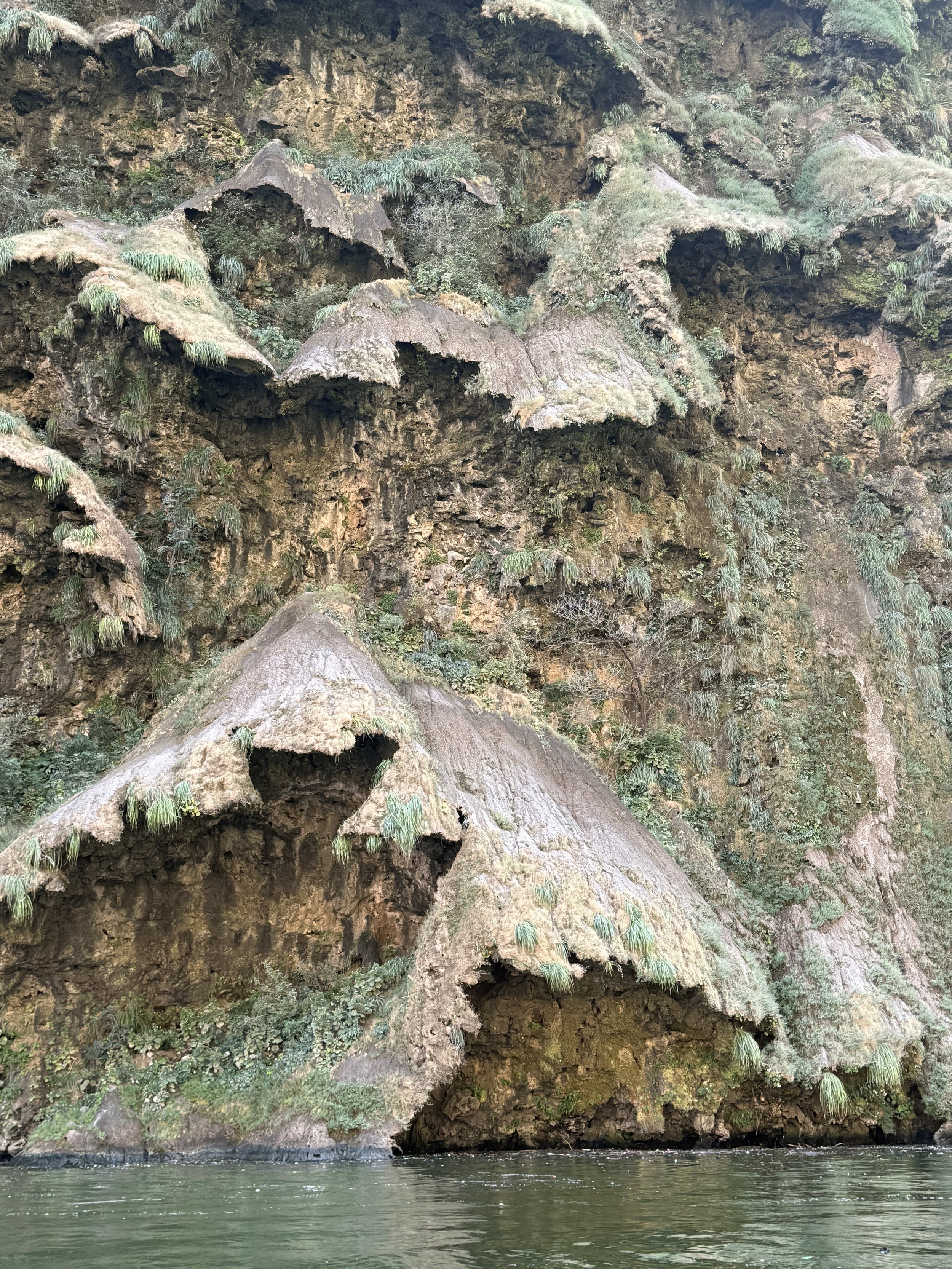
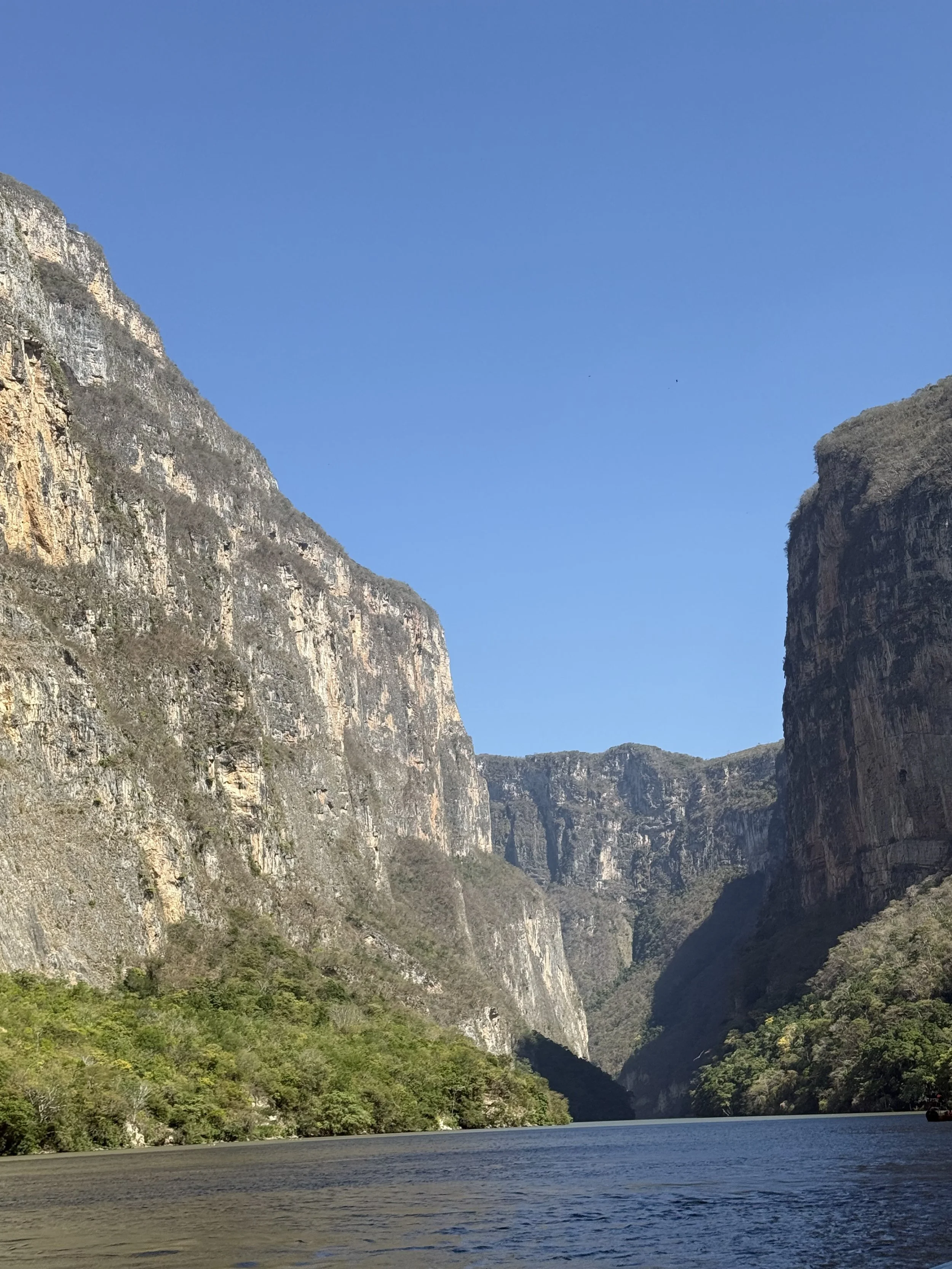
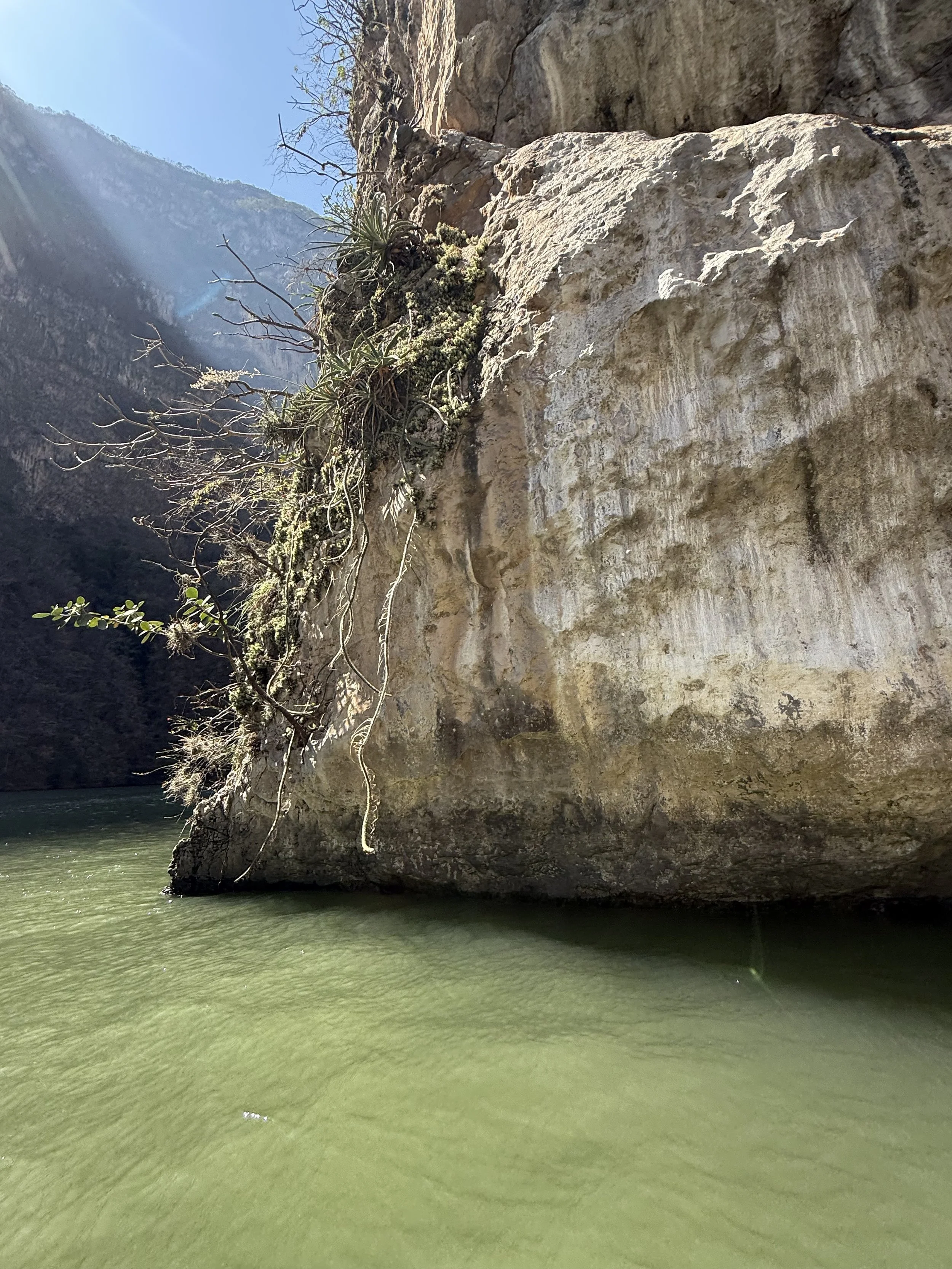
Next stop: Chamula, an autonomous indigenous Tzotzil Maya community known for its intense religious syncretism, traditional woolen clothing (white for men, black for women), and fierce independence. Located near San Cristóbal de las Casas, the town is famous for its unique church rituals, which involve shamans, candles, and, strictly, no photography in the church. The San Juan Chamula church ceremony is a unique, intense blend of Catholicism and Maya Tzotzil traditions.
Key Aspects of the Ceremony
Syncretism: The ritual merges Catholic saints with ancient Maya practices, focusing on spiritual cleansing.
Healing Rituals: Local shamans ("curanderos") lead ceremonies to cure illnesses by praying, chanting, and often sacrificing chickens.
Atmosphere: The church is filled with thousands of candles and pine needles on the floor, with no pews, and a dim, smoky atmosphere.
Ritual Elements: Offerings include eggs, candles of different colors, incense, Coca-Cola, and pox (sugar cane alcohol).
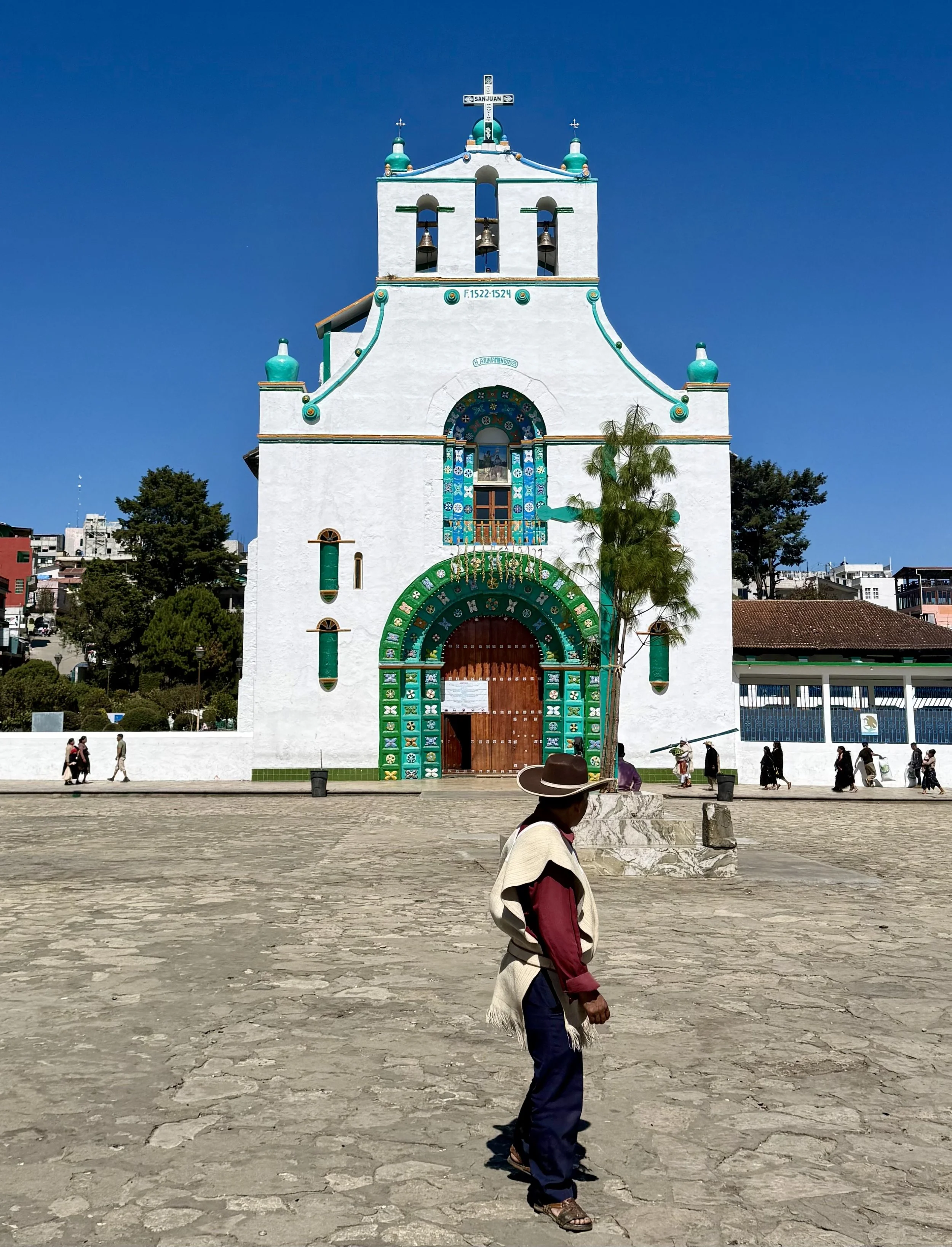
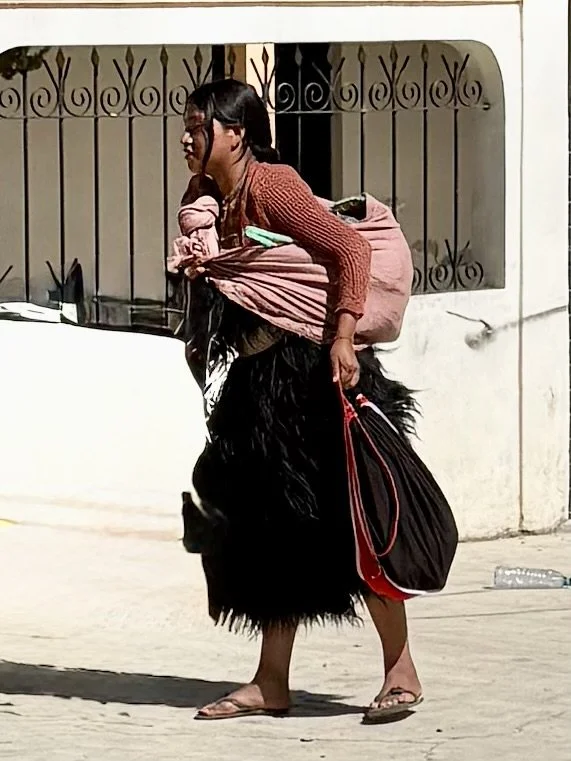
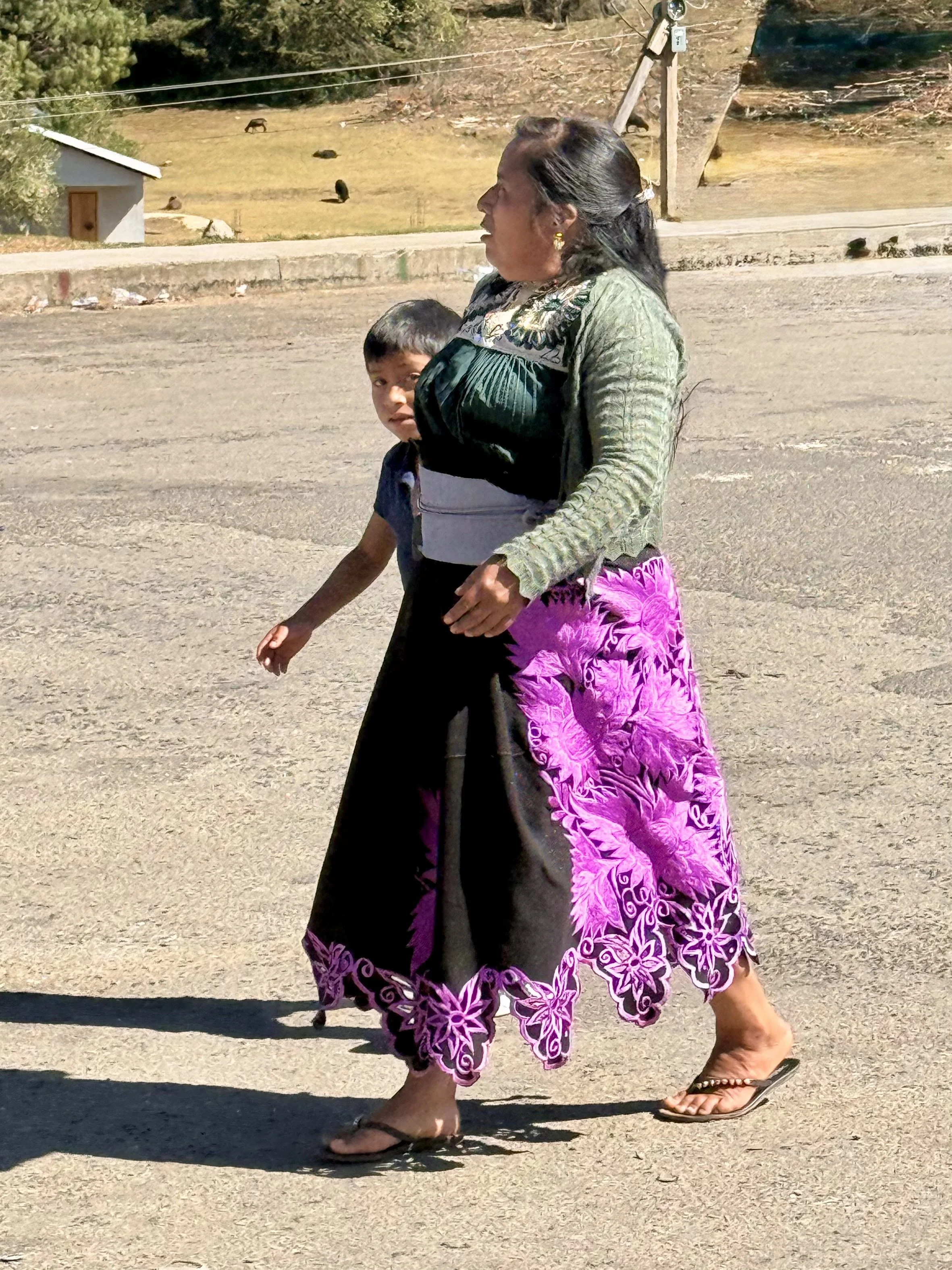
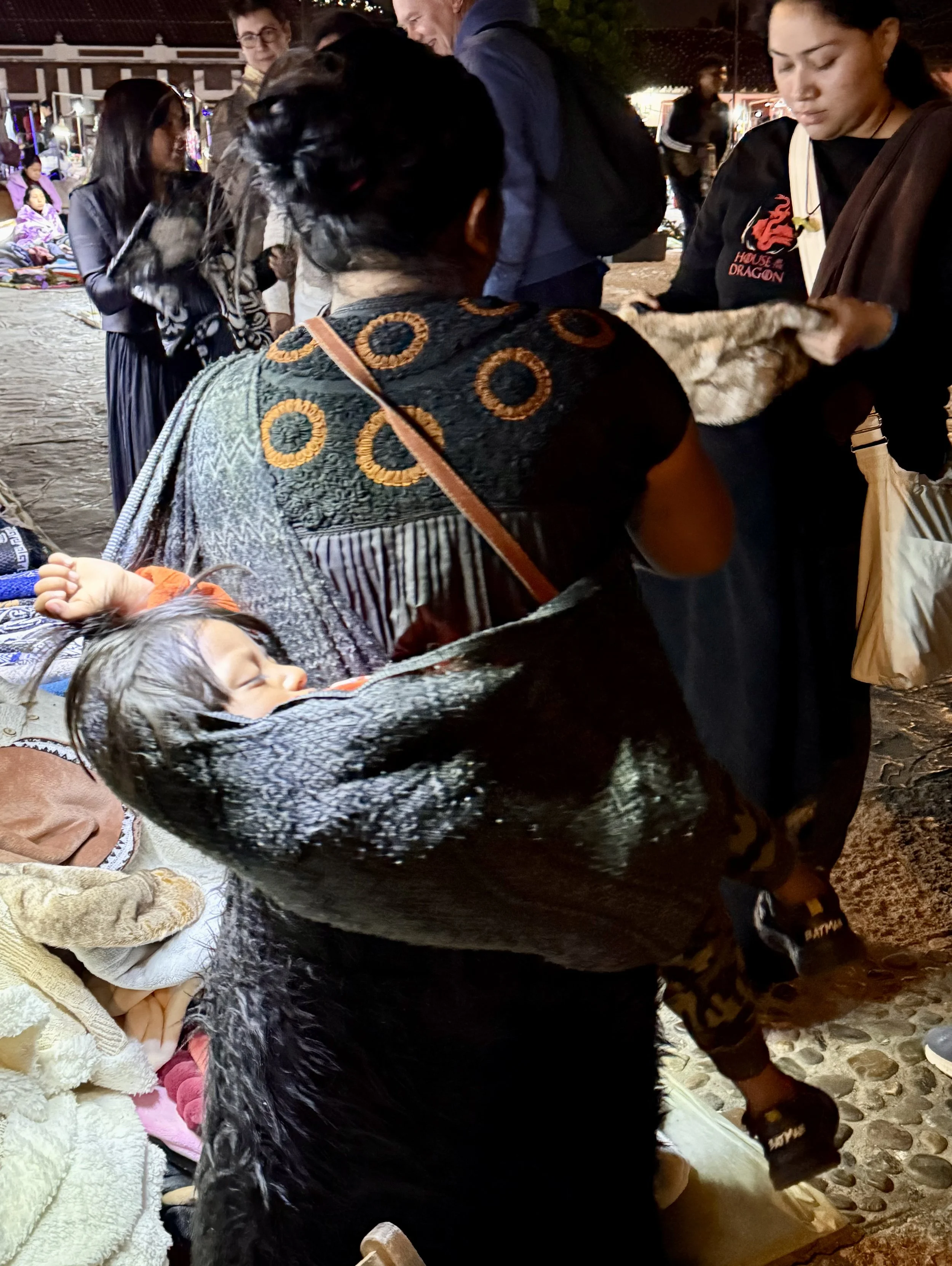
We also visited nearby Zinacantán, a town of Tzotzil people, famous for its fabrics and flowers.
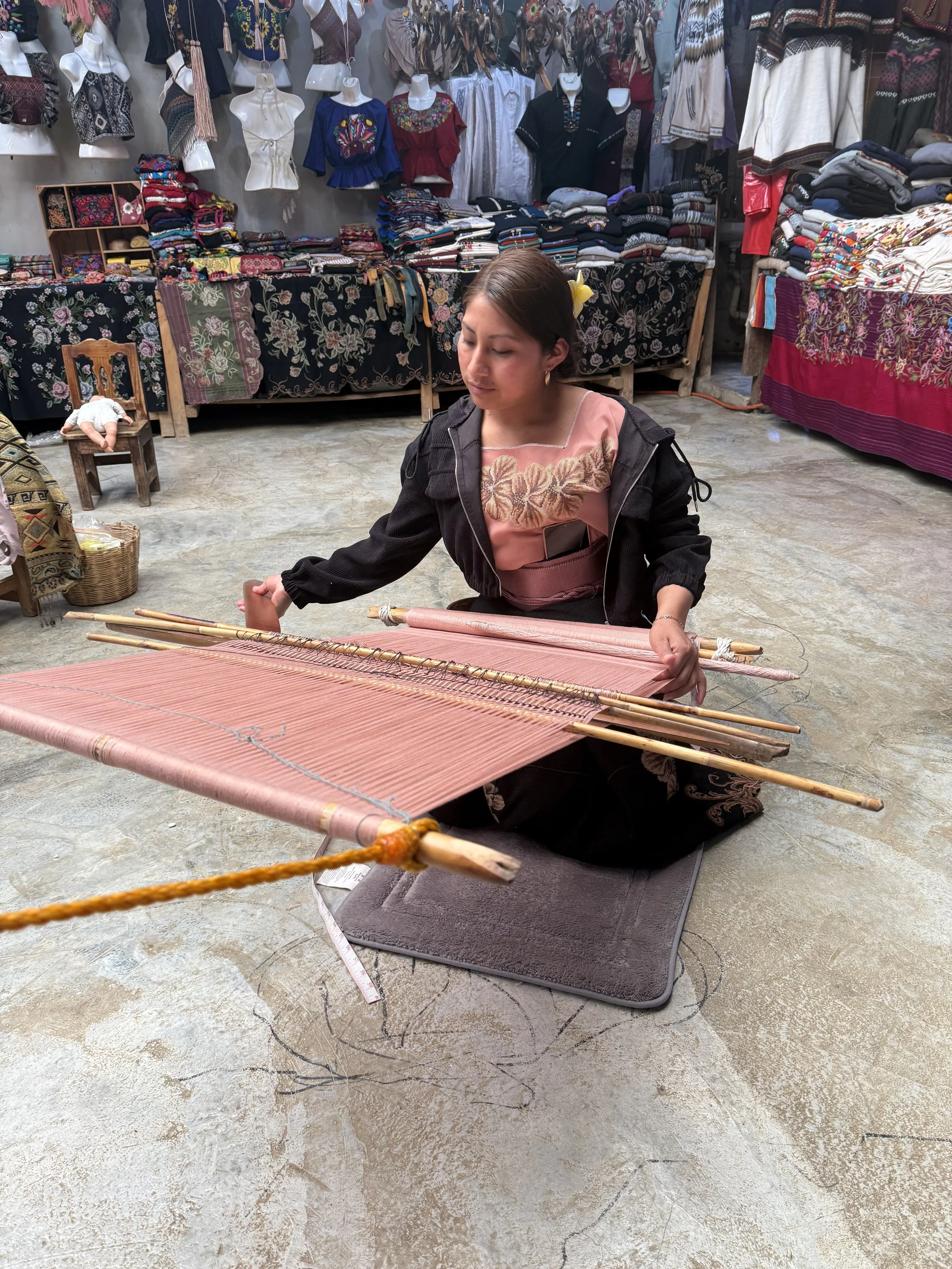
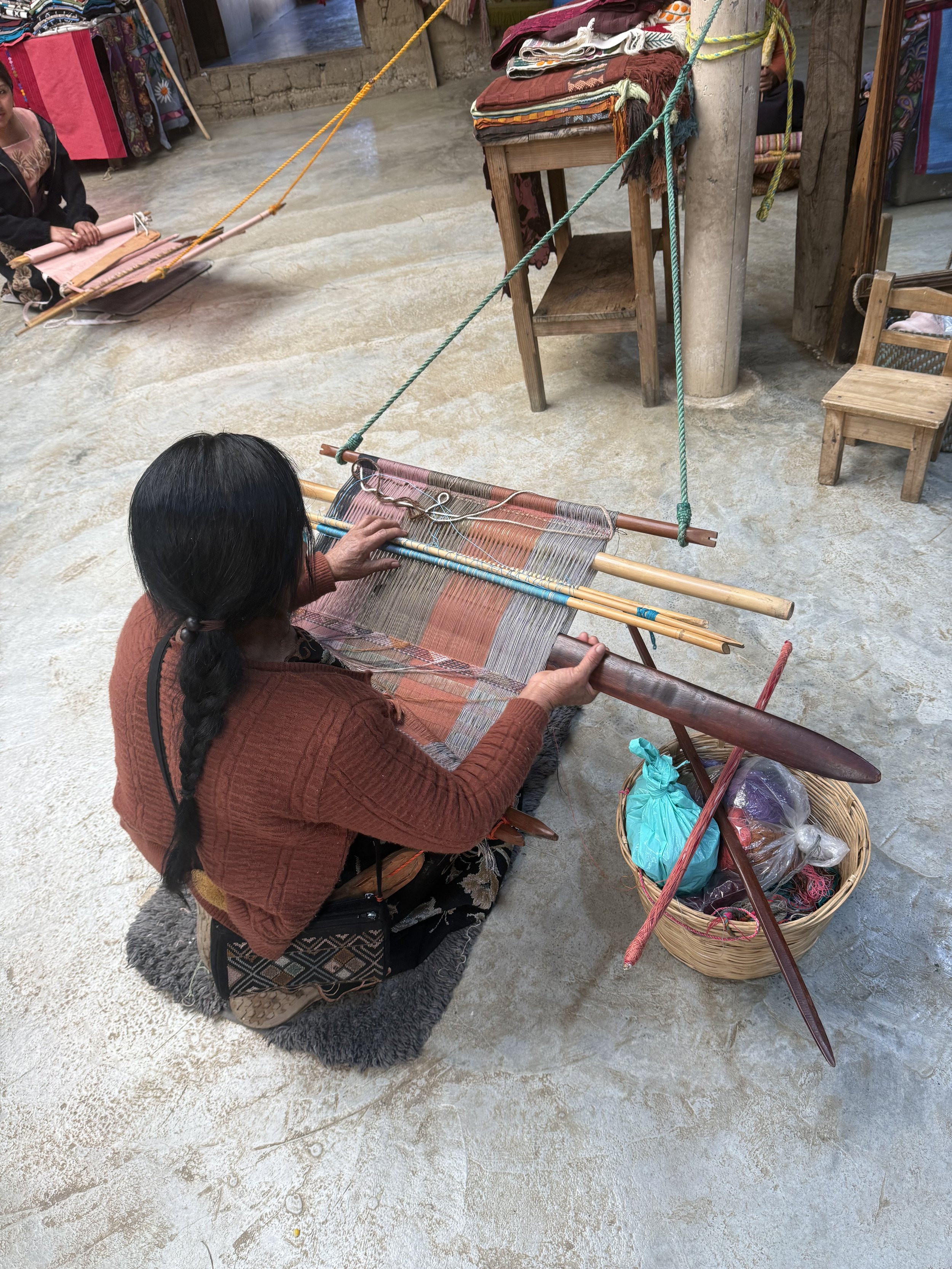
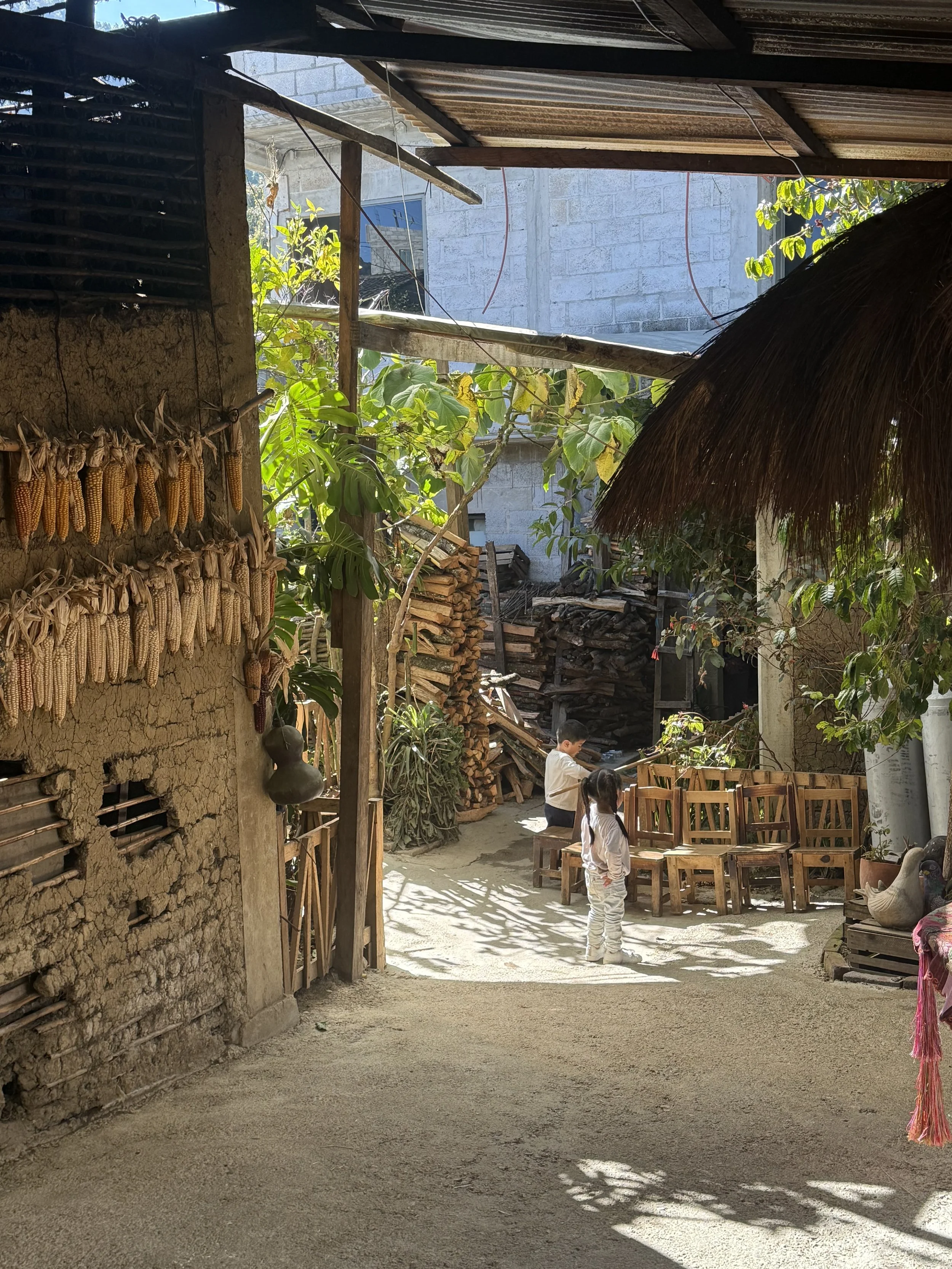
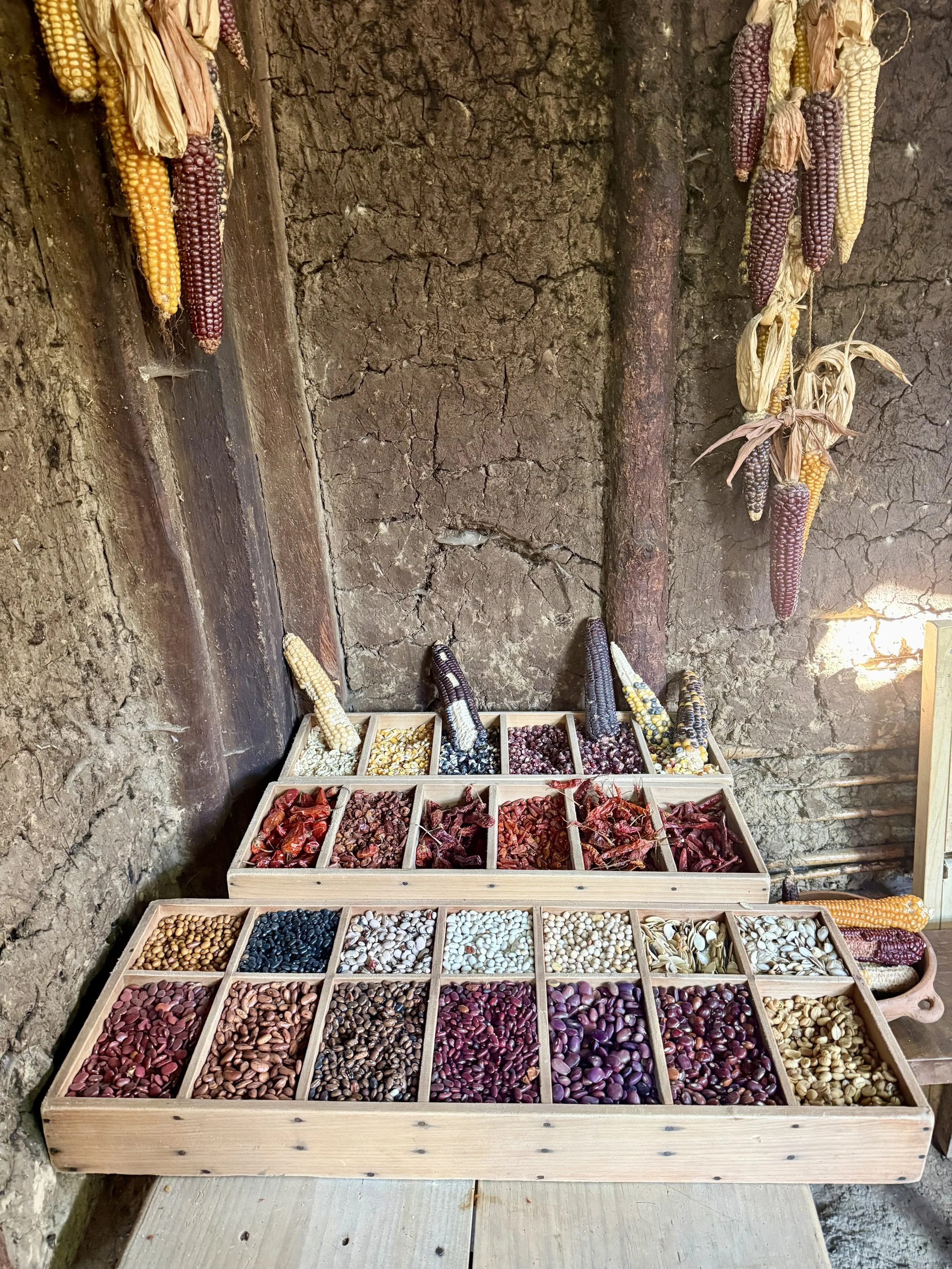
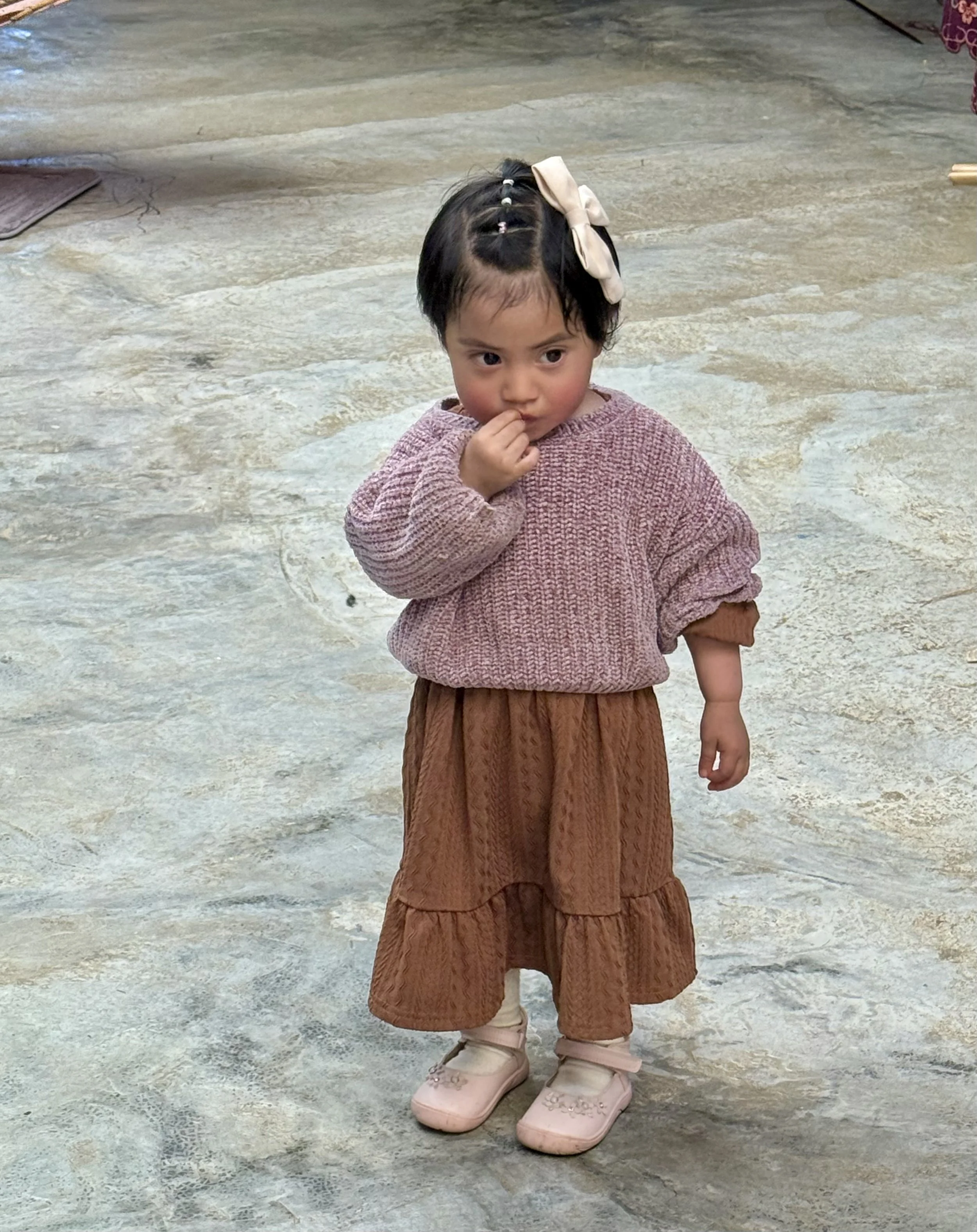
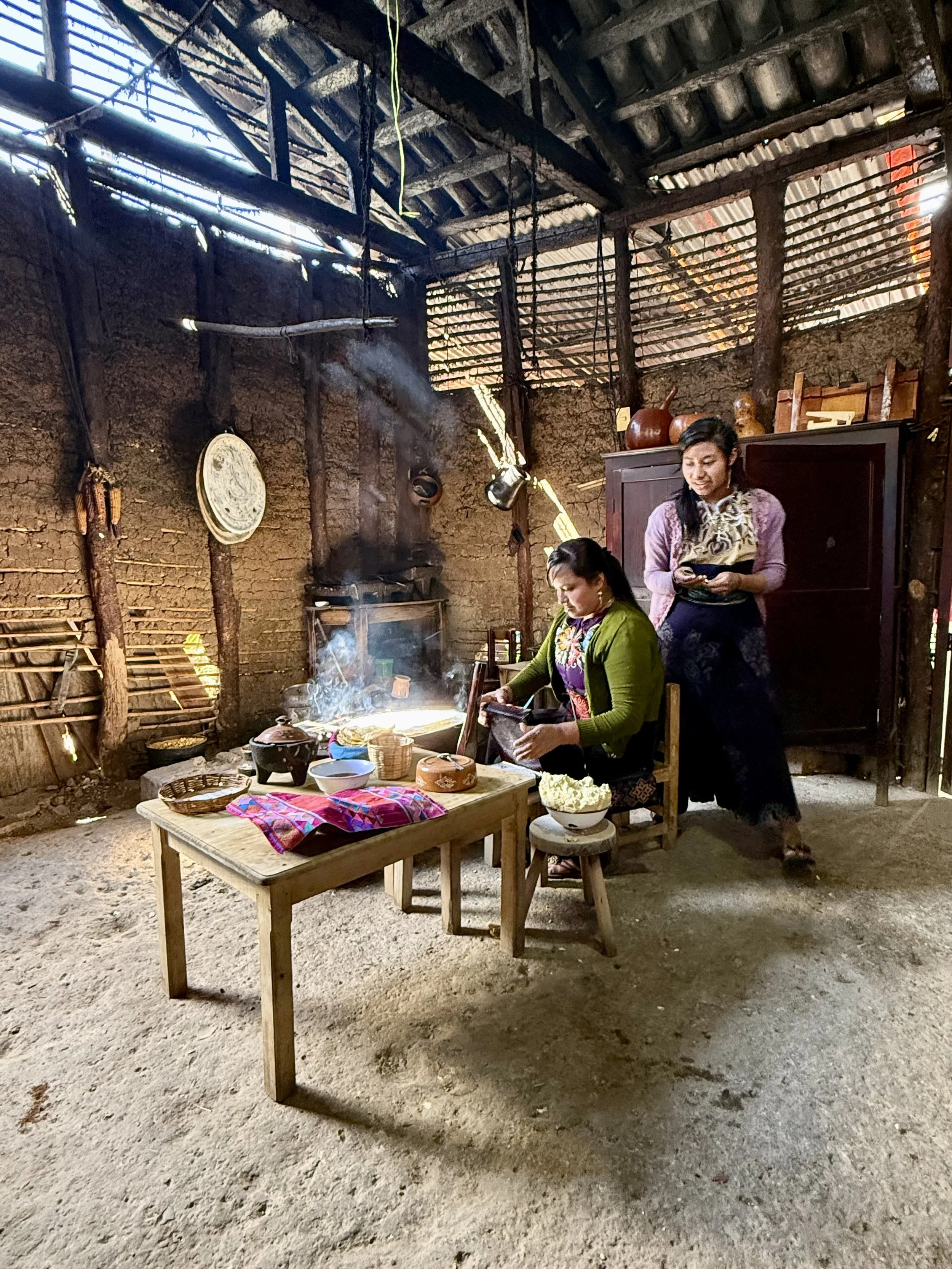
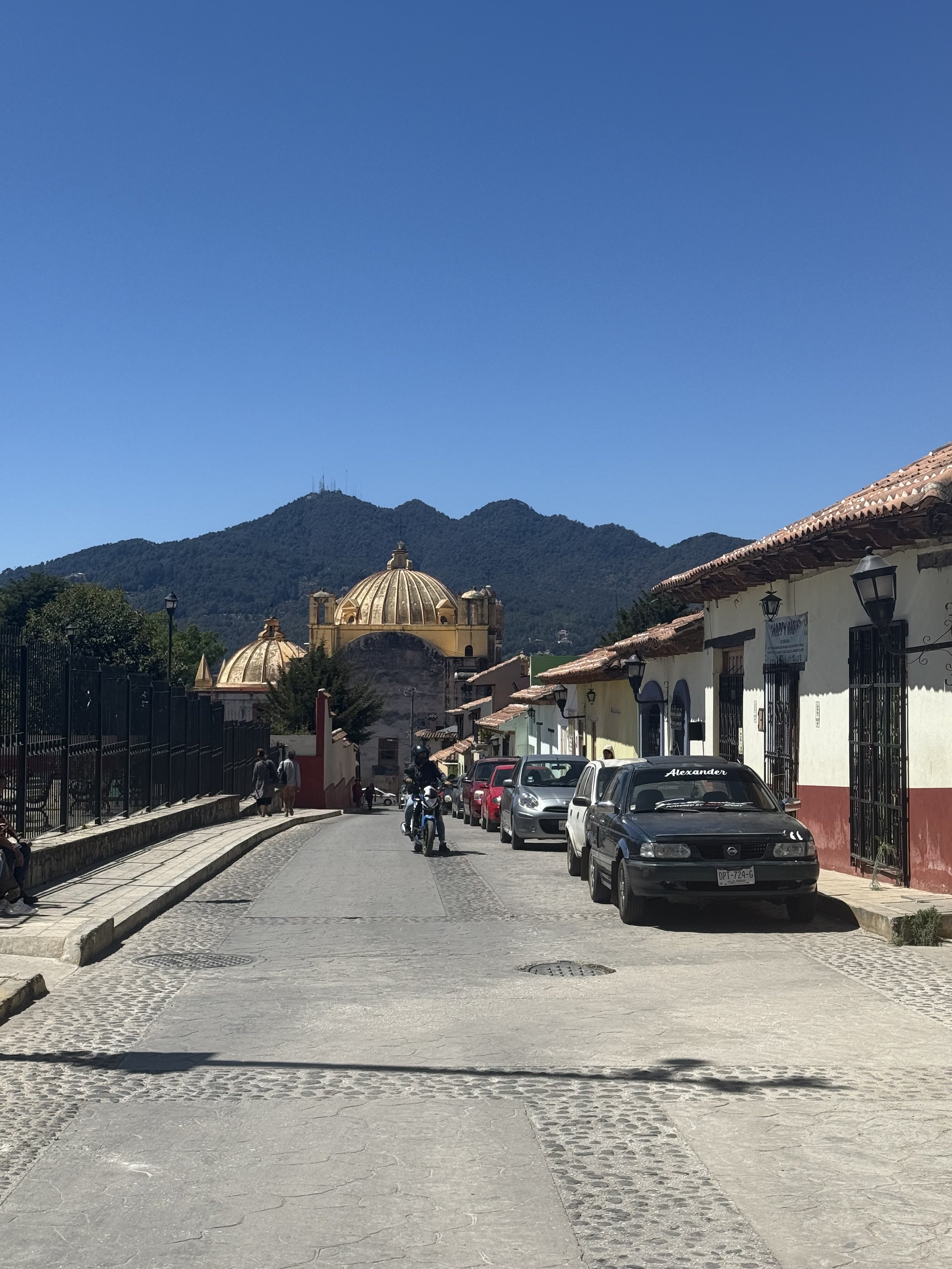
We spent the second day by ourselves exploring the city. San Cristóbal de las Casas, a vibrant, colonial and charming "Pueblo Mágico". Somehow more authentic than Oaxaca.
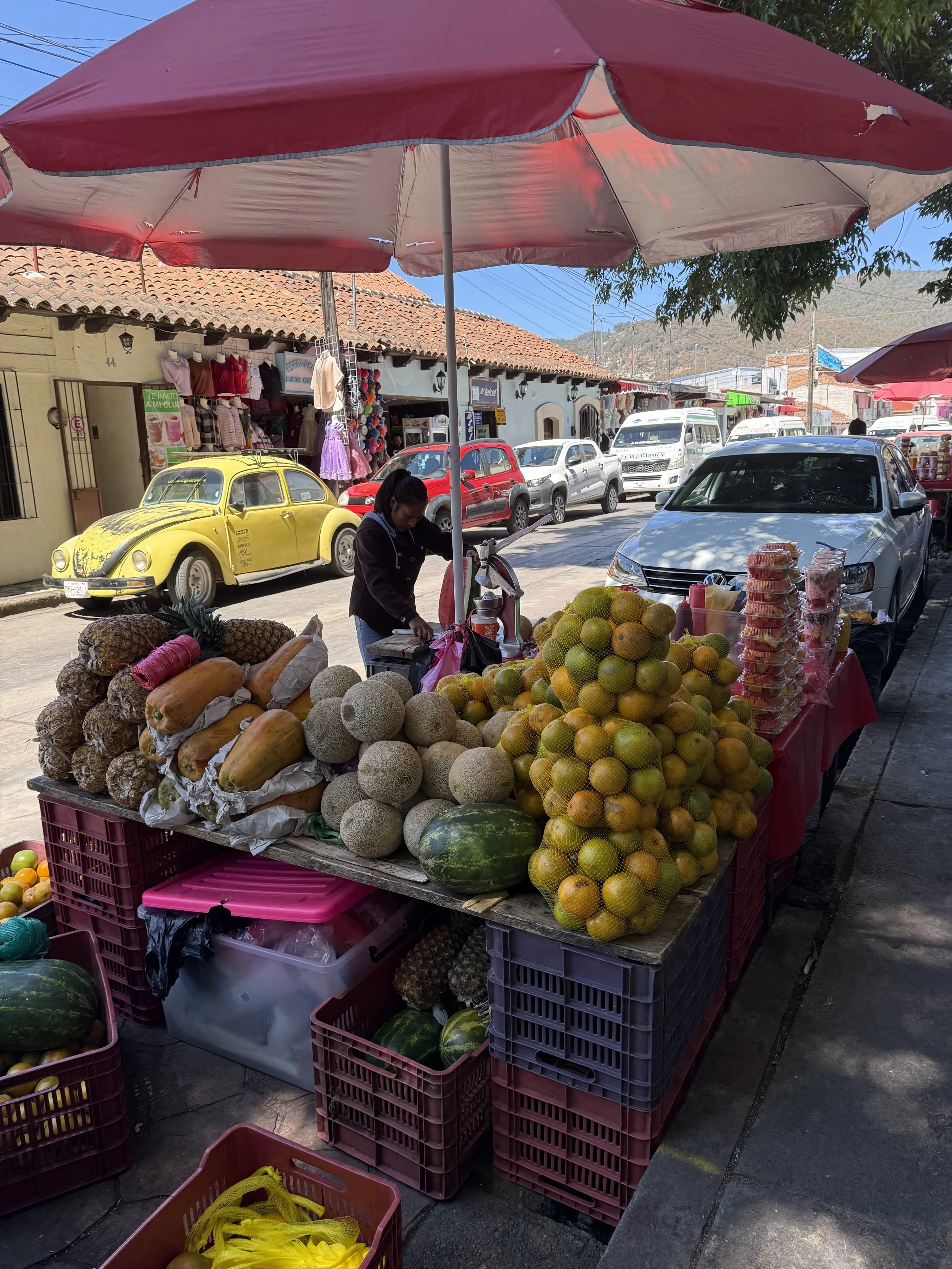
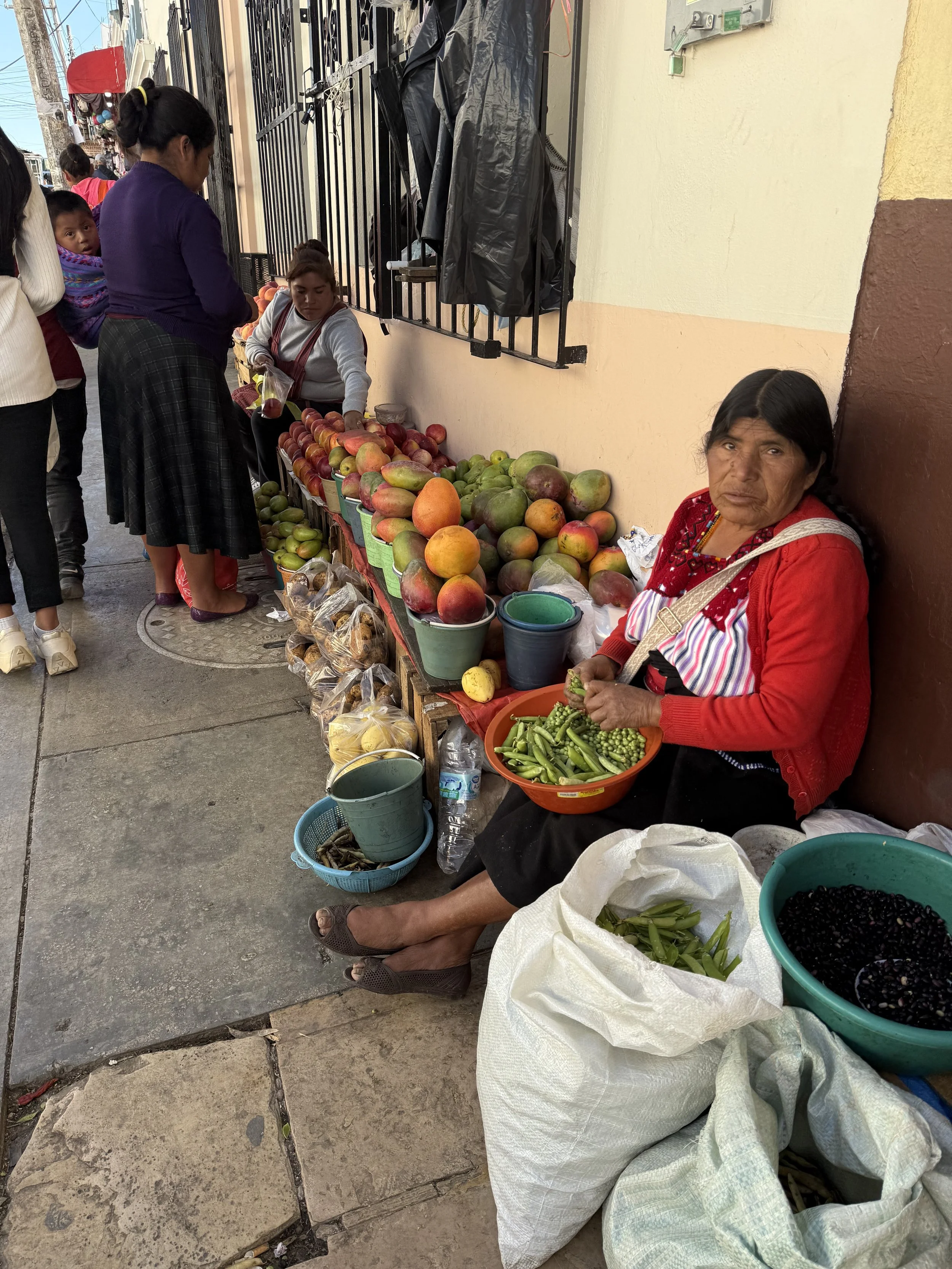
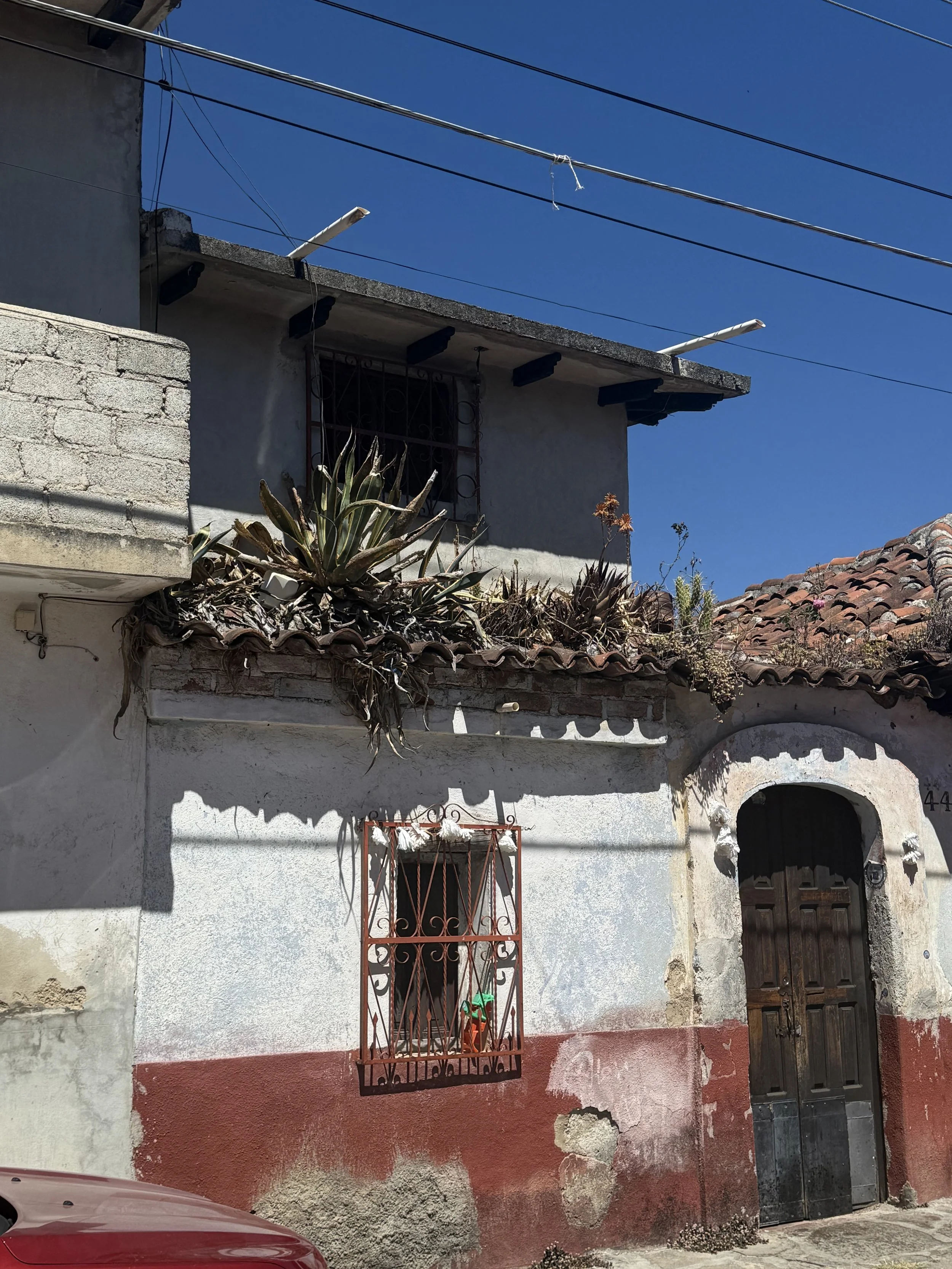
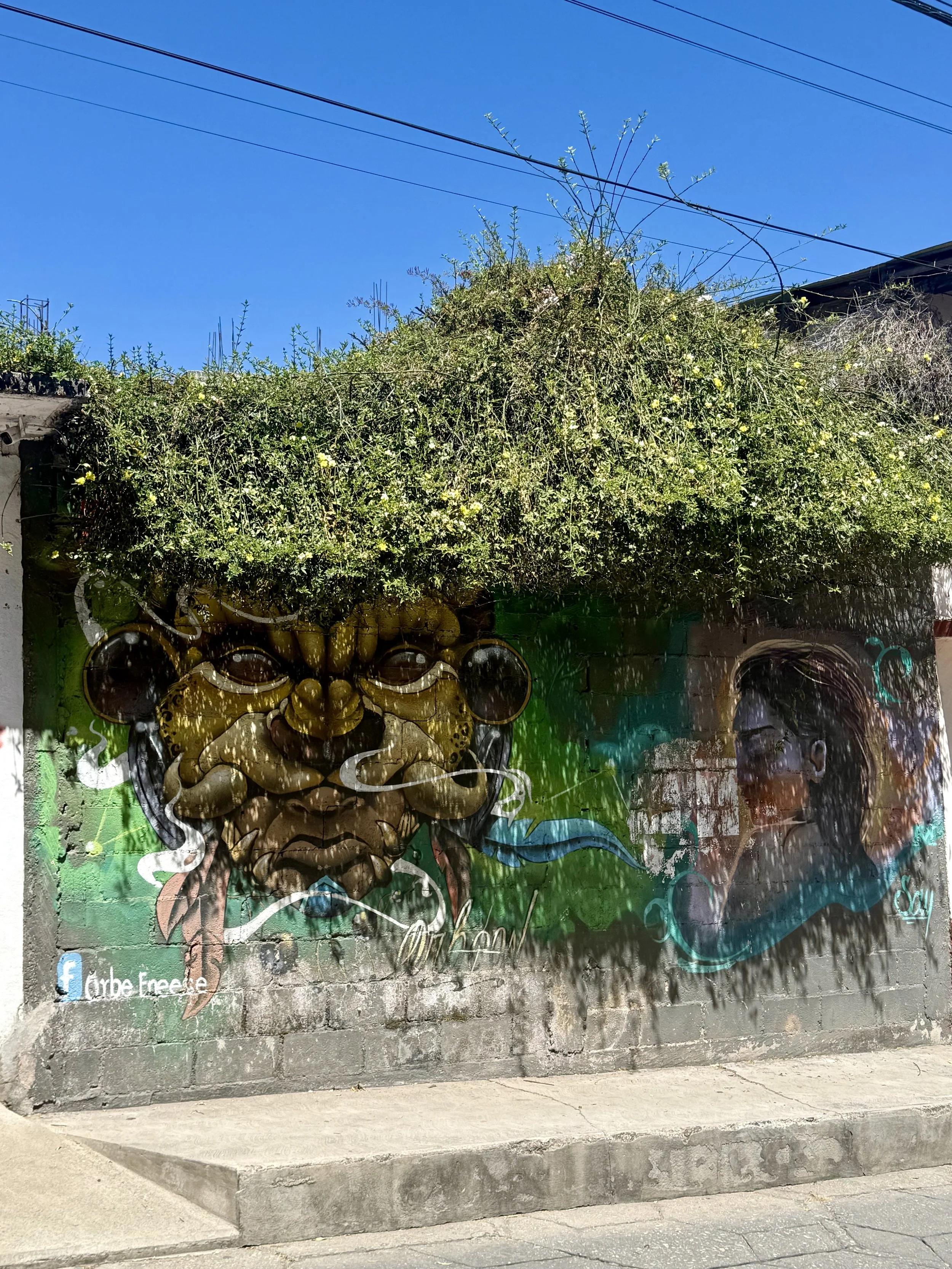
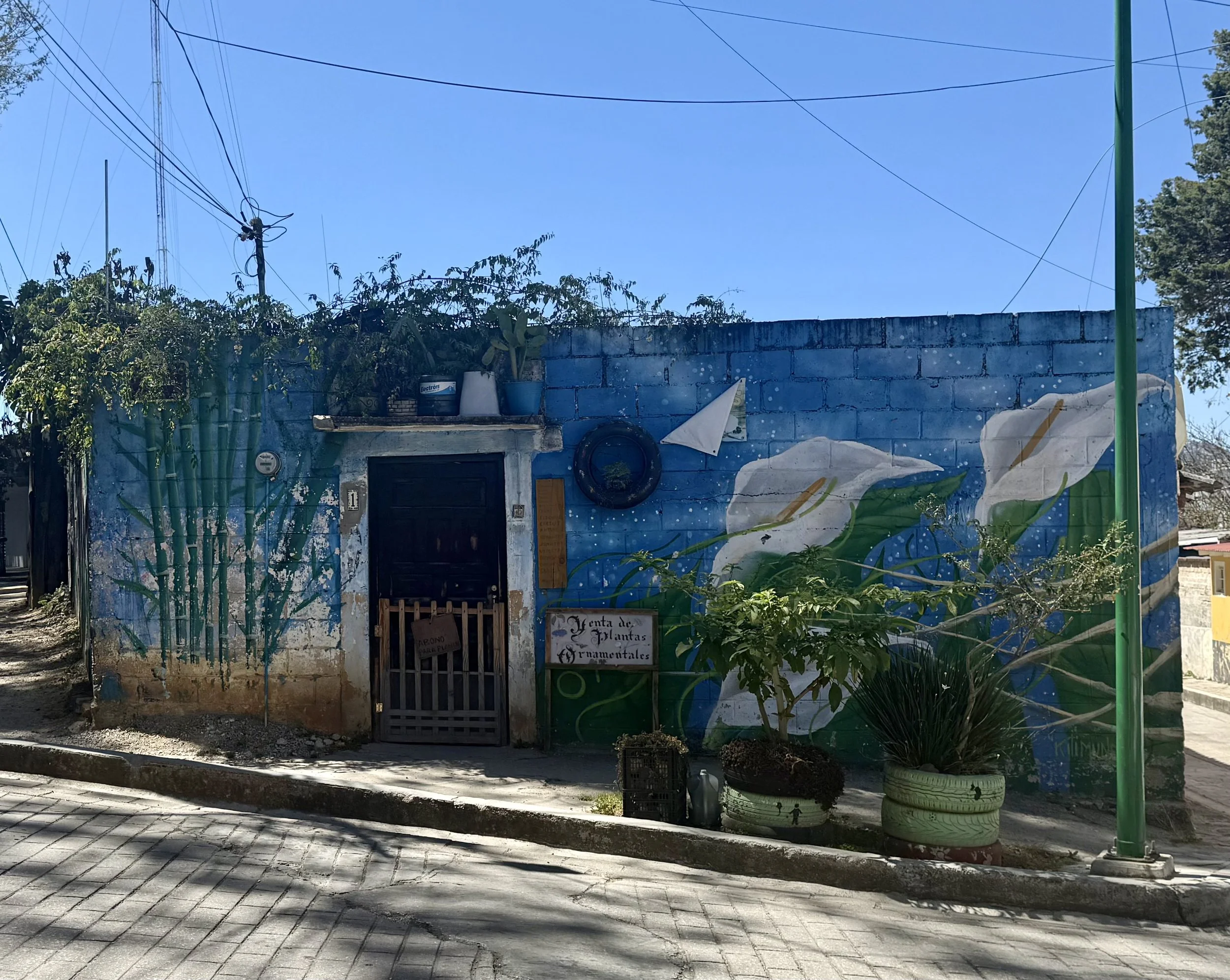
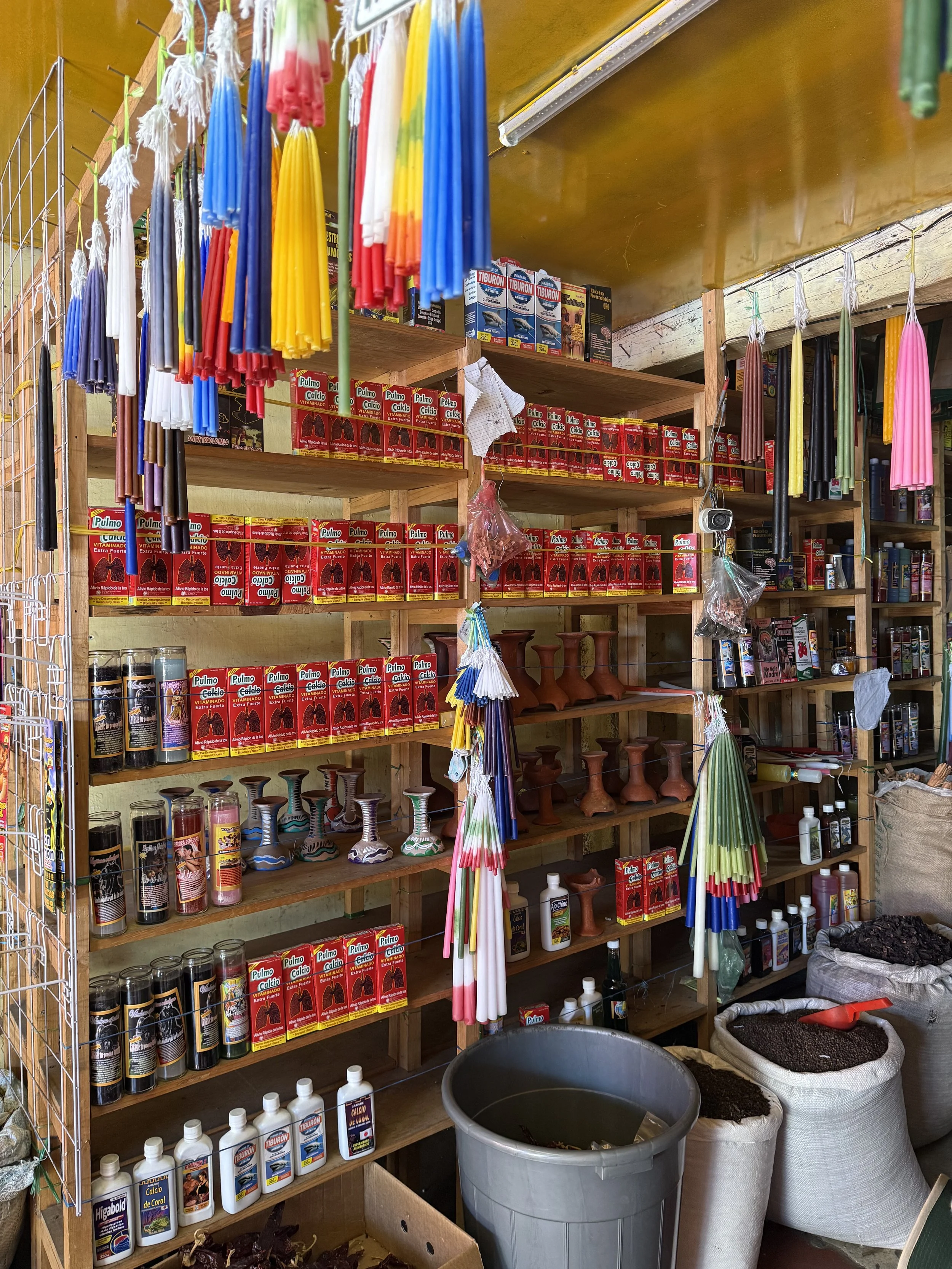
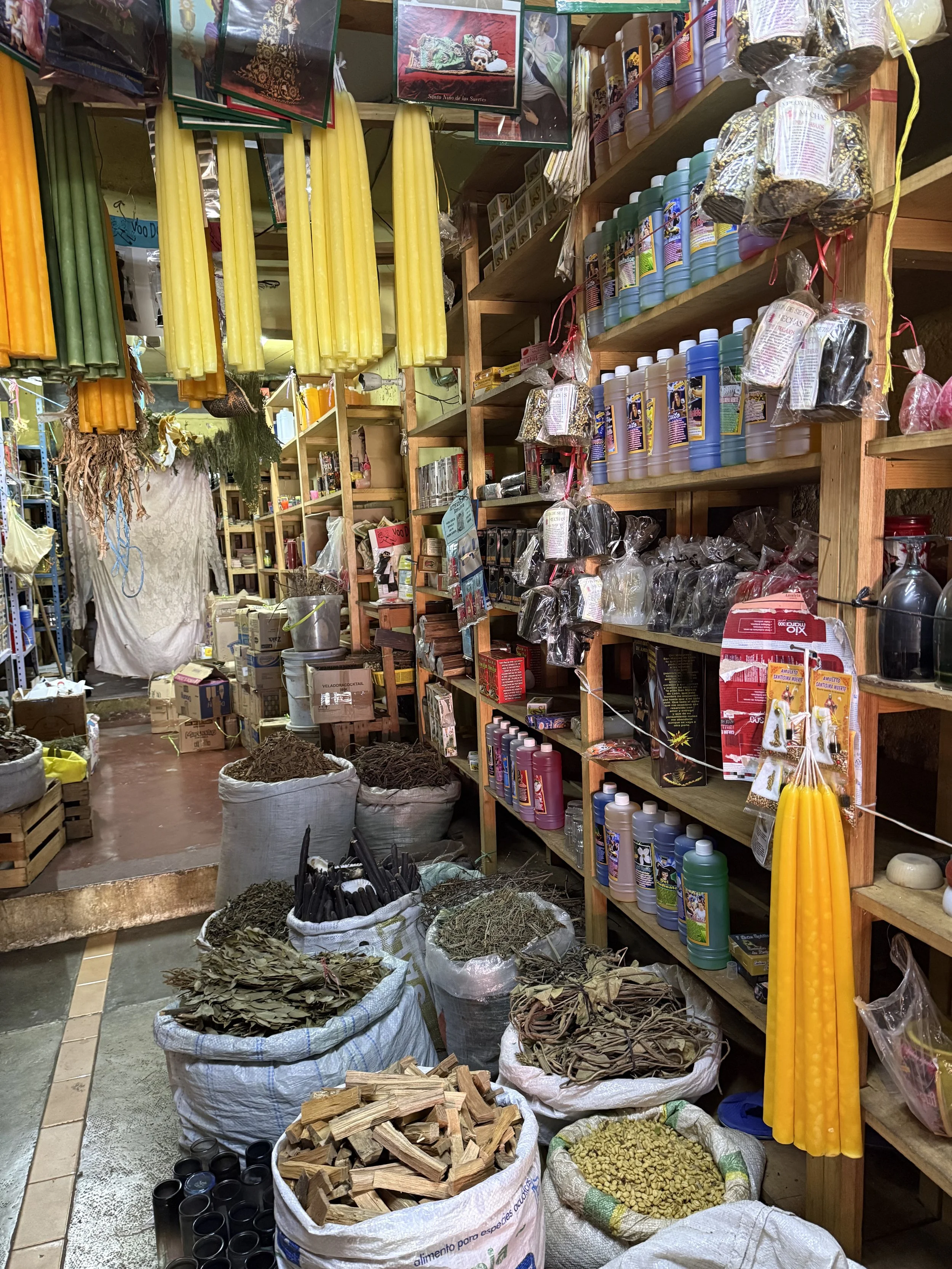
The witches store
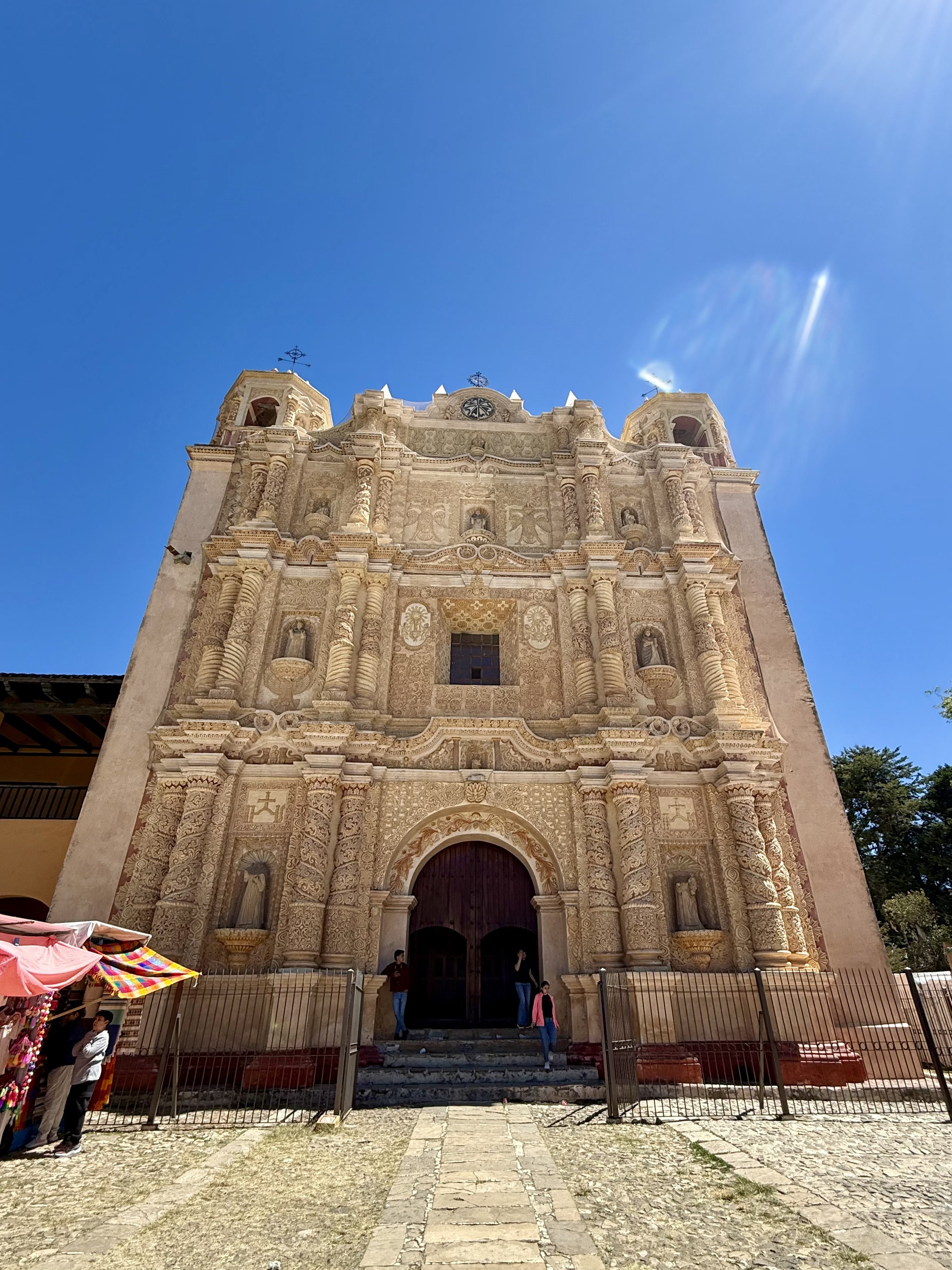
El Templo de Santo Domingo
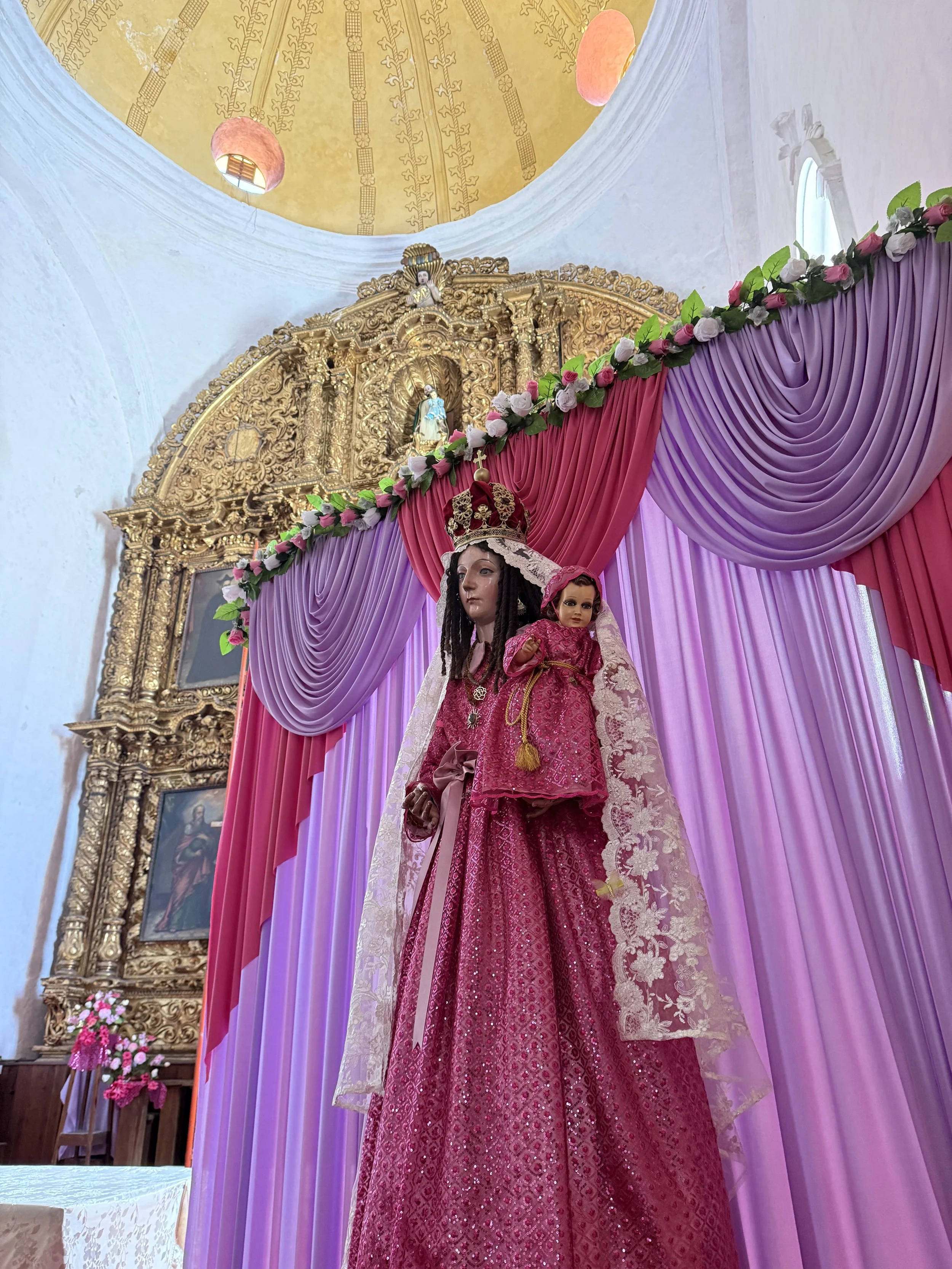
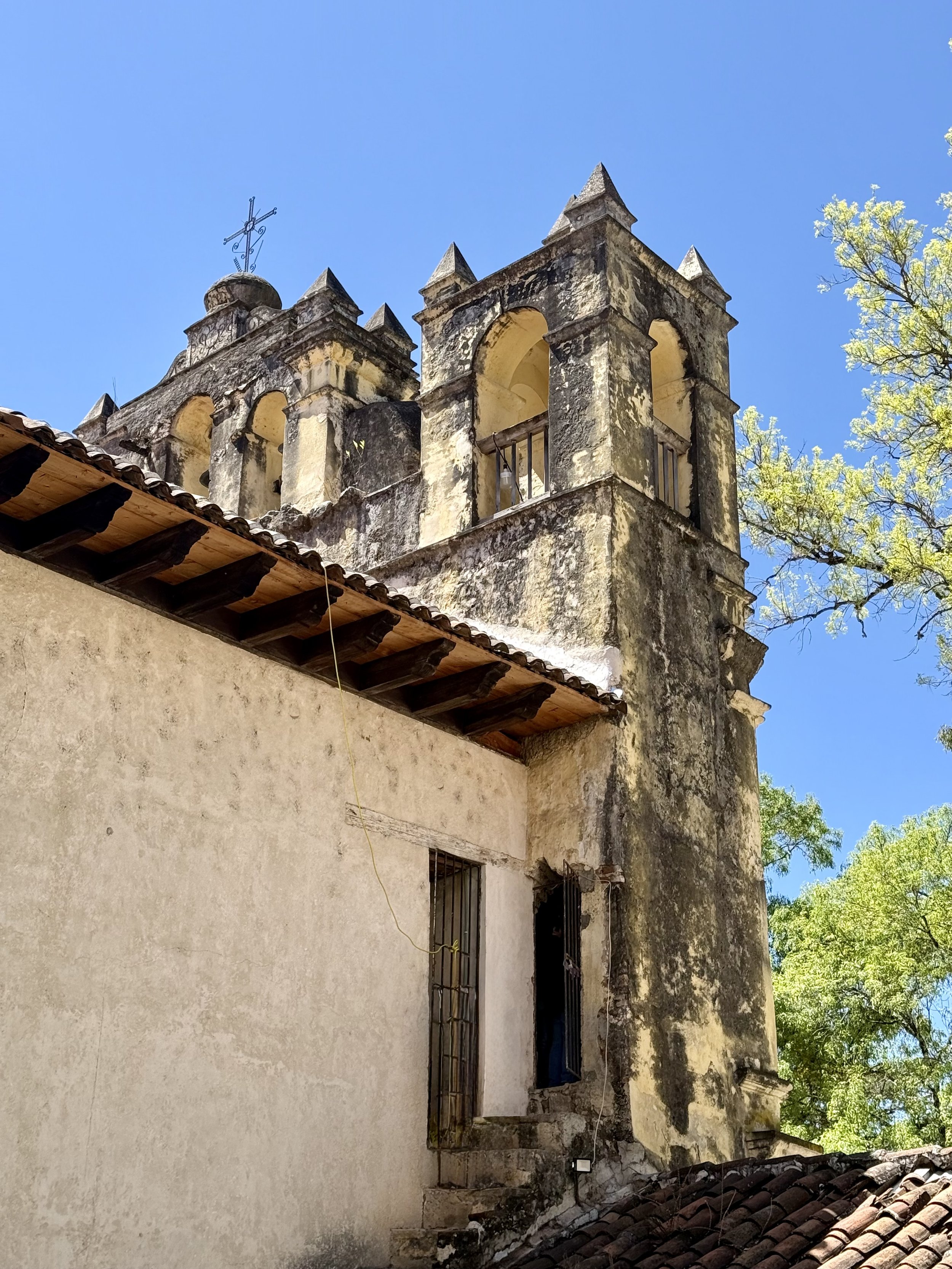
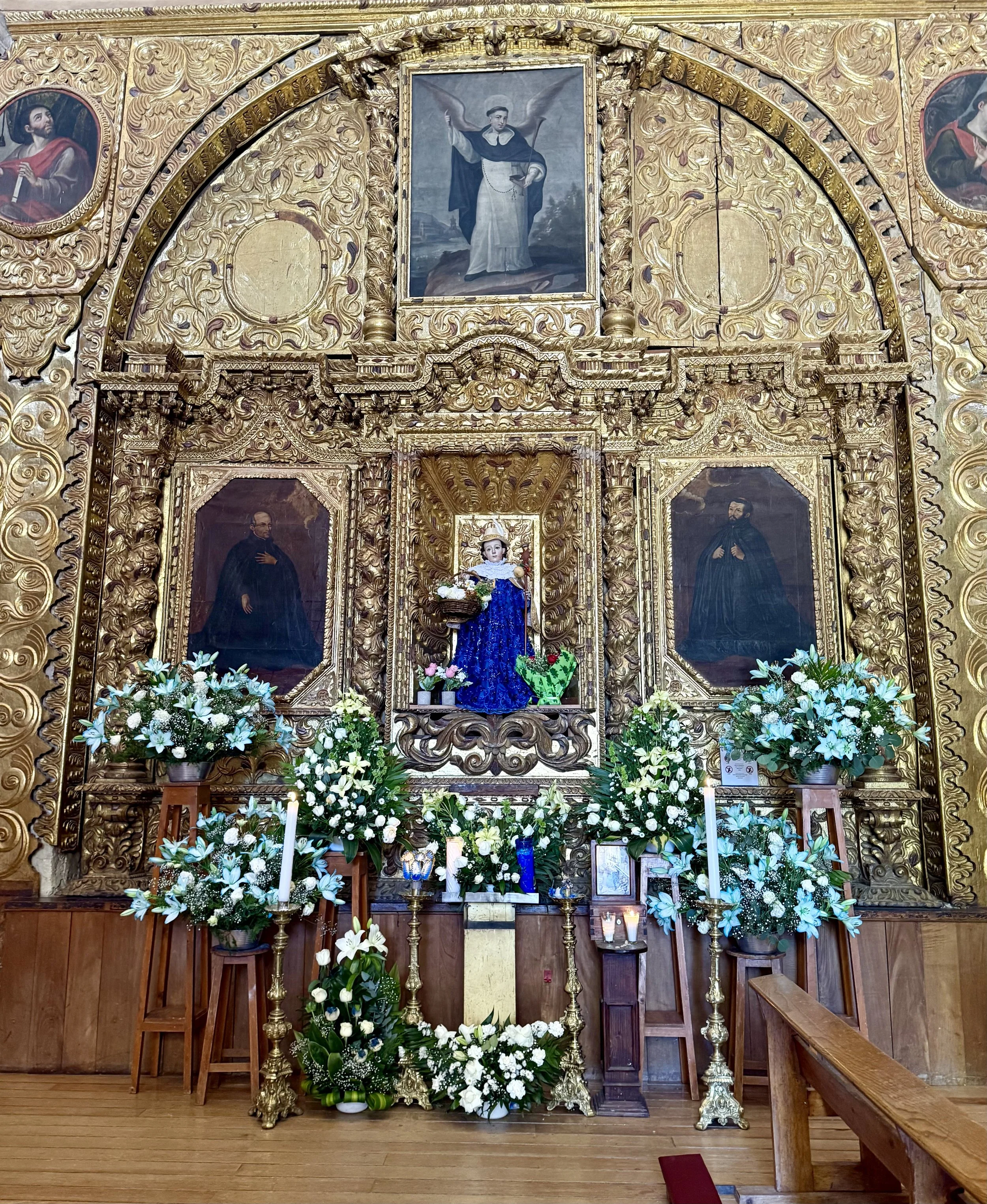
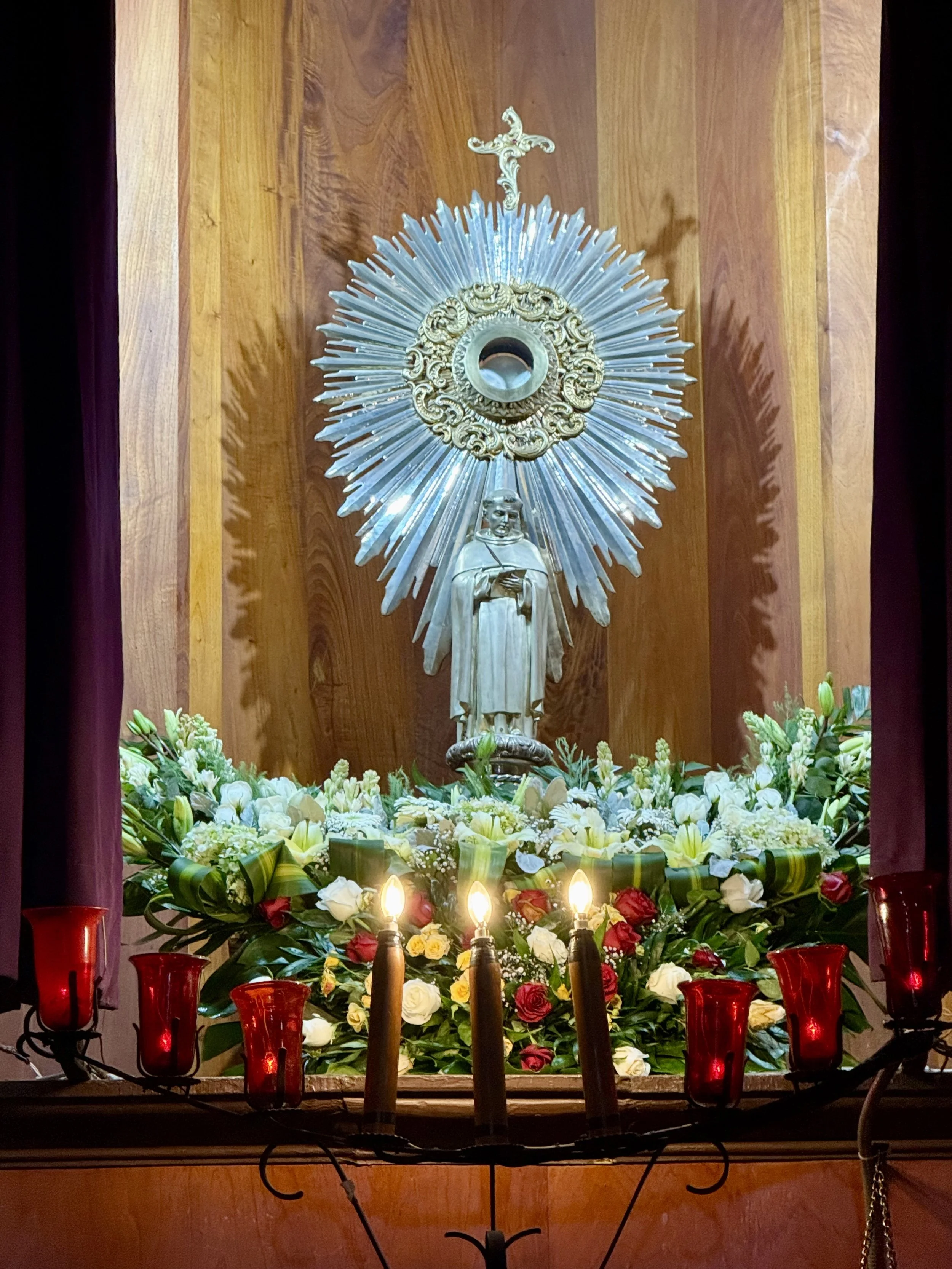
Na Bolom (House of the Jaguar) in San Cristóbal de las Casas, Chiapas, is a nonprofit museum and research center founded in 1950 by archaeologist Frans Blom and photographer Gertrude Duby-Blom. It preserves Lacandon Maya culture and the Chiapas environment through extensive ethnographic, archaeological, and photographic collections.
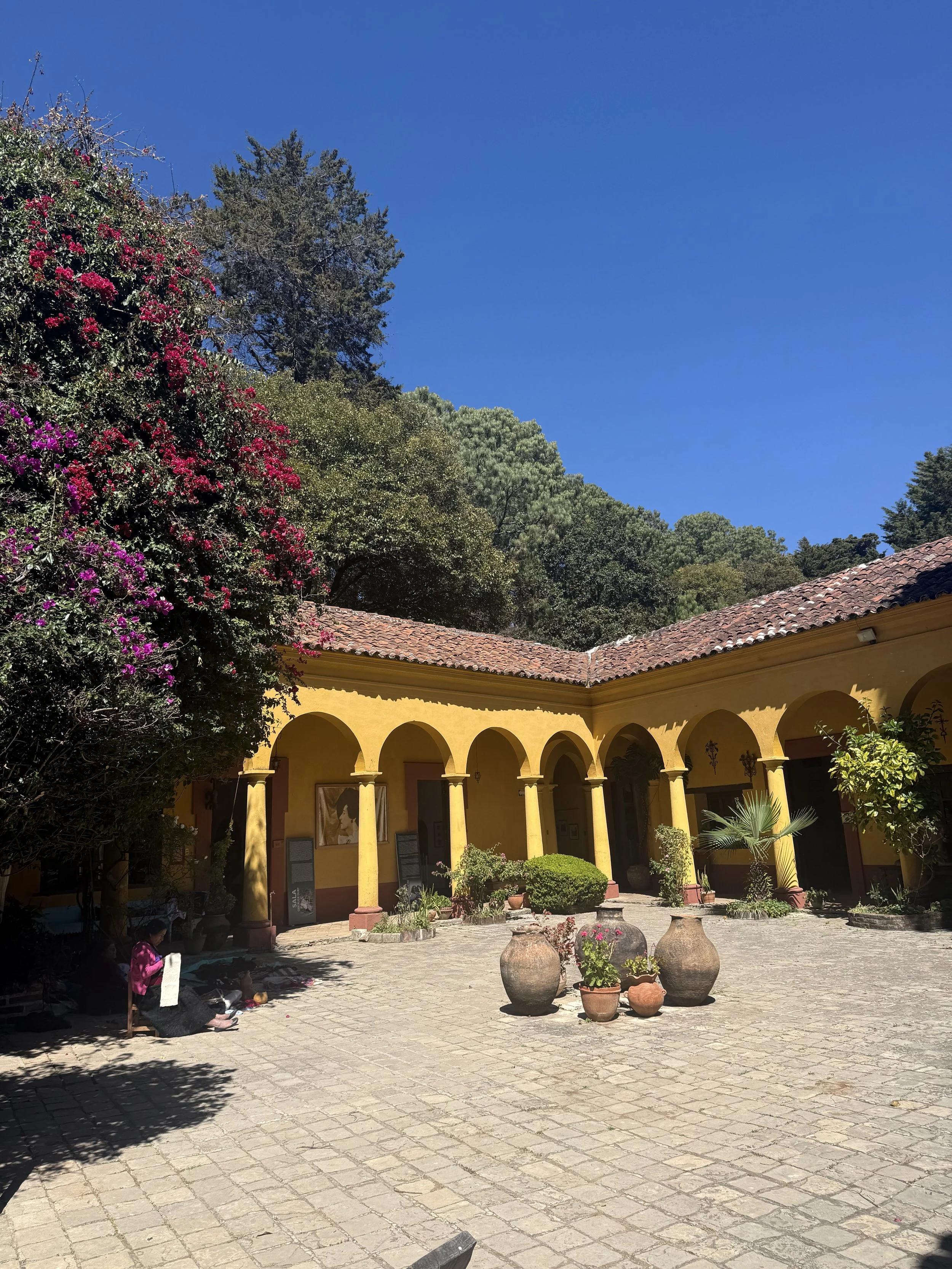
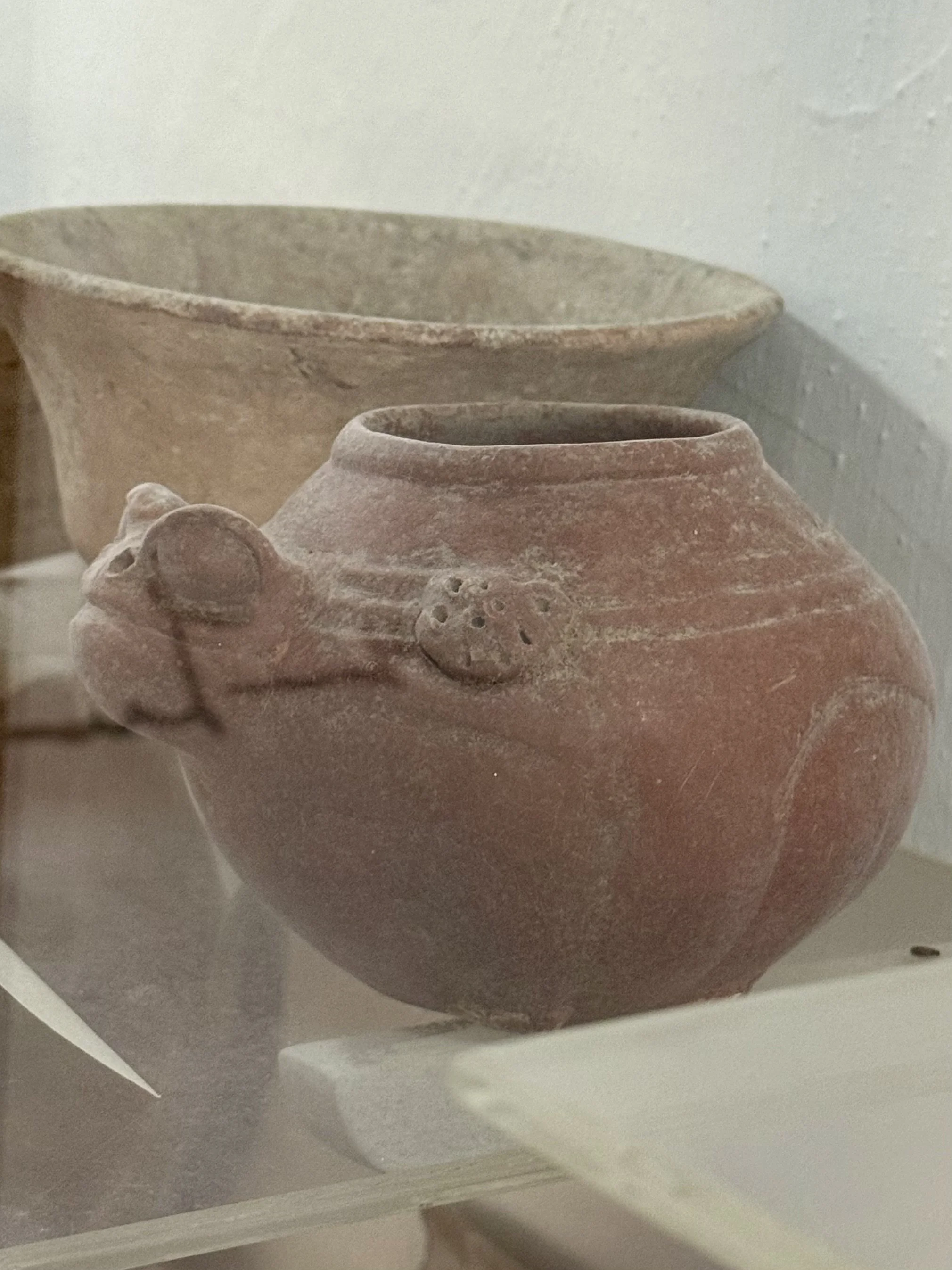
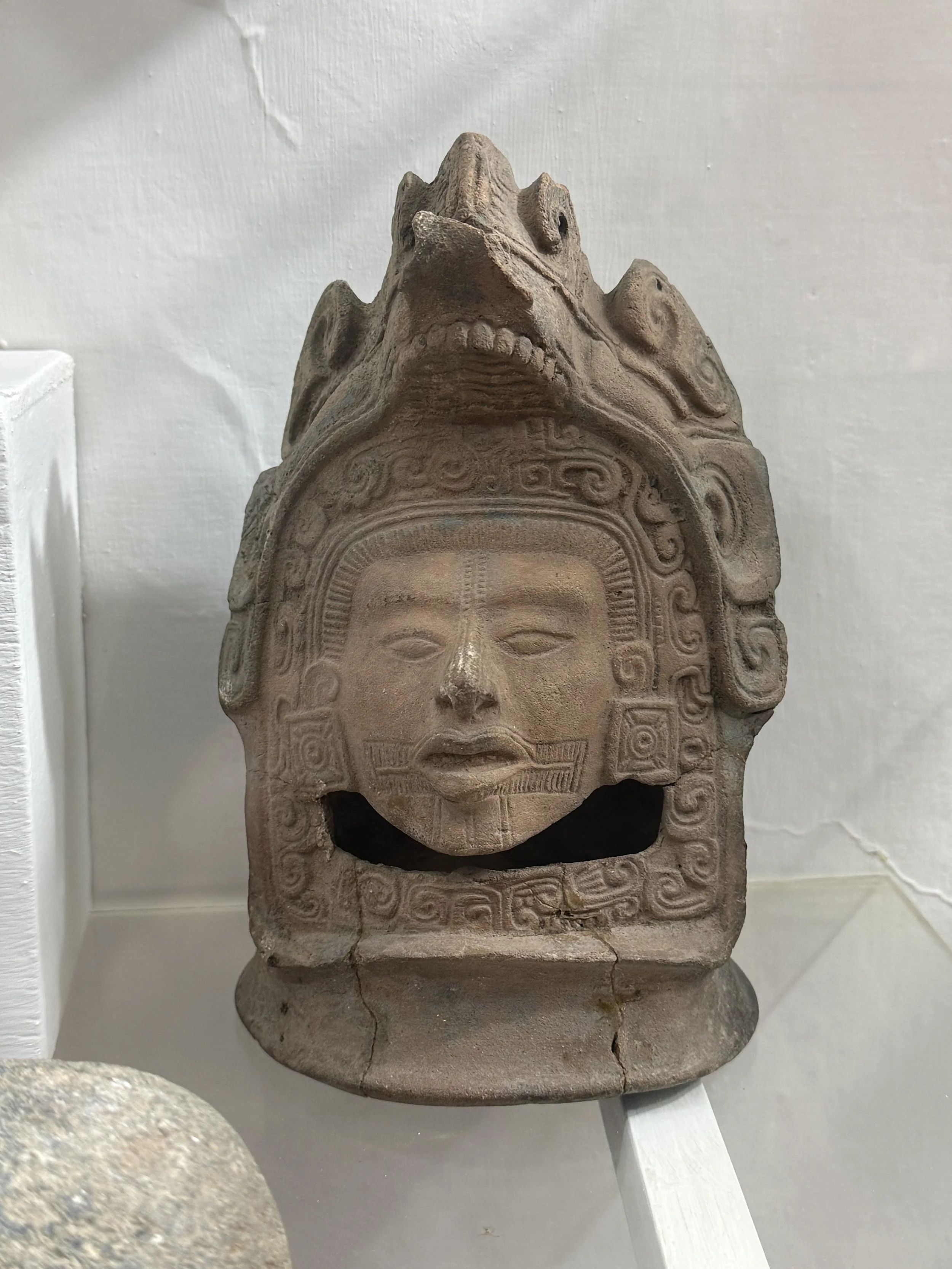
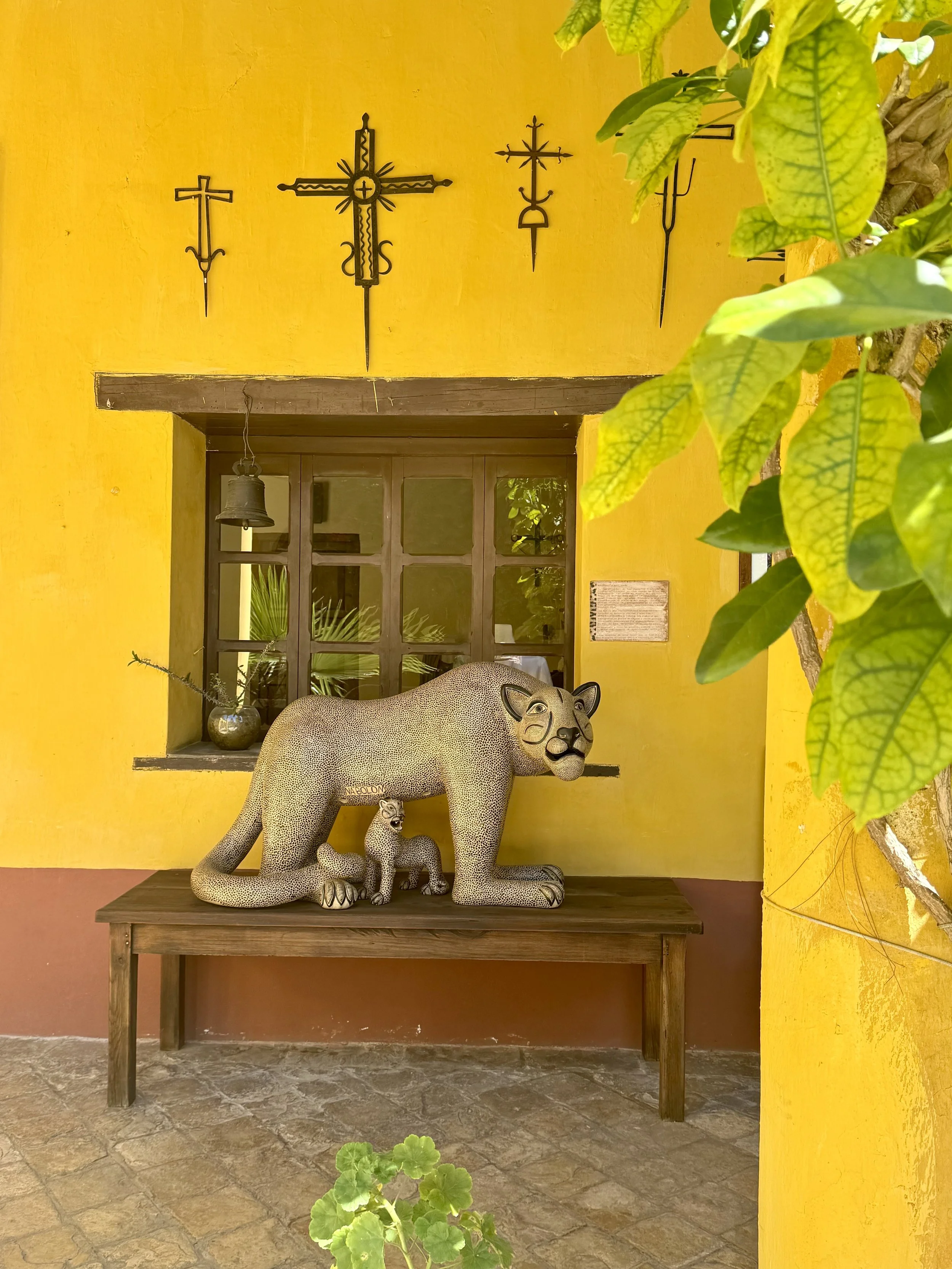
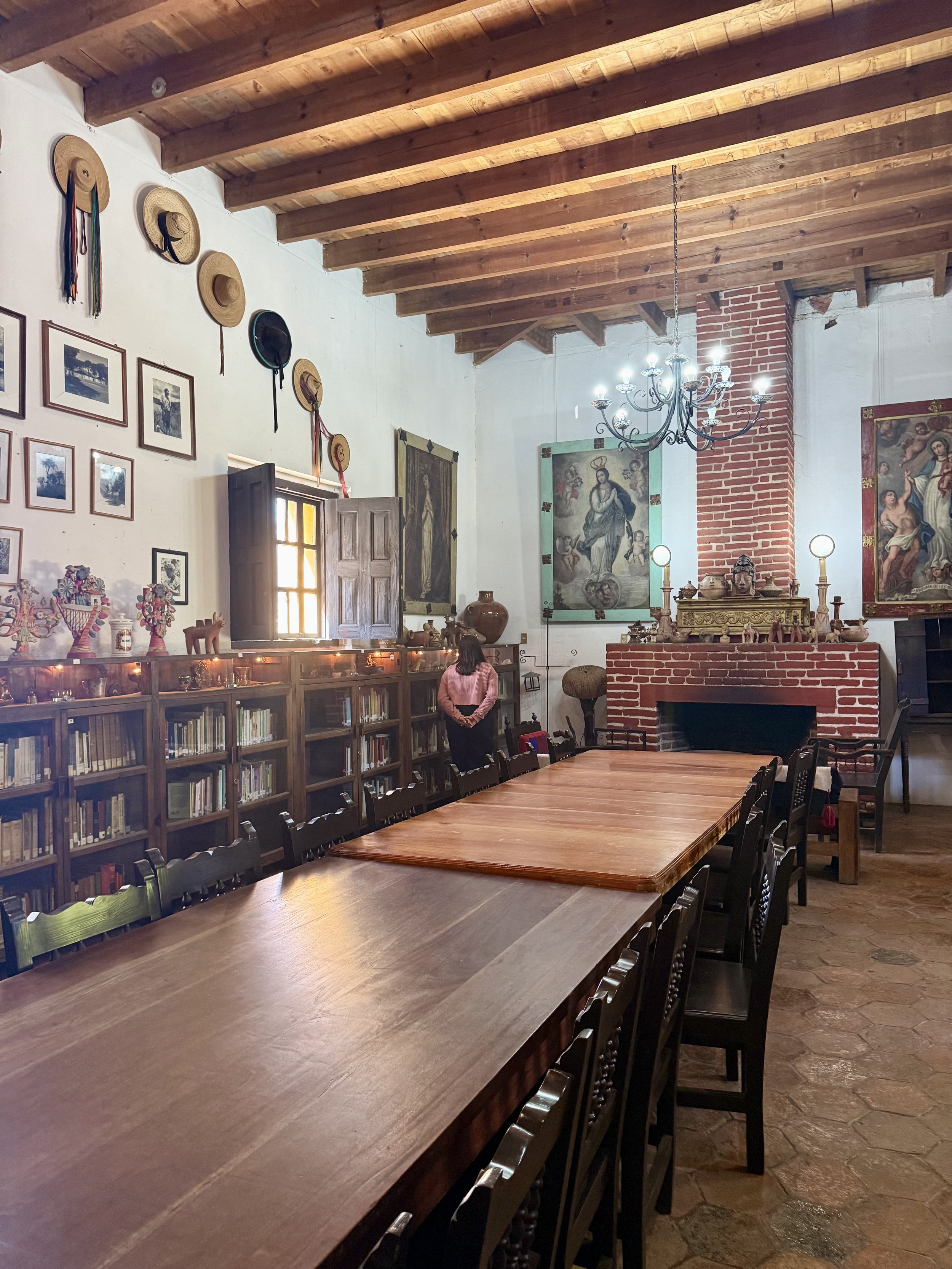
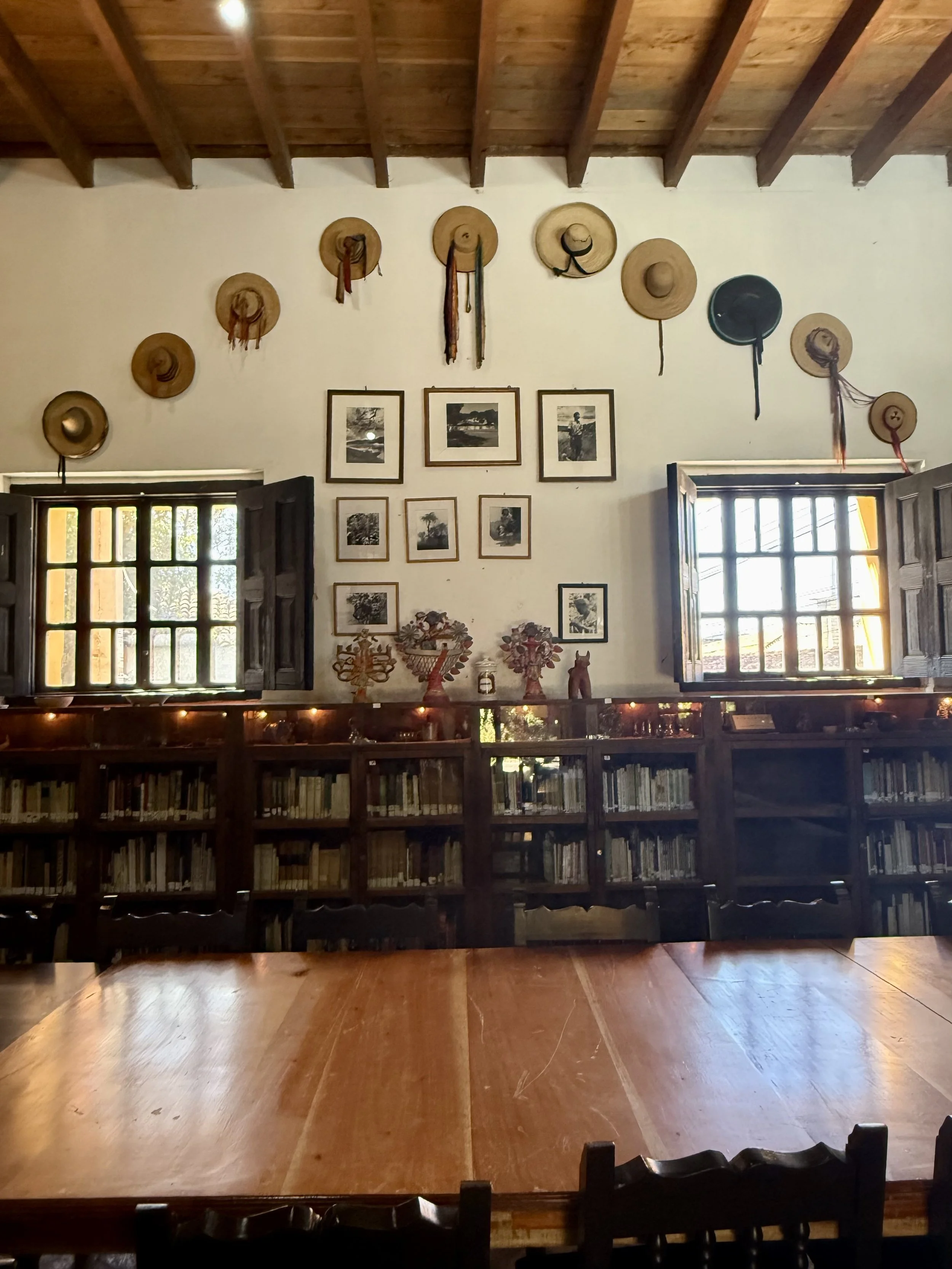
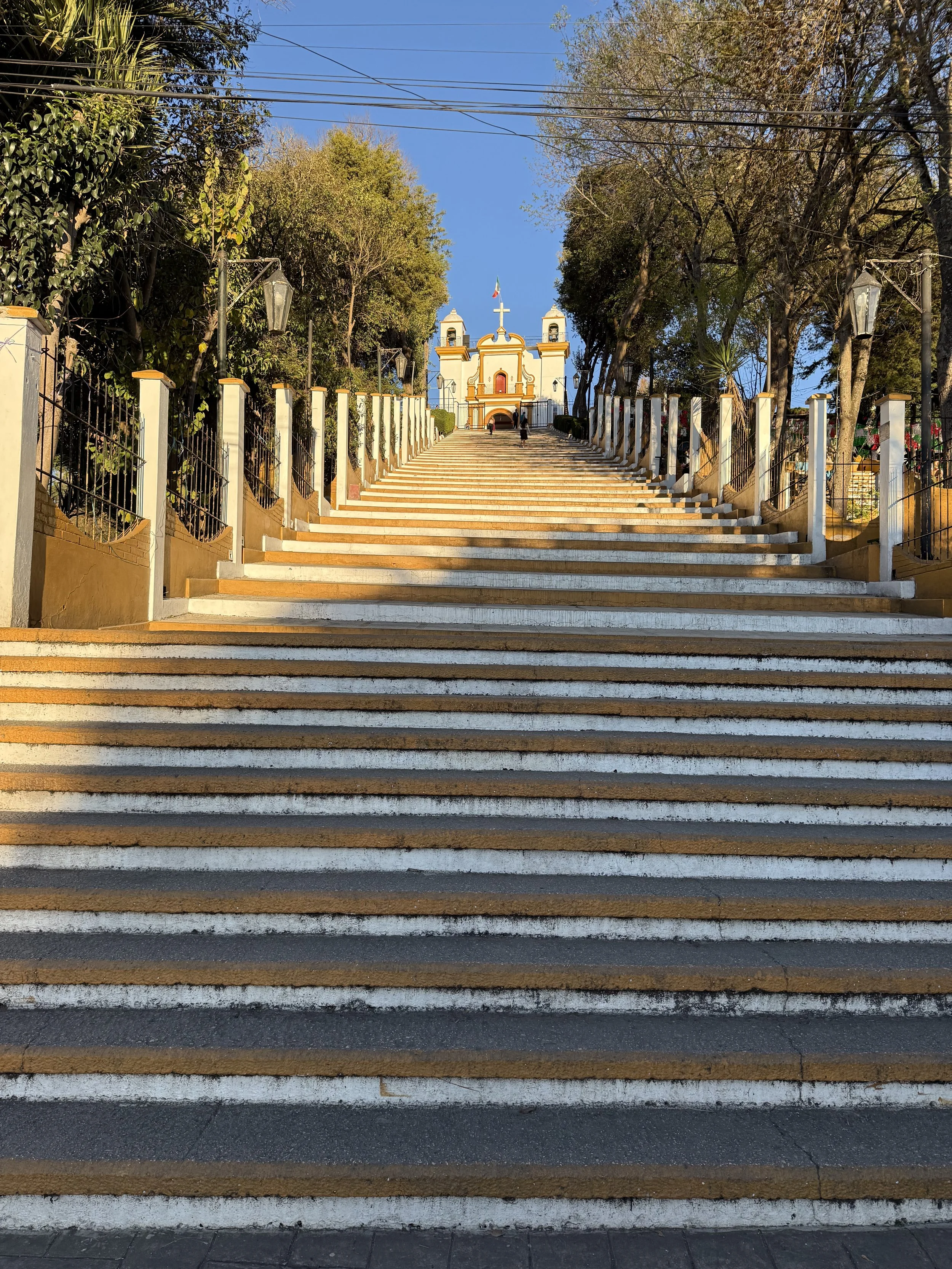
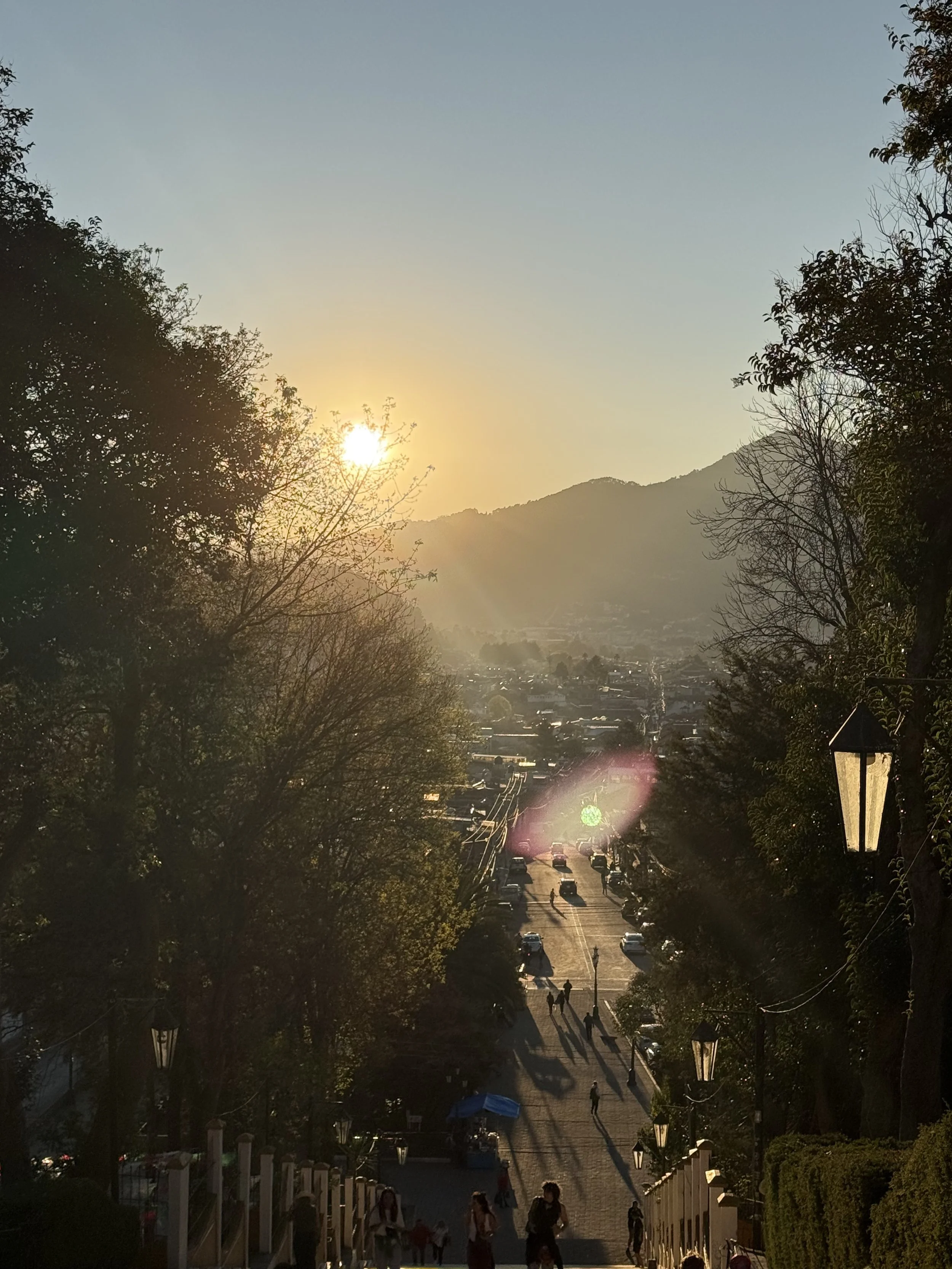
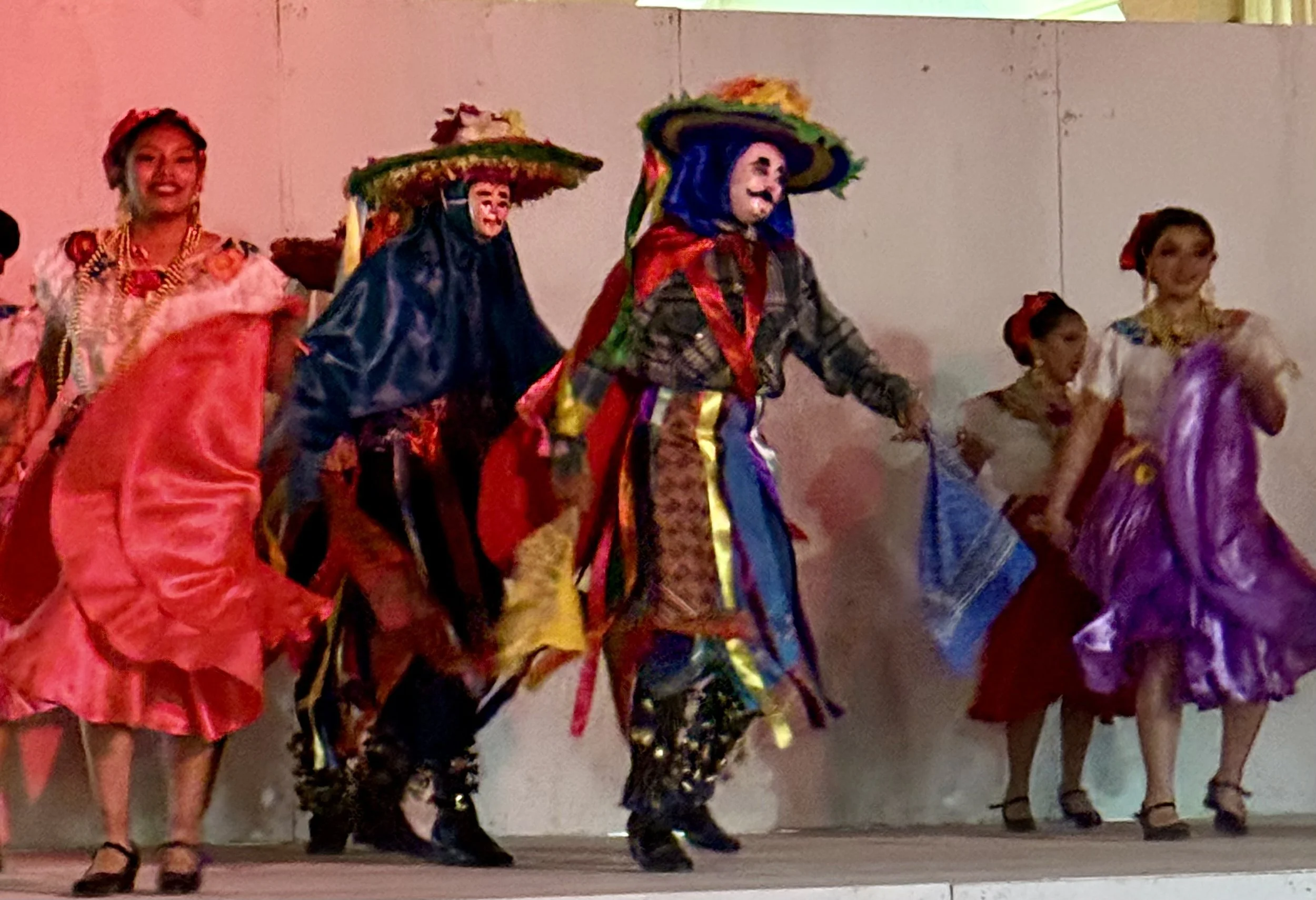
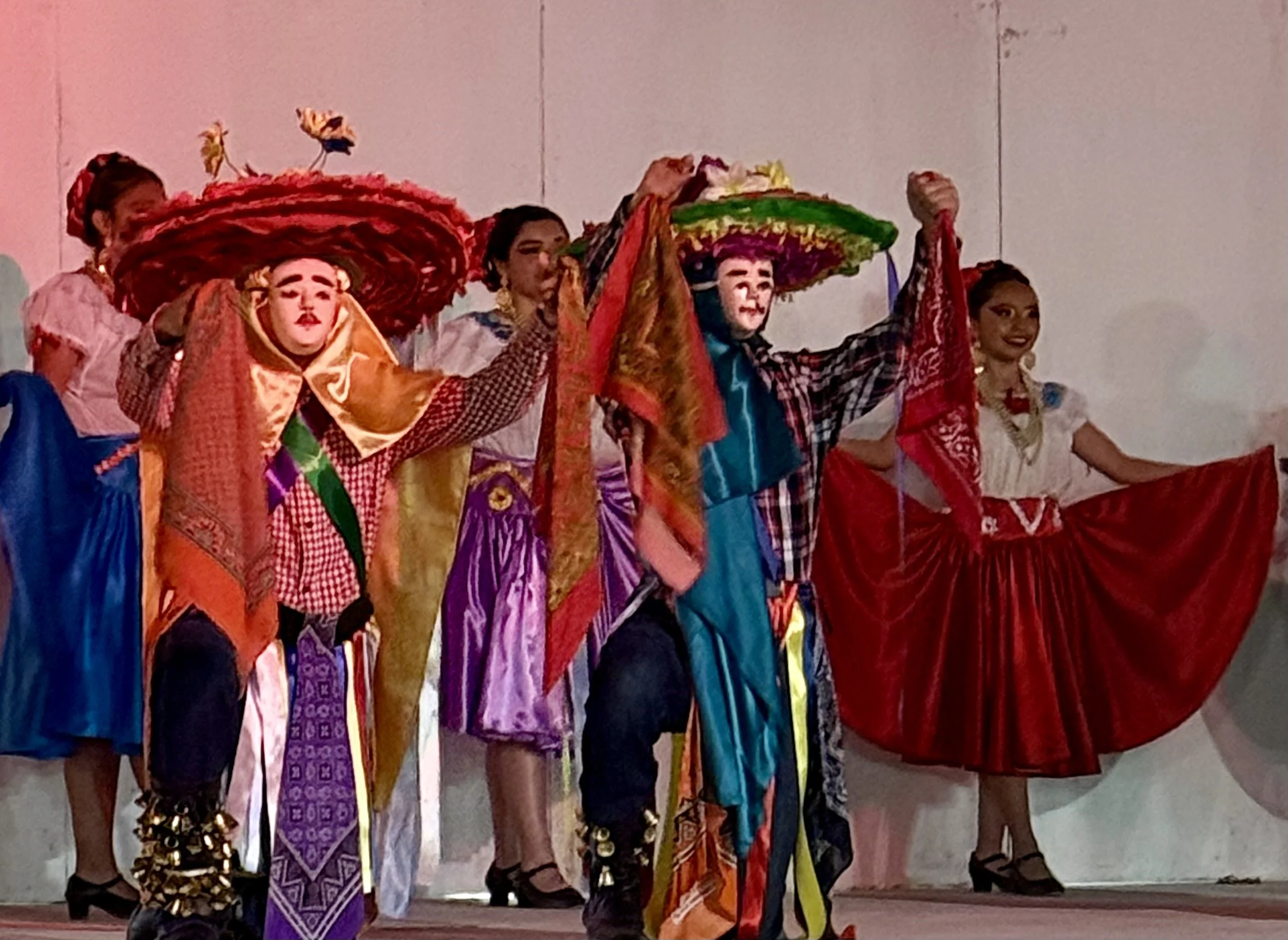
Sunset at The Templo de la Guadalupe and local dances on the city square.
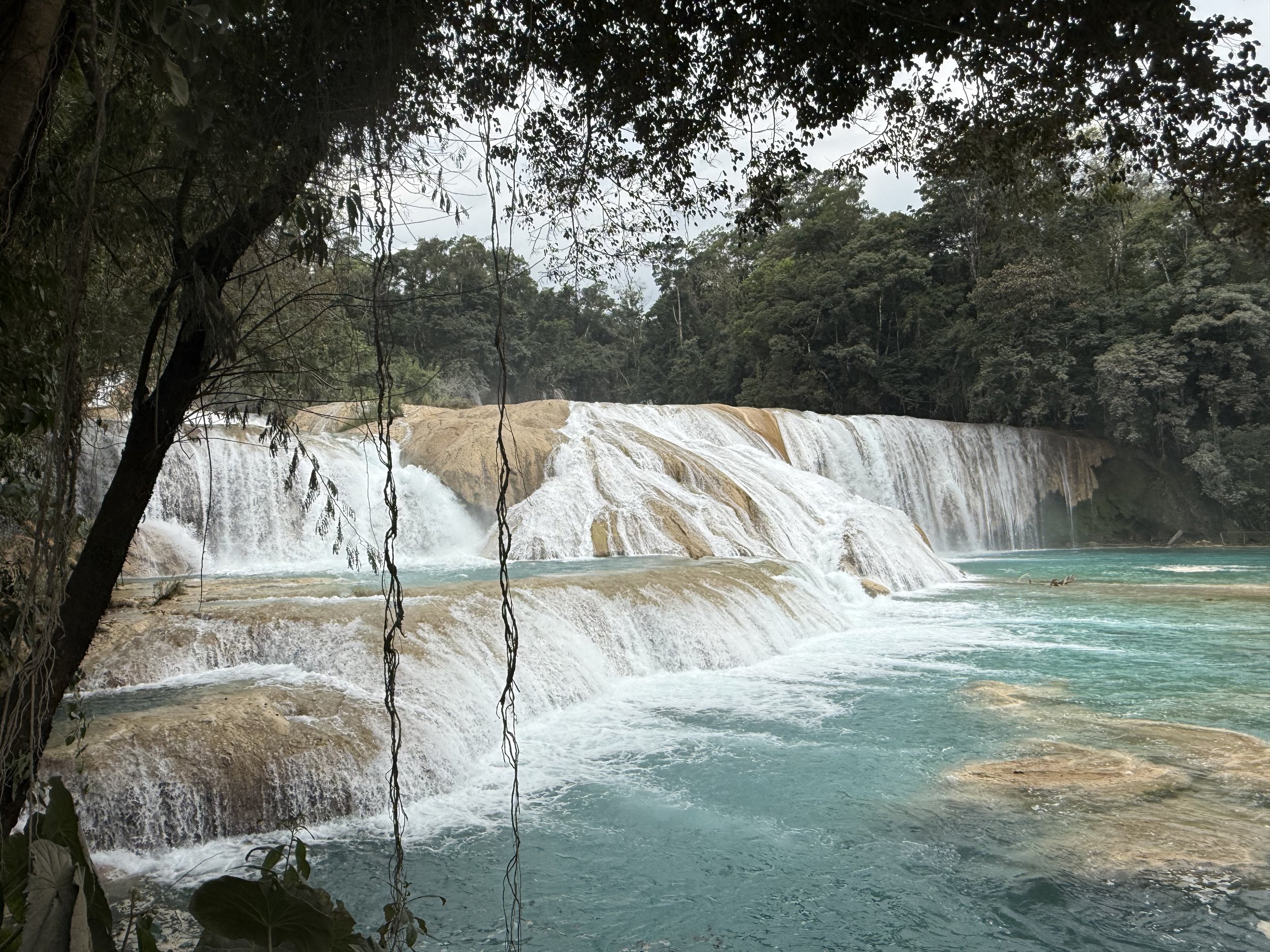
The third day (+/- 8 hours), starting with a beautiful drive to Palenque, stopping at Agua Azul. it is a breathtaking series of terraced, turquoise-blue limestone waterfalls and pools on the Xanil River. We never saw such beautiful waterfalls.
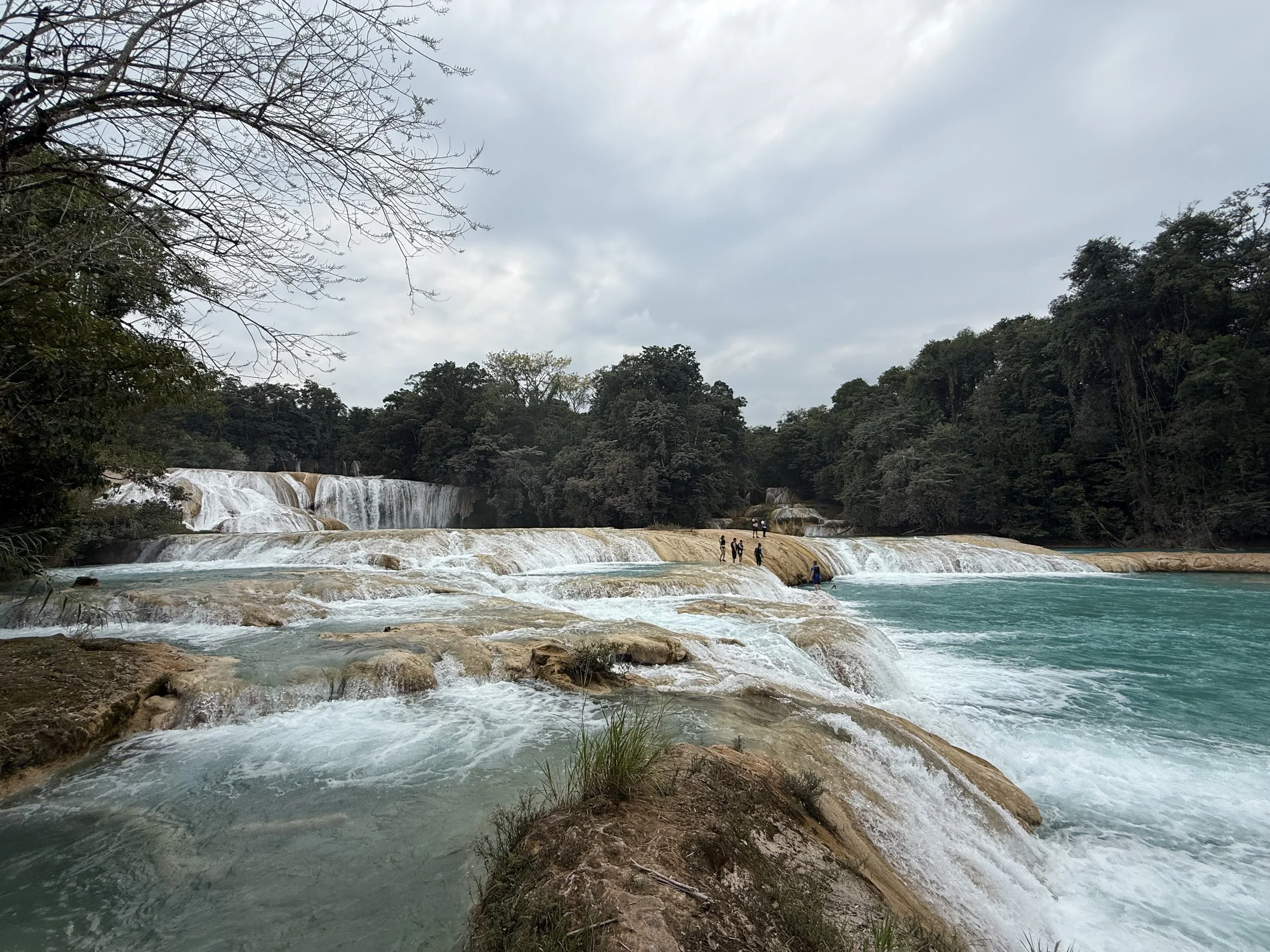
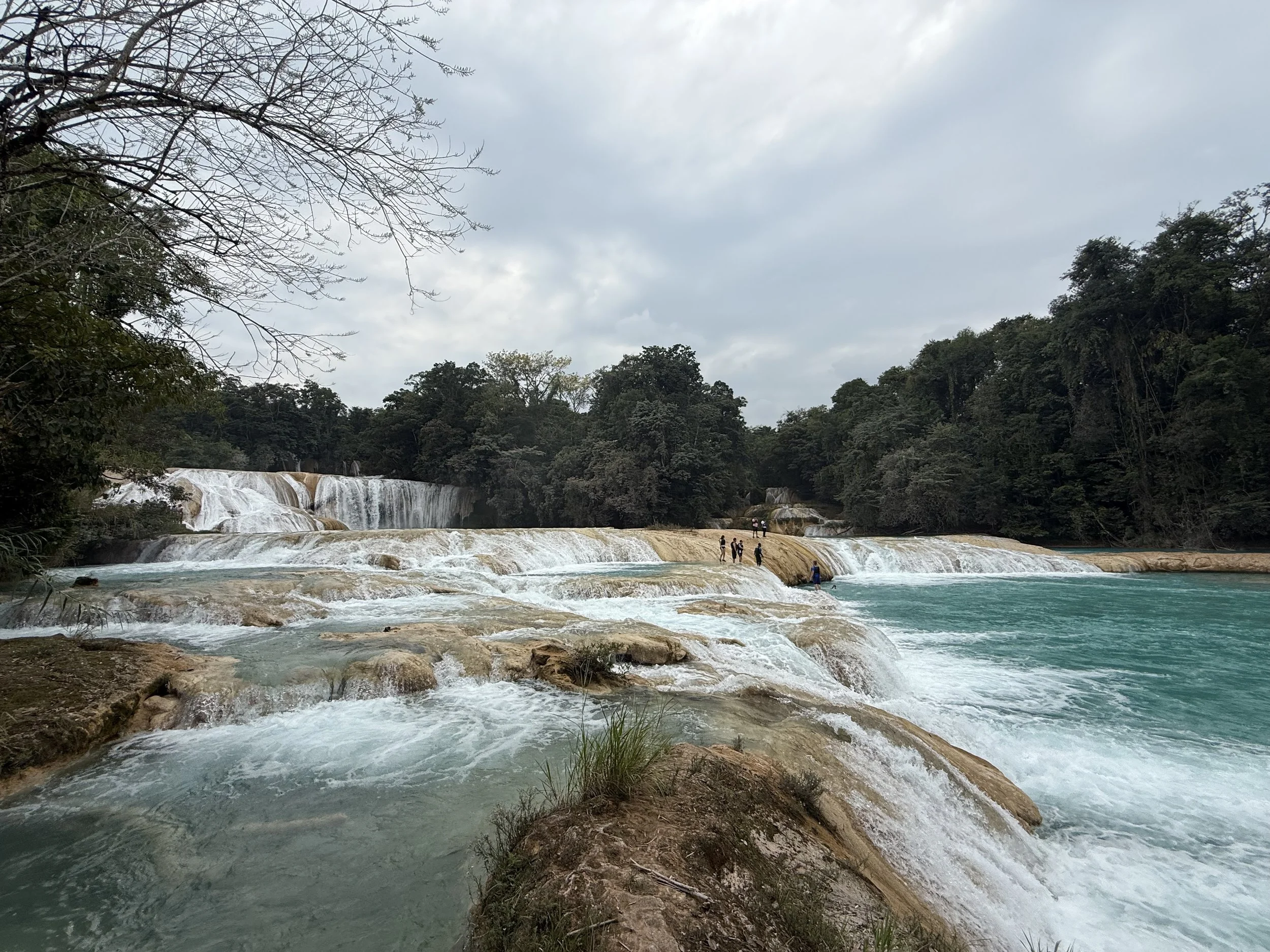
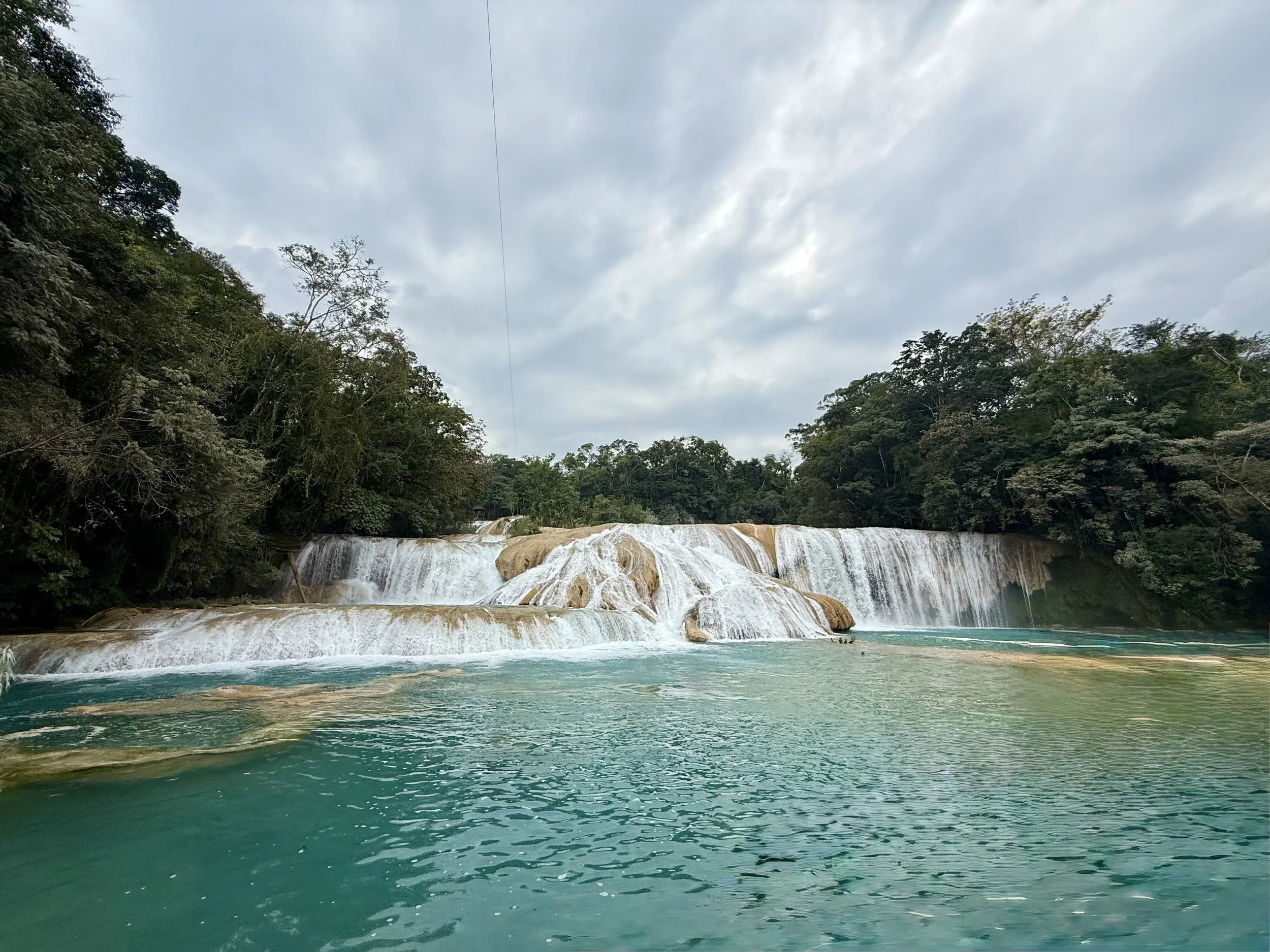
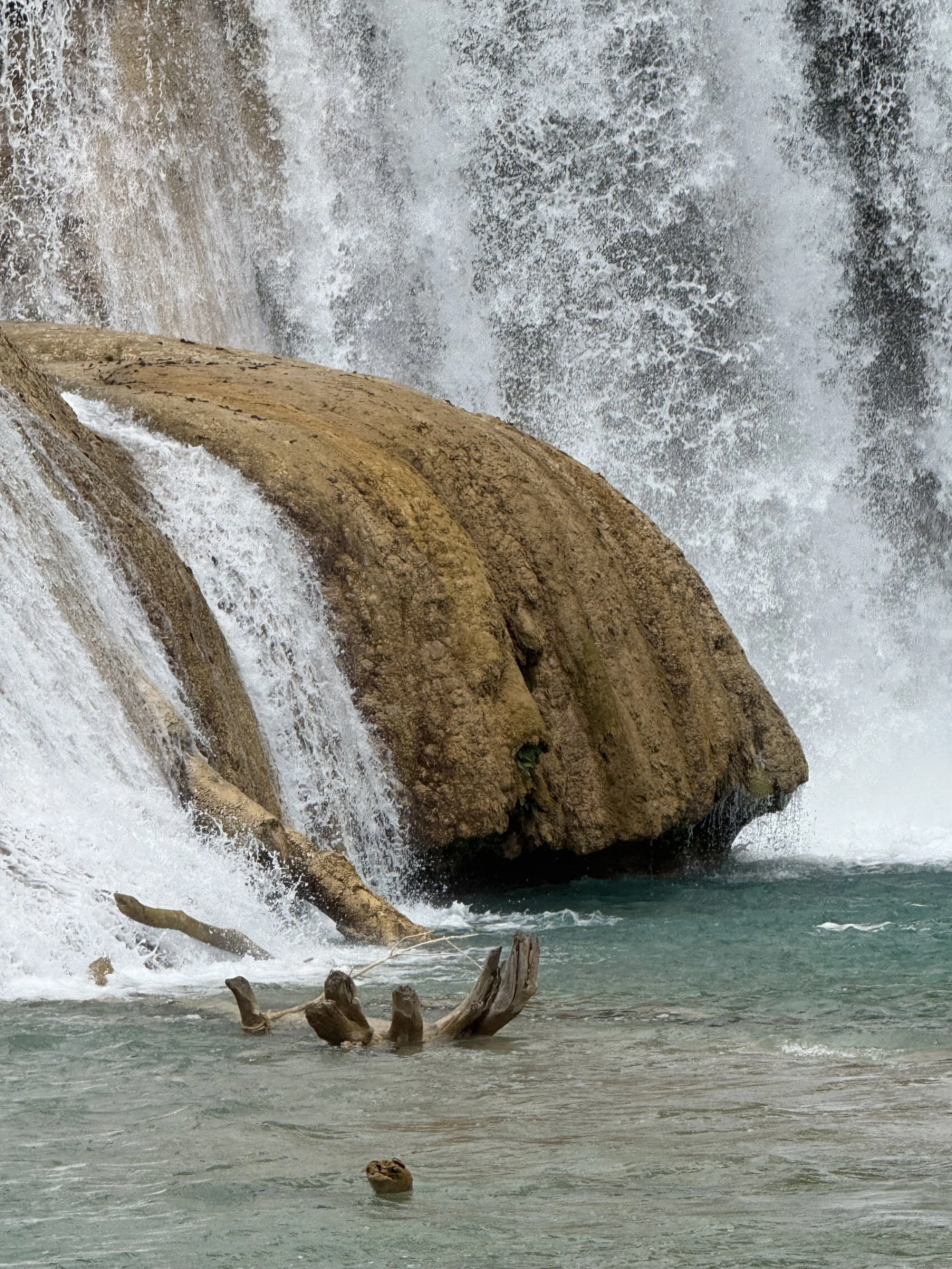
We stayed 3 nights in Palenque at the Hotel Quinta Chanabnal: a “luxurious boutique hotel” designed to resemble a Mayan palace. It is very close by the Palenque Archaeological Site and surrounded by tropical gardens and monkeys. I think it was the only option… Great staff and pretty good restaurant.
The fourth day, a very long day coming up but so worth it!
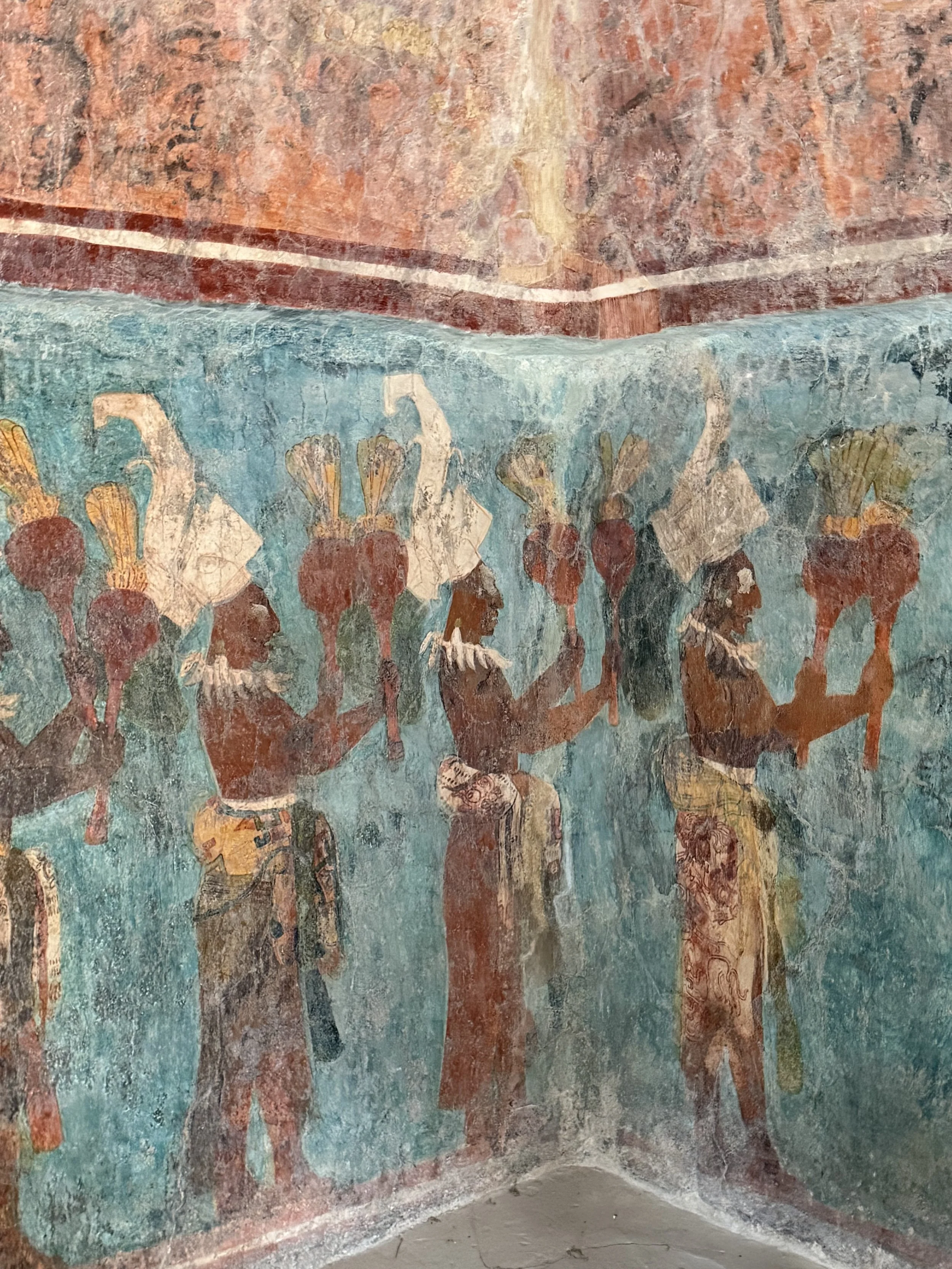
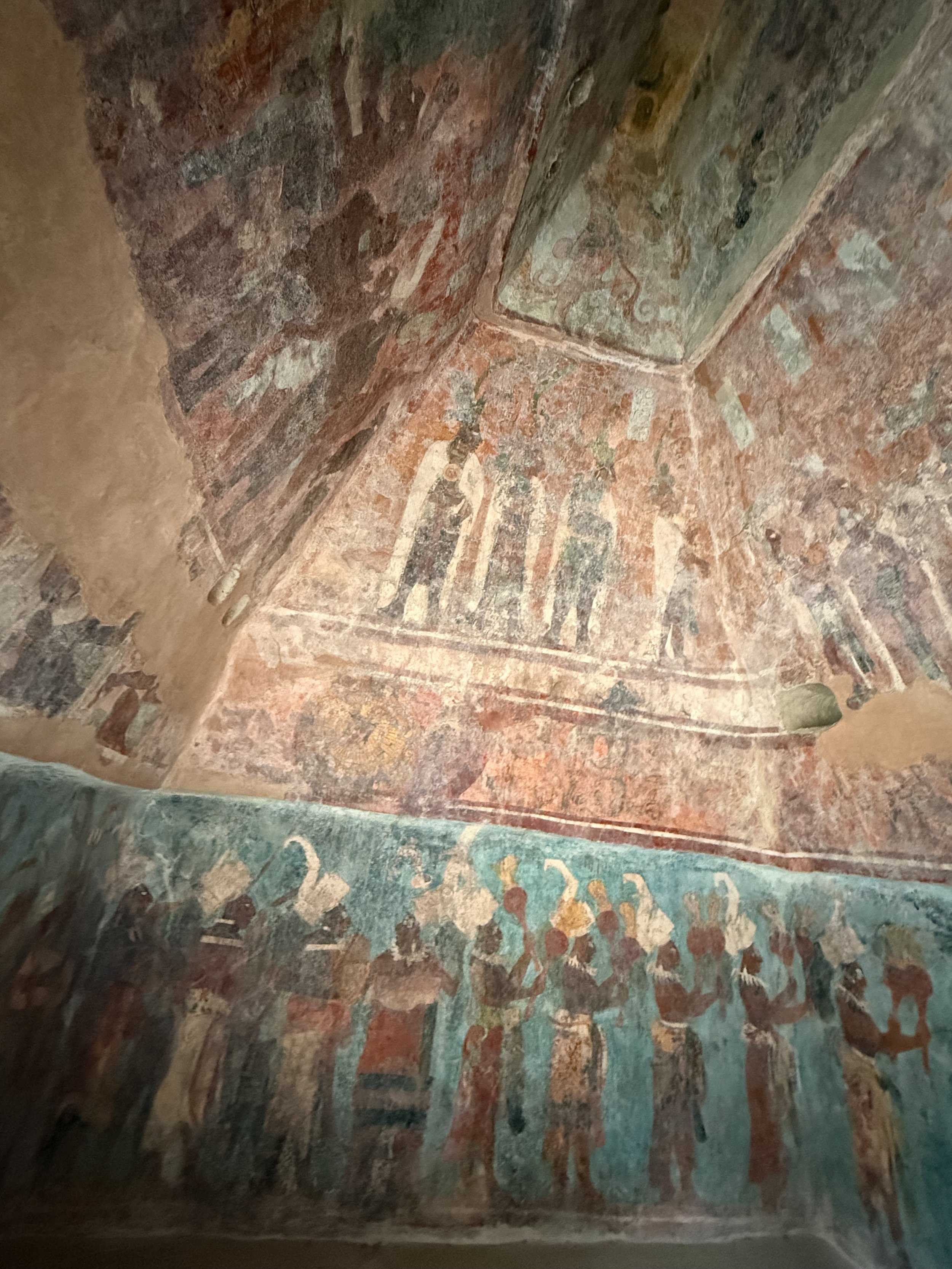
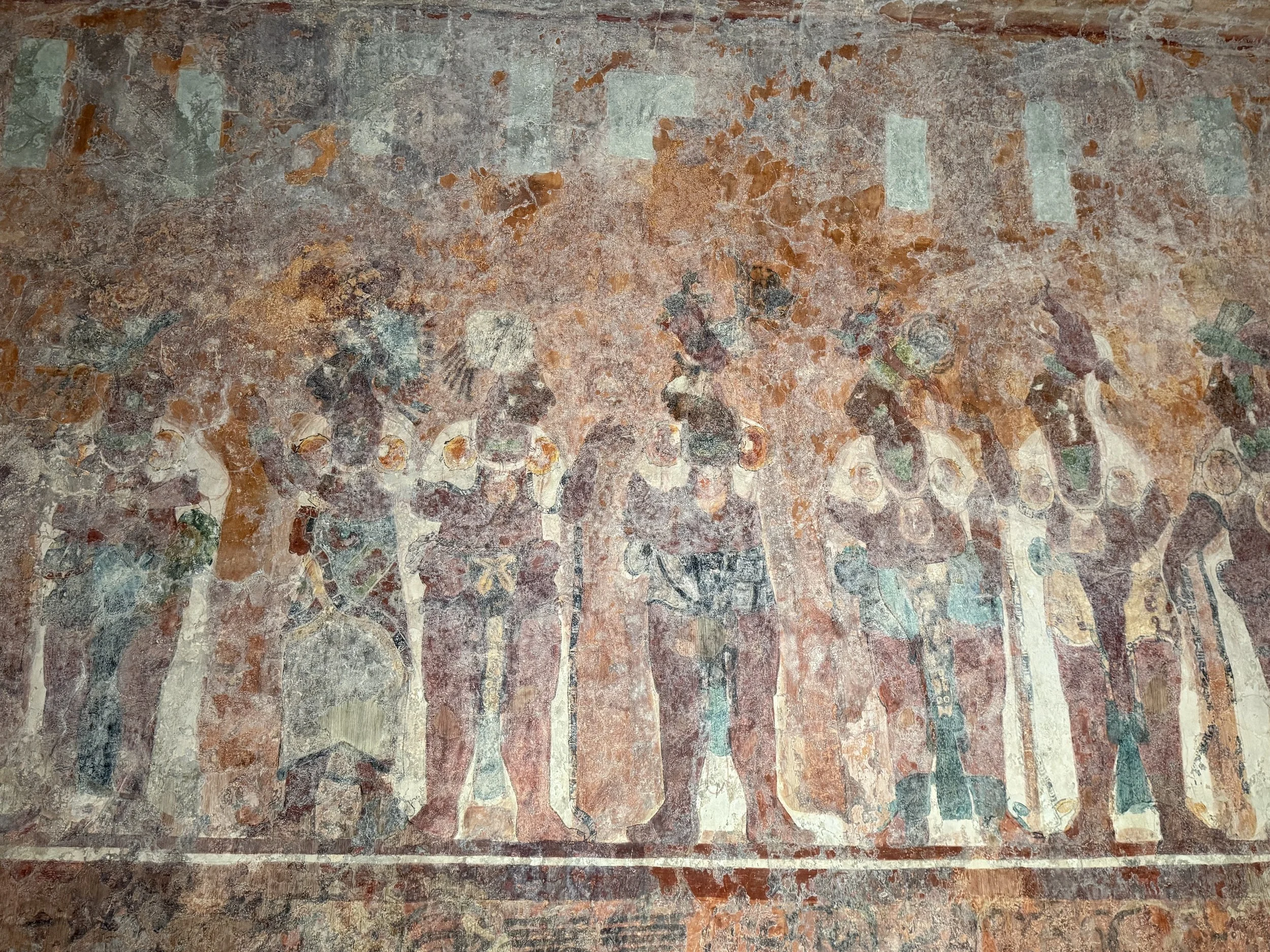
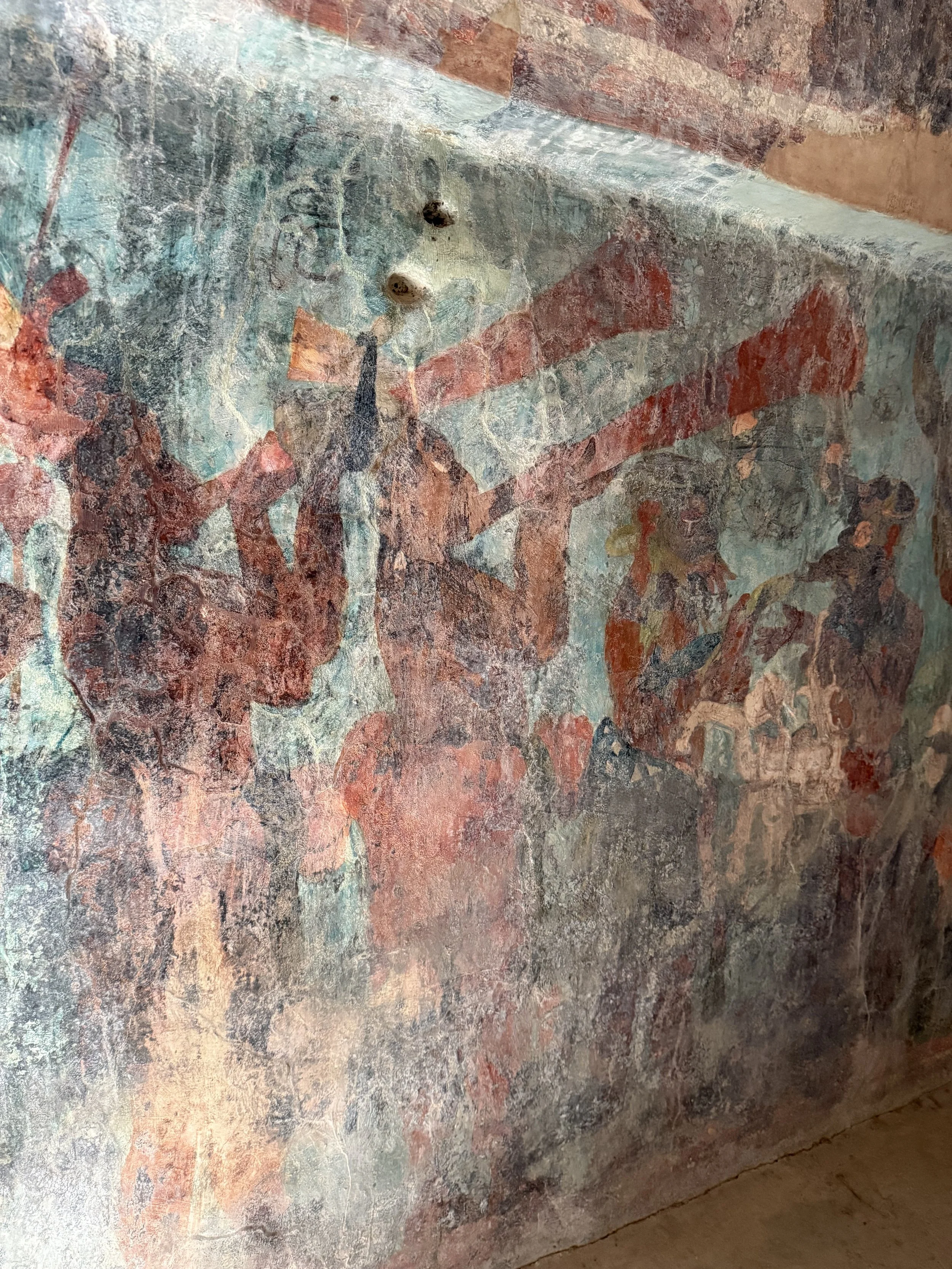
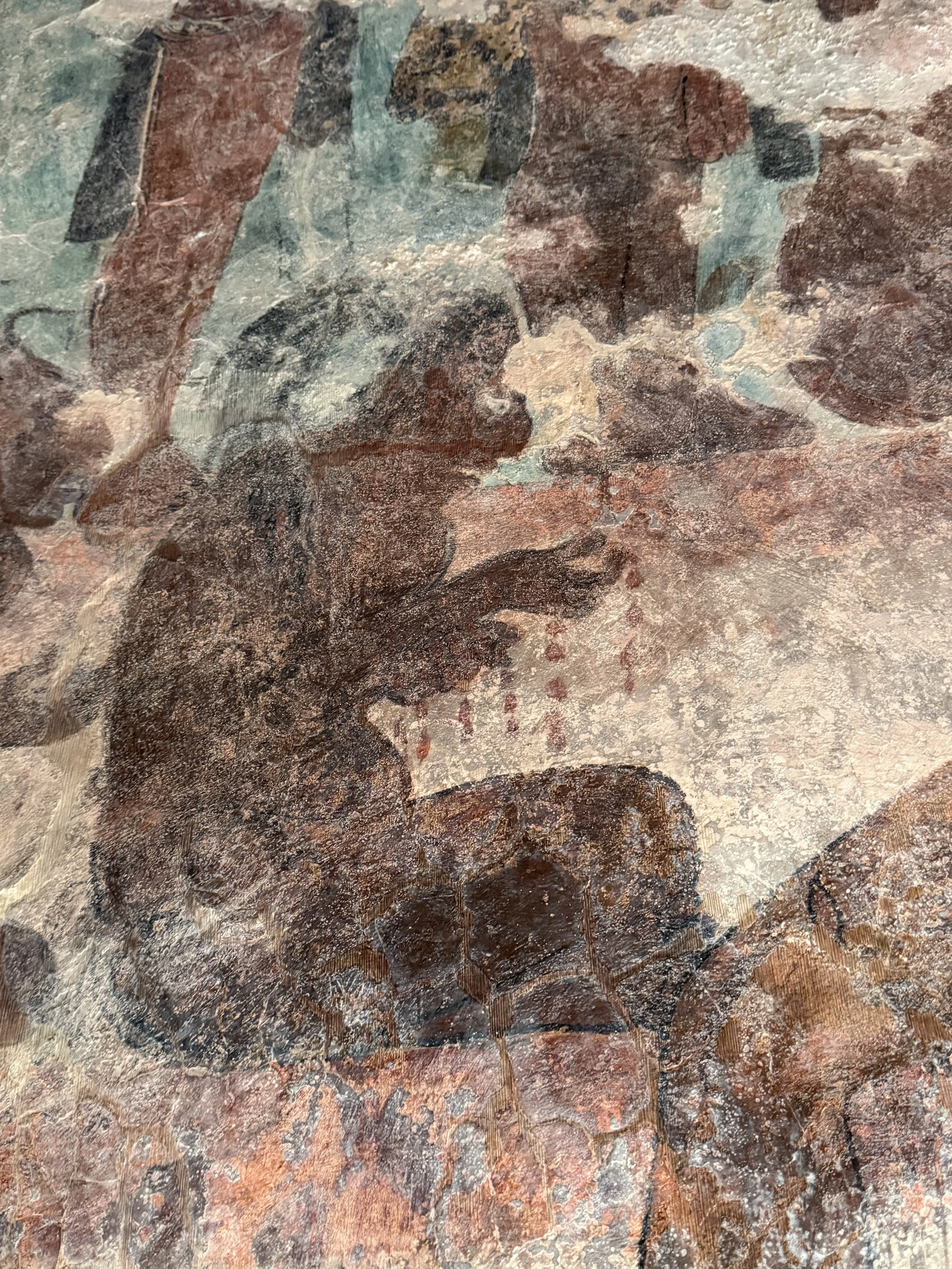
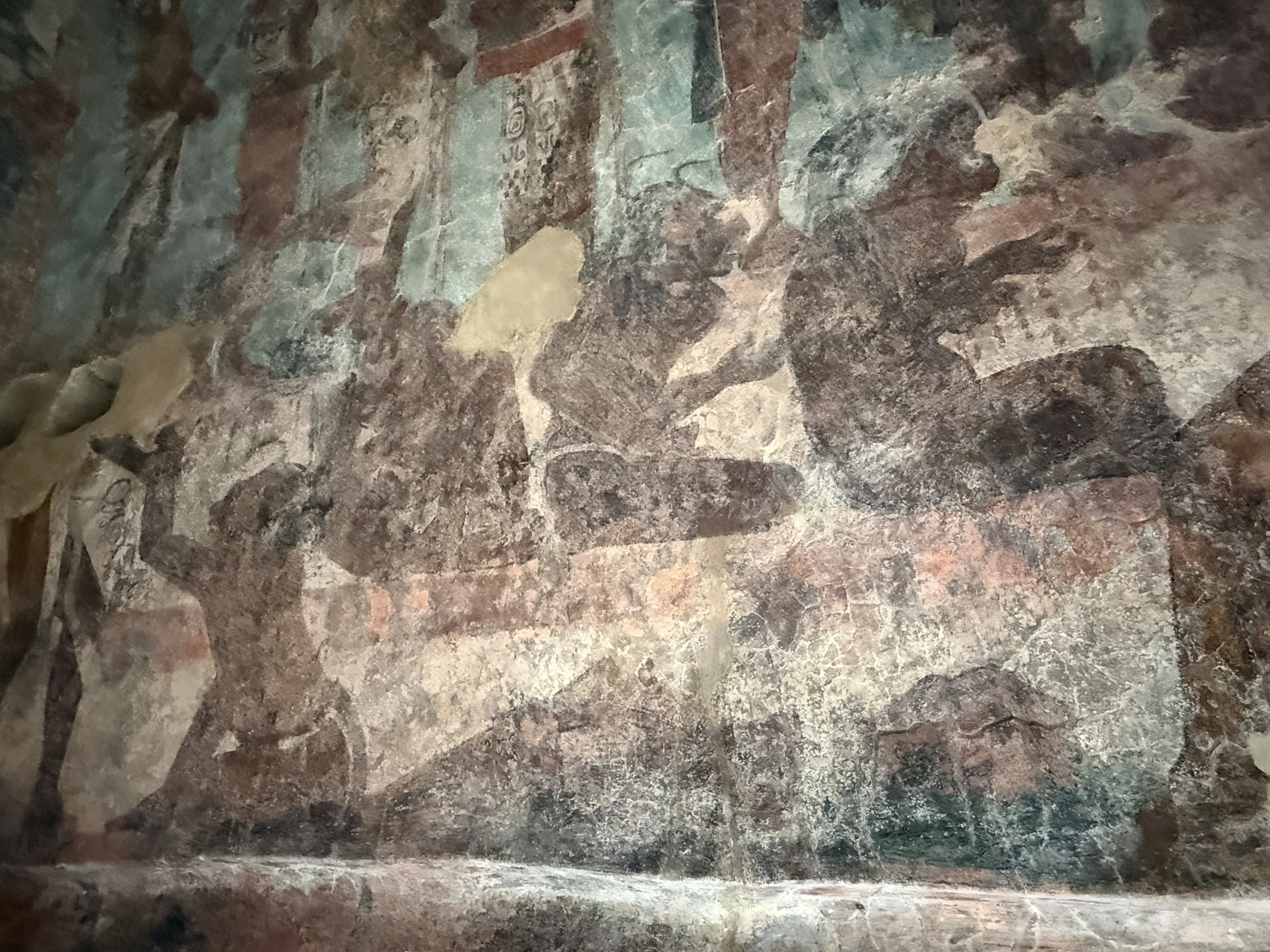
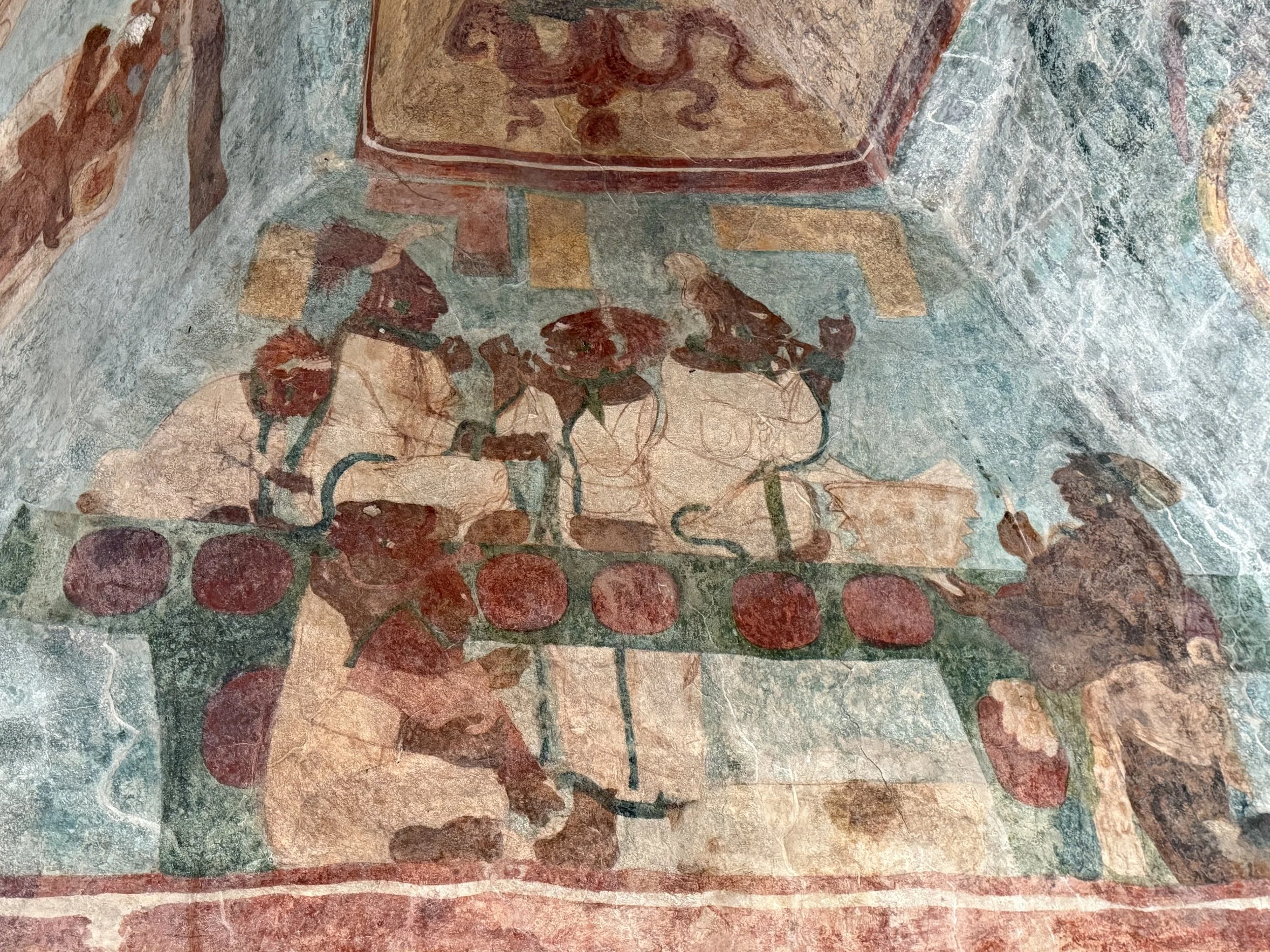
First, Bonampak, it is a Maya site renowned for its very well preserved murals depicting 790–792 AD court life, war, sacrifice, and rituals. It is located in the Lacandon jungle.
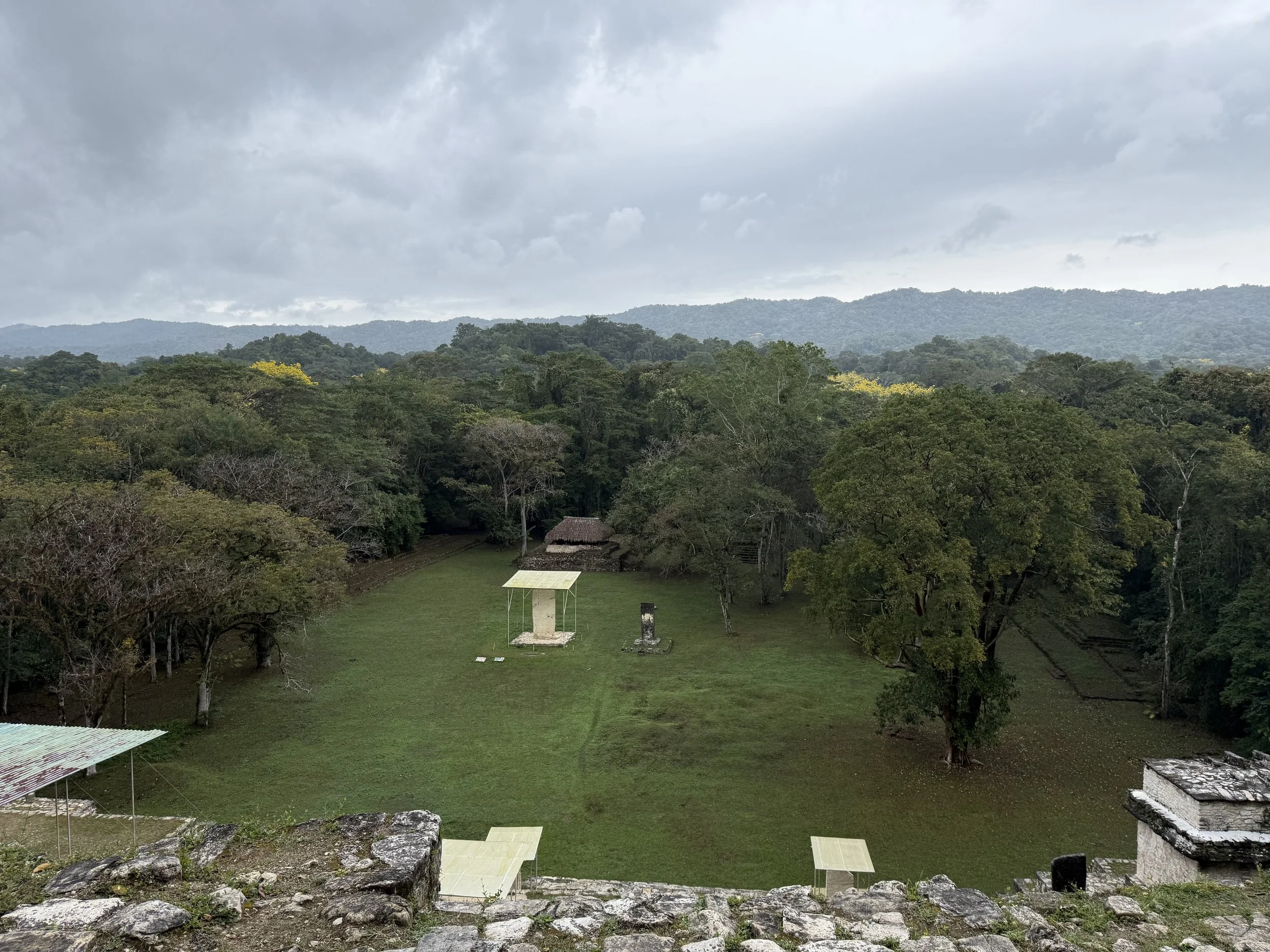
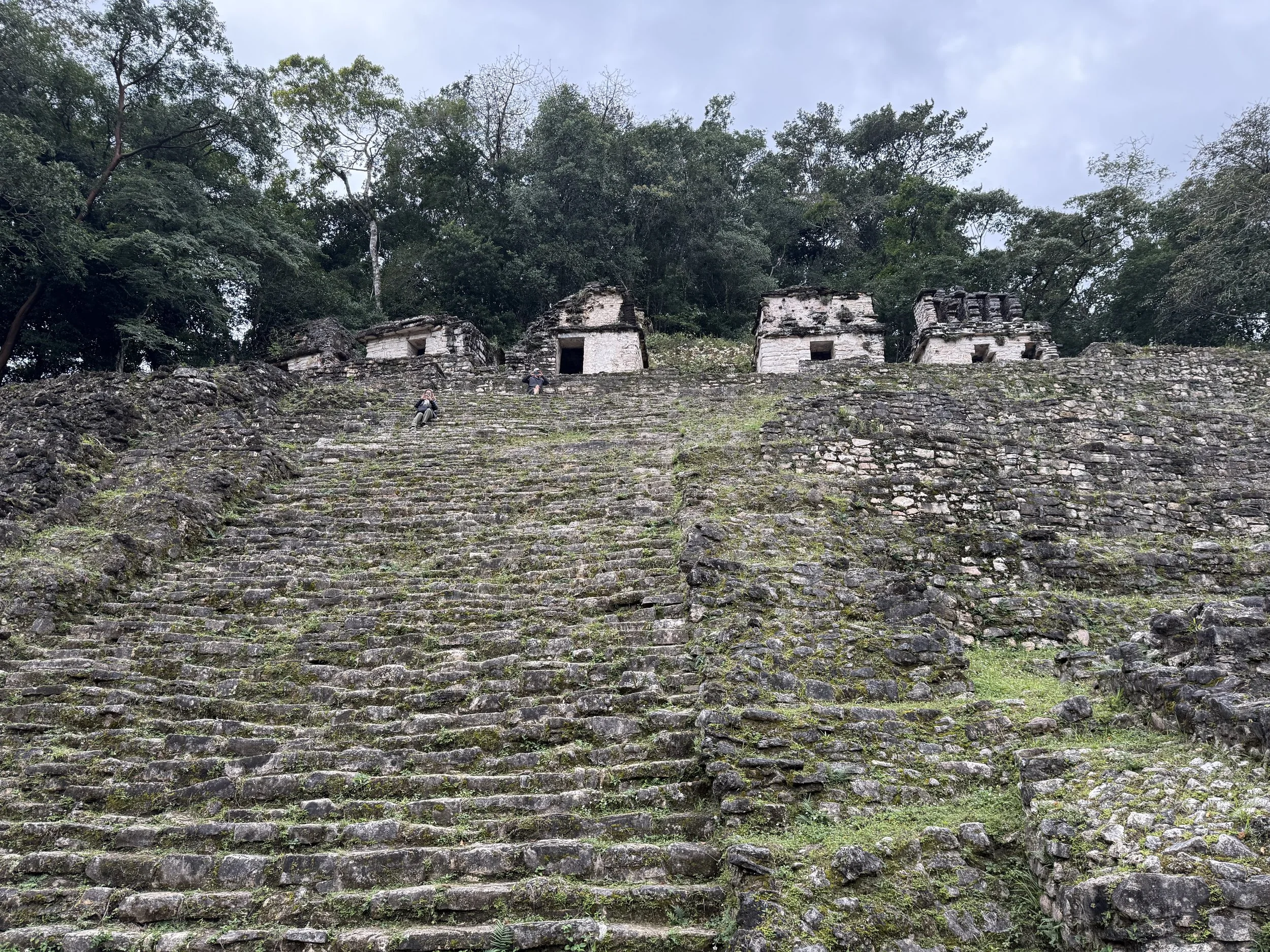
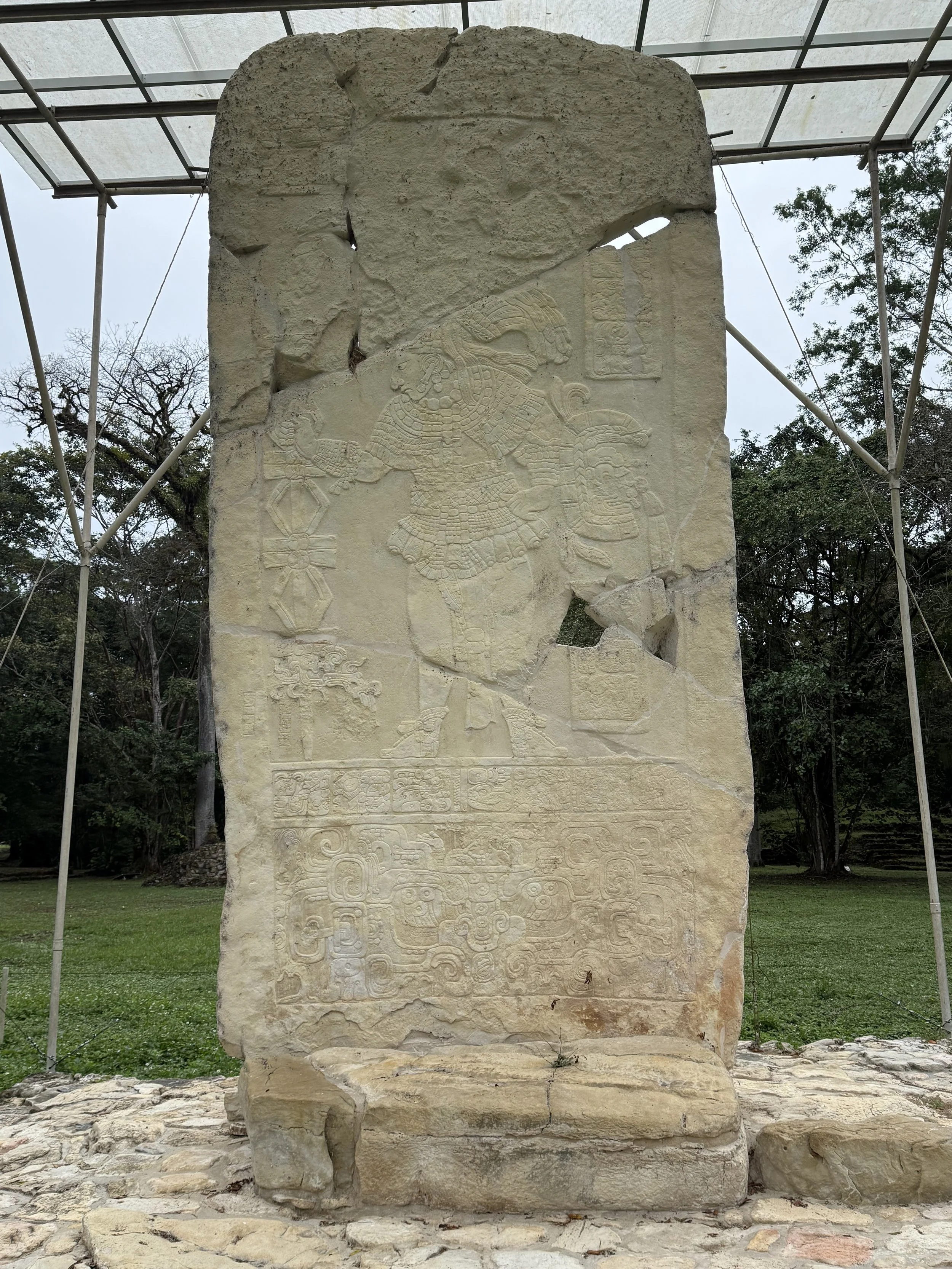
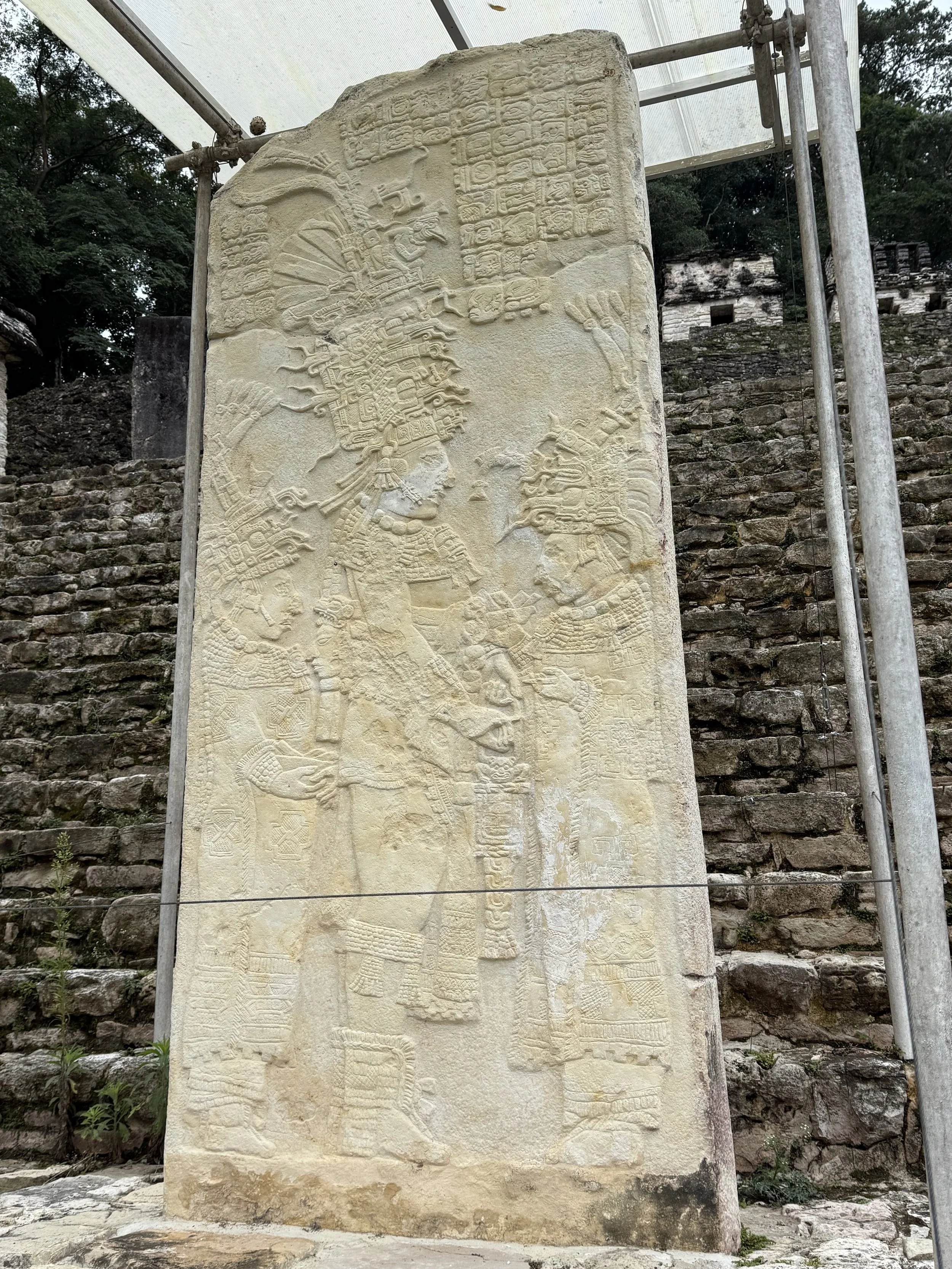
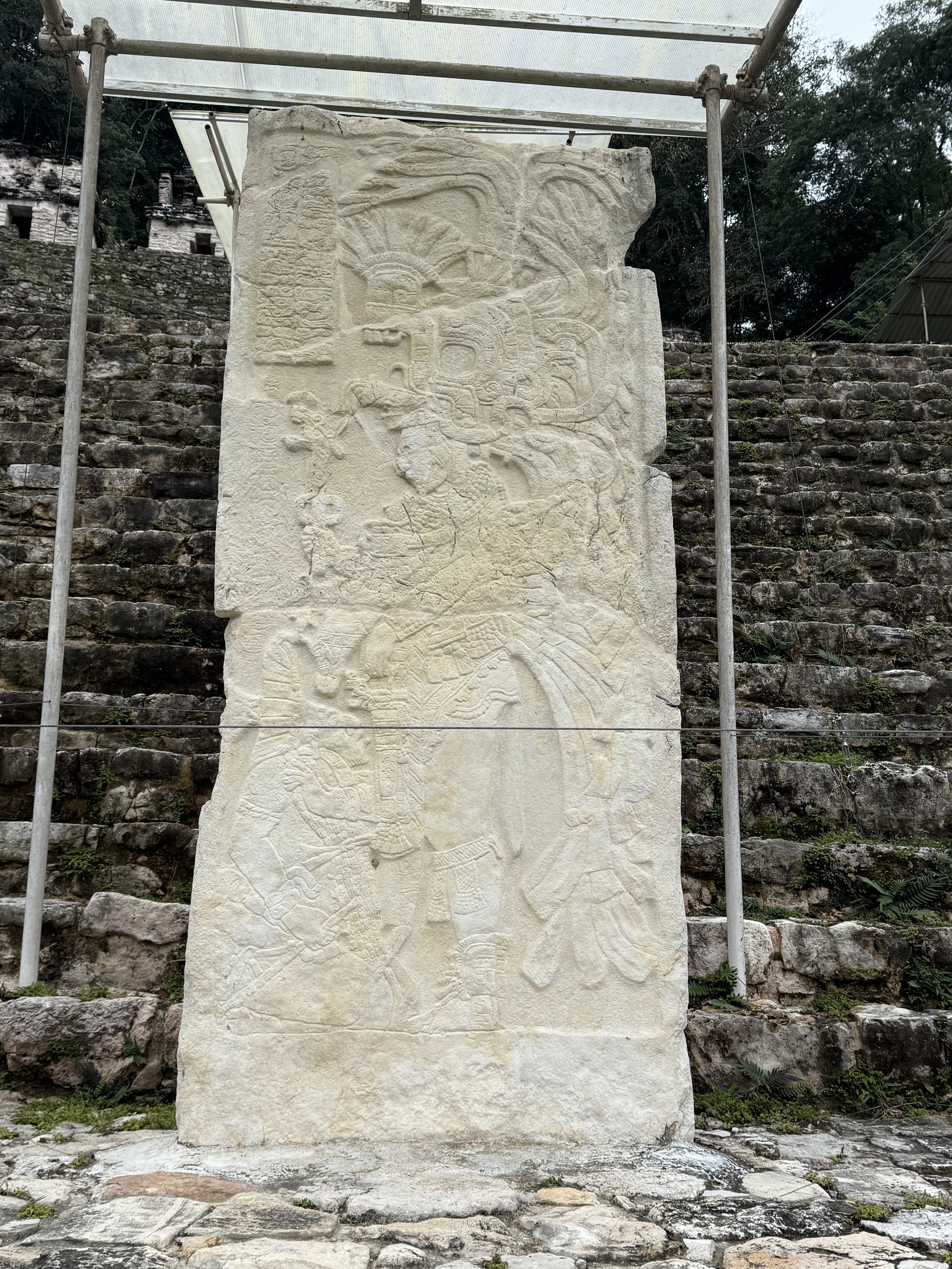
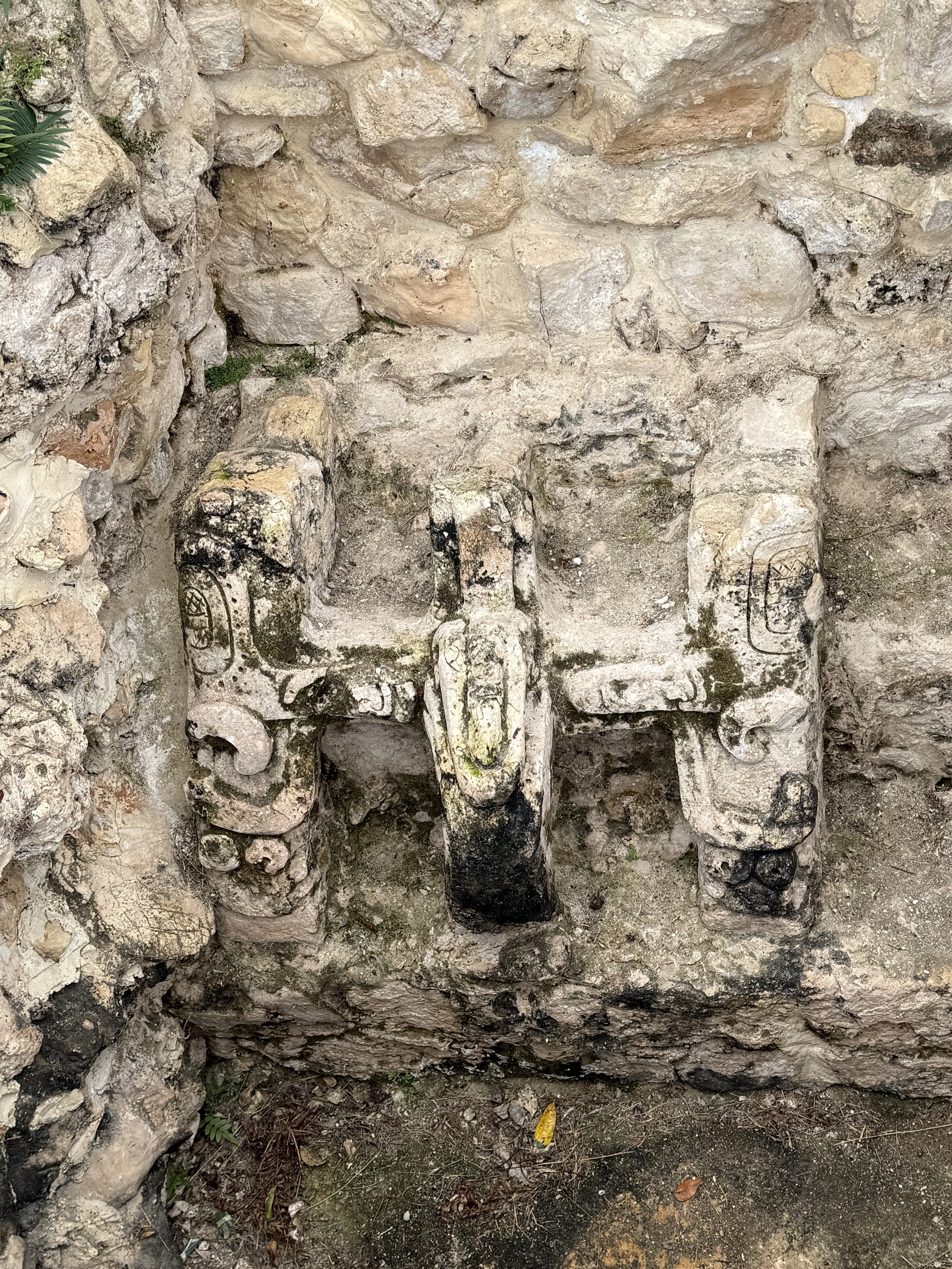
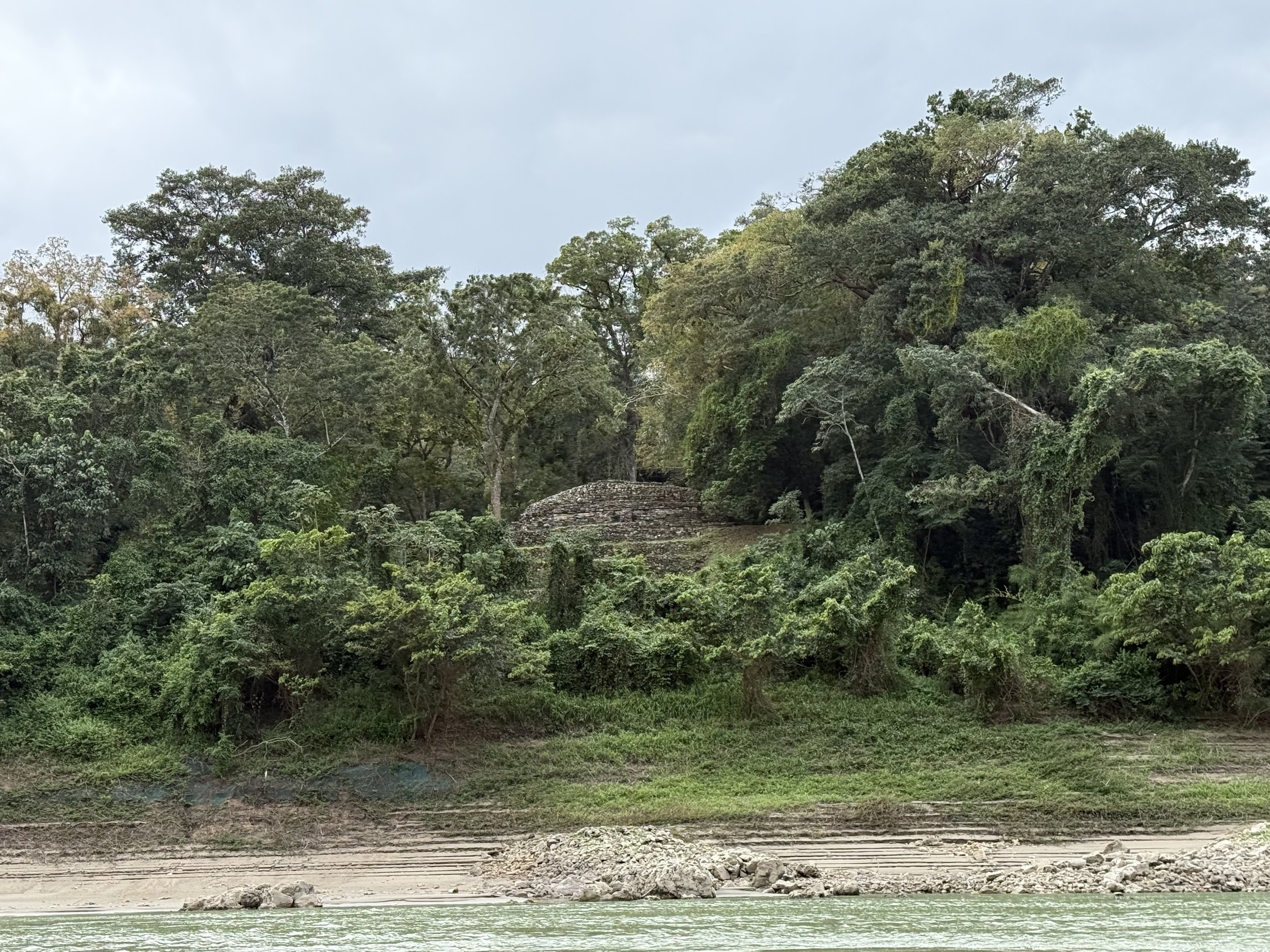
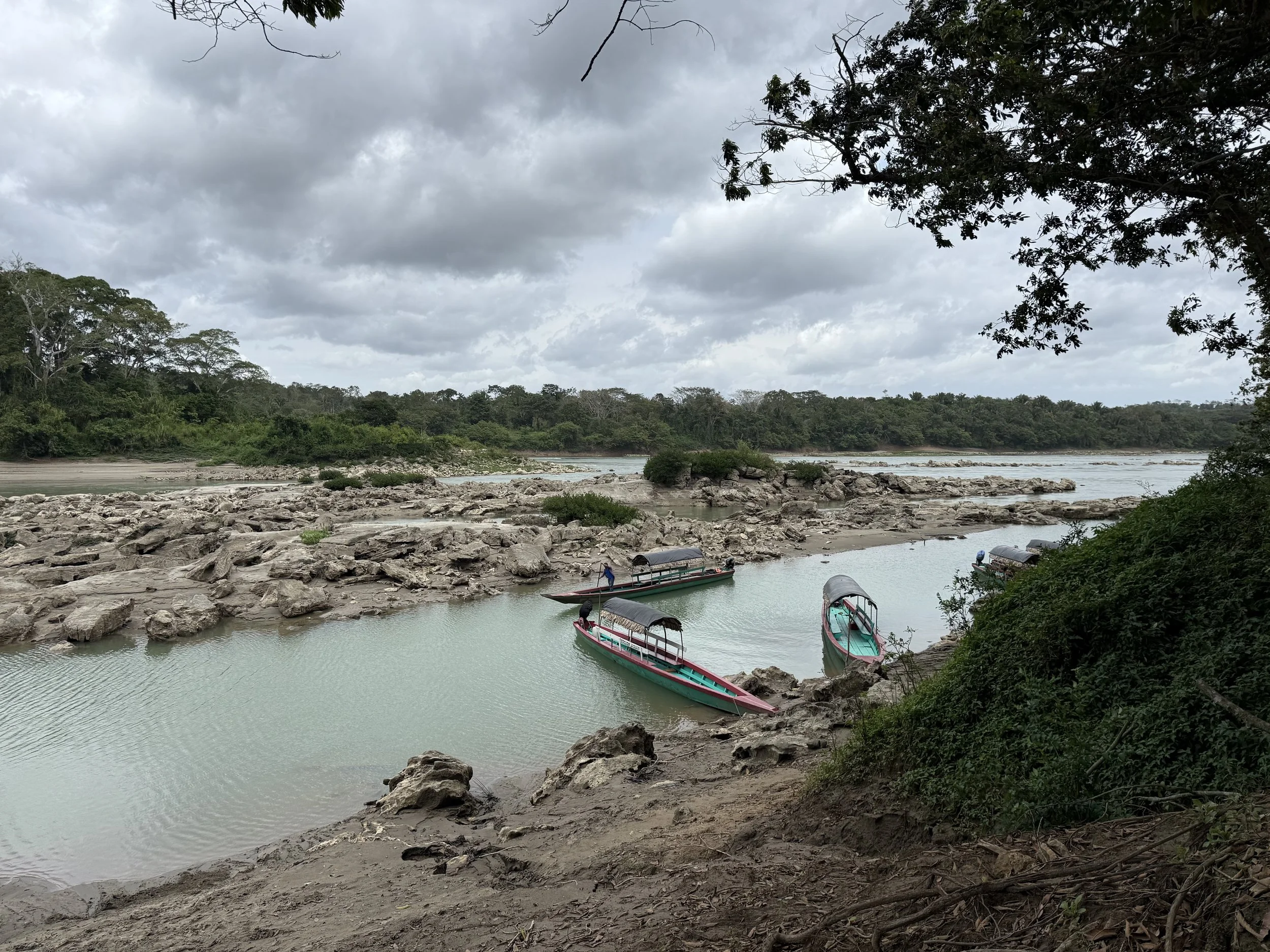
A 45 minutes boat ride on the Usumacinta River along Guatemala to discover Yaxchilán, one of the most important Mayan archeological sites of the Late Classic period, from 600 to 800 AD. Also situated in the dense Lacandon jungle.
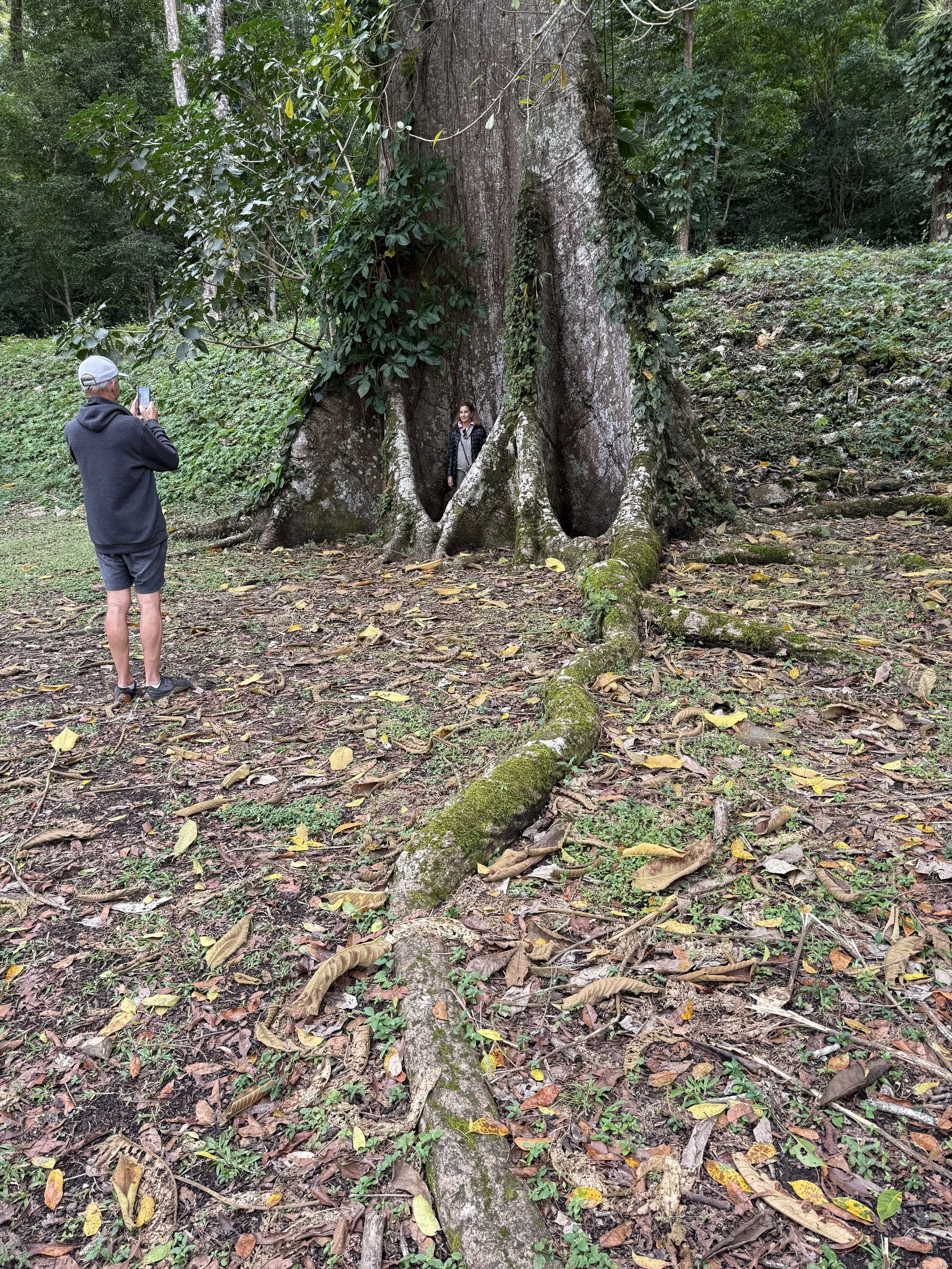
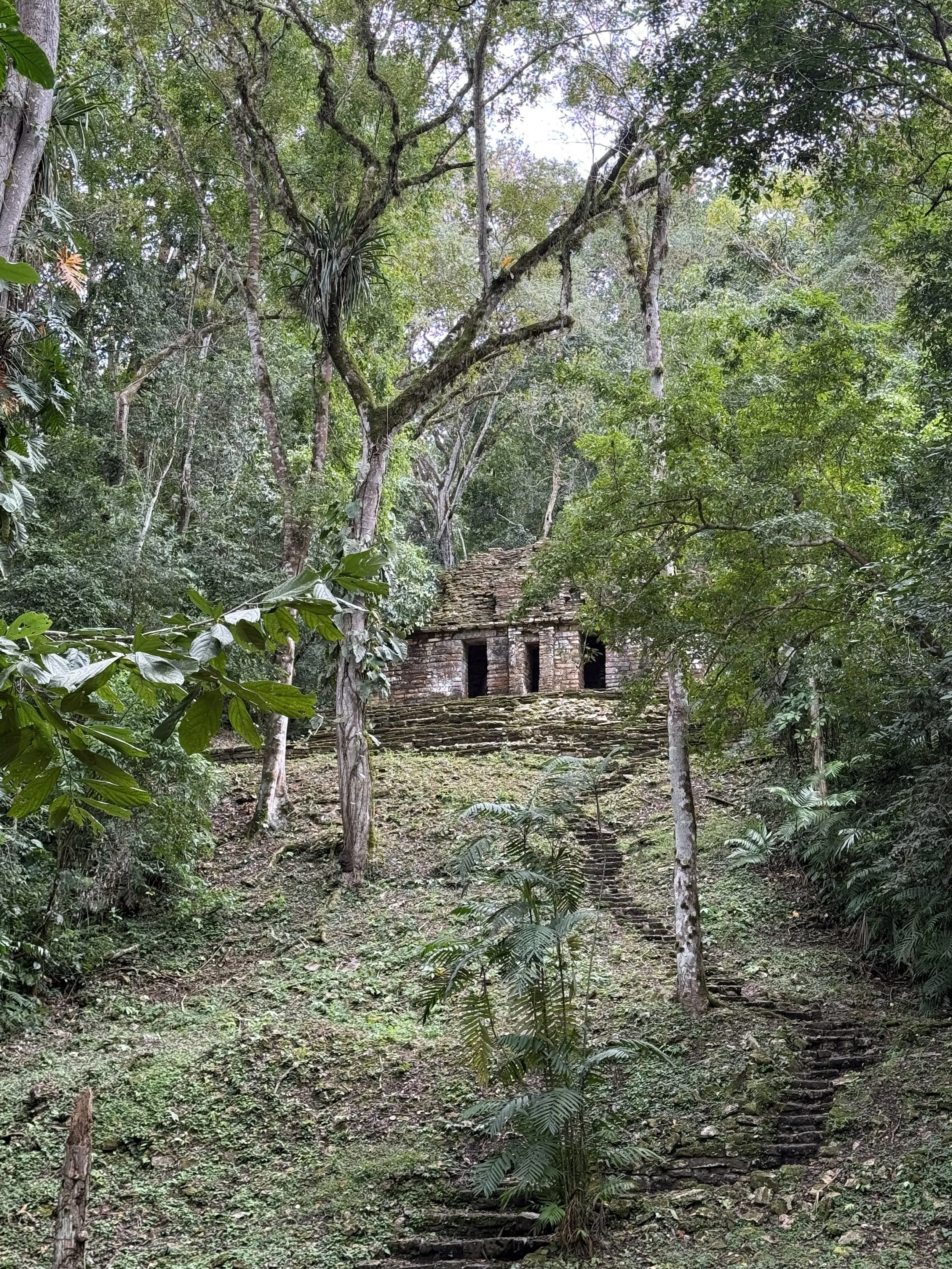
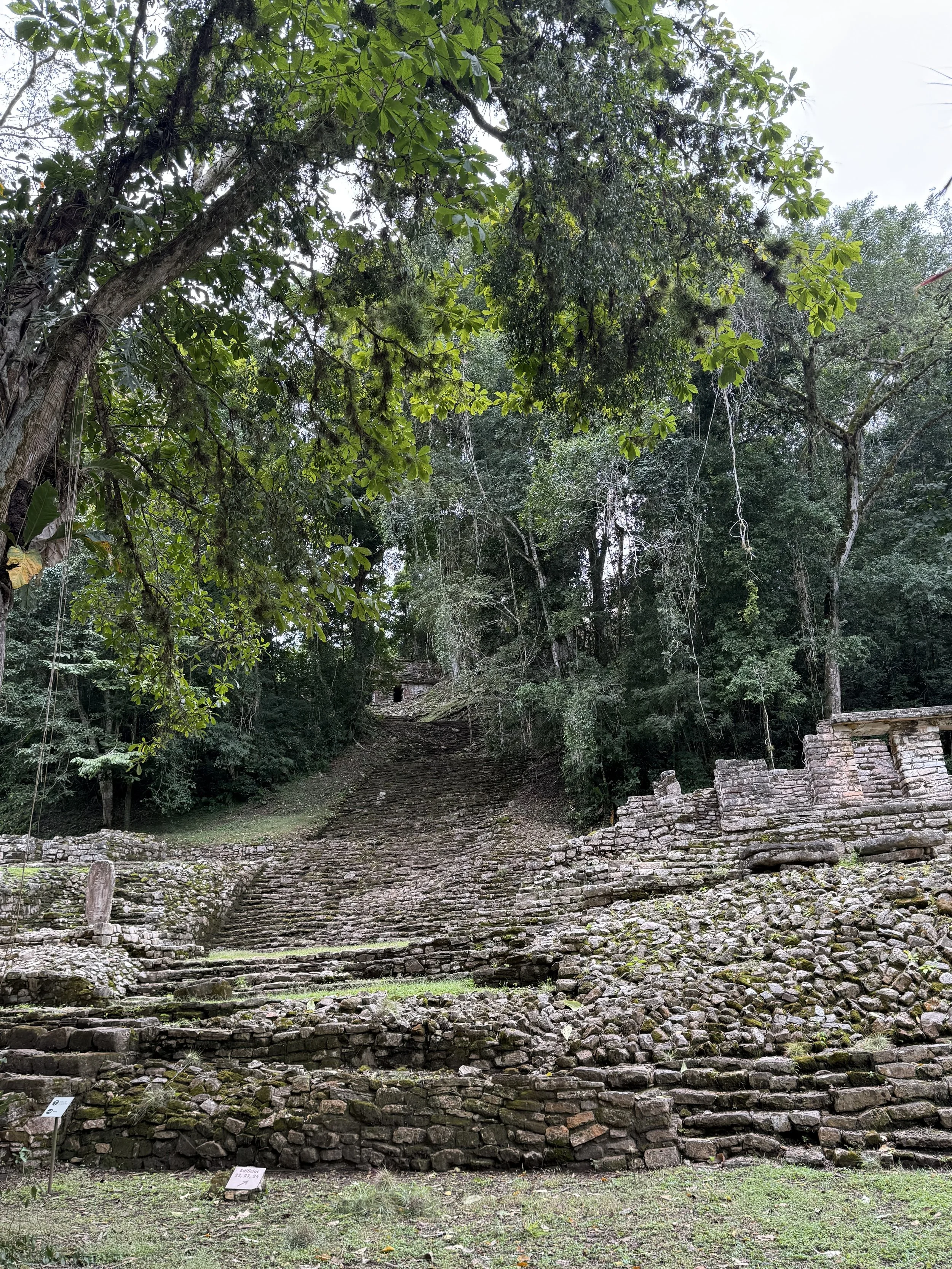
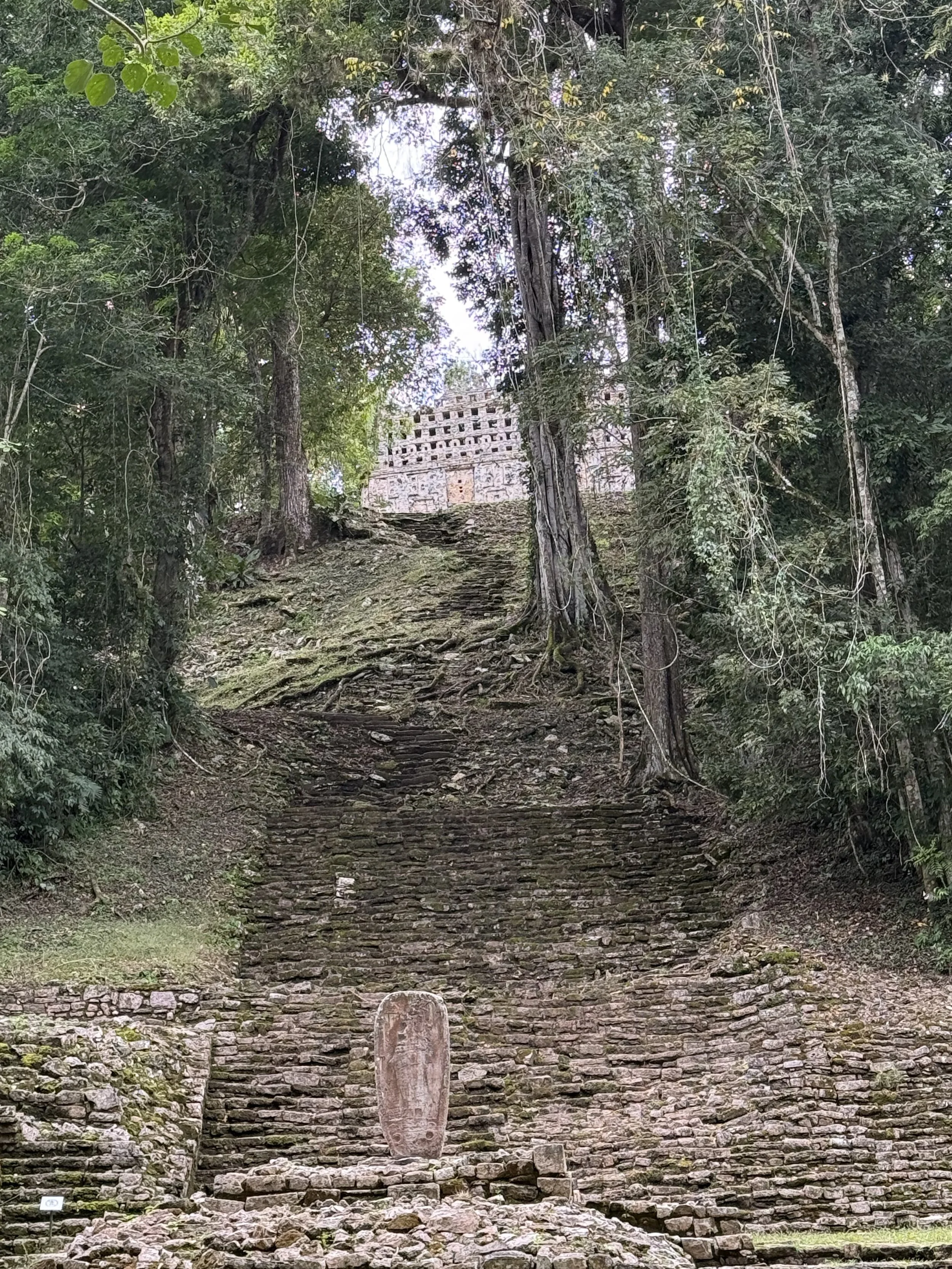
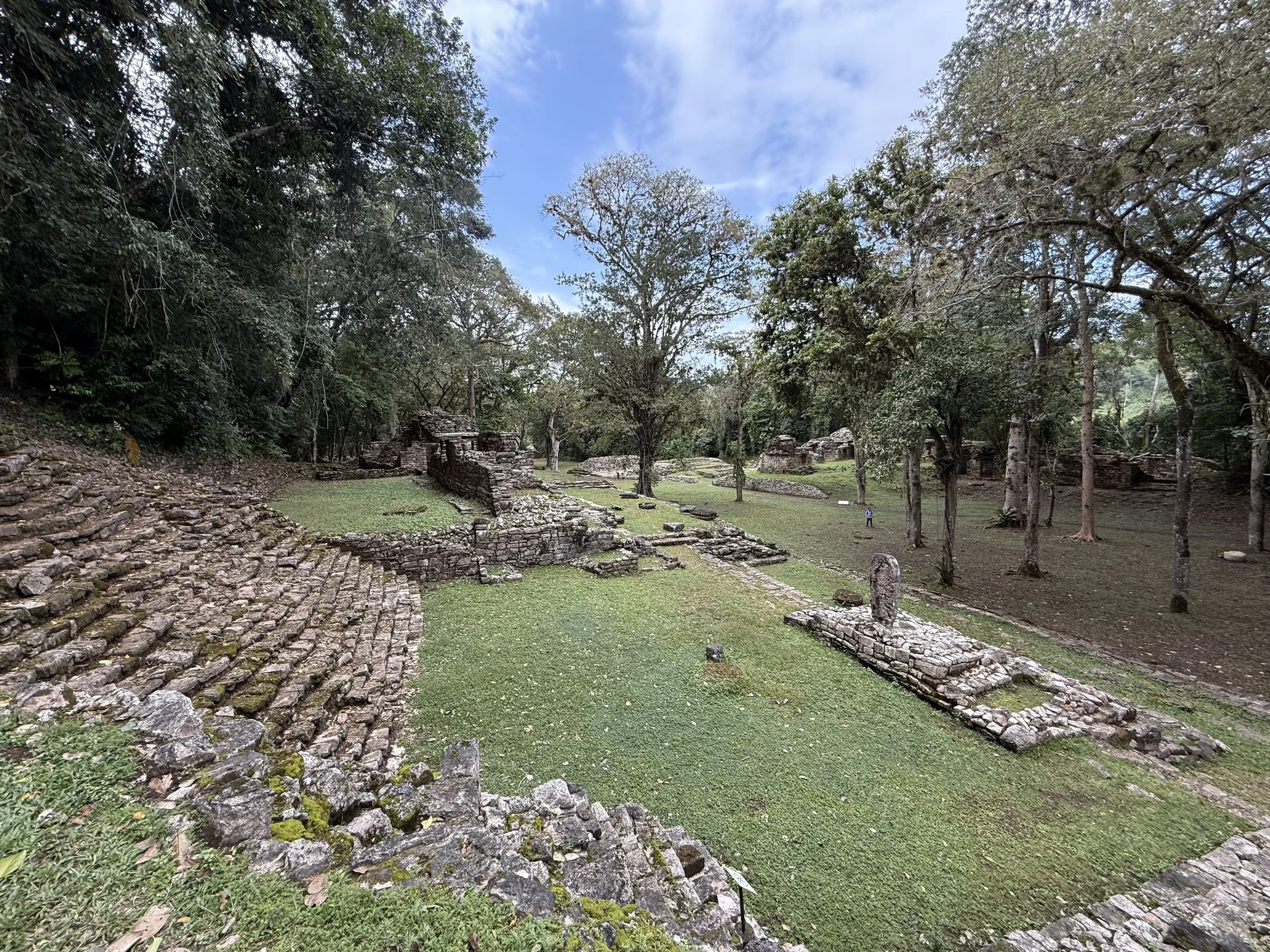
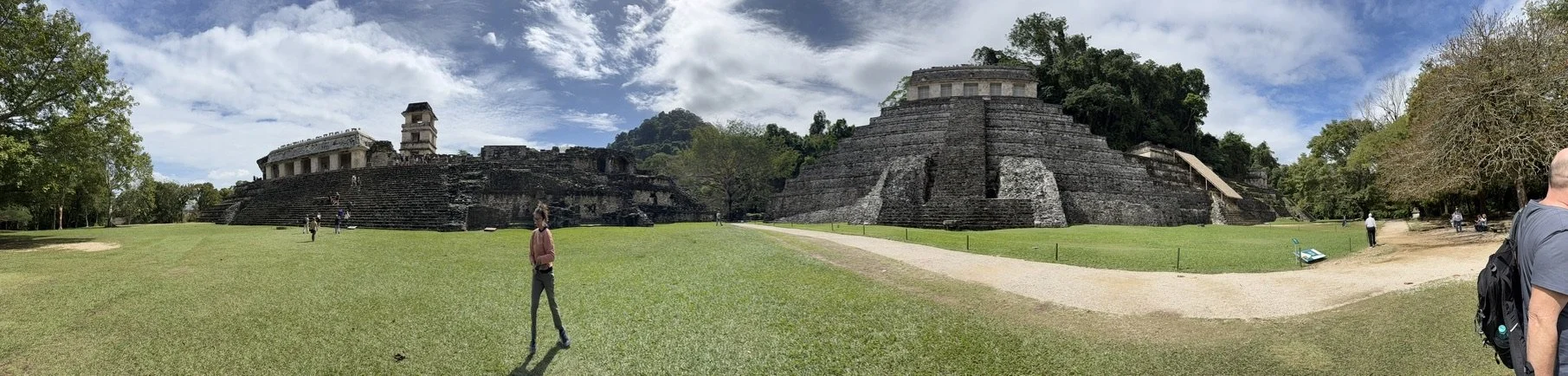
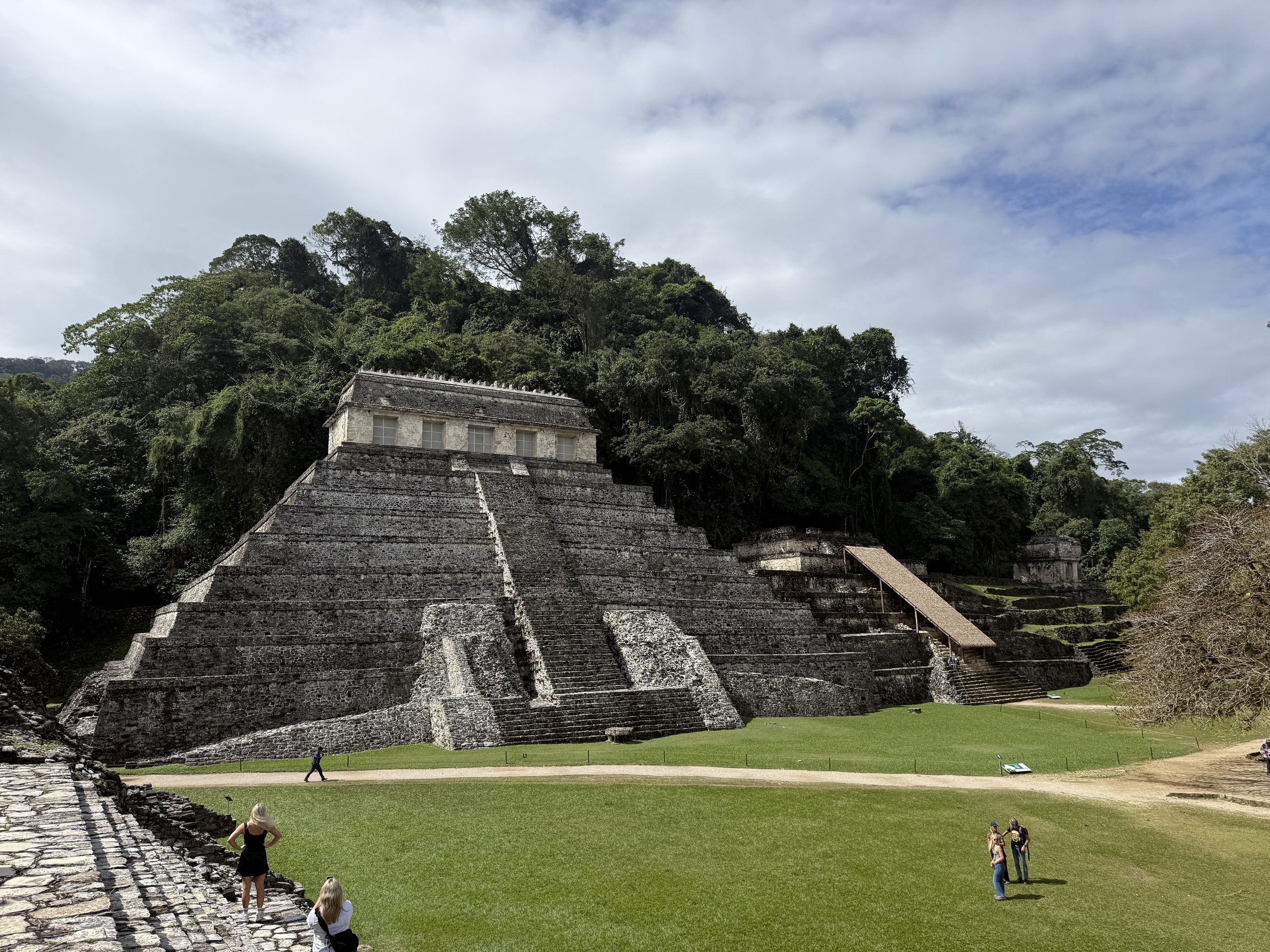
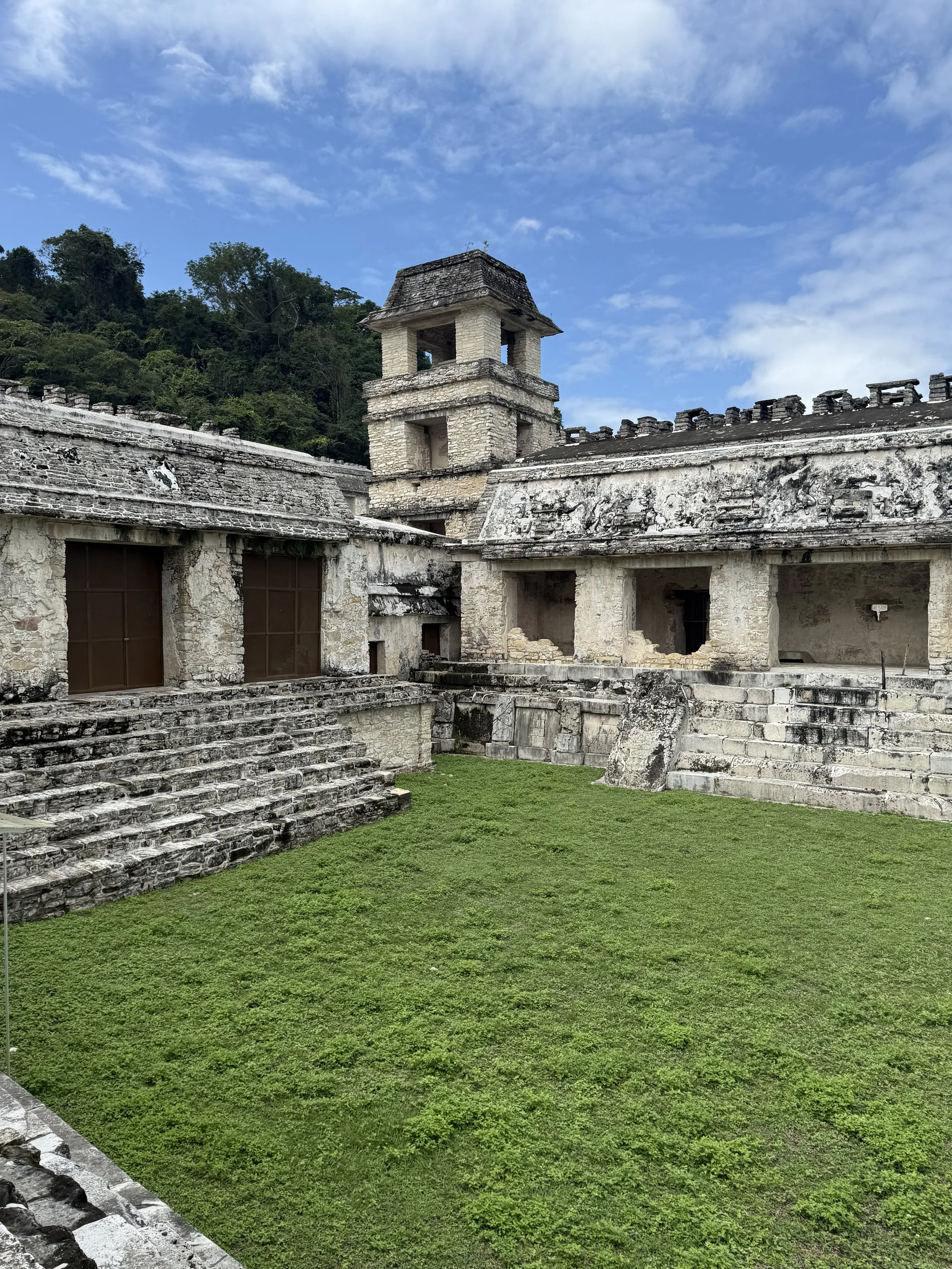
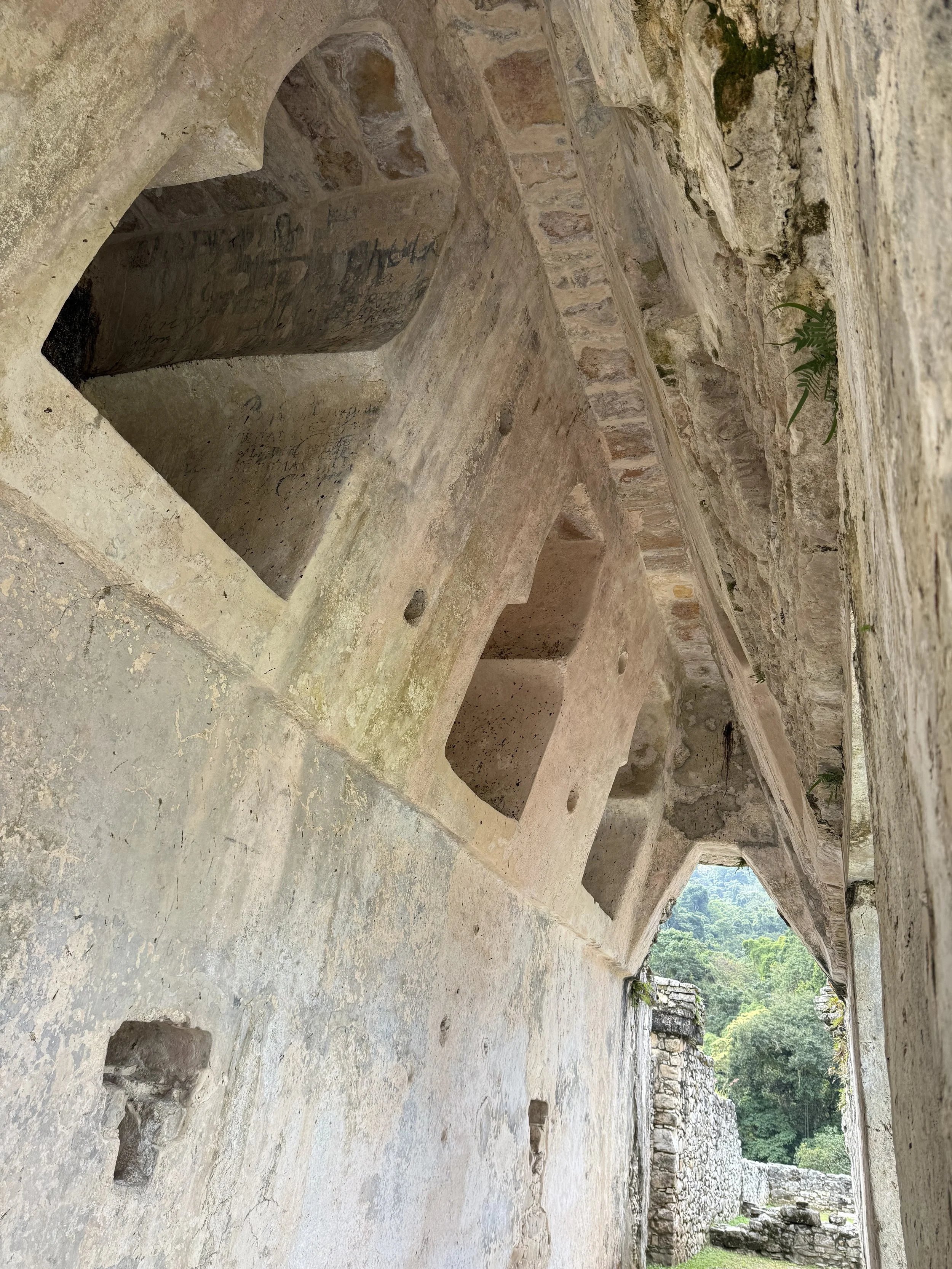
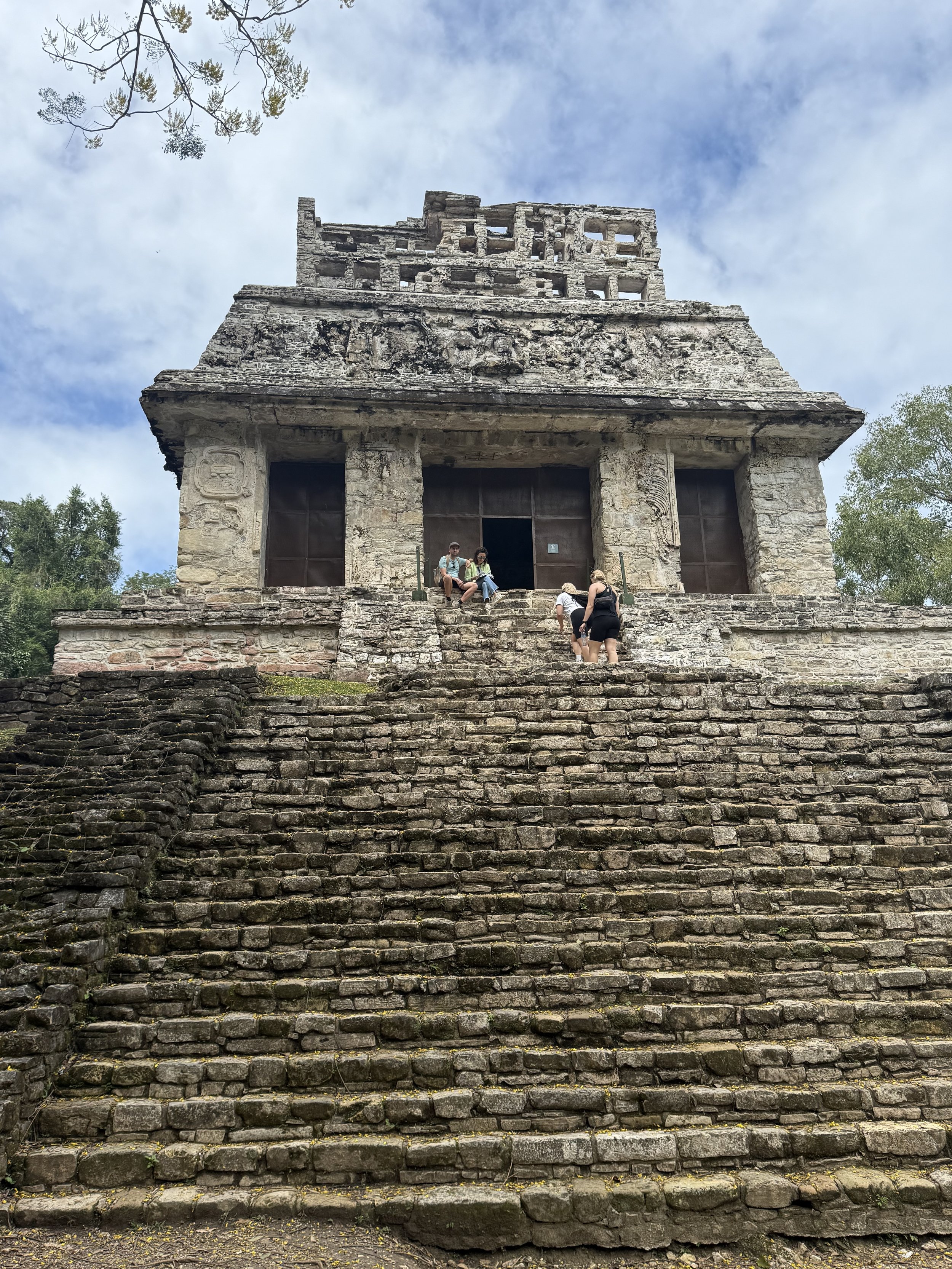
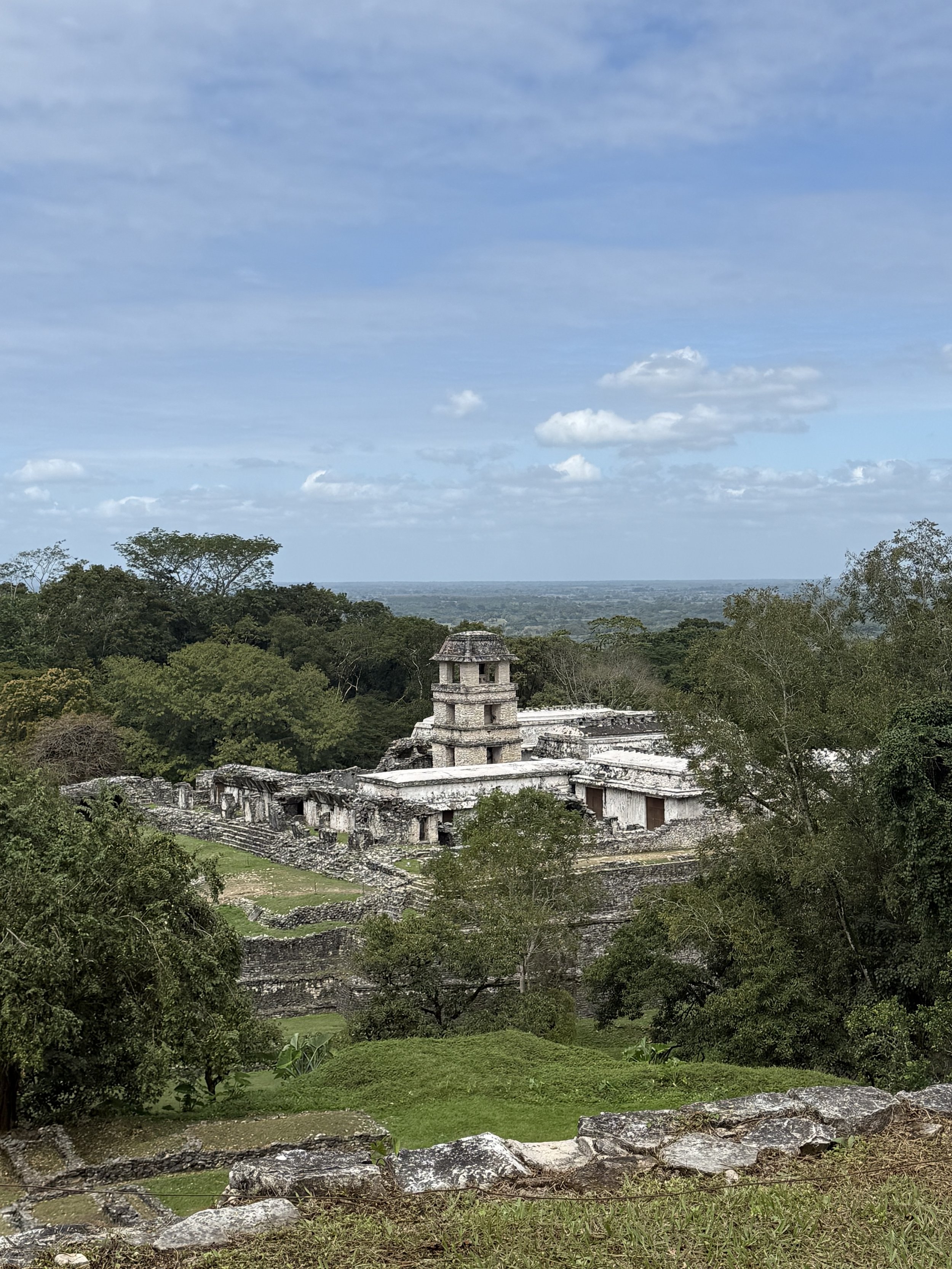
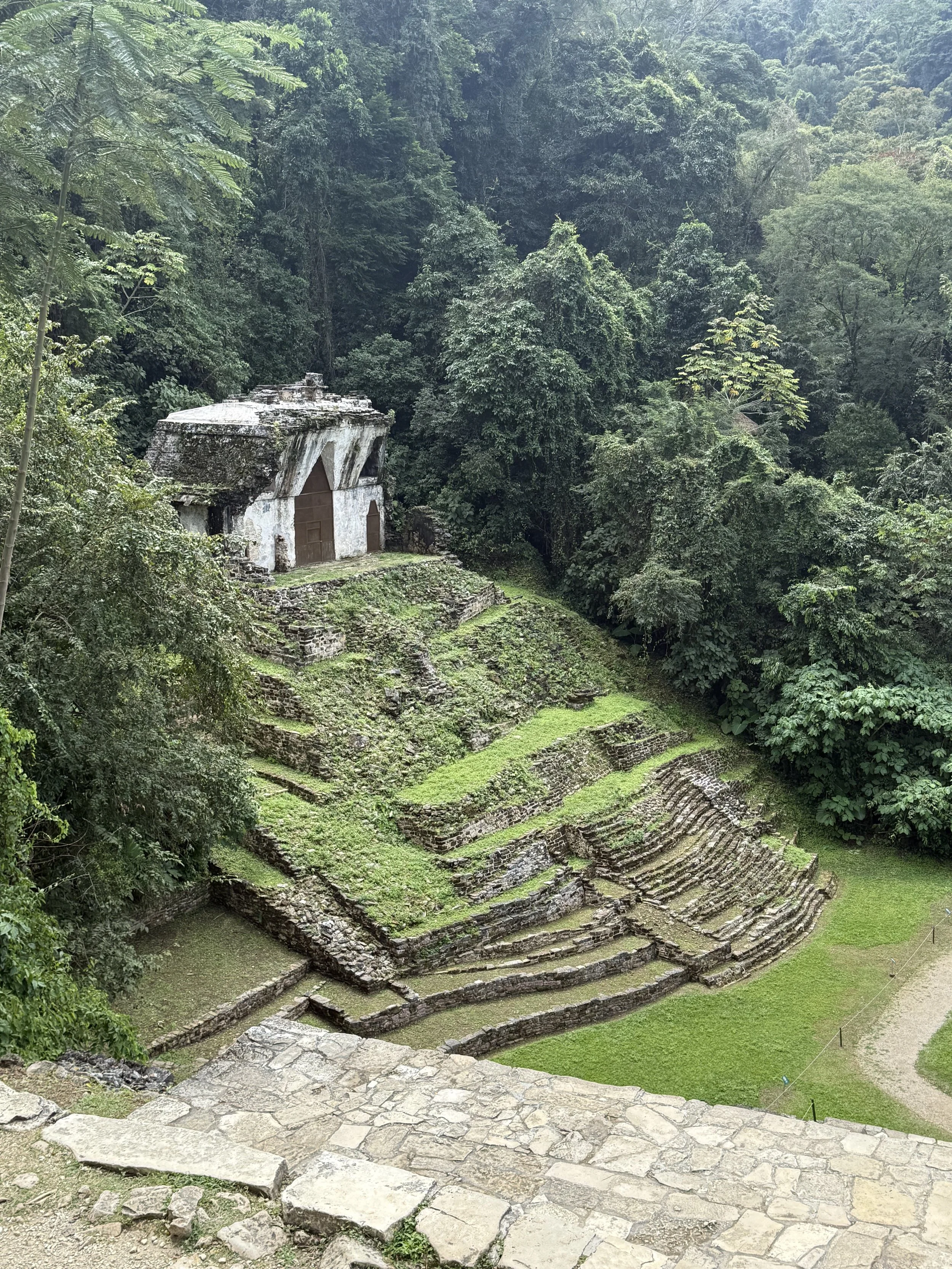
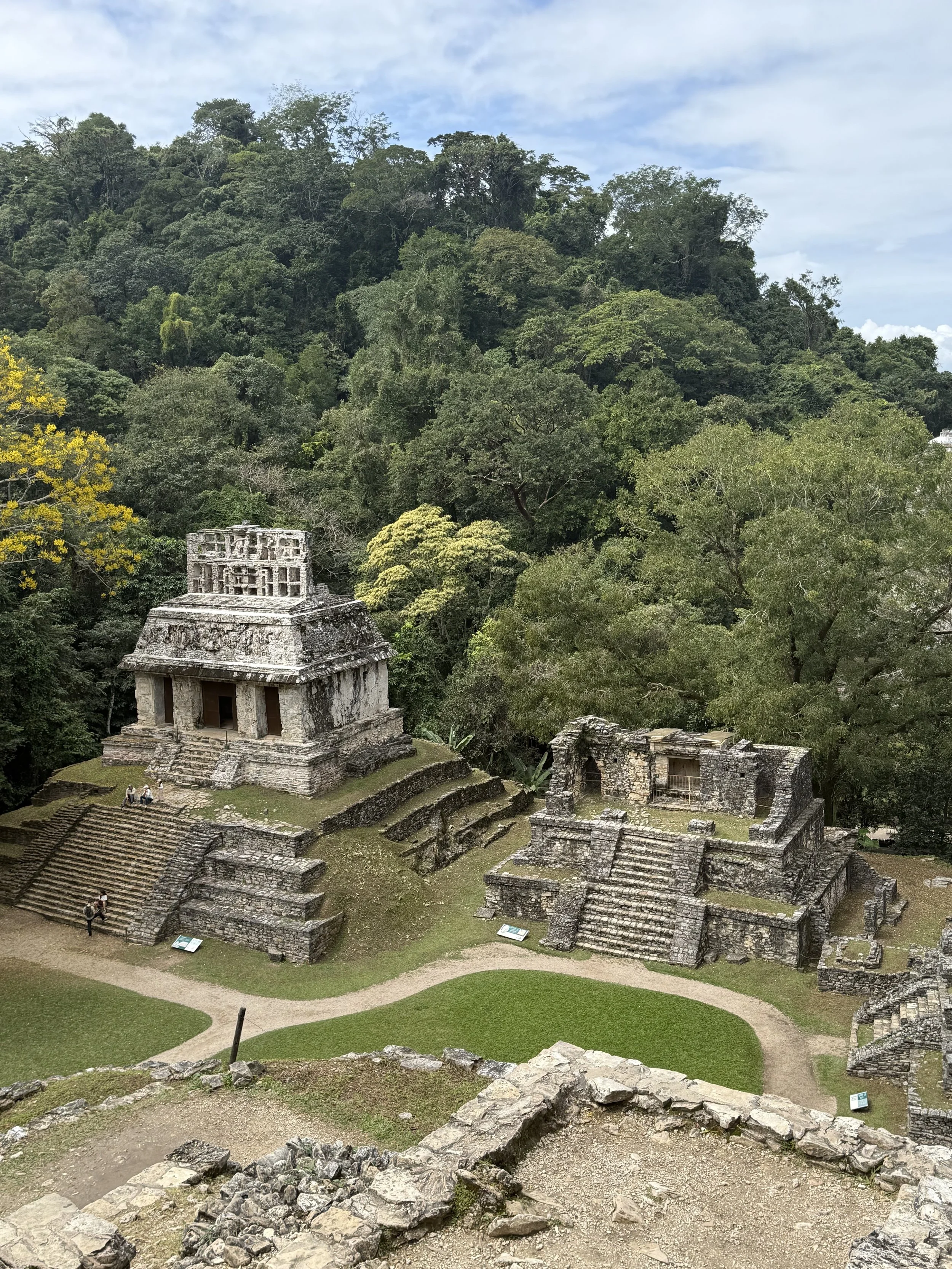
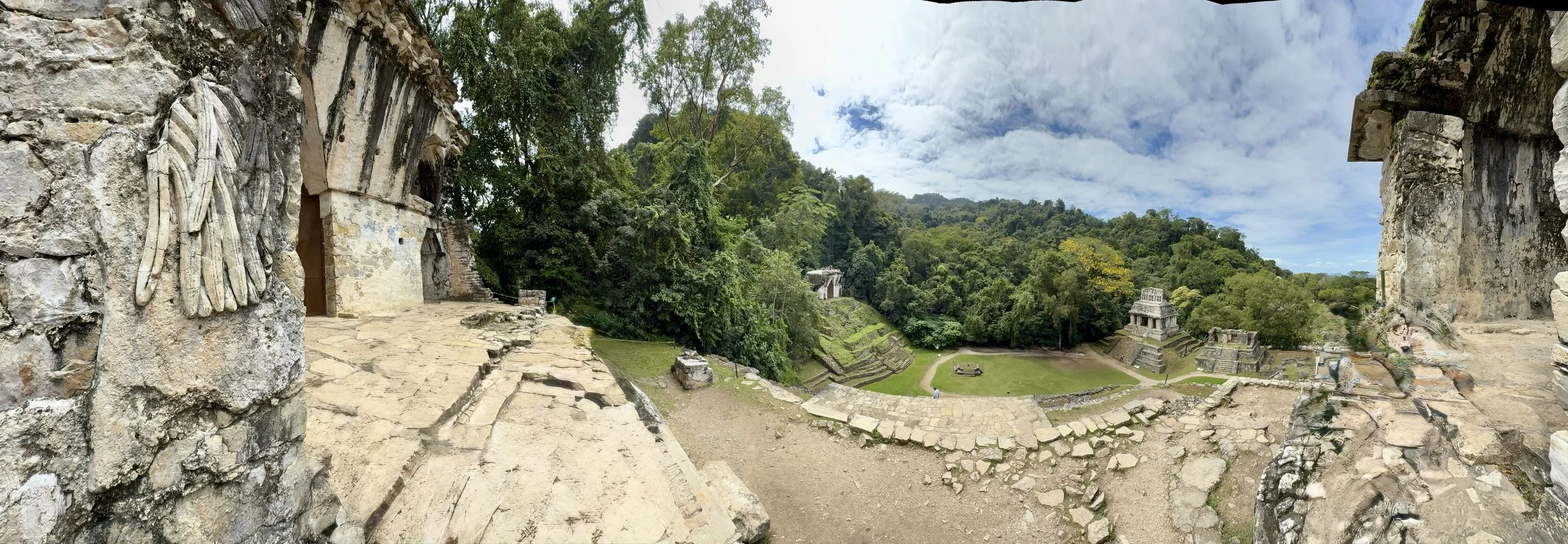
We kept the best for our last day: Palenque an other UNESCO World Heritage site.
In the middle of the jungle, Palenque developed as one of the most remarkable cities of the classic Mayan period, Recognized for its innovative artistic style and the high quality of its architectural and sculptural works, the site reached its splendor between the years 600 and 90 of our era.
The following morning, they drove us to Villahermosa International Airport about 2 hours from our hotel.
Fabulous trip! Fabulous team!